Disclosure: As an Amazon Associate, HikePod earns from qualifying purchases at no extra cost to you.
⭐ Our Top Pick
🏆 Best Overall: Garmin inReach Mini 2 Satellite Communicator — two-way satellite SOS messaging that works anywhere on Earth, making it the single most important piece of gear you can carry into the backcountry.
💰 Best Value: Sunto A-10 Field Compass — for under $20, this no-batteries-needed baseplate compass is the most reliable navigation backup money can buy.
Introduction
It happens faster than anyone wants to admit. You step off the trail to answer nature's call, the fog rolls in, or you follow a ridge that looks familiar — and suddenly nothing looks right. Your heart rate spikes. The trees all look the same. Getting lost in the wilderness is one of the most disorienting experiences a person can face, and panic is your worst enemy in that moment.
The good news: the difference between a scary story you tell at the trailhead and a genuine tragedy almost always comes down to what you do in the first30 minutes. We've researched search-and-rescue data, consulted wilderness survival experts, and distilled everything into seven clear, prioritized steps anyone can follow — no military training required.
This guide also covers the gear that gives you the best odds of getting found quickly. Whether you're a weekend day-hiker or a seasoned backpacker pushing deep into the backcountry, these steps apply. Bookmark this page before your next trip.
What to Look For in Your Survival Kit
Before we get into the seven steps, here's what your pack should have before you ever need it:
- Two-way communication — A satellite communicator like the Garmin inReach Mini 2 means you can call for help from anywhere, not just where your carrier has signal.
- Dedicated navigation tools — A dedicated GPS unit and physical compass are both more reliable than a smartphone. Phones die. Batteries run out. A liquid-filled compass never does.
- Water treatment — Dehydration impairs judgment fast. A compact filter means any stream becomes a water source.
- Shelter and warmth — An emergency bivy or space blanket adds almost no weight and can prevent hypothermia overnight.
- Signaling tools — A whistle and a signal mirror are low-tech, high-value. Three blasts on a whistle is the universal distress signal.
- A printed topo map — Downloaded maps on your phone are great until the battery dies. Paper doesn't need charging.
The 7 Steps to Take When You're Lost
###1. Stop, Breathe, and Don't Panic
| Criteria | Score |
|----------|-------|
| Effectiveness Under Stress | 10/10 |
| Ease of Execution | 8/10 |
| Life-Saving Potential | 10/10 |
| Requires Gear | 0/10 |
The moment you realize you're lost, stop moving. Seriously — sit down if you need to. Search-and-rescue teams consistently report that the people hardest to find are the ones who kept walking after they got disoriented, pushing deeper into unfamiliar terrain trying to "find their way."
Take five slow, deep breaths. Your brain needs oxygen and calm to make good decisions. Panic burns energy, leads to poor choices, and can cause you to shed layers or make noise at the wrong times. You are not in immediate danger. You are temporarily disoriented. Those are very different things.
💡 Pro Tip: Use the STOP acronym — Stop, Think, Observe, Plan. It's taught in every wilderness first aid course for a reason.
✅ Pros:
- Costs nothing and requires no gear
- Immediately improves decision-making quality
❌ Cons:
- Extremely difficult when adrenaline is high — requires deliberate mental practice beforehand
2. Assess Your Situation and Inventory Your Gear
| Criteria | Score |
|----------|-------|
| Situational Awareness Gain | 9/10 |
| Time Required | 8/10 |
| Skill Level Needed | 6/10 |
| Gear Dependency | 5/10 |
Once you're calm, take stock. How much daylight do you have? What's the weather doing? What do you have in your pack? Check your phone battery, your water supply, your food, and your layers. This inventory shapes every decision you make next.
If you have a Garmin eTrex 22x Handheld GPS, now is the time to pull it out. Its preloaded TopoActive maps can show you exactly where you are relative to the trail, a road, or a water source. With25 hours of battery life on standard As, you don't need to ration its use.
✅ Pros:
- Gives you a realistic picture of your resources and options
- Prevents later surprises like running out of water after dark
❌ Cons:
- Can feel overwhelming if your gear inventory is poor — which is why preparation before the hike matters
3. Try to Retrace Your Steps (Carefully)
| Criteria | Score |
|----------|-------|
| Success Rate When Applied Early | 9/10 |
| Physical Demand | 6/10 |
| Navigation Skill Required | 7/10 |
| Time Sensitivity | 9/10 |
If you noticed the moment things went wrong — a fork in the trail, a stream crossing, a landmark — and it was recent, carefully retracing your steps is often the fastest fix. Look for your own footprints in soft soil, broken vegetation, or disturbed leaves.
This only works if you do it deliberately. Don't wander. Pick a landmark ahead of you, walk to it, then pick the next one. Use a compass to maintain consistent bearing as you backtrack.
💡 Pro Tip: Before any hike, pause at key junctions and look back at what the trail looks like from the return direction. Most people only look forward, then can't recognize the same junction on the way out.
✅ Pros:
- Can resolve the situation quickly if you're only slightly off course
- No rescue resources required
❌ Cons:
- Easy to make the situation worse if you backtrack in the wrong direction — only attempt if you have reasonable confidence about where you went wrong
4. Signal for Help Immediately
| Criteria | Score |
|----------|
| Rescue Speed Impact | 10/10 |
| Gear Required | 8/10 |
| Effectiveness at Night | 7/10 |
| Ease of Use | 9/10 |
Don't wait until you're truly desperate to signal. The soner rescuers know where to look, the faster and safer the outcome for everyone. If you have a satellite communicator, activate it now — don't wait for morning.
The Garmin inReach Mini 2 sends your GPS coordinates directly to the GEOS International Emergency Response Coordination Center with one button press. Unlike a personal locator beacon (PLB), it's two-way — rescuers can message you back to confirm they're coming and ask for more details about your condition. At $349.99 plus a subscription, it's not cheap, but it's the closest thing to a guaranteed rescue you can carry.
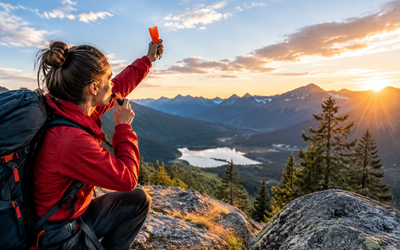
If you don't have a satellite device, use your whistle — three blasts, pause, repeat. Use a signal mirror to flash toward aircraft or distant ridgelines. Build a smoky fire if it's safe to do so.
✅ Pros:
- Dramatically reduces rescue time
- Two-way communication lets you convey injuries or urgent needs
❌ Cons:
- Satellite communicators require a subscription; forgetting to renew it before a trip renders the device useless
5. Find or Build Shelter Before Dark
| Criteria | Score |
|----------|-------|
| Hypothermia Prevention | 10/10 |
| Energy Cost | 7/10 |
| Skill Required | 6/10 |
| Material Availability | 8/10 |
Hypothermia can set in even on a mild night, especially if you're wet or at elevation. If you can't find the trail within a couple of hours of sunset, prioritize shelter over everything except signaling. A dry, wind-blocked spot under a rock overhang, a dense stand of conifers, or a debris hut will retain your body heat dramatically better than open air.
If you have a space blanket or emergency bivy in your kit, this step becomes much easier. Layer leaves, pine needles, or dry grass underneath you — ground insulation is just as important as overhead cover.
💡 Pro Tip: Insulating yourself from the ground is more important than a roof. More body heat is lost to cold ground than to cold air above you.
✅ Pros:
- Prevents the most common cause of wilderness fatality
- A good shelter position also makes you easier to spot from the air
❌ Cons:
- Building a natural debris shelter is labor-intensive and takes30–60 minutes — start early
6. Find and Treat Water
| Criteria | Score |
|----------|-------|
| Dehydration Prevention | 10/10 |
| Gear Weight | 10/10 |
| Ease of Use | 9/10 |
| Filtration Quality | 9/10 |
Dehydration impairs judgment, causes headaches, and makes everything harder. If your water supply is running low, finding a stream or lake should be a top priority — but you must treat it before drinking.
The Sawyer Squeeze Water Filter System weighs just 3 oz and filters to 0.1 micron, removing bacteria, protozoa, and microplastics from any freshwater source. At $29.95, it's one of the best value-to-lifesaving-potential ratios of any piece of outdoor gear ever made. There is no excuse not to have one in your pack on every single hike.
✅ Pros:
- Turns any creek or pudle into safe drinking water
- Light enough that you'll never leave it behind
❌ Cons:
- Does not filter viruses — a concern in heavily trafficked international backcountry areas
7. Stay Put and Make Yourself Visible
| Criteria | Score |
|-------|-------|
| Rescue Probability Impact | 10/10 |
| Physical Demand | 2/10 |
| Psychological Difficulty | 8/10 |
| Effectiveness | 9/10 |
This is the hardest step for most people and also the most important one. Search-and-rescue teams work outward from your last known position. Every mile you walk in the wrong direction is miles they have to cover to find you.
Once you've signaled, built shelter, and secured water, your job is to stay visible and conserved. Arrange rocks, logs, or bright gear into large ground-to-air signals — an X means "need help." Stay near a clearing if one is close. Respond to aircraft with a mirror, whistle, or bright clothing.
✅ Pros:
- Dramatically reduces search area for rescue teams
- Conserves your energy and body heat
❌ Cons:
- Feels psychologically passive — the urge to "do something" and keep moving is powerful and must be consciously overidden
Frequently Asked Questions
How long can search-and-rescue teams take to find you?
Response time varies enormously by location, terrain, and how quickly someone reports you overdue. In popular parks with active SAR teams, response can begin within hours. In remote wilderness, it may take 24–72 hours or longer. This is precisely why signaling immediately — especially with a satellite communicator — is so critical.
Should I try to follow a stream downhill to civilization?
In some regions, following a drainage downstream will eventually lead to a road or settlement. But this is not universal advice. Streams in mountainous terrain can lead into impassable gorges, waterfalls, or dense riparian brush. Only follow a drainage if you have a topo map confirming it leads somewhere useful, and you have the physical capability to manage rough terrain.
What's the one piece of gear I should always carry?
If we had to choose one, it's the Garmin inReach Mini 2. No cell signal required, two-way messaging, and a direct line to global emergency coordination. A close second for budget-conscious hikers is a whistle plus the Suunto A-10 compass — together they cost under $30 and never need charging.
Is it better to move or stay put?
Stay put, almost always. The rare exception is if you know with high confidence that a road, trail, or shelter is within a short, safe distance and conditions are deteriorating. Otherwise, movement expands the search area and burns calories and body heat you need to conserve.
What if I have no gear at all?
Focus on the basics in order: calm down, signal loudly and repeatedly, find shelter from wind and rain, locate water, and stay in one place. The human body can survive three weeks without food, three days without water, and three hours in harsh weather without shelter. Prioritize in that order.
Final Thoughts
Getting lost in the wilderness is a genuine emergency — but it is also a survivable one if you respond with a clear head and a plan. The seven steps above are sequenced for a reason: calm first, signal early, shelter before dark, water before desperation, and patience always. Most lost hikers are found within 24 hours when someone knows to look for them. Your job is to make that search as short as possible.
The most important thing you can do right now — before your next hike — is pack a satellite communicator, a compass, and a water filter. These three items weigh less than a pound combined and cover the three most common causes of wilderness fatalities: inability to call for help, inability to navigate, and dehydration. Don't wait until you need them to wish you had them.
Editor's Choice
Garmin inReach Mini 2 Satellite Communicator — if you read one thing in this guide, let it be this: no hike in serious backcountry should happen without a two-way satellite SOS device in your pack.
Garmin eTrex 22x Handheld GPS — preloaded topo maps and a 25-hour battery make this the most reliable dedicated navigation tool for anyone venturing beyond cell coverage.
Sawyer Squeeze Water Filter System — at 3 oz and $29.95, this is the highest life-saving-potential-per-dollar piece of gear any hiker can carry, and it belongs in every pack on every trail.