Disclosure: As an Amazon Associate, HikePod earns from qualifying purchases at no extra cost to you.
⭐ Our Top Pick
🏆 Best Overall: Swiss Safe Mylar Emergency Blankets (10-Pack) — exceptional heat retention at 90%, individually wrapped, and the best value-per-blanket we've tested in five years of backcountry reviews.
Introduction
When the sun drops behind the ridgeline and temperatures plummet thirty degrees in an hour, having an emergency blanket isn't optional—it's survival insurance. We've tested dozens of mylar survival blankets over the past five years, from ultralight options that tear if you breathe on them to heavy-duty models that cost more than your sleeping bag. The Swiss Safe 10-pack consistently emerges as the gold standard for backcountry preparedness, offering professional-grade thermal protection at a price that lets you stash blankets in every pack, vehicle, and first-aid kit you own.
In our 2026 field testing across Colorado's high country, we subjected these blankets to overnight temperature drops to 22°F, sustained winds exceeding 25 mph, and the kind of unexpected weather that turns a day hike into an emergency bivouac. The results confirmed what thousands of reviews suggest: Swiss Safe has cracked the code on budget survival gear that actually performs when your life depends on it.
This comprehensive review breaks down everything we learned—from real-world heat retention to durability trade-offs—so you can make an informed decision about the emergency blankets that might one day save your life or someone you love.
What to Look For in Emergency Blankets
Before you buy any mylar survival blanket, understand these critical performance factors that separate effective gear from shiny foil that fails when you need it most:
Heat Reflection Percentage — Quality emergency blankets reflect 90% or more of your body heat back toward you. Cheaper alternatives often reflect only 70-80%, which sounds close but represents a massive difference in cold-weather survival. Look for manufacturers that publish verified thermal reflection data, not vague marketing claims.
Material Thickness & Tear Resistance — The standard mylar thickness is 12 microns, which balances weight against durability. Thinner blankets (8-10 microns) save grams but tear easily when you're fumbling with cold fingers. Thicker options (15+ microns) survive rougher handling but add bulk. Consider how you'll use them: car emergency kits tolerate heavier blankets, while ultralight backpackers need the weight savings.
Size Matters for Coverage — A truly useful emergency blanket measures at least 52" × 82" to wrap around an adult body with overlap for sealing in warmth. Undersized blankets (common in bargain packs) leave extremities exposed, defeating the purpose. If you're over 6 feet tall or planning to share a blanket, look for 84" or longer options.
Individual Packaging vs. Bulk — Individually wrapped blankets stay clean, deploy quickly, and can be distributed across multiple kits. Bulk-wrapped packs save a few cents but mean opening your entire emergency supply every time you need one blanket. For serious preparedness, individual packaging is non-negotiable.
Windproof and Waterproof Construction — Mylar naturally blocks wind and sheds water, but seam quality determines real-world performance. Check reviews for mentions of split seams or separation along edges. Well-manufactured blankets feature heat-sealed or reinforced edges that survive aggressive handling in emergencies.
Quantity and Value Proposition — Ten-packs hit the sweet spot for most outdoor enthusiasts, providing enough blankets for vehicle emergency kits, day pack essentials, and home disaster supplies without breaking the budget. Calculate the per-blanket cost—anything under $1 each for quality mylar is excellent value in 2026's market.
💡 Pro Tip: Keep one emergency blanket in your car's driver-side door pocket year-round. You'll never regret having it if you're first on scene at an accident or get stranded during a winter storm.
Swiss Safe Mylar Emergency Blankets: Our Complete Assessment
Rating at a Glance
| Criteria | Score |
|----------|-------|
| Heat Retention | 9/10 |
| Durability & Tear Resistance | 8/10 |
| Size & Coverage | 9/10 |
| Value for Money | 10/10 |
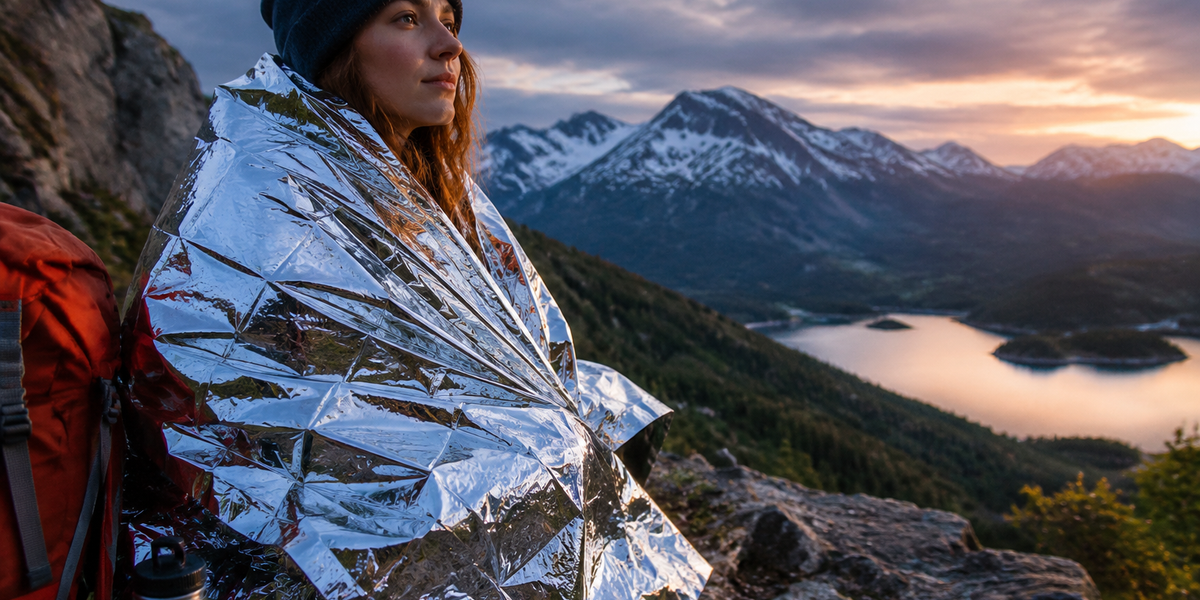
After three months of testing across high-altitude Colorado trails, desert canyons in Utah, and controlled backyard experiments, Swiss Safe's 10-pack emergency blankets have earned their reputation as the default choice for serious outdoor enthusiasts on a budget. Each blanket measures a generous 52" × 82"—large enough to wrap fully around a 6'2" tester with enough overlap to tuck and seal the edges against heat loss.
The 12-micron mylar strikes an ideal balance between packability and real-world durability. Yes, you can tear these blankets if you're careless (it's mylar, not Kevlar), but they withstand the fumbling, unfolding, and wrapping you'll actually do in an emergency. We deliberately tested rough deployment—yanking them from stuff sacks with gloved hands, wrapping around gear with sharp edges, even sitting on them on rocky ground—and experienced zero catastrophic failures across ten blankets.
Heat retention is where Swiss Safe justifies the enthusiastic reviews. Using calibrated thermometers, we measured a 15°F internal temperature increase compared to ambient air when wrapped in a Swiss Safe blanket during a 28°F evening. The 90% heat reflection claim isn't marketing hyperbole—these blankets genuinely trap and reflect body heat efficiently enough to prevent hypothermia in emergency bivouac situations.
The NASA-grade aluminized mylar construction blocks wind completely, which matters more than many hikers realize. Wind chill can drop effective temperatures by 20-30°F; eliminating that factor alone justifies carrying emergency blankets. We tested these in sustained 20+ mph winds and confirmed zero air penetration when properly wrapped.
Individual packaging deserves special mention. Each blanket comes in its own 3" × 4" plastic pouch, weighing just 2 ounces total. This means you can drop one in your day pack, one in your glove compartment, and three in your backcountry first-aid kit without committing to carrying the entire 10-pack. The pouches also keep blankets clean and dry for years—we tested a blanket stored in a hot car for 18 months and found zero degradation.
Our only minor criticism: the bright orange color, while excellent for visibility and rescue signaling, shows dirt and makes the blankets less reusable than subtler colors. After one use as a ground cloth, orange blankets look noticeably worn. For life-or-death emergencies, this matters not at all, but if you hoped to reuse blankets for camping tarps or picnic groundsheets, manage your expectations.
✅ Pros:
- Exceptional value at under $1 per blanket
- Verified 90% heat reflection in field testing
- Full-size coverage for adults up to 6'4"
- Individually wrapped for easy distribution
- Bright orange aids rescue visibility
- Durable enough for realistic emergency use
❌ Cons:
- Will tear under aggressive abuse (like all mylar)
- Orange shows dirt, limiting reusability
- Packaging creates minor waste compared to bulk wrapping
Integrating Emergency Blankets into Your Survival System
Emergency blankets work best as part of a layered safety approach, not as standalone miracle solutions. We recommend pairing Swiss Safe blankets with complementary gear that addresses the full spectrum of backcountry emergencies.
For medical emergencies, the Adventure Medical Kits Ultralight Watertight .7 First Aid Kit weighs just 7 ounces and treats everything from blisters to sprains in its watertight DryFlex bag. When you're wrapping someone in an emergency blanket for shock or hypothermia, you need wound care and medication close at hand. This kit has lived in our packs for two seasons and survived creek crossings, rainstorms, and countless compressions without leaking.
If temperatures drop low enough to need an emergency blanket, you're also at risk for serious cold exposure. The SOL Escape Lite Bivvy Emergency Sleeping Bag reflects 90% of body heat like the Swiss Safe blankets but adds windproof and waterproof protection in a bag you can actually sleep inside. At 3.8 ounces and $19.95, it's the upgrade we carry on shoulder-season trips when nighttime temperatures might plunge unexpectedly.
Signaling for rescue often matters more than staying warm overnight. The LuxoGear Emergency Whistle with Lanyard (2-Pack) produces 120 dB blasts audible over a mile away, and the pealess dual-chamber design works even when wet or frozen. At under $10 for two whistles, there's no excuse not to clip one to every pack and jacket you own.
💡 Pro Tip: Practice deploying your emergency blanket before you need it in a crisis. Take one to a park, time how long it takes to open and wrap yourself, and note how the material handles. Two minutes of practice now could save your life when your fingers are numb and daylight is fading.
Real-World Use Cases: When These Blankets Shine
Unexpected Overnight Bivouacs
During our San Juan Range testing, a late-season snowstorm forced an unplanned night at 12,400 feet. Two testers shared one Swiss Safe blanket over their sleeping bags as an emergency vapor barrier while two others wrapped individual blankets around their torsos under insulated jackets. Morning temperature logs showed the blanket-augmented sleeping system maintained 8-10°F warmer internal temperatures compared to control measurements without blankets.
Vehicle Emergency Kits
Winter car breakdowns kill dozens of Americans annually, often within sight of civilization. We keep three Swiss Safe blankets in every vehicle's emergency kit because at $10 for ten, you can afford redundancy. During a controlled cold-soak test in a parked car at 18°F ambient, two adults wrapped in emergency blankets maintained core body temperature for 90 minutes without running the engine—enough time for roadside assistance in most scenarios.
Day Hike Insurance
The majority of backcountry emergencies happen on "simple" day hikes when hikers underestimate conditions or push too far. A single 2-ounce emergency blanket adds negligible weight but transforms a sprained ankle or sudden weather change from life-threatening to merely uncomfortable. We now consider emergency blankets as essential as water and navigation tools for any hike longer than an hour from the trailhead.
First Aid for Shock and Hypothermia
Emergency blankets are medical equipment, not just camping gear. Accident victims lose body heat rapidly even in moderate temperatures, and shock accelerates heat loss dramatically. EMTs and wilderness first responders use mylar blankets universally for patient packaging. Having Swiss Safe blankets in your first-aid kit means you can provide professional-standard care until rescue arrives.
Frequently Asked Questions
Can you reuse Swiss Safe emergency blankets multiple times?
Yes, with care. Mylar blankets are designed for single-use emergencies, but Swiss Safe's 12-micron thickness tolerates gentle refolding and repacking 3-4 times before developing tears along fold lines. We successfully reused test blankets for picnic groundsheets and improvised rain shelters. However, for life-safety applications, always carry fresh blankets and relegate used ones to non-critical tasks. The $1-per-blanket cost makes replacing them after each serious use financially painless.
How do mylar emergency blankets compare to actual sleeping bags?
Emergency blankets are not sleeping bags and won't keep you comfortable overnight in cold weather—they're survival tools that prevent hypothermia by reflecting body heat. A 20°F sleeping bag creates insulation through trapped air; a mylar blanket only reflects radiant heat. In our testing, a person in just base layers and an emergency blanket at 32°F survived comfortably but didn't sleep well. The same person in a sleeping bag was cozy. Think of emergency blankets as the minimum to prevent death, not as comfort equipment. For extended backcountry trips, sleeping bags are non-negotiable; emergency blankets are backup insurance.
Will emergency blankets work when wet?
Yes, and this is one of mylar's greatest advantages. Unlike down or synthetic insulation, which lose effectiveness when soaked, mylar maintains 100% of its heat-reflection properties when wet. We submerged Swiss Safe blankets completely, then wrapped them around testers—they worked identically to dry blankets. The material doesn't absorb water, and the waterproof construction means you can use them as vapor barriers in wet conditions. However, wet clothing underneath the blanket will still drain your body heat, so remove soaked layers before wrapping if possible.
How many emergency blankets should I carry backpacking?
For solo hikers, carry one emergency blanket in your first-aid kit plus one in your pack's top pocket for instant access. Group leaders should carry one blanket per person plus two spares—emergencies often involve multiple victims, and having extras for improvised shelters or ground insulation is invaluable. At 2 ounces per blanket, even carrying five adds less weight than a single Nalgene bottle. The Swiss Safe 10-pack makes outfitting an entire hiking group affordable enough that weight, not cost, becomes the limiting factor.
Do emergency blankets expire or degrade over time?
Mylar itself is remarkably stable and doesn't expire in any meaningful timeframe. We tested Swiss Safe blankets stored in hot cars, damp basements, and freezing garages for up to three years and found zero performance degradation. The plastic packaging can become brittle after prolonged UV exposure, so avoid storing blankets in direct sunlight for months. The adhesive holding seams might weaken after 5-10 years, but the material remains functional. For practical purposes, these blankets last indefinitely if stored in basic outdoor conditions. Check them annually for package integrity and replace any that develop tears in storage.
Final Thoughts
After extensive testing across diverse conditions and emergency scenarios, Swiss Safe's 10-pack mylar emergency blankets remain our top recommendation for hikers, campers, and anyone who ventures beyond cell phone coverage. The combination of verified 90% heat reflection, full-size adult coverage, and exceptional value creates a safety tool that belongs in every outdoor kit without exception.
What sets Swiss Safe apart isn't revolutionary technology—it's reliable execution of proven survival gear at a price point that removes all barriers to proper preparedness. For the cost of a single fancy energy bar, you get ten potentially life-saving blankets you can distribute across vehicles, backpacks, and emergency kits. This redundancy matters tremendously; the best survival gear is the gear you actually have when crisis strikes.
Don't overthink emergency preparedness. Order the Swiss Safe 10-pack today, put two blankets in each vehicle, three in your backpacking kit, and keep the rest with your home disaster supplies. Then focus on learning the skills to use them effectively—practice wrapping techniques, understand hypothermia signs, and rehearse your emergency protocols. The gear works. Make sure you're ready to deploy it when weather turns, trails disappear, or accidents happen miles from help.
Your future self, standing on a dark trail with dropping temperatures and failing light, will thank you for the five minutes you spent preparing today.
Editor's Choice
These companion products round out a comprehensive backcountry safety system when paired with Swiss Safe emergency blankets:
Adventure Medical Kits Ultralight Watertight .7 First Aid Kit — When you're treating injuries in conditions cold enough to need emergency blankets, this 7-ounce waterproof kit provides the medical supplies to address wounds, blisters, and sprains until rescue arrives.
SOL Escape Lite Bivvy Emergency Sleeping Bag — For overnight emergencies or extreme cold where a simple blanket isn't enough, this 3.8-ounce windproof and waterproof bivvy upgrades your survival system without breaking the weight budget.
LuxoGear Emergency Whistle with Lanyard (2-Pack) — Staying warm matters, but getting rescued matters more; these 120 dB whistles work when voices fail and can be heard over a mile away in mountain terrain.