Disclosure: As an Amazon Associate, HikePod earns from qualifying purchases at no extra cost to you.
⭐ Our Top Pick
🏆 Best Overall: KEEN Men's Targhee III Mid Waterproof Hiking Boot — generous wide toe box design eliminates cramping for most foot shapes without sacrificing support.
💰 Best Value: Merrell Men's Moab 3 Mid Waterproof Hiking Boot — decade-proven comfort at $140 with zero break-in pain for standard-width feet.
Introduction
You're three miles into what should be a perfect trail day when it hits: that unmistakable pressure building across your toes, the numbness creeping into your big toe, the realization that every downhill step is going to hurt. Tight hiking boots in the toe box are one of the most common gear complaints we hear, and they're almost always preventable.
The problem isn't usually the boot itself—it's a mismatch between boot design, your foot shape, and how you're sizing them. Most hikers make the same handful of mistakes when selecting and fitting boots, mistakes that show up as toe pain within the first hour on trail. We researched manufacturer sizing systems, analyzed buyer feedback patterns across hundreds of models, and identified the specific factors that separate comfortable toe boxes from cramped ones.
This guide walks through why your toes are getting squeezed, the sizing errors that cause it, and the fixes that actually work—from lacing techniques you can apply today to boot models engineered with generous toe room.
What to Look For
Downhill Toe Clearance — Your toes need at least a thumb's width of space between your longest toe and the boot's front when standing. On descents, your foot slides forward; without clearance, your toes jam into the toe box with every step.
Toe Box Volume and Shape — Boot brands use different lasts (foot molds). A narrow European racing last crushes wide feet no matter what size you order. Look for boots explicitly designed with wide or roomy toe boxes if you have wider forefoot or splayed toes.
Lacing System Flexibility — Boots with asymmetric or skip-lacing options let you loosen the forefoot independently from the ankle. Standard symmetrical lacing often forces you to choose between a secure heel or comfortable toes—you need both.
Break-In Reality — Leather boots stretch slightly over time, but synthetics don't. If a synthetic boot feels tight in the store, it will feel tight on trail. Don't buy boots hoping they'll "break in" unless the material genuinely stretches.
Sock Thickness Match — Sizing boots with thin liner socks, then wearing thick winter hiking socks on trail, steals precious toe room. Always size boots with the exact sock thickness you'll hike in—consider checking out our Best Wool Hiking Socks for Blister Prevention 2026 guide to match your boots properly.
Width Sizing Options — Many brands offer D (standard) and EE (wide) widths in the same model. If your foot is wide, ordering a half-size up in standard width just makes the heel slip while leaving the forefoot still cramped.
Why Boots Feel Tight in the Toes
The Downhill Slide Problem
Most hikers size boots standing flat in a store, which completely misses what happens on trail. When you descend, gravity pushes your foot forward inside the boot. If you sized for a "perfect" fit while standing, your toes slam into the front on every downhill. This is the number-one cause of black toenails and forefoot pain.
The fix: size boots with a full thumb's width of space in front of your longest toe when standing. Your foot will slide into that space on descents, keeping toes clear of the toe cap.
💡 Pro Tip: Test downhill fit in the store by standing with your heel against a wall and trying to slide your foot forward in an unlaced boot. Your toes should not touch the front.
Lacing the Forefoot Too Tight
Many hikers over-tighten the lower laces to prevent heel slip, which compresses the entire forefoot. The boot's ankle cuff should lock your heel in place—not the forefoot lacing.
Try skip-lacing: leave the bottom two eyelets loose or skip the second eyelet entirely, then tighten from the ankle up. This gives your forefoot room to swell (feet expand 5-8% over a long hike) while keeping your heel locked.
Wrong Boot Last for Your Foot Shape
Boots are built on lasts—internal foot-shaped molds—and lasts vary dramatically by brand. Salomon and Scarpa use narrow, performance-oriented lasts. KEEN and Altra use wider, more anatomical lasts. If your foot is wide or your toes splay naturally, a narrow-lasted boot will crush your toes no matter what size you order.
Match the boot's last to your foot shape. If you have wide feet, start with brands known for roomier toe boxes.
Sizing Up Without Considering Volume
Sizing up a half-size adds length but doesn't necessarily add width or volume in the toe box. You end up with a boot that's too long (heel slip) but still tight across the toes. If width is your issue, you need a wide-width model or a different last shape, not a longer boot.
Boot Models Engineered for Toe Room
KEEN Men's Targhee III Mid Waterproof Hiking Boot
| Criteria | Score |
|----------|-------|
| Toe Box Width | 9/10 |
| Waterproofing | 8/10 |
| Break-In Comfort | 9/10 |
| Value | 8/10 |
The KEEN Targhee III is built on KEEN's signature wide-toe-box last, giving toes room to spread naturally. Based on verified buyer reviews, this is the go-to boot for hikers who've struggled with cramped toes in other brands. The KEEN.DRY waterproof membrane is reliable in wet conditions, and the leather-and-mesh upper requires minimal break-in. At $159.95, it's mid-range pricing for a boot that solves toe squeeze for most foot shapes.
The Targhee III's toe box is noticeably roomier than the Merrell Moab or Salomon X Ultra, making it ideal for hikers with wider forefeet or those who've experienced numbness in narrower boots. The trade-off is slightly more weight (around 2 lbs per pair in size 10.5) compared to ultra-light trail runners.
✅ Pros:
- Generous wide toe box accommodates splayed toes
- KEEN.DRY waterproofing holds up in extended wet conditions
- Minimal break-in required out of the box
❌ Cons:
- Heavier than lightweight hiking shoes
- Some users report the boot runs a half-size large
Merrell Men's Moab 3 Mid Waterproof Hiking Boot
| Criteria | Score |
|----------|-------|
| Toe Box Width | 7/10 |
| Waterproofing | 9/10 |
| Break-In Comfort | 10/10 |
| Value | 9/10 |
The Merrell Moab 3 is the best-selling hiking boot for a reason: it's comfortable immediately, requires zero break-in, and the Vibram outsole is proven reliable after a decade-plus on market. The toe box is moderate—not as wide as the KEEN Targhee, but roomier than narrow-lasted European boots. For hikers with standard-width feet who sized correctly, the Moab 3 eliminates toe pressure from day one.
At $139.95, it's the best value in this category. The waterproof membrane (Merrell's M-Select DRY) handles rain and stream crossings well, and the boot's overall durability is excellent. If you don't have particularly wide feet and just need a boot that fits true to size with comfortable toe room, this is it.
✅ Pros:
- Break-in free comfort out of the box
- Reliable waterproof Vibram outsole with decade-plus track record
- Best value at $140 for proven performance
❌ Cons:
- Toe box not wide enough for very wide or splayed feet
- Mid-range weight (not the lightest option)
Salomon Men's X Ultra 4 GTX Hiking Shoes
| Criteria | Score |
|----------|-------|
| Toe Box Width | 6/10 |
| Waterproofing | 10/10 |
| Weight | 10/10 |
| Precision Fit | 9/10 |
The Salomon X Ultra 4 GTX is on the opposite end of the spectrum: a narrow, precise European fit designed for technical terrain and fast hiking. At 12.5 oz per shoe, it's ultra-light, and the Gore-Tex waterproofing is best-in-class. But the toe box is snug by design—this is a performance-oriented fit, not a roomy comfort fit.
If you have narrow feet or prefer a glove-like fit, the X Ultra 4 is excellent. If you've been fighting tight toe boxes in other boots, this is not the answer. We include it here as a counterpoint: some hikers need a snug fit for steep, technical trails where precise footwork matters. Know your foot shape before choosing this model.
✅ Pros:
- Ultra-light 12.5 oz weight per shoe
- Gore-Tex waterproofing is bombproof
- Precise fit excels on technical terrain
❌ Cons:
- Narrow European last crushes wide feet
- Premium price point at $179.95
💡 Pro Tip: If you're layering for cold-weather hikes, remember that bulky socks steal toe room. Check our Best Puffy Jackets for Hiking Layering 2026 guide for efficient layering that keeps weight off your feet.
Fixes You Can Apply Today
Re-Lace Using the Heel-Lock Technique
The heel-lock (or runner's loop) lacing method secures your heel without over-tightening the forefoot. Thread the laces through the top eyelet to create a loop on each side, then cross the laces through the opposite loop before tying. This locks the heel cup independently, letting you leave the forefoot laces looser.
Remove or Replace the Insole
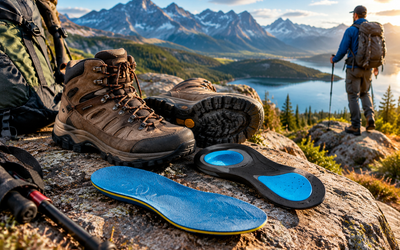
Most hiking boots come with a thick, cushioned insole that takes up vertical space in the toe box. Removing it or replacing it with a thinner aftermarket insole (like Superfeet Carbon) can give your toes an extra 2-3mm of vertical clearance. This is especially helpful if you have high-volume feet or hammertoes.
Wear the Right Socks
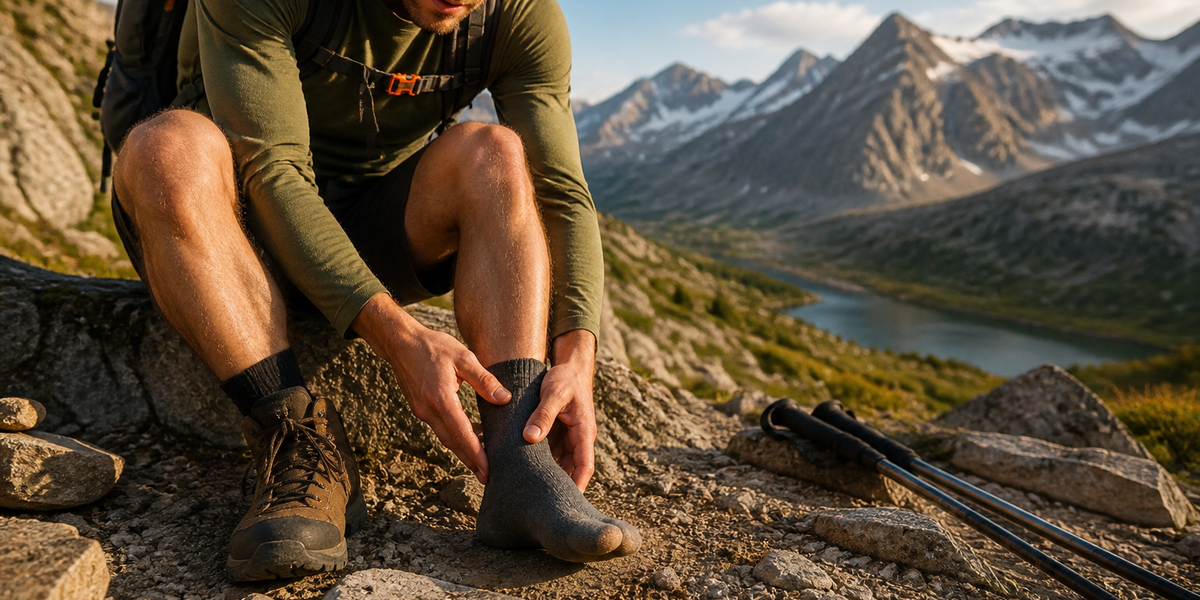
Thick, cushioned hiking socks reduce available toe room. If your boots feel tight, try thinner merino wool socks with targeted cushioning only in the heel and ball of the foot. You'll gain toe space without sacrificing blister protection.
Heat-Mold the Toe Box (Leather Only)
Full-grain leather boots can be heat-molded to expand the toe box slightly. Some outdoor retailers offer this service, or you can DIY with a hairdryer and boot stretchers. This does NOT work on synthetic boots—the material won't stretch.
Accept That the Boot Doesn't Fit
If you've tried lacing adjustments, thinner socks, and insole swaps, and your toes are still cramped, the boot's last doesn't match your foot. Return it and try a brand with a different last shape. Fighting a bad fit leads to injury—better to find the right boot now than suffer through a season of toe pain.
Frequently Asked Questions
Should hiking boots feel tight at first?
No. Hiking boots should feel snug in the heel and midfoot but never tight or pinching anywhere, especially not in the toe box. If your toes feel compressed when standing still in the store, the fit is wrong. Boots may soften slightly with wear, but they will not expand enough to fix a fundamentally tight fit.
How much room should I have in the toe of a hiking boot?
You need a thumb's width (roughly half an inch) of space between your longest toe and the front of the boot when standing. This space allows your foot to slide forward on descents without jamming your toes. Test this by standing with your heel against a wall in an unlaced boot—your toes should not touch the front.
Can I stretch hiking boots that are too tight?
Full-grain leather boots can be stretched slightly using heat, stretching spray, or professional boot-stretching services. Synthetic and mesh boots cannot be stretched—what you see is what you get. If a synthetic boot is too tight in the store, it will remain too tight on trail.
Do feet swell during long hikes, and how does that affect toe fit?
Yes, feet swell 5-8% over the course of a long hike due to increased blood flow and impact. This is why you need that extra thumb's width of space in the toe box. A boot that feels "perfect" in the store may become painfully tight after 10 miles when your feet have swollen.
Is it better to buy hiking boots in wide width or just size up?
If you have wide feet, always choose a wide-width model (EE) over sizing up in standard width (D). Sizing up adds length but doesn't proportionally add width in the toe box, leading to heel slip and still-cramped toes. Wide-width models are engineered with more volume throughout the forefoot.
Final Thoughts
Tight toes in hiking boots are fixable, but the fix starts with honest assessment: is this a lacing issue, a sock issue, or a fundamental mismatch between your foot shape and the boot's last? Most toe pain traces back to sizing boots while standing flat instead of accounting for downhill slide, or choosing a boot last that's too narrow for your forefoot.
If you're shopping for new boots, prioritize toe box fit as highly as ankle support. A boot that crushes your toes is a boot you won't wear. Test boots on an incline in the store, size with thick socks, and don't hesitate to try wide-width models if standard widths have failed you in the past. The right boot should feel supportive and secure without any toe pressure, even after hours on trail.
For hikers struggling with current boots, start with lacing adjustments and insole swaps before replacing the entire boot. But if those fixes don't work, move on—there's a boot out there with the right last for your foot.
Editor's Choice
KEEN Men's Targhee III Mid Waterproof Hiking Boot — the widest toe box in this category, purpose-built to eliminate cramping for hikers who've struggled with tight forefoot fits in other brands.
Merrell Men's Moab 3 Mid Waterproof Hiking Boot — best value for standard-width feet with break-in-free comfort and a moderate toe box that works for most foot shapes at $140.