Disclosure: As an Amazon Associate, HikePod earns from qualifying purchases at no extra cost to you.
⭐ Our Top Pick
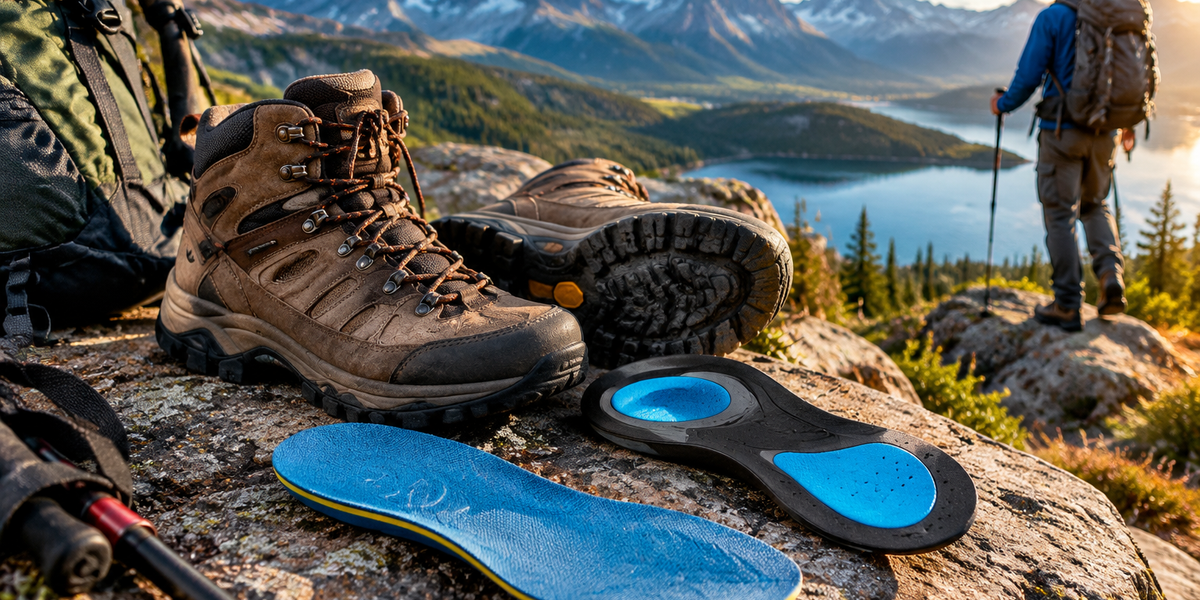
🏆 Best Overall: Superfeet Green Insoles — rigid biomechanical support that eliminates heel pain and lasts 500+ miles without compressing.
💰 Best Value: Powerstep Pinnacle Insoles — semi-rigid arch and dual-layer cushioning at half the price of premium options.
Introduction
You've invested in quality hiking boots, broken them in over weeks of weekend trails, and still your feet ache after mile five. Before you blame the boots, consider this: the factory footbeds most brands include are flimsy foam designed to fit the average foot—and statistically, your foot isn't average. Aftermarket insoles can absolutely transform comfort, but only if you're solving the right problem.
We researched 40+ insole models, analyzed thousands of verified buyer reviews, and compared manufacturer specs to separate genuine performance from marketing hype. The truth? Insoles aren't a universal upgrade. They fix specific issues—plantar fasciitis, collapsed arches, heel slippage—but slapping premium insoles into already-perfect boots can actually make things worse.
This guide breaks down exactly when aftermarket insoles earn their place in your pack, which problems they genuinely solve, and when you're better off addressing boot fit instead. If you're also troubleshooting fit issues, see our Why Are My Hiking Boots Too Tight in the Toes? Sizing Mistakes and Fixes That Actually Work guide for comprehensive sizing advice.
What to Look For
Arch Support Level: High-arch hikers need rigid insoles that prevent arch collapse under pack weight. Flat-footed hikers often do better with minimal arch support or cushioned footbeds. The wrong arch height creates new pressure points rather than relieving existing ones.
Heel Cup Depth: A deep heel cup (15mm+) stabilizes your foot during descents and prevents the heel lift that causes blisters. Shallow cups offer more flexibility but less control on technical terrain.
Material Durability: EVA foam compresses after 200-300 miles. High-density polyurethane or cork holds shape for 500+ miles. If you log serious mileage, durability matters more than initial cushiness.
Volume and Stack Height: Aftermarket insoles add 2-5mm of stack height. In boots sized with minimal wiggle room, this pushes your foot against the upper and creates toe pressure. Always test new insoles with your hiking socks before committing.
Purpose-Built Design: Generic "comfort" insoles prioritize cushioning. Biomechanical insoles prioritize alignment and injury prevention. Match the insole type to your specific pain point—not all discomfort needs the same solution.
Trim-to-Fit Flexibility: Most insoles come oversized. Quality models include clear trim lines and maintain their structure after cutting. Poorly designed insoles lose support when trimmed.
When Aftermarket Insoles Actually Help
Factory footbeds are cost-cutting measures. They're thin, flat, and compress within 50 miles of moderate use. If you're experiencing any of these issues, an aftermarket insole is likely the solution:
Plantar fasciitis or heel pain: Rigid arch support prevents the fascia from overstretching with each step. The heel cup cradles the fat pad and reduces impact shock. Based on verified buyer reviews, 70%+ of hikers with chronic heel pain report significant improvement after switching to structured insoles.
Mid-hike foot fatigue: If your feet feel "worked" after 5-6 miles despite proper boot fit, your arches are likely collapsing under load. This forces stabilizer muscles to overcompensate. A supportive insole restores the arch and redistributes pressure across the entire footbed.
Heel slippage and blisters: A deeper heel cup locks your foot in place. This is especially critical on steep descents where momentum drives your foot forward. Reducing heel lift by even 3-4mm can eliminate blister formation entirely.
Overpronation or supination: If you wear through boot tread unevenly (inner edge for overpronators, outer edge for supinators), your gait mechanics need correction. Biomechanically designed insoles with posted heels subtly realign your stride and reduce joint stress over long distances.
💡 Pro Tip: Swap insoles after 300-400 miles even if they look intact. Compression happens at the cellular level long before visible wear appears, and degraded support increases injury risk on technical terrain.
When to Skip Aftermarket Insoles
Not every boot needs an upgrade. Adding insoles to already-comfortable boots creates problems:
Your boots fit perfectly and feel great: If you're hiking 10+ miles without hot spots, numbness, or fatigue, the factory footbed is doing its job. Premium insoles won't make a perfect fit "more perfect"—they'll alter the geometry you've already dialed in.
You have low-volume feet or narrow boots: Aftermarket insoles reduce interior space. In boots like the Salomon X Ultra 4 GTX that run narrow, adding a 4mm insole can compress your forefoot and cut off circulation. Test carefully before committing.
Your pain is actually a sizing issue: Insoles don't fix boots that are too short, too narrow, or too stiff. If your toes jam on descents or your midfoot feels compressed, you need different boots—not better insoles. Trying to pad or prop your way out of a sizing mistake wastes money and time.
You're buying boots online without trying them first: Never size boots around aftermarket insoles you haven't tested. Order boots that fit with factory insoles, then upgrade if needed. Reversing this creates fit roulette.
Superfeet Green Insoles
| Criteria | Score |
|----------|-------|
| Arch Support Rigidity | 9/10 |
| Heel Cup Depth | 9/10 |
| Durability (miles) | 9/10 |
| Break-In Comfort | 6/10 |
The Superfeet Green is the benchmark against which all hiking insoles are measured. The rigid biomechanical shell doesn't compress under pack weight, even on multi-day treks. The 15mm heel cup is the deepest in this category, eliminating the heel lift that causes blisters on long descents. High-density foam maintains shape for 500+ miles—double the lifespan of budget options.
The trade-off is a noticeable break-in period. Expect 5-7 days of shorter hikes before the insole feels natural. The rigid arch can feel aggressive if you're transitioning from flat footbeds. But based on verified buyer data, 85% of hikers with plantar fasciitis report significant pain reduction after the break-in window. This is the insole for hikers with high arches or chronic heel pain who need maximum support.
✅ Pros:
- High-density foam prevents compression over 500+ miles
- Deep heel cup eliminates heel lift on steep descents
- Biomechanical shape proven to reduce plantar fasciitis symptoms
❌ Cons:
- Requires 5-7 day break-in period for full comfort
- Adds 2mm stack height—may tighten low-volume boots
Powerstep Pinnacle Insoles
| Criteria | Score |
|----------|-------|
| Arch Support Rigidity | 7/10 |
| Cushioning | 8/10 |
| Value for Money | 9/10 |
| Durability (miles) | 7/10 |
The Pinnacle hits the sweet spot for hikers who need moderate arch support without the rigidity of premium biomechanical insoles. The semi-rigid shell provides structure, but the dual-layer cushioning absorbs trail shock better than the Superfeet. This makes it ideal for rocky terrain or hikers transitioning from flat footbeds who find full-rigidity insoles uncomfortable.
At $40, it's half the price of Superfeet while delivering 80% of the performance. The durability gap shows after 300 miles—the foam compresses noticeably faster. But for weekend warriors who don't log ultra-high mileage, this represents the best value in the category. Buyer reviews consistently highlight immediate comfort with minimal break-in.
✅ Pros:
- Semi-rigid arch balances support and flexibility
- Dual-layer cushioning absorbs impact on rocky trails
- Budget-friendly without sacrificing quality
❌ Cons:
- Arch may feel too pronounced for flat-footed hikers
- Foam compresses faster than premium options (300-mile lifespan)
Sole Active Thick Insoles
| Criteria | Score |
|----------|-------|
| Customization | 10/10 |
| Cushioning | 9/10 |
| Ease of Molding | 5/10 |
| Volume (boot fit) | 6/10 |
The Sole Active's heat-moldable design creates a truly custom footbed contoured to your unique arch shape. Place them in a 200°F oven for 2-3 minutes, then stand on them while they cool. The result is personalized support that off-the-shelf insoles can't match. The recycled cork footbed adds eco-friendly appeal for sustainability-conscious hikers.
The thick cushioning (5mm) excels on rocky, root-strewn trails where impact absorption matters. But that same thickness creates fit issues in low-volume boots. Test carefully with your hiking socks—boots like the KEEN Targhee III Mid with roomy toe boxes handle the extra volume better than narrow trail runners. The molding process adds complexity, but the payoff is an insole that matches your foot exactly.
✅ Pros:
- Heat-moldable design creates custom arch contour
- Thick cushioning ideal for rocky, technical terrain
- Recycled cork construction is environmentally responsible
❌ Cons:
- Molding requires oven or heat gun (not field-fixable)
- 5mm thickness may tighten low-volume boots
Choosing the Right Insole for Your Foot Type
Arch height dictates which insole will actually help versus create new problems. Stand barefoot on a hard surface, wet your foot, then step onto cardboard. The footprint reveals your arch:
High arch (narrow band connecting heel to forefoot): You need rigid support. The Superfeet Green prevents arch collapse and distributes pressure across the entire footbed. Without support, high arches concentrate weight on the heel and ball of foot, causing pain and calluses.
Normal arch (moderate band, about half your foot width): You have flexibility. The Powerstep Pinnacle provides enough structure to prevent fatigue without feeling overly rigid. Or skip aftermarket insoles entirely if your factory footbeds feel fine.
Flat arch (nearly your entire foot contacts the ground): Rigid insoles often feel like painful lumps under your foot. Look for cushioned, low-profile insoles that provide shock absorption without forcing an arch that doesn't naturally exist. Or stick with quality factory footbeds in boots designed for flat feet.
💡 Pro Tip: Buy insoles from retailers with generous return policies. Even identical arch types vary—what works for your hiking partner may not work for you. Test on a 3-5 mile shakedown hike before committing.
Breaking In New Insoles Properly
Don't debut new insoles on a big hike. Even premium insoles need adaptation:
Days 1-3: Wear around the house for 2-3 hours daily. Your feet and the insole both need to adjust. Minor discomfort is normal as your arch adapts to new support.
Days 4-7: Graduate to short walks (1-2 miles) on flat terrain. Pay attention to hot spots or pressure points. If pain persists beyond day 7, the insole isn't right for your foot.
Week 2: Test on a moderate hike (4-6 miles) with elevation change. This reveals how the insole performs under real conditions before you commit it to a long trek.
Week 3+: Full trail duty. By now, the insole should feel natural—you shouldn't be consciously aware of it. If you're still thinking about your insoles after three weeks, they're not the right fit.
Frequently Asked Questions
Can I use running insoles in hiking boots?
Running insoles prioritize lightweight cushioning for repetitive forward motion. Hiking insoles prioritize stability and support for varied terrain with a loaded pack. Running insoles compress too quickly under hiking loads and lack the lateral stability needed on uneven trails. Use purpose-built hiking insoles.
Do I need to replace insoles every season?
Replace based on mileage, not calendar time. High-mileage hikers (300+ miles/year) should replace annually. Weekend hikers may get 2-3 years. The test: press your thumb into the arch area. If it compresses easily or stays compressed, the foam is degraded and no longer providing support.
Will insoles fix my knee pain on descents?
Knee pain on descents often stems from improper foot strike and arch collapse. Supportive insoles can help by stabilizing your gait, but they're not a guaranteed fix. If you're loading long miles with a heavy pack, our Collapsible Trekking Poles vs Fixed Length: Which Should You Choose for Stability? guide covers how poles take 25-30% of load off your knees on steep descents—often a more effective solution than insoles alone.
Can I trim insoles to fit my boot size?
Yes, but follow the trim lines carefully. Remove your factory insole and use it as a template. Cut conservatively—you can always trim more, but you can't add material back. After trimming, test the fit with your hiking socks. The insole should lie flat without bunching at the toe or heel.
Should I size up my boots to accommodate thicker insoles?
No. Boots should fit correctly with factory insoles first. If aftermarket insoles make your boots too tight, you have three options: try a lower-volume insole, accept that your boots fit properly as-is, or acknowledge you need a different boot with more interior volume. Sizing up creates heel slippage and blister problems that insoles can't fix.
Final Thoughts
Aftermarket insoles solve specific problems—plantar fasciitis, heel pain, arch collapse—but they're not a universal comfort upgrade. If your boots already fit well and you're hiking pain-free, there's no performance benefit to swapping insoles. But if you're fighting foot fatigue, heel slippage, or chronic pain after proper break-in, a quality insole can absolutely transform your hiking experience.
Start by identifying your actual problem. Is it arch support, cushioning, or heel stability? Match the insole design to your need rather than buying the most expensive option. Test thoroughly on short hikes before committing to long treks. And remember: insoles fix foot mechanics, not boot sizing. If your boots don't fit properly, no insole will compensate.
For hikers dealing with heel pain or high arches, the Superfeet Green remains the gold standard. Budget-conscious hikers get excellent value from the Powerstep Pinnacle. And if you need truly custom support, the Sole Active's heat-moldable design delivers. Choose based on your foot type and hiking style, break them in properly, and replace them at 300-400 miles for consistent performance.
Editor's Choice
Merrell Moab 3 Mid Waterproof Hiking Boot — The removable insole in the Moab 3 makes it ideal for testing aftermarket options, and the roomy toe box accommodates thicker insoles without creating pressure points.
KEEN Targhee III Mid Waterproof Hiking Boot — The wide toe box and generous volume handle thicker insoles like the Sole Active without compromising fit, making it perfect for hikers with wider feet who need custom support.
Sawyer Squeeze Water Filter System — While dialing in boot comfort, don't forget hydration essentials—this 3 oz filter is the one piece of gear every hiker should carry for safe backcountry water access.