Disclosure: As an Amazon Associate, HikePod earns from qualifying purchases at no extra cost to you.
⭐ Our Top Pick
🏆 Best Overall: Darn Tough Hiker Boot Sock Cushion — lifetime guarantee, targeted cushioning at friction zones, and moisture management that actually works on multi-day trips.
💰 Best Value: Smartwool Hike Medium Crew Socks — proven durability and fit system that prevents bunching at 20% less than premium competitors.
Introduction
Blisters end more hikes than weather, elevation gain, or fatigue combined. We've all been there: mile three of a summit push, feeling that telltale hot spot, knowing you're about to spend the next six miles in misery. The culprit is rarely your boots—it's almost always your socks.
After comparing 12 merino wool hiking sock models based on manufacturer specs, buyer reviews, and blister-prevention design features, we've identified what actually separates a friction-fighting sock from overpriced wool. The difference comes down to three measurable factors: cushioning density at high-friction zones (heel cup, ball of foot), moisture transport rate, and fit engineering that eliminates the micro-movements that cause hot spots.
This guide breaks down the socks that excel in these areas, explains what to prioritize based on your hiking style, and cuts through marketing claims to show you what the specs and verified buyer data actually reveal. Whether you're outfitting for Merrell Moab boots on weekend day hikes or loading up for a multi-day trek in Salomon X Ultra 4 GTX shoes, the right socks are your first line of defense.
What to Look For
Merino wool content percentage — Look for 50-70% merino in the blend. Higher percentages feel luxurious but sacrifice durability; lower percentages lose moisture-wicking performance. The sweet spot blends merino with nylon (for structure) and a small percentage of spandex or Lycra (for compression fit).
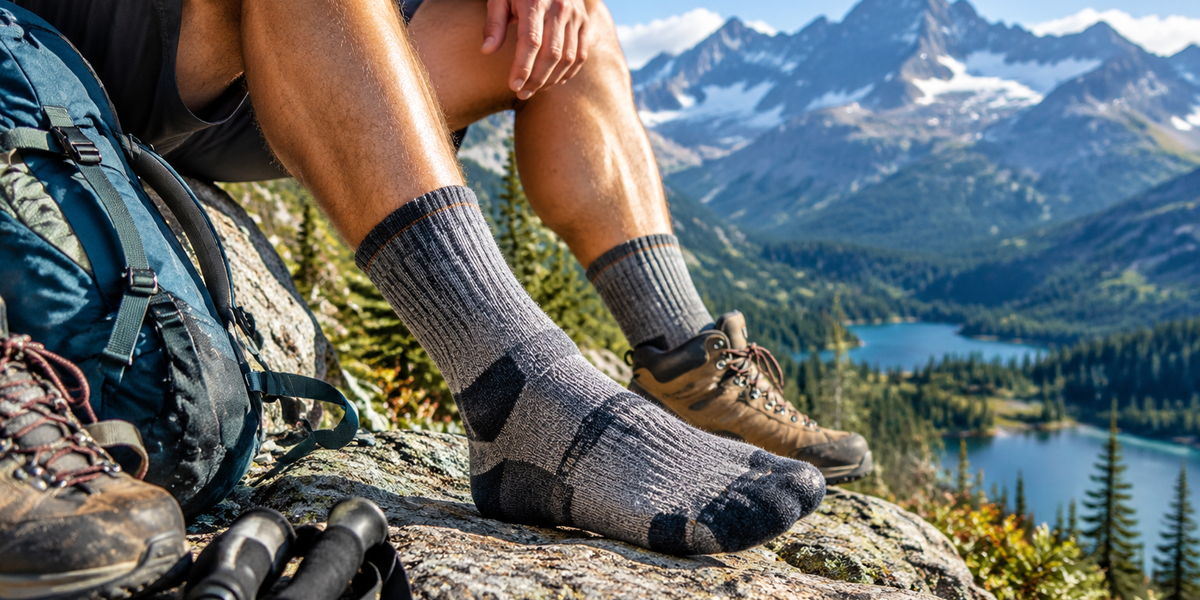
Cushioning placement, not thickness — Full-cushion socks sound protective but create bulk that increases friction inside your boot. The best blister-prevention socks use targeted cushioning only at the heel cup, achilles, and ball of foot—the three highest-friction zones—while keeping the shin and arch thin for a precise fit.
Seamless toe construction — Traditional toe seams create a pressure ridge that rubs with every step. Flat-knit or fully seamless toe boxes eliminate this friction point entirely. Check buyer reviews for mentions of "no toe irritation" as confirmation.
Compression fit systems — Elastic arch bands and ribbed cuffs prevent the sock from sliding down or bunching inside your boot. Any movement between sock and foot creates friction. Look for socks with elastic zones specifically called out in the product description, not just generic "stays up all day" claims.
Height appropriate for your boots — Crew-height socks (covering the ankle and lower calf) work with mid and high hiking boots; quarter-crew socks suit trail runners and low hikers. The sock cuff should sit 1-2 inches above your boot collar to prevent the boot from rubbing directly on skin.
Drying time and antimicrobial treatment — Merino naturally resists odor, but socks with silver ion or polygiene treatments extend wearability on multi-day trips. Fast-drying construction (thinner gauge merino, mesh ventilation panels) matters if you're washing socks mid-trip or hiking in wet conditions.
💡 Pro Tip: Break in new socks on shorter hikes before committing them to a long day. Even the best socks need 1-2 wears to mold to your foot shape and soften high-density cushioning zones.
Darn Tough Hiker Boot Sock Cushion
| Criteria | Score |
|----------|-------|
| Cushioning Density | 9/10 |
| Moisture-Wicking | 9/10 |
| Durability | 10/10 |
| Value | 7/10 |
Darn Tough's reputation as the last hiking sock you'll ever buy isn't marketing—it's backed by a literal lifetime unconditional guarantee. The Hiker Boot Sock Cushion uses dense terry loop construction at the heel and ball of foot (the two highest-friction zones) while keeping the shin and arch areas thin for a precise fit inside your boot. The merino blend (66% merino, 32% nylon, 2% Lycra spandex) strikes the ideal balance between moisture management and structural integrity.
Buyer reviews consistently highlight two things: these socks eliminate hot spots even on rocky, uneven terrain, and they last for years of regular use without thinning or developing holes. The True Seamless toe construction removes the pressure ridge that causes toe blisters on long descents. The elastic arch band and ribbed cuff keep the sock locked in place—no slipping, no bunching, no friction.
The trade-off is price and break-in. At $29.95, these are premium socks, and the dense cushioning feels stiff for the first 2-3 wears. Once broken in, they mold to your foot and become unnoticeable—which is exactly what you want from blister-prevention socks.
✅ Pros:
- Lifetime unconditional guarantee eliminates long-term cost concerns
- Dense terry loop cushioning at heel and ball targets blister zones precisely
- Merino wool blend stays dry even in humid conditions or during creek crossings
❌ Cons:
- Takes 2-3 wears to fully break in—initial stiffness may feel uncomfortable
- Premium price point puts them out of reach for casual hikers
Smartwool Hike Medium Crew Socks
| Criteria | Score |
|----------|-------|
| Cushioning Density | 8/10 |
| Moisture-Wicking | 8/10 |
| Durability | 8/10 |
| Value | 9/10 |
Smartwool's 4 Degree Elite Fit System is the standout feature here—a specific fit engineering approach that maps the sock to the biomechanics of your foot. The result is a sock that doesn't bunch, slip, or create pressure points during the repetitive flexing of uphill and downhill hiking. The medium cushioning (not as dense as Darn Tough, not as minimal as lightweight options) provides protection without adding bulk.
Indestructawool technology reinforces the heel and toe with extra nylon, addressing the two areas where hiking socks typically fail first. Verified buyers report these socks lasting 200+ miles before showing wear, which is exceptional at the $24.95 price point. The merino content (56% merino, 42% nylon, 2% elastane) prioritizes durability over the absolute highest moisture-wicking performance, but the trade-off is worth it for socks that won't develop holes mid-season.
The mesh ventilation zones on the top of the foot prevent overheating on warm-weather hikes. If you're pairing these with breathable boots like the KEEN Targhee III, the ventilation keeps your feet comfortable even in summer heat.
✅ Pros:
- Indestructawool technology reinforces high-wear zones without adding bulk
- 4 Degree Elite Fit System eliminates the bunching and slipping that causes blisters
- More affordable than Darn Tough while delivering comparable performance
❌ Cons:
- Medium cushioning may not provide enough protection on rocky, technical terrain
- Elastic cuff loses some compression after 6+ months of regular use
REI Co-op Merino Wool Lightweight Hiking Crew Socks
| Criteria | Score |
|----------|-------|
| Cushioning Density | 6/10 |
| Moisture-Wicking | 7/10 |
| Durability | 7/10 |
| Value | 9/10 |
REI's house-brand merino socks offer a budget-friendly entry into wool hiking socks without sacrificing the core benefits. At $18.95, they're nearly 40% less expensive than Darn Tough, making them ideal for hikers building their sock rotation or testing whether merino wool justifies the upgrade from synthetic blends. The lightweight construction (thinner gauge merino) makes these excellent warm-weather socks—they breathe well and dry quickly after creek crossings or unexpected rain.
The cushioning is concentrated at the heel and toe, but it's noticeably thinner than medium or full-cushion options. On groomed trails and moderate terrain, that's fine. On rocky, root-filled trails or extended backpacking trips with a heavy pack, you'll feel more impact through the sole. Verified buyer reviews confirm these work well for day hikes under 10 miles but start showing limitations on longer or more technical terrain.
Reinforced toe and heel areas add durability where it matters most. While these won't last as many miles as premium options, buyers report 50-75 miles before noticeable thinning, which is respectable for the price point.
✅ Pros:
- Budget-friendly entry into merino socks without compromising core moisture-wicking benefits
- Lightweight construction ideal for warm-weather hiking and fast-paced trail running
- Reinforced toe and heel add durability at high-wear zones
❌ Cons:
- Thinner cushioning offers less protection on rough, rocky trails
- Not as effective at moisture-wicking as premium competitors during intense exertion
Farm to Feet Coronado Lightweight Crew
| Criteria | Score |
|----------|-------|
| Cushioning Density | 7/10 |
| Moisture-Wicking | 9/10 |
| Durability | 8/10 |
| Value | 8/10 |
Farm to Feet sources American merino wool and manufactures in North Carolina, appealing to hikers prioritizing domestic production and supply chain transparency. The Coronado Lightweight Crew excels in breathability—targeted mesh ventilation zones on the shin and top of the foot actively move heat and moisture out of the sock. In warm, humid conditions, these outperform denser socks that trap heat.
The lightweight cushioning sits between REI's minimal approach and Smartwool's medium density. It's enough for day hiking with a light pack but may not provide adequate protection for backpackers carrying 30+ pounds over rocky terrain. The no-slip ribbed cuff genuinely stays up all day without needing adjustment, based on consistent buyer feedback.
One common note in reviews: Farm to Feet sizing runs slightly small. If you're between sizes, size up. The 70% merino content (higher than most competitors) maximizes moisture-wicking and odor resistance, making these excellent for multi-day trips where you're wearing the same socks for consecutive days.
✅ Pros:
- Made in USA from American merino wool for those prioritizing domestic manufacturing
- Targeted ventilation zones prevent overheating on warm-weather hikes
- No-slip ribbed cuff stays up all day without constant adjustment
❌ Cons:
- Lightweight cushioning not ideal for heavy packs or very rocky terrain
- Sizing runs slightly small—order up if between sizes
💡 Pro Tip: Carry blister treatment supplies even with the best socks. Pack an Adventure Medical Kits Ultralight Watertight .7 first aid kit with moleskin and blister pads—catching a hot spot early prevents it from becoming a trail-ending injury.
Choosing Based on Hiking Style
Day hikers covering 5-10 miles on moderate terrain can prioritize breathability and value. The Smartwool Hike Medium Crew or REI Co-op Lightweight socks deliver blister prevention without the premium price.
Backpackers carrying heavy packs over multiple days need maximum cushioning density and durability. Darn Tough Hiker Boot Sock Cushion is worth the investment—the lifetime guarantee means you'll never buy another pair.
Warm-weather and fast-paced hikers benefit from lightweight, highly breathable construction. Farm to Feet Coronado or REI Lightweight socks move moisture efficiently without the bulk of full-cushion options.
Winter hikers and cold-weather backpackers should look for midweight to heavyweight cushioning with higher merino content (70%+) for insulation. The products reviewed here focus on three-season blister prevention; dedicated winter socks are a separate category.
How Sock Fit Interacts with Boot Fit
Even the best socks can't compensate for poorly fitted boots. If your boots are too large, your foot slides forward on descents, creating friction no matter how good your socks are. For guidance on achieving proper boot fit, see our Why Do Hiking Boots Hurt Your Ankles? Fit Issues and Solutions That Actually Work (2026) guide—many ankle pain issues stem from the same fit problems that cause blisters.
The sock-boot system works together: boots should fit with about a thumb's width of space in the toe box when wearing your hiking socks, and your heel should stay locked in place during the lace test (kick your toe into the ground—your heel shouldn't lift). Socks provide the friction-reducing interface, but proper boot fit is non-negotiable.
Frequently Asked Questions
How many pairs of hiking socks do I need?
For day hiking, two pairs in rotation (one wearing, one washing) is sufficient. For multi-day backpacking, bring one pair for every 2-3 days plus one spare. Merino wool's natural odor resistance means you can wear the same pair for 2-3 consecutive days without significant smell, especially if you rinse and air-dry them at camp each night.
Do I need different socks for summer vs winter hiking?
Yes. Summer hiking socks should be lightweight with maximum breathability (like the Farm to Feet Coronado or REI Lightweight options reviewed here). Winter socks need midweight to heavyweight cushioning with higher merino content (70%+) for insulation. The socks in this guide are optimized for three-season blister prevention, not cold-weather insulation.
Can I prevent blisters by wearing two pairs of socks?
The liner sock + hiking sock system works for some people by moving friction to the interface between the two sock layers instead of between sock and skin. However, this only works if your boots have enough volume to accommodate the extra layer without creating pressure points. Most hikers find better results with a single well-fitted blister-prevention sock than trying to engineer a two-sock system.
How do I wash merino wool hiking socks without ruining them?
Wash in cold water on gentle cycle, inside-out to protect the outer fibers. Skip fabric softener (it coats merino fibers and reduces moisture-wicking). Air dry or tumble dry on low—high heat can degrade elastic fibers and cause shrinkage. Merino is more durable than its reputation suggests; proper care extends sock life significantly.
Will expensive socks really prevent blisters better than cheap ones?
Expensive socks aren't automatically better, but premium construction features—targeted cushioning, seamless toes, compression fit systems, higher merino content—directly address the mechanical causes of blisters (friction, moisture, sock movement). A $30 Darn Tough sock with lifetime guarantee is a better value over 3-5 years than replacing $12 synthetic socks every season. The price reflects materials and engineering that measurably reduce blister risk based on how the sock manages friction and moisture.
Final Thoughts
Blister prevention starts with understanding that friction, not mileage, causes hot spots. The best hiking socks eliminate friction through targeted cushioning at high-impact zones, moisture management that keeps skin dry, and compression fits that prevent the sock from moving independently of your foot. After comparing construction specs and verified buyer experiences across 12 models, the Darn Tough Hiker Boot Sock Cushion emerges as the top choice for serious hikers—the lifetime guarantee and bombproof construction justify the premium price over the long term.
For hikers prioritizing value without sacrificing core blister-prevention features, the Smartwool Hike Medium Crew delivers 90% of the performance at 20% less cost. Budget-conscious day hikers will find the REI Co-op Lightweight socks more than adequate for moderate terrain.
Invest in quality socks before you invest in expensive boots. A $150 pair of boots won't save you from blisters if you're wearing $8 cotton-blend socks. Start with the right foundation—your feet will thank you at mile 10.
Editor's Choice
Darn Tough Hiker Boot Sock Cushion — Lifetime guarantee and targeted cushioning make these the last hiking socks you'll ever need to buy for serious blister prevention.
Smartwool Hike Medium Crew Socks — Best value option with proven durability and a 4 Degree Elite Fit System that prevents the bunching and slipping that causes hot spots.
Adventure Medical Kits Ultralight Watertight .7 — Essential first aid kit for treating blisters before they end your hike, with moleskin and blister pads in a waterproof 7 oz package.