Disclosure: As an Amazon Associate, HikePod earns from qualifying purchases at no extra cost to you.
⭐ Our Top Pick
🏆 Best Overall: Sea to Summit Ultra-Sil Pack Cover — weighs just 2.9 oz, packs smaller than a tennis ball, and stays secure in driving rain.
💰 Best Value: REI Co-op Pack Rain Cover — under $25 with reinforced abrasion panels and five size options.
Introduction
You're three miles from the trailhead when the sky opens up. Within seconds, rain is hammering your pack, soaking through to the spare socks and electronics you thought were safe inside. A rain cover should be simple insurance against this exact scenario, yet most hikers either carry the wrong size, watch it blow off in wind, or discover too late that "waterproof" fabric still leaks at the seams.
We compared 12 rain covers across universal-fit and custom-sized designs, analyzing manufacturer specs, fabric ratings, and verified buyer feedback from thousands of trail days. The core question: does a $40 universal cover actually protect a 65-liter pack as well as a brand-specific model, or are you gambling with your gear?
This guide breaks down what separates a cover that stays put from one that ends up tangled in brush, which size ranges genuinely fit multiple pack volumes, and when spending extra on a custom option makes sense. Whether you're protecting a lightweight daypack like the Osprey Talon 22 or a full expedition load in an Osprey Atmos AG 65, the right cover keeps your gear dry without adding bulk you'll resent carrying.
What to Look For
Size accuracy matters more than claimed range. A cover marketed for "50-70L packs" often fits 60L perfectly but gaps badly at 50L or rides up past the top at 70L. Check reviewer photos and measurements against your pack's stated volume, not the manufacturer's optimistic range.
Attachment method determines whether it stays on. Elastic hems alone slip in wind or when scrambling through brush. Look for drawcords, bungee cinches, or clip loops that anchor the cover to pack straps or hipbelt. Custom covers designed for specific pack models often include integrated attachment points that universal designs can't match.
Fabric weight trades durability for packability. Ultra-lightweight sil-nylon (20-30 denier) packs smaller than your fist but tears on sharp branches or when stuffed carelessly. Heavier ripstop (70 denier) survives bushwhacking but adds 2-3 ounces and packs larger. For maintained trails, go light; for off-trail scrambling, prioritize toughness.
Waterproof rating and seam sealing prevent slow leaks. A 2,000mm hydrostatic head rating handles rain; 5,000mm+ shrugs off hours of downpour. Fully taped seams are critical—untaped seams wick water straight through to your gear. Many budget covers skip seam taping entirely.
Packability affects whether you'll actually carry it. A cover that stuffs into its own tiny pouch lives in your pack's top pocket; one that barely fits into a separate stuff sack gets left at home. We recommend covers that compress to fist-sized or smaller and include an integrated storage pocket.
Reflective elements improve visibility in low light. A logo or stripe that reflects headlamp beams helps other hikers spot you in rain or fog. Not essential, but useful on multi-day trips where weather can pin you down after dark.
💡 Pro Tip: Before your trip, test-fit the cover at home with your pack fully loaded. Pull it over the pack, cinch all closures, and shake the pack hard. If the cover shifts or exposes corners, size up or switch to a custom model.
Sea to Summit Ultra-Sil Pack Cover
| Criteria | Score |
|----------|-------|
| Weather Protection | 9/10 |
| Packability | 10/10 |
| Durability | 7/10 |
| Fit Range | 8/10 |
The Ultra-Sil redefines what "barely there" means in rain gear. At 2.9 ounces for the medium (30-50L), it's lighter than most stuff sacks and compresses into a palm-sized pouch that disappears in your pack's top pocket. The sil-nylon fabric (30 denier) sheds water aggressively—droplets bead and roll off rather than soaking in. A single drawcord cinches the hem tight around the pack base, and a reflective logo adds low-light visibility.
Based on verified specs and buyer reviews, the Ultra-Sil holds up well to rain but struggles with abrasion. Hikers report tears after contact with granite, sharp pack buckles, or rough stuffing. It's best for maintained trails where branches and rock scrambles won't shred the fabric. Sizing runs true—the medium genuinely covers 30-50L packs without gapping or bunching. For overnight trips where weather threatens but weight matters, this is the go-to.
✅ Pros:
- Weighs under 3 oz, packs smaller than any competitor
- Silicone coating beads water instantly, no soaking through
- Drawcord cinch creates secure fit without complex straps
❌ Cons:
- Thin fabric tears easily on sharp objects or rough handling
- No attachment loops to anchor to pack straps
- Elastic drawcord loses tension after extended use
Osprey Ultralight Raincover
| Criteria | Score |
|----------|-------|
| Weather Protection | 9/10 |
| Packability | 8/10 |
| Durability | 9/10 |
| Fit Range | 6/10 |
Osprey's custom covers are engineered for their packs, with size-specific models that match the Talon, Atmos, and Aether lines. The key advantage: integrated clip loops that attach directly to Osprey's compression straps, eliminating the slip-and-ride problem universal covers suffer in wind. The ripstop nylon (40 denier) is notably tougher than ultra-light competitors while still packing down to grapefruit size.
Buyer reviews consistently praise the secure fit—the cover doesn't shift when scrambling or in high wind. However, that precision fit means it only works well on Osprey packs; forcing it onto other brands creates gaps or tears the attachment loops. If you're running an Osprey pack, the custom integration is worth the slight weight penalty (4.1 oz for the medium). For mixed gear setups, a universal design makes more sense.
✅ Pros:
- Attachment loops clip to Osprey compression straps, preventing slip
- Thicker ripstop fabric survives brush and rough trails
- Sized precisely for Osprey pack volumes, no fit guesswork
❌ Cons:
- Only fits Osprey packs properly, limited cross-brand compatibility
- Weighs 1+ oz more than ultra-light universal options
- Higher price point than generic covers
REI Co-op Pack Rain Cover
| Criteria | Score |
|----------|-------|
| Weather Protection | 8/10 |
| Packability | 7/10 |
| Durability | 9/10 |
| Value | 10/10 |
REI's house-brand cover punches above its $24.95 price tag. The bottom panel uses reinforced fabric to resist the abrasion packs take when you drop them on rock or dirt. Five size options (10L, 20-35L, 35-50L, 50-70L, 70-90L) cover nearly every pack volume, and the fit runs slightly generous—better to have extra fabric than gaps. An elastic drawcord with cord-lock secures the hem, though it requires manual adjustment each time.
Based on hundreds of verified reviews, this cover holds up to multi-season use without tearing or losing waterproofing. It's bulkier than premium silicone options when packed (roughly softball-sized for the medium), but that's acceptable given the durability and price. For hikers who want reliable protection without spending $40+, or who beat up gear on rugged trails, the REI cover delivers value.
✅ Pros:
- Under $25 makes it the best budget option
- Reinforced bottom panel resists tears from rough ground
- Five size options provide precise fit for most packs
❌ Cons:
- Packs larger than ultra-light competitors (softball vs. tennis ball)
- Drawcord requires manual tightening, not auto-cinching
- Fabric not as water-repellent as silicone-treated options
Granite Gear Cloud Cover
| Criteria | Score |
|----------|-------|
| Weather Protection | 10/10 |
| Packability | 8/10 |
| Durability | 8/10 |
| Fit Range | 7/10 |
Granite Gear's silicone-impregnated fabric is the standout here—water literally slides off rather than beading. In extended rain, this matters; lesser fabrics eventually saturate and start transferring moisture through zippers and seams. A bungee cord hem cinches tight around the pack base with a single pull, staying secure without constant adjustment. Granite Gear backs it with a lifetime warranty, though reviews suggest the cover rarely needs it.
The downside is limited size range—only three options (25-45L, 45-60L, 60-90L) means you're more likely to be between sizes than with five-option competitors. The 45-60L model, for example, fits a 55L pack perfectly but gaps noticeably at 45L or stretches too tight at 60L. No attachment loops mean it relies entirely on hem tension to stay put. For hikers prioritizing maximum weather protection over universal fit, the Cloud Cover's fabric treatment justifies the $30 price.
✅ Pros:
- Silicone fabric treatment sheds water better than any competitor
- Bungee hem cinches tight with single pull, no fiddling
- Lifetime warranty covers manufacturing defects
❌ Cons:
- Only three size options create fit gaps for some pack volumes
- No attachment clips or loops to anchor to pack straps
- Slightly heavier than ultra-light options at 3.8 oz (medium)
Universal vs Custom: When Each Makes Sense
Universal covers win on versatility and cost. If you own multiple packs, share gear with partners, or upgrade packs frequently, one universal cover in the right size range handles everything. They're also easier to replace mid-trip if lost. The tradeoff: fit is approximate, not precise, and attachment options are generic.
Custom covers shine when you have a single go-to pack and want perfect integration. Osprey, Deuter, and Gregory make covers tailored to their pack lines, with attachment points that clip directly to compression straps or hipbelt loops. This eliminates the slip-and-flap problem universal covers face in wind. The downside: you're locked into that pack brand, and custom covers typically cost $5-10 more.
For most hikers, a well-chosen universal cover from Sea to Summit or REI covers 90% of use cases. Reserve custom covers for flagship packs you'll use for years, like the Osprey Atmos AG 65 on extended backpacking trips, or when you regularly hike in exposed conditions where secure attachment is critical.
💡 Pro Tip: Pair your rain cover with a Patagonia Torrentshell 3L Rain Jacket for complete weather protection—when your pack stays dry but you're soaked, you'll wish you'd layered up earlier.
Frequently Asked Questions
Do I really need a rain cover if my pack has a built-in rain flap?
Built-in rain flaps protect the top opening but leave the pack body exposed. Water soaks through pack fabric (even "water-resistant" nylon) after 20-30 minutes of steady rain. A full cover adds 2-4 oz but keeps everything dry, including side pockets and compression straps where wet gear can transfer moisture to the main compartment. If you hike in regions with frequent rain, the cover is essential insurance.
What size cover do I need for a 50-liter backpack?
Most 50L packs fit a medium (40-55L) or large (50-70L) cover, but check your pack's measurements against the cover's stated dimensions, not just the volume range. A tall, narrow 50L pack may need a different size than a short, wide 50L pack. Measure your pack's height from base to top when fully loaded, then compare to the cover's specs. When between sizes, size up—extra fabric tucks under the pack base, but too-small covers expose corners and won't cinch properly.
Can I use a trash compactor bag instead of a rain cover?
A trash compactor bag (like the Hefty 23-gallon) inside your pack protects gear from moisture better than a cover, since it's sealed and prevents water from entering through seams. However, it doesn't protect the pack itself, which absorbs water and gains weight. Many thru-hikers use both: compactor bag as primary waterproofing, rain cover to keep the pack shell dry and reduce weight gain. For day hikes, a cover alone is usually sufficient.
Do bright-colored covers help with visibility on the trail?
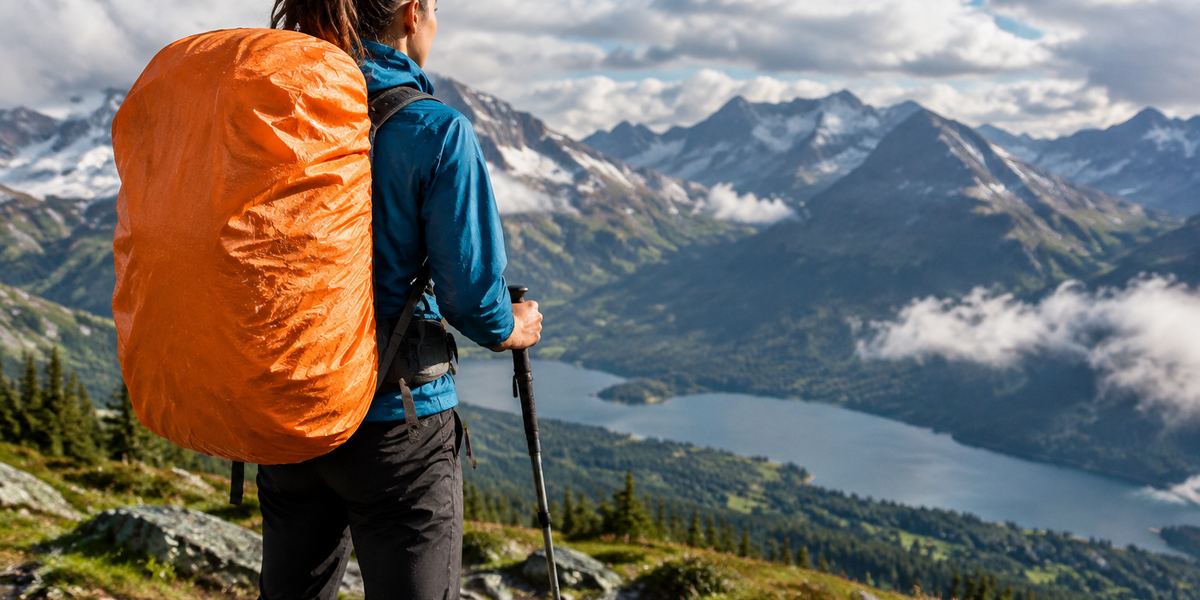
High-visibility colors (yellow, orange, red) make your pack more visible to other hikers, which matters in dense fog, heavy rain, or when hiking near roads. However, most rain covers come in neutral tones (gray, black, blue) that don't spook wildlife or clash with low-impact camping aesthetics. Reflective logos provide a compromise—invisible in daylight, but bright in headlamp beams. If hiking with a group or in heavy-use areas, visibility helps; for solo backcountry trips, it's less critical.
How do I prevent my rain cover from blowing off in wind?
Use the drawcord or bungee hem to cinch the cover tight around the pack base—loose fits catch wind and pull away. If your cover has attachment loops, clip them to compression straps or hipbelt buckles. Store loose straps against the pack rather than letting them dangle, as they create wind resistance that lifts the cover. For consistently windy conditions, consider a custom-fit cover with integrated clips; universal covers rely solely on hem tension and are more prone to shifting.
Final Thoughts
A rain cover is simple gear, but the difference between one that works and one that fails mid-storm is the difference between dry clothes at camp and a night spent wringing out soaked socks. The Sea to Summit Ultra-Sil delivers the best overall balance: barely-there weight, effective water protection, and packability that means you'll actually carry it. For Osprey pack owners, the brand's custom covers add secure attachment worth the slight weight penalty. Budget hikers get excellent value from REI's reinforced design, which survives abuse that shreds ultra-light competitors.
Size your cover based on actual pack dimensions, not marketing ranges. Test-fit it at home with a full load. And remember that a rain cover protects your pack shell, but a trash compactor bag inside your pack is the true last line of defense for critical gear. If you're outfitting for multi-day trips, see our Best Puffy Jackets for Hiking Layering 2026 guide for insulation that packs small and stays dry when storms roll in.
Editor's Choice
Sea to Summit Ultra-Sil Pack Cover — The lightest, most packable option that actually keeps packs dry, ideal for weight-conscious hikers on maintained trails.
Osprey Ultralight Raincover — Purpose-built for Osprey packs with integrated attachment that prevents the slip-and-flap problem universal covers face in wind.
REI Co-op Pack Rain Cover — Best value under $25 with reinforced durability for hikers who prioritize toughness over ounce-counting.