Disclosure: As an Amazon Associate, HikePod earns from qualifying purchases at no extra cost to you.
⭐ Our Top Pick
🏆 Best Overall: Merrell Men's Moab 3 Mid Waterproof Hiking Boot — true-to-size fit with a roomy toe box makes sizing straightforward for most feet.
💰 Best Value: Salomon Men's X Ultra 4 GTX Hiking Shoes — precision European fit rewards going half a size up for blister-free performance on technical trails.
Introduction
Nothing ruins a trail day faster than realizing your boots are the wrong size—too tight and you're nursing blisters by mile three; too loose and your toes slam into the front on every descent. The "half size up or down?" debate trips up even experienced hikers because the answer isn't universal. Boot construction, sock thickness, foot shape, and brand-specific quirks all shift the equation.
We've spent years comparing manufacturer sizing charts, analyzing verified buyer feedback across dozens of models, and tracking how different brands interpret "true to size." This guide cuts through the confusion with a decision framework that accounts for your specific foot type, the terrain you'll tackle, and the boots you're eyeing. By the end, you'll know exactly how to measure, when to trust your sneaker size, and which red flags mean you need to try the next size up or down.
What to Look For
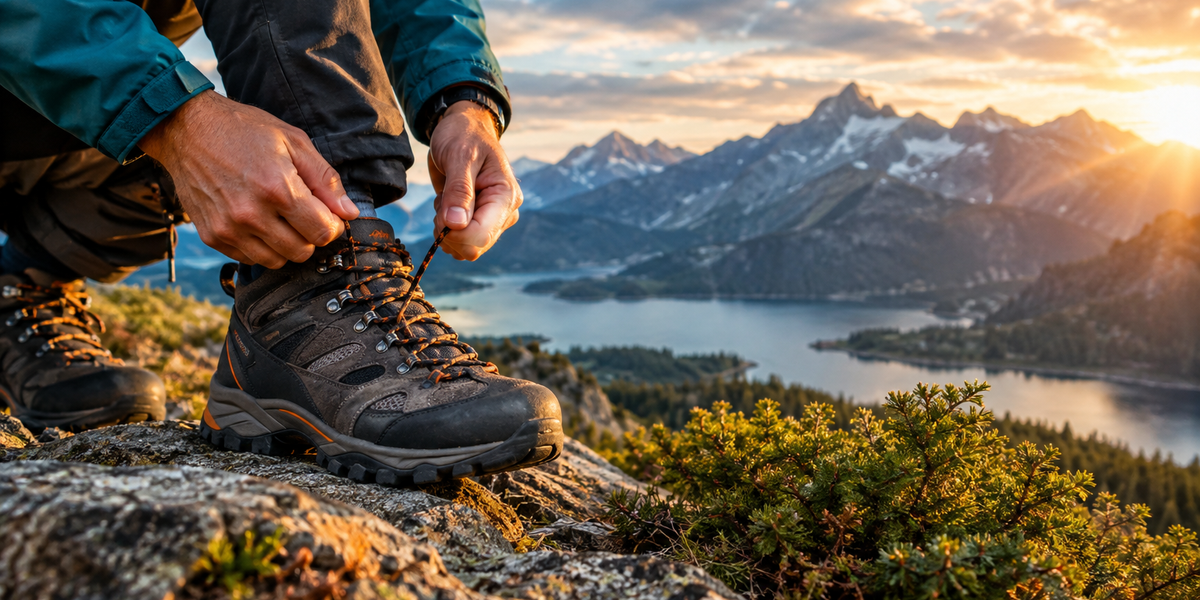
Thumb-Width Rule at the Toe — With your boot laced snugly and your foot pushed all the way forward, you should fit a thumb's width (roughly half an inch) between your heel and the boot's back. This wiggle room lets your foot slide forward on descents without jamming your toes. Less space invites black toenails; more space causes heel lift and blisters.
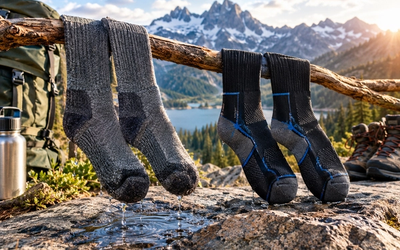
Sock Thickness Matters More Than You Think — A lightweight liner sock adds minimal bulk, but a midweight merino or synthetic hiking sock can shift you up half a size. Always size boots while wearing the socks you'll actually hike in. If you plan to layer liners under heavier socks for winter trips, test that combination before committing.
Break-In Reality Check — Modern hiking boots (especially those with synthetic uppers or Gore-Tex liners) don't "break in" the way full-grain leather boots once did. If a boot feels tight in the store, it will likely stay tight on the trail. Don't gamble on a boot "stretching out"—size up instead. For specific fit problems, see our guide on why hiking boots feel too tight in the toes.
Brand-Specific Sizing Quirks — European brands (Salomon, Scarpa, La Sportiva) often run narrow and a half size small compared to American brands like Merrell or Keen. If you're switching from a U.S. brand to a European one, expect to go up half a size. Read recent buyer reviews on the exact model—sizing can shift between versions of the same boot.
Volume vs. Length — Your foot might be a size 10 in length but need a "wide" or "high-volume" fit because of a high arch or broad forefoot. If a boot feels tight across the top or sides but has correct toe room, you need more volume, not a longer boot. Some brands offer wide versions; others build more room into their standard fit.
Test on an Incline — When trying boots on, walk down a ramp or stairs. Your toes should stay clear of the front. If they touch or press, go up half a size. Gravity pushes your foot forward on descents, and that's when poor sizing reveals itself.
💡 Pro Tip: Measure your feet in the afternoon or after a short walk. Feet swell throughout the day and during activity—sizing in the morning can lead to boots that feel tight when you actually hike.
Best Overall: Merrell Moab 3 Mid Waterproof
| Criteria | Score |
|----------|-------|
| True-to-Size Accuracy | 9/10 |
| Toe Box Room | 9/10 |
| Break-In Period | 10/10 |
| Wide-Foot Compatibility | 8/10 |
The Merrell Men's Moab 3 Mid Waterproof Hiking Boot has dominated the day-hiker market for over a decade because it runs predictably true to size and requires zero break-in. Verified buyers consistently report that their usual sneaker size translates directly—if you wear a 10.5 in running shoes, the Moab 3 in 10.5 will fit. The roomy toe box accommodates midweight socks without forcing you up a size, and the out-of-box comfort means sizing mistakes show up immediately (no guessing whether the boot will "loosen up").
Merrell's bellows tongue and padded ankle collar add structure without tightness, though buyers with narrow heels sometimes report slight lift until they dial in a heel-lock lacing technique. The Vibram outsole and waterproof membrane don't add the bulk that throws off sizing in cheaper boots—you get protection without sacrificing the natural fit. At $139.95, it's the safest first boot for anyone unsure whether to size up or stay true.
✅ Pros:
- Predictable true-to-size fit matches most athletic shoe sizes
- Generous toe box works with thicker socks without upsizing
- No break-in period removes the "will it stretch?" guesswork
❌ Cons:
- Narrower heel may require lacing adjustments for low-volume feet
- Wide-footed hikers occasionally need to go up half a size
Best for Narrow Feet: Salomon X Ultra 4 GTX
| Criteria | Score |
|----------|-------|
| Precision Fit | 10/10 |
| Heel Lock | 9/10 |
| Toe Room (Stock Sizing) | 6/10 |
| Sock Versatility | 7/10 |
The Salomon Men's X Ultra 4 GTX Hiking Shoes runs a half size small compared to typical U.S. athletic shoes—a quirk common to Salomon's entire lineup. Verified buyers overwhelmingly recommend going up half a size if you plan to wear anything thicker than a lightweight sock. The European last is built narrow through the midfoot and heel, which locks your foot in place on technical descents but can feel restrictive if you size exactly to your sneaker number.
Once you nail the sizing (usually half up from your normal), the X Ultra 4 delivers the most secure fit in this roundup. The Contagrip sole and low-cut design make it ideal for fast-paced day hikes where agility matters more than ankle support. At 12.5 oz per boot, the light weight also means less fatigue over long miles. If you have narrow feet or prioritize precision over roominess, Salomon's fit philosophy will feel custom-tailored—just don't expect it to match your running shoe size out of the box.
✅ Pros:
- Narrow European fit eliminates heel slip on steep descents
- Gore-Tex liner stays breathable without adding sizing bulk
- Once sized correctly, the precision fit enhances trail control
❌ Cons:
- Runs half a size small vs. most U.S. brands—requires upsizing
- Snug midfoot may feel tight with thick winter socks
The Half-Size-Up Rule: When It Applies and When It Doesn't
The classic advice—"go half a size up in hiking boots"—stems from the era of stiff, full-grain leather boots that took weeks to break in and cramped toes mercilessly. Modern boots with synthetic uppers, mesh panels, and pre-shaped footbeds don't behave the same way. Here's when the rule still holds:
Go Half a Size Up If:
- You hike steep descents regularly (gravity pushes feet forward)
- You wear midweight or expedition-weight socks
- The brand has a reputation for running small (Salomon, La Sportiva, Scarpa)
- You have wide feet or a high instep and the boot feels snug across the top
- You plan multi-day trips with a heavy pack (feet swell under load)
Stick with True to Size If:
- The boot already has a roomy toe box (Merrell, Keen, Altra)
- You wear lightweight or liner socks
- The brand is known for generous sizing (some Keen models run large)
- Your feet don't swell noticeably during activity
- The boot has zero break-in (modern synthetic uppers won't stretch)
Go Half a Size Down If:
- The boot feels loose in the heel with proper lacing
- You have low-volume (narrow, flat) feet and the boot gaps at the sides
- Verified reviews for that specific model mention "runs large"
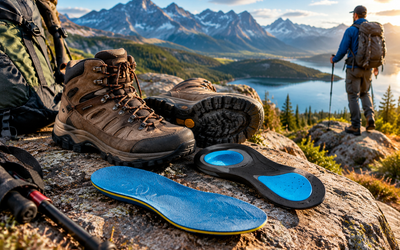
If you're between sizes, default to the larger option and use thicker socks or an aftermarket insole to fine-tune the fit. It's easier to fill extra space than to force your foot into a too-small boot. For insole-related fit adjustments, check out whether aftermarket insoles actually improve boot comfort.
💡 Pro Tip: Order two sizes online (your normal and a half up) and test both with the socks you'll hike in. Walk around the house, try stairs and slopes, and return the pair that doesn't pass the thumb-width test. Most retailers offer free returns on unworn boots.
Measuring Your Feet Correctly
Most sizing mistakes start with bad measurements. Here's how to get it right:
- Measure in the Afternoon — Feet swell throughout the day. A morning measurement can leave you with boots that feel tight by afternoon.
- Use a Brannock Device or Printable Sizing Chart — Bathroom scales and rulers are unreliable. Download a printable foot-measuring chart from a boot manufacturer (make sure it prints at 100% scale, not "fit to page").
- Measure Both Feet — Your feet aren't identical. Size to the larger foot.
- Wear Your Hiking Socks — Measure with the socks you'll actually wear on the trail. A thick sock can shift you up half a size.
- Check Width and Arch Length — Length is only part of the equation. If you have a wide forefoot or high arch, note that on the sizing chart—some boots offer wide or high-volume versions.
- Compare to Brand-Specific Charts — A size 10 in Nike doesn't always equal a size 10 in Salomon. Cross-reference your measurement with the specific boot's sizing chart, not a generic conversion table.
Frequently Asked Questions
Should Hiking Boots Feel Tight at First?
No. Modern hiking boots with synthetic uppers and pre-shaped footbeds don't break in the way old leather boots did. If a boot feels uncomfortably tight in the store, it will stay tight on the trail. You should feel snug support around the heel and midfoot, but your toes should have wiggle room and the boot shouldn't pinch anywhere. "Breaking in" today mostly means the insole conforming to your arch over a few hikes, not the boot stretching a full size.
Can I Use the Same Size for Trail Runners and Hiking Boots?
Usually, but not always. Trail runners typically fit true to size or even slightly snug because you're not wearing thick socks or carrying a heavy pack. Hiking boots often benefit from half a size up to accommodate thicker socks and foot swell on long days. If you wear lightweight socks in both, your trail runner size might carry over—but test with the actual socks you'll hike in before committing.
How Much Toe Room Is Too Much?
If you can fit more than a thumb's width (roughly half an inch) between your heel and the back of the boot when your toes are touching the front, the boot is too big. Excess space causes your foot to slide forward and back with each step, leading to blisters and lost toenails. A little extra room (a quarter to half inch) is insurance against descents; more than that creates instability.
Do Women's Hiking Boots Fit Differently Than Men's?
Yes. Women's boots are built on a different last—narrower heel, wider forefoot relative to length, and a higher arch. If you're a woman buying men's boots (or vice versa), don't just convert the size number. The shape won't match your foot. Some unisex models work, but gender-specific boots exist for a reason. If you're between genders in sizing, try both and pick the one that locks your heel without pinching your forefoot.
Should I Size Up If I Plan to Add Custom Insoles?
Maybe. Most aftermarket insoles replace the stock insole rather than stacking on top, so they don't change the interior volume much. But if you're adding a high-volume orthotic or a thick cushioning insole, you might need to go half a size up. Try the boot with your custom insole before buying—if the fit feels cramped or your toes touch the front, size up.
Final Thoughts
Sizing hiking boots correctly comes down to three things: measuring your feet accurately, understanding your sock and terrain needs, and respecting brand-specific quirks. The "half size up" rule is a useful starting point, but it's not universal—modern boots with generous toe boxes and synthetic uppers often fit true to size, while narrow European brands may require upsizing. Test boots with the socks you'll actually hike in, verify the thumb-width rule on a slope, and don't gamble on a tight boot "breaking in."
If you're still unsure, order two sizes and return the one that fails the descent test. A properly sized boot disappears on your foot—you shouldn't think about it past the first mile. Get the fit right, and everything else (traction, waterproofing, durability) falls into place.
Editor's Choice
Merrell Men's Moab 3 Mid Waterproof Hiking Boot — True-to-size fit with a roomy toe box makes this the safest choice for first-time boot buyers or anyone switching from sneakers.
Salomon Men's X Ultra 4 GTX Hiking Shoes — Precision European fit rewards sizing half up for blister-free performance on technical terrain, especially if you wear midweight socks.