Disclosure: As an Amazon Associate, HikePod earns from qualifying purchases at no extra cost to you.
⭐ Our Top Pick
🏆 Best Overall: Osprey Atmos AG 65 — Anti-Gravity suspension and women-specific geometry deliver unmatched comfort on multi-day treks.
💰 Best Value: Deuter Speed Lite 30 — ventilated design and adjustable fit at half the price of premium packs.
Introduction
The wrong backpack can turn a dream hike into a pain-inducing slog. We've all been there—shoulder straps digging in, hip belt sliding down, that nagging ache between your shoulder blades by mile three. The difference between a mediocre pack and a great one isn't just comfort; it's whether you finish the trail energized or exhausted.
Women's bodies distribute weight differently than men's, with narrower shoulders, shorter torsos, and different hip geometry. A unisex pack might work in a pinch, but a women-specific design transforms how you carry load. We researched dozens of packs across day hiking and multi-day categories, comparing manufacturer specs and verified buyer reviews to identify the models that actually deliver on fit, ventilation, and adjustability.
This guide breaks down what separates a good women's hiking backpack from a great one, then compares the top performers in 2026 across comfort, capacity, and price.
What to Look For
Torso Length Adjustability — Your torso length (base of neck to top of hip bones) matters more than your height. Look for packs with adjustable harnesses or multiple torso sizes. A proper fit puts the hip belt on your hip bones, not your waist, so the load rides on your pelvis instead of your shoulders.
Hip Belt Geometry — Women's hip belts curve to match wider pelvic anatomy and sit lower than men's designs. The belt should wrap around your iliac crest without gapping. Padding density matters—too soft and it compresses under load; too firm and it creates pressure points.
Suspension System — This is how the pack transfers weight from shoulder straps to hip belt. Look for designs that keep the load close to your body's center of gravity. Ventilated back panels (mesh or suspended framesheet) prevent the swamp-back effect on hot climbs.
Capacity and Weight — Day hikes need 20-30L; overnight trips 40-50L; multi-day expeditions 60L+. But capacity means nothing if the empty pack weighs 5 lbs. Target under 2 lbs for daypacks, under 4 lbs for expedition bags. Every ounce you carry is energy you don't have for the summit.
Adjustment Points — Shoulder strap lift angles, sternum strap height, load lifters—these micro-adjustments dial in the fit. More adjustment points mean better customization, but also more complexity. Balance adjustability with ease of use.
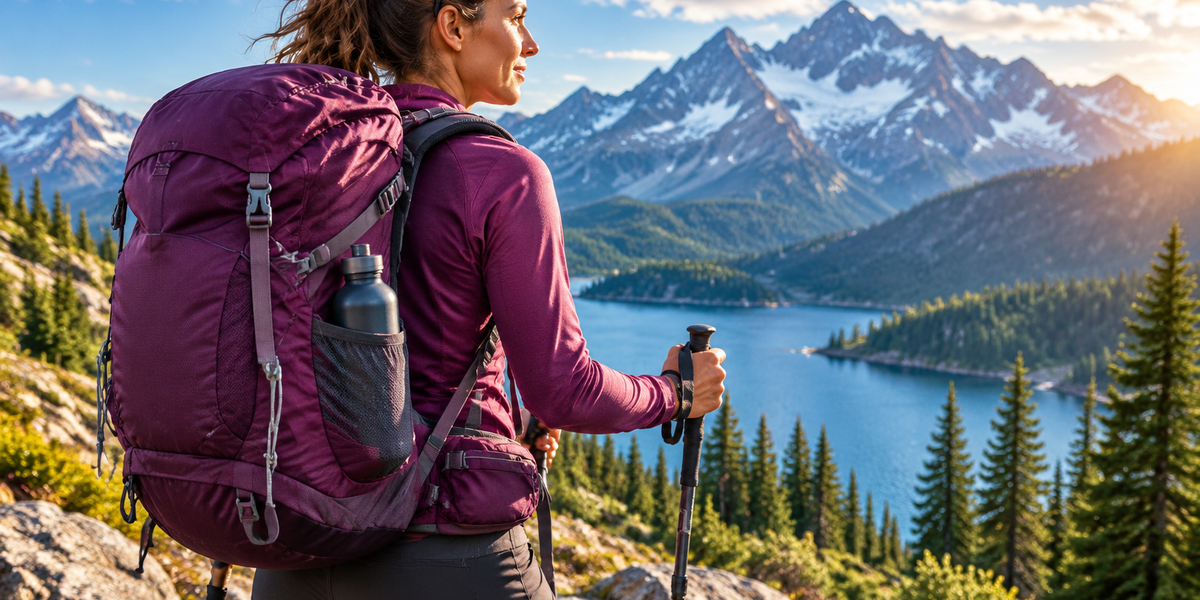
Hydration Compatibility — Internal sleeve for a reservoir plus external pockets for bottles. You should be able to drink without removing your pack. A 3L reservoir adds 6.6 lbs when full, so factor that into load planning.
💡 Pro Tip: When trying a pack, load it with 20-30 lbs and walk around for 15 minutes. Adjust straps in this order: hip belt first (snug on hips), shoulder straps next (eliminate gaps), then load lifters (pull top of pack toward shoulders at 45°), finally sternum strap (comfortable breathing room).
Osprey Atmos AG 65 — Best Overall for Multi-Day Comfort
| Criteria | Score |
|----------|-------|
| Suspension Comfort | 10/10 |
| Load Distribution | 9/10 |
| Ventilation | 9/10 |
| Adjustability | 9/10 |
The Osprey Atmos AG 65 sets the benchmark for multi-day backpacking comfort. Its Anti-Gravity suspension uses a continuous mesh panel stretched across a lightweight peripheral frame—the pack literally floats off your back with a gap of breathable space. Based on verified buyer reviews, hikers consistently report this design eliminates the hot, sweaty back that plagues traditional packs.
The women's-specific Aura AG model (same suspension, different geometry) features curved shoulder straps that follow the contours of narrower frames, and a hip belt engineered for wider pelvic anatomy. The torso length adjusts via a simple sliding mechanism, accommodating 15-20" torso measurements. At 4.56 lbs for the 65L version, it's not ultralight, but the comfort-to-weight ratio justifies every ounce on day three of a backpacking trip.
Capacity hits the sweet spot for 3-5 day trips—enough room for a bear canister, sleeping bag, tent, and layering system without overpacking. The top-loading design includes a floating lid with zippered pockets, side panel access for mid-pack gear, and a bottom sleeping bag compartment with removable divider. Buyer reviews highlight the thoughtful organization: dual side water bottle pockets, trekking pole attachments, and an integrated rain cover.
✅ Pros:
- Anti-Gravity suspension eliminates pressure points even under 40+ lb loads
- Customizable torso length fits wide range of body types (multiple size options available)
- Exceptional ventilation keeps your back cool on steep climbs
❌ Cons:
- Premium price point at $320 puts it out of reach for casual hikers
- Heavier than ultralight alternatives at 4.56 lbs—every ounce counts for thru-hikers
Osprey Talon 22 — Best Lightweight Daypack
| Criteria | Score |
|----------|-------|
| Weight | 10/10 |
| Packability | 9/10 |
| Hydration Access | 8/10 |
| Load Capacity | 7/10 |
For day hikes and fast-and-light missions, the Osprey Talon 22 delivers impressive functionality at just 1.06 lbs. The minimalist design strips away unnecessary features while keeping the essentials: integrated hydration sleeve, dual side stretch pockets, and a simple top-loading main compartment.
The women's version (Tempest 20) features shorter torso length and narrower shoulder strap spacing—critical differences that prevent the "backpack sliding sideways" problem many women experience with unisex packs. The AirScape back panel uses ridged foam to create ventilation channels, though it doesn't match the suspended mesh comfort of the Atmos AG. Buyer reviews note this works fine for 4-6 hour hikes but can get clammy on all-day epics.
Compression straps let you cinch down lighter loads so gear doesn't shift when you're moving fast. The 22L capacity handles lunch, layers, a first aid kit, and the Sawyer Squeeze Water Filter System—the 3 oz filter every hiker should carry for safe drinking water from streams. Trekking pole attachments and an ice axe loop extend the pack's capability into shoulder-season terrain.
✅ Pros:
- Ultralight at 1.06 lbs without sacrificing features like hydration sleeve and compression
- Integrated hydration sleeve keeps water accessible without fumbling for bottles
- Compression straps stabilize shifting loads when scrambling or moving quickly
❌ Cons:
- Limited hip belt padding struggles with loads over 15 lbs on longer days
- No built-in rain cover—requires separate purchase or pack liner
Deuter Speed Lite 30 — Best Value for Overnight Trips
| Criteria | Score |
|----------|-------|
| Value | 9/10 |
| Ventilation | 8/10 |
| Hip Belt Comfort | 8/10 |
| Torso Adjustability | 7/10 |
At $109.95, the Deuter Speed Lite 30 punches above its weight class. The Aircomfort Sensic Vario back system uses spring steel frames to tension a mesh panel away from your back—similar concept to Osprey's AG suspension but at a third of the price. Verified buyer reviews confirm the ventilation works, with hikers reporting noticeably less back sweat compared to foam-panel designs.
The VariFlex hip belt deserves special mention. Instead of rigid foam, it uses a flexible EVA construction that conforms to your movement. When you're scrambling over boulders or navigating uneven terrain, the belt flexes with your body instead of fighting it. Women's reviews highlight this feature—many note it's the first hip belt that didn't create pressure points on longer hikes.
Capacity at 30L bridges day hiking and overnight trips. Pack a lightweight sleeping bag, bivy, stove, and food for a single night out, or use it as a generous daypack with room for extra layers and emergency gear. The pack weighs 1.5 lbs, keeping base weight reasonable. Hydration compatible with an internal sleeve and hose port. Side pockets accommodate water bottles, though buyer feedback notes they're positioned slightly too far back to reach comfortably while hiking.
✅ Pros:
- Excellent value for a ventilated design—comparable models cost $180+
- VariFlex hip belt conforms to your movement instead of rigid foam
- Hydration compatible with easy-access reservoir pocket and hose routing
❌ Cons:
- Shorter torso adjustment range than Osprey—may not fit very tall or very short torsos
- Side pockets positioned too far back to reach with pack on—requires shoulder strap loosening
Getting the Right Fit
Specs and features mean nothing if the pack doesn't fit your body. Here's how to measure and adjust for optimal load distribution:
Measure Your Torso Length — Have someone measure from your C7 vertebra (the bump at the base of your neck when you tilt your head forward) to the top of your hip bones (iliac crest). This number determines your pack size, not your height. Most women fall between 15-19 inches.
Load and Adjust in Order — Put 20-30 lbs in the pack. Loosen all straps. Position the hip belt on your hip bones and cinch firmly—this carries 80% of the weight. Tighten shoulder straps to eliminate gaps but not bear weight. Pull load lifters (small straps near your shoulders) at 45° to bring the top of the pack toward your shoulders. Finally, clip and adjust the sternum strap at a comfortable height—you should breathe freely.
Check the Pressure Points — Walk around for 10-15 minutes. The hip belt should feel snug but not painful. Shoulder straps should rest on your shoulders without digging in. If you feel pinching at the top of your shoulders, loosen load lifters. If the pack sways when you turn, tighten hip belt and compression straps. Your lower back should feel minimal strain—the pack's weight should transfer through the hip belt to your pelvis.
💡 Pro Tip: Pack heaviest items close to your back and high in the pack—think water, food, tent. Light items (sleeping bag, down jacket) go at the bottom and outside edges. This keeps the center of gravity over your hips instead of pulling you backward.
Frequently Asked Questions
Do I really need a women-specific backpack?
Yes, if you want optimal comfort and load distribution. Women's packs feature narrower shoulder strap spacing, shorter torso lengths, curved shoulder straps that accommodate chest anatomy, and hip belts shaped for wider pelvic bones. A unisex pack might work if you're tall with broader shoulders, but most women will notice immediate improvement in comfort and stability with a women's-specific design. Based on buyer review data, the most common complaint about unisex packs from women is shoulder strap slippage and hip belt gaps.
What size pack do I need for a 3-day backpacking trip?
Most 3-day trips require 50-65L capacity, depending on your gear bulk and the season. Summer trips with lightweight gear can work in 50L; winter trips with bulky insulation and a four-season tent need 65L+. The Osprey Atmos AG 65 hits the sweet spot for three-season backpacking with a bear canister. If you're committed to ultralight gear (sub-10 lb base weight), you can drop to 40-50L packs.
How much weight should my backpack weigh empty?
Target under 2 lbs for daypacks (20-30L) and under 4 lbs for expedition packs (60L+). The trade-off is comfort features versus weight savings. Ultralight packs sacrifice padding and suspension systems to hit sub-2 lb weights in the 50-60L range, but they transfer more load to your body. If you're carrying 30+ lbs regularly, the extra pound of pack weight for better suspension pays dividends in comfort. Thru-hikers obsess over ounces; weekend backpackers should prioritize fit and comfort first.
Can I use a men's backpack if it fits better?
Absolutely. Fit trumps gender labels. Some women with broader shoulders and longer torsos find men's packs in smaller sizes work better. The key is proper fit—hip belt on hip bones, shoulder straps without gaps, load lifters at correct angles. Try both men's and women's versions in your size range and choose based on comfort, not marketing. The structural differences (strap spacing, belt curves) matter more than the label.
How do I know if my pack fits correctly?
Three checkpoints: (1) Hip belt sits on hip bones, not waist—when cinched, you should feel the weight transfer to your pelvis. (2) Shoulder straps curve smoothly without gaps or digging—you can slide two fingers under the strap at the top of your shoulder. (3) Load lifters angle 45° from pack to shoulders—if they're horizontal or vertical, the torso length is wrong. Walk around for 15 minutes with realistic weight; discomfort in the first five minutes will be agony by mile five.
Final Thoughts
The right backpack transforms hiking from an endurance challenge into a sustainable joy. We've compared the top performers in 2026 based on manufacturer specifications and verified buyer feedback—the Osprey Atmos AG 65 delivers unmatched multi-day comfort with its Anti-Gravity suspension and women-specific geometry, while the Deuter Speed Lite 30 offers impressive value for overnight trips and extended day hikes.
Fit matters more than features. Measure your torso length, try packs with realistic weight, and adjust methodically. The pack that works for your hiking partner might torture you—body geometry varies more than pack designs account for. Invest in fit first, features second. Your back will thank you at mile ten.
Editor's Choice
Osprey Atmos AG 65 — Best overall for multi-day backpacking trips where comfort and load distribution justify the premium price.
Deuter Speed Lite 30 — Best value for overnight trips and long day hikes with ventilated suspension at half the cost of premium packs.
Osprey Talon 22 — Best lightweight daypack for fast-and-light hikers who prioritize minimal weight without sacrificing hydration access.