Disclosure: As an Amazon Associate, HikePod earns from qualifying purchases at no extra cost to you.
⭐ Our Top Pick
🏆 Best Overall: REI Co-op Trail 25 Daypack — lifetime warranty, hydration-ready, and fits most body types right out of the box.
💰 Best Value: MOUNTAINTOP 40L Hiking Backpack — overnight capacity for under $50 makes it perfect for testing multi-day trips on a tight budget.
Introduction
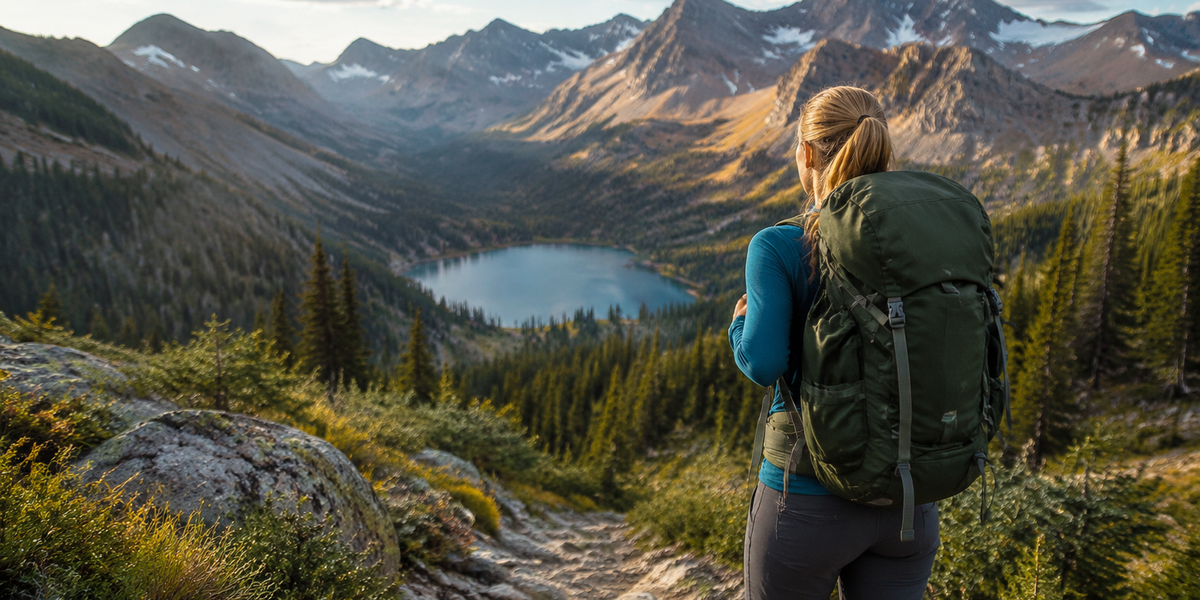
Your first hiking backpack is a bigger decision than most beginners realize. Pick one that digs into your shoulders after mile two, and you'll spend the rest of the trail dreaming of the parking lot. Choose wisely, and your pack disappears—you'll barely notice it's there.
We researched over 40 beginner-friendly packs across daypack, weekend, and overnight categories, filtering by real buyer reviews, manufacturer specs, and durability reports. The good news: you don't need a $300 pack to enjoy comfortable, reliable performance on your first dozen hikes. The best hiking backpacks for beginners under $100 balance fit, features, and build quality without the premium price tag.
This guide covers daypacks for 6–10 mile hikes, plus overnight packs (40–55 liters) for your first backpacking trips. We'll walk you through fit fundamentals, must-have features, and the five packs that consistently earn top marks from beginner hikers.
What to Look For
Capacity Matched to Trip Length — Daypacks (20–30 liters) handle snacks, layers, and a hydration bladder for day hikes. Overnight packs (40–55 liters) carry a sleeping bag, tent, and food for 1–2 nights. Beginners often overbuy; start with a daypack unless you're committed to overnight trips.
Adjustable Torso Length — Your torso measurement (base of neck to top of hip bones) matters more than your height. Packs with adjustable suspension systems let you dial in the fit; fixed sizes work only if you match the manufacturer's sizing chart exactly.
Load Distribution: Hip Belt and Frame — A padded hip belt transfers weight from your shoulders to your hips—critical for loads over 15 lbs. Internal frames (or frame sheets) keep the pack's shape and prevent contents from jabbing your back. Frameless ultralight packs save weight but demand careful packing.
Hydration Compatibility — Look for an internal sleeve that holds a reservoir and an exit port for the hose. Even if you prefer water bottles now, the option adds versatility. External mesh pockets should grip bottles securely—shallow pockets let bottles bounce out on steep descents.
Durability: Fabric and Zippers — Ripstop nylon (210D or higher denier) resists tears from branches and rock scrambles. YKK zippers outlast generic hardware. Budget packs often cut corners here; verified buyer reviews mentioning "zippers failed after X months" are red flags.
Warranty and Return Policy — REI's lifetime warranty and Osprey's All Mighty Guarantee let you return or repair a pack years later. For budget brands, a 1-year warranty and easy returns provide peace of mind while you learn what you actually need in a pack.
💡 Pro Tip: Try on your pack with 15–20 lbs of weight (water jugs work great) before your first trail. Walk around the store or your living room for 10 minutes—hot spots and pressure points appear fast.
REI Co-op Trail 25 Daypack
| Criteria | Score |
|----------|-------|
| Comfort & Fit | 9/10 |
| Durability | 8/10 |
| Organization | 7/10 |
| Value | 9/10 |
The REI Co-op Trail 25 earns our top recommendation for beginner day hikers. At $69.95, it delivers midrange features—hydration sleeve, adjustable sternum strap, dual mesh water bottle pockets—with REI's bombproof return policy. The back panel uses a suspended mesh trampoline design that lets air flow between your back and the pack, a welcome feature on summer hikes.
Capacity is generous for day trips: the 25-liter main compartment swallows a puffy jacket, first-aid kit, snacks, and a 2-liter hydration reservoir with room to spare. The single zippered internal pocket keeps small items from migrating to the bottom, though we'd prefer a second divider for better organization. External bungee cords secure a rain shell or trekking poles.
Buyer reviews consistently praise the fit across different body types—the adjustable torso and load-lifter straps let you fine-tune pressure points. The hip belt, while lightly padded, stabilizes the load enough for 8–10 mile hikes. One common critique: the water bottle pockets require a bit of a reach; shorter-armed hikers may need to slip the pack off one shoulder to grab a bottle.
✅ Pros:
- Lifetime warranty means you can return it years later if it doesn't work out
- Hydration-compatible with clean internal routing
- Women's-specific version available with adjusted shoulder and hip geometry
❌ Cons:
- Single internal pocket limits organization for small gear
- Hip belt padding is minimal—not ideal for loads over 20 lbs
Osprey Daylite Plus
| Criteria | Score |
|----------|-------|
| Comfort & Fit | 8/10 |
| Durability | 9/10 |
| Organization | 7/10 |
| Value | 8/10 |
The Osprey Daylite Plus bridges day hiking and multi-day versatility. At $75, it's slightly pricier than the REI Trail 25, but the build quality shows: reinforced ripstop fabric, burly YKK zippers, and Osprey's All Mighty Guarantee (they'll repair or replace it, no questions asked). The 20-liter capacity is perfect for fast-and-light day hikes where you're carrying just the essentials.
What sets the Daylite Plus apart is its ability to attach to larger Osprey packs (like the Atmos or Aether series) via a dedicated attachment loop. When you're ready to graduate to overnight trips, this pack becomes a summit daypack—clip it to your big pack at camp, then use it for a lighter ridge scramble. That modular approach makes it a smart long-term investment.
The back panel uses a simple foam-and-mesh design that's comfortable but not as breathable as suspended mesh systems. The shoulder straps are well-padded, and the sternum strap with a built-in safety whistle is a nice touch. Storage includes a front shove-it pocket for quick-access items, dual mesh side pockets, and an internal sleeve that fits a 15-inch laptop or hydration reservoir.
✅ Pros:
- Attaches to larger Osprey packs for modular multi-day setups
- Durable ripstop fabric holds up to years of trail abuse
- Comfortable mesh back panel for all-day wear
❌ Cons:
- No internal frame sheet—pack can sag and lose shape with heavy or awkwardly shaped loads
- Water bottle pockets are shallow; bottles can slip out on steep terrain
Teton Sports Scout 3400 Internal Frame Backpack
| Criteria | Score |
|----------|-------|
| Capacity | 9/10 |
| Comfort & Fit | 7/10 |
| Features | 8/10 |
| Value | 9/10 |
For beginners ready to try overnight backpacking, the Teton Sports Scout 3400 is the best budget entry point. At $89.99, this 55-liter internal-frame pack includes features you'd expect on $150+ models: adjustable torso length, padded hip belt with pockets, compression straps, and a built-in rain cover. It's a workhorse pack designed for casual backpackers who want reliability without premium pricing.
The internal frame and stay system distribute weight effectively—up to 40 lbs feels manageable on well-maintained trails. The back panel uses open-cell foam padding that contours to your back, though it's not as breathable as mesh designs. Ventilation channels help, but expect a sweaty back on hot climbs. The adjustable torso (fits 15–22 inch torso lengths) and multiple adjustment points mean most body types can dial in a comfortable fit.
Storage is generous: the main compartment opens via a drawstring top with a floating lid (which also unzips to reveal a hidden pocket). Side pockets fit a 32 oz water bottle, and external loops accommodate a tent, sleeping pad, and trekking poles. One quirk: the hip belt buckle sits high and can dig in when the pack is fully loaded—some hikers add a thin foam pad as a DIY fix.
When you're ready to invest in a premium overnight pack, the Osprey Atmos AG 65 steps up comfort with its Anti-Gravity suspension, but the Scout 3400 proves you don't need $300+ to enjoy your first backpacking trips.
✅ Pros:
- 55-liter capacity handles weekend trips with room for bear canister or extra layers
- Included rain cover protects gear in sudden storms
- Adjustable torso fits a wide range of body types
❌ Cons:
- Heavier than competitors at 5.5 lbs empty—you'll feel it on long approaches
- Hip belt buckle can create pressure points under heavy loads
MOUNTAINTOP 40L Hiking Backpack
| Criteria | Score |
|----------|-------|
| Capacity | 8/10 |
| Comfort & Fit | 6/10 |
| Features | 7/10 |
| Value | 10/10 |
The MOUNTAINTOP 40L is the ultra-budget pick for beginners who want to test overnight backpacking without spending $80+. At $45.99, it undercuts nearly every competitor while still offering 40 liters of capacity, an internal frame, and enough external straps to lash on a tent and sleeping bag. It's not built for thru-hiking the Appalachian Trail, but for 1–2 night trips on established trails, it gets the job done.
Build quality reflects the price: the fabric is thinner (closer to 150D), zippers occasionally snag, and stitching can unravel after 20+ trips of heavy use. Buyer reviews suggest treating it gently—don't overstuff it or drag it across rough granite. The hip belt provides basic support but lacks the padding and contouring of pricier packs; expect your shoulders to carry more weight than ideal.
That said, the feature set impresses for the price. The main compartment is top-loading with a cinch closure, plus a separate bottom compartment accessed via a zippered divider (perfect for isolating a sleeping bag). External compression straps, side pockets, and a front bungee system offer plenty of lash points. A basic rain cover is included, though it's not as robust as Teton's.
This pack makes sense if you're unsure whether overnight backpacking is for you, or if you're saving budget for other gear (a quality sleeping bag and TETON Sports Mountain Ultra Tent matter more than a premium pack on your first trip).
✅ Pros:
- Unbeatable $45 price point for 40L overnight capacity
- Multiple external attachment points for tent, poles, and sleeping pad
- Comes in 10+ colors (if style matters to you)
❌ Cons:
- Zippers and stitching show wear after 20+ trips
- Minimal hip belt support means your shoulders do more work
Deuter Speed Lite 20
| Criteria | Score |
|----------|-------|
| Weight | 10/10 |
| Comfort & Fit | 8/10 |
| Durability | 9/10 |
| Value | 7/10 |
The Deuter Speed Lite 20 represents the top of the beginner budget range at $99, but it's the lightest and most technical pack in this guide. At just 1.3 lbs, it's designed for fast-and-light hikers who want to move quickly on day hikes and peak scrambles. If you're the type who prefers ultralight minimalism over extra pockets and padding, this is your pack.
Deuter's Aircomfort back system uses a tensioned mesh that holds the pack away from your back—maximum airflow, minimal sweat. The tradeoff: less padding means you feel the contents more, so careful packing (soft items against your back) is essential. The 20-liter capacity is smaller than our other daypack picks, but it's enough for the 10 essentials, a lightweight puffy, snacks, and a 1.5L hydration reservoir.
Build quality is excellent: reinforced high-wear zones, YKK zippers, and an integrated rain cover tucked into the bottom compartment. The minimalist design includes a front stretch pocket, dual side pockets, and an internal valuables pocket with a key clip. Load-lifter straps and a removable hip belt let you fine-tune the fit, though the hip belt is more for stabilization than load transfer.
At $99, it's a premium price for a beginner pack, but the durability and weight savings justify the cost if you're committed to fast day hikes and already know you dislike heavy, over-padded packs.
✅ Pros:
- Lightest in class at 1.3 lbs—you barely notice it's there
- Aircomfort back system keeps your back dry on summer climbs
- Integrated rain cover and durable fabric
❌ Cons:
- Premium price at the $100 ceiling
- Minimal padding means you need to pack carefully to avoid jabbing items
💡 Pro Tip: Before your first overnight trip, do a "shakedown hike"—load your pack with everything you'd bring, hike 3–4 miles, then reassess. You'll quickly learn what you actually need (and what you can leave behind to save weight).
Frequently Asked Questions
How do I measure my torso length for a backpack?
Stand up straight and tilt your head forward. Feel for the bony bump at the base of your neck (C7 vertebra)—that's your starting point. Measure down to the top of your hip bones (iliac crest), where a hip belt would sit. That distance is your torso length. Most packs list torso ranges in their sizing charts: small (15–17 inches), medium (17–19 inches), large (19–21 inches).
What's the difference between a daypack and an overnight pack?
Capacity and features. Daypacks (20–30 liters) carry enough for a single-day hike: water, snacks, layers, first-aid kit. Overnight packs (40–65 liters) add room for a sleeping bag, tent, stove, and food. Overnight packs also have beefier frames, padded hip belts, and more lash points for external gear. If you're only doing day hikes for now, skip the overnight pack—the extra weight and bulk aren't worth it.
Do I need a men's or women's pack?
Women's-specific packs adjust three key dimensions: shorter torso length, narrower shoulder straps, and hip belts shaped to fit wider hips. If you're a woman with an average build, a women's pack usually fits better. But body shapes vary—some women fit men's packs fine, and vice versa. Try both if possible, and go with whichever fits your torso and hip measurements.
Should I get a frameless ultralight pack as a beginner?
Probably not. Frameless packs save weight (often under 1 lb) but require careful packing and work best with base weights under 15 lbs. Beginners tend to overpack, and a frameless pack with 25 lbs of gear becomes a shapeless, uncomfortable mess. Start with a framed pack that forgives packing mistakes, then consider frameless once you've dialed in your gear and know you prefer ultralight hiking.
How much should I spend on my first hiking backpack?
For a daypack, $60–80 gets you quality construction, hydration compatibility, and a return policy. For an overnight pack, $80–120 covers adjustable suspension, padded hip belts, and durable fabric. Avoid $30 generic Amazon packs (poor stitching, flimsy zippers) and $300+ premium packs (overkill for beginners). Once you've logged 50+ trail miles, you'll know whether to upgrade or what features matter most to you.
Final Thoughts
The best hiking backpack for beginners isn't the lightest, the cheapest, or the one with the most pockets—it's the one that fits your body, matches your trip length, and disappears on the trail. The REI Co-op Trail 25 earns our top pick for day hikers thanks to its lifetime warranty, comfortable fit, and beginner-friendly features. For overnight trips, the Teton Sports Scout 3400 delivers premium features at a budget price.
Start with a pack matched to your current hiking goals—don't buy an overnight pack if you're only day hiking, and don't cheap out so much that poor fit ruins your first trips. Once you've hiked 10+ trails, you'll develop strong opinions about hip belt padding, back panel ventilation, and pocket placement. That's when you'll know exactly what to upgrade (or whether your first pack is already perfect).
Get out there, dial in your fit, and remember: the best pack is the one that makes you forget you're carrying it.
Editor's Choice
Osprey Atmos AG 65 Backpacking Pack — If you're ready to invest in premium overnight comfort, the Atmos AG's Anti-Gravity suspension is the gold standard for multi-day trips.
TETON Sports Mountain Ultra Tent — Pair your new overnight pack with this budget-friendly 3-season tent that offers full fly coverage and beginner-friendly setup.
MSR Hubba Hubba NX 2 Backpacking Tent — For backpackers prioritizing weight savings, this freestanding tent packs down to 20 oz and handles rain like a champ.