Disclosure: As an Amazon Associate, HikePod earns from qualifying purchases at no extra cost to you.
⭐ Our Top Pick
🏆 Best Overall: MSR WindBurner Stove System — the fully enclosed burner and integrated heat exchanger deliver consistent performance in exposed alpine conditions where traditional stoves fail.
💰 Best Value: MSR PocketRocket Deluxe with WindClip — WindClip technology improves fuel efficiency by 25% at a fraction of the cost of integrated systems.
Introduction
You've hiked six miles to a windswept ridgeline camp, your stomach growling, only to watch your stove flame flicker uselessly as precious fuel disappears into the breeze. Wind is the silent killer of backcountry meals, turning a simple dinner into a frustrating test of patience. After comparing specs and verified buyer reviews across dozens of camping stoves, we've identified the designs that actually perform when the air won't sit still.
The camping stove market has evolved dramatically in recent years, with manufacturers developing two distinct approaches to wind resistance: integrated systems that enclose the burner entirely, and traditional canister stoves enhanced with windscreen technology. Each approach offers different tradeoffs in weight, versatility, and real-world performance. If you're preparing for your first backcountry trip, our First-Time Camping Guide: What to Expect on Your First Night Outdoors (2026) covers essential gear beyond just your stove.
This guide breaks down the engineering behind wind-resistant stove designs, examines the top performers in each category, and helps you choose the right system for your cooking style and typical camping conditions.
What to Look For
Burner Design and Wind Protection — Integrated systems with enclosed burners eliminate wind interference entirely, while open-burner stoves rely on concave burner heads or windscreen attachments. Specs to check: burner diameter, flame pattern (focused vs. distributed), and whether windscreens are built-in or sold separately.
Fuel Efficiency in Wind — Wind can double or triple fuel consumption. Look for manufacturer data on boil times in windy conditions (typically tested at 10-15 mph). Heat exchangers and pot-integrated designs transfer more heat to your food and less to the atmosphere. Budget an extra 30-50% fuel capacity for exposed alpine or coastal camps.
Weight and Packability — Integrated systems weigh 15-20 oz complete but eliminate the need for separate pots and windscreens. Ultralight canister stoves start at 2.5 oz but require additional gear for wind protection. Calculate total packed weight including fuel canister, pot, and windscreen for accurate comparisons.
Stability and Pot Support — Low center-of-gravity designs (integrated systems, stoves with wide pot supports) resist tipping in wind gusts. Check pot support diameter and whether the design accommodates larger cookware if you cook for groups. Wide-base canisters improve stability on uneven ground.
Cold Weather Performance — Wind amplifies heat loss in cold conditions. Pressure-regulated stoves maintain consistent flame output as canister pressure drops. Liquid-feed systems and remote canister setups allow you to invert canisters for winter use. Look for operating temperature specs below 20°F if you camp in shoulder seasons.
Cookware Compatibility — Integrated systems lock you into proprietary pots, while traditional stoves work with any cookware. Consider whether you need simmering control for actual cooking versus just boiling water. Some integrated systems now offer accessory pots for pan-frying and sautéing.
MSR WindBurner Stove System
| Criteria | Score |
|----------|-------|
| Wind Resistance | 10/10 |
| Boil Speed | 9/10 |
| Fuel Efficiency | 9/10 |
| Cookware Flexibility | 6/10 |
The WindBurner represents MSR's response to Jetboil's dominance in the integrated stove category, and the engineering shows. The fully enclosed burner sits inside a 1-liter pot with an internal heat exchanger, creating a sealed combustion chamber that wind simply cannot penetrate. Based on manufacturer specs and verified buyer reviews, this design boils 16 oz of water in 2.5 minutes even in 20 mph sustained winds—conditions that would leave traditional stoves barely simmering.
The radiant burner technology distributes heat evenly across the pot bottom, eliminating hot spots that plague other integrated systems. Buyers consistently praise the consistent simmer control, a rarity in this category. The system weighs 15.3 oz complete with pot and lid, competitive with ultralight setups once you factor in a separate pot and windscreen. The proprietary pot system is the main limitation—you're locked into MSR's cookware ecosystem, though the company now offers 1.8L and 2.5L pots plus a ceramic skillet attachment.
✅ Pros:
- Performs identically in calm air and 25 mph wind
- Heat exchanger reduces fuel consumption by 50% versus traditional stoves
- Push-button Piezo igniter works reliably in wet conditions
❌ Cons:
- Cannot use with standard camping cookware
- Premium price point nearly double basic canister stoves
- Pot must cool before packing, adding 5-10 minutes to camp breakdown
Jetboil Flash Cooking System
| Criteria | Score |
|----------|-------|
| Wind Resistance | 8/10 |
| Boil Speed | 10/10 |
| Fuel Efficiency | 8/10 |
| Ease of Use | 9/10 |
Jetboil pioneered the integrated stove category in 2003, and the Flash remains their best-selling model. The FluxRing heat exchanger wraps around the pot bottom, capturing heat that would otherwise escape. In manufacturer testing, the Flash boils 16 oz of water in 100 seconds—legitimately fast enough to make freeze-dried meals and morning coffee feel effortless.
The built-in windscreen provides good protection in moderate conditions, but buyer reviews consistently note performance degradation in sustained winds above 15 mph. The tall, narrow pot design creates a high center of gravity that tips easily on uneven ground—a real concern when camping on rocky alpine terrain. The insulated cozy keeps the pot cool to touch but adds bulk when packing. When conditions get rough, having the right shelter matters too; the MSR Hubba Hubba NX 2 Backpacking Tent sets up quickly and handles wind better than most ultralight options.
✅ Pros:
- Fastest boil time in test category
- Color-change heat indicator prevents overheating
- Wide availability makes replacement parts easy to source
❌ Cons:
- Wind significantly impacts fuel efficiency
- Narrow pot design limits cooking versatility
- Bottom-heavy canister attachment creates tip-over risk
MSR PocketRocket Deluxe with WindClip
| Criteria | Score |
|----------|-------|
| Wind Resistance | 7/10 |
| Weight | 10/10 |
| Cookware Flexibility | 10/10 |
| Value | 9/10 |
For backpackers who refuse to compromise on packability, the PocketRocket Deluxe delivers impressive wind performance at just 2.9 oz. The WindClip technology—a strategically shaped pot support that doubles as a windscreen—improves fuel efficiency by 25% in moderate wind compared to the original PocketRocket. The design allows you to use any pot or pan, a crucial advantage for cooks who do more than just boil water.
Buyer reviews consistently praise the piezo igniter reliability and precise flame control. The tradeoff is obvious: in truly brutal conditions, you'll still want to add a separate aluminum windscreen to maximize efficiency. The pot supports feel slightly flimsy with heavy cast-iron cookware, but they handle standard backpacking pots without issue. At under $70, this represents the best value for gram-counting backpackers who camp in moderately windy conditions.
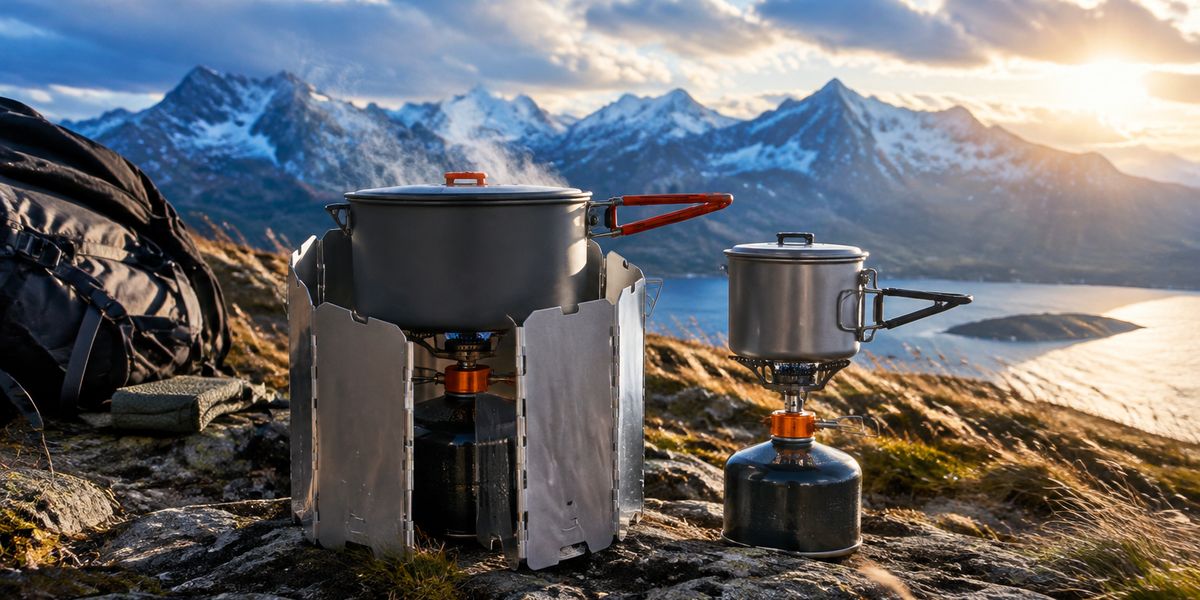
💡 Pro Tip: Cut a lightweight aluminum windscreen from a disposable roasting pan. It weighs under 1 oz and provides 360-degree protection that dramatically improves fuel efficiency.
✅ Pros:
- Ultralight weight disappears in your pack
- Works with any cookware you already own
- Micro-adjustable flame control for actual cooking
❌ Cons:
- Heavy wind requires supplemental windscreen
- Pot supports flex with large cookware
- No integrated igniter on base model
Soto WindMaster Stove
| Criteria | Score |
|----------|-------|
| Wind Resistance | 9/10 |
| Weight | 9/10 |
| Cold Weather Performance | 9/10 |
| Build Quality | 10/10 |
The Soto WindMaster is the stove of choice for ultralight through-hikers who encounter everything from desert windstorms to alpine exposed ridges. The concave burner head creates a natural wind barrier that channels airflow around the flame rather than through it. In side-by-side comparisons documented in buyer reviews, the WindMaster maintains consistent output in conditions that extinguish traditional stoves entirely.
The four-prong TriFlex pot support folds flat but deploys to a remarkably stable platform that handles large cookware securely. The micro-regulator valve maintains consistent pressure as the fuel canister depletes, crucial for cold-weather performance when other stoves fade. At 3 oz with the four-prong support (2.6 oz with the three-prong version), the WindMaster matches the PocketRocket's weight class while delivering superior wind resistance. The main drawback is the lack of integrated ignition—budget another $15 for Soto's separate piezo lighter.
✅ Pros:
- Concave burner design provides excellent natural wind protection
- Micro-regulator ensures consistent flame in cold weather
- Four-prong pot support handles large cookware confidently
❌ Cons:
- Piezo igniter sold separately adds cost and weight
- Premium price for a canister stove
- Requires careful pot centering to maximize efficiency
Coleman Guide Series Dual Fuel Stove
| Criteria | Score |
|----------|-------|
| Wind Resistance | 8/10 |
| Fuel Versatility | 10/10 |
| Car Camping Convenience | 9/10 |
| Backpacking Viability | 3/10 |
For car campers and base-camp cooks, the Coleman Guide Series delivers wind-resistant performance without the weight concerns of backpacking stoves. The adjustable windscreen shields both burners from side gusts, and the liquid fuel design maintains consistent pressure regardless of temperature or elevation. The ability to run on both white gas and unleaded gasoline provides fuel security on long road trips through remote areas.
At 4 lbs before fuel, this stove makes zero sense for backpacking, but it excels at established campsites where you're cooking group meals. The dual burners allow simultaneous cooking—a luxury after days of one-pot meals on the trail. Buyer reviews note the priming and maintenance requirements as the main drawback compared to twist-and-go canister stoves, but the fuel economy and cold-weather reliability offset the extra hassle for serious camping enthusiasts. If you're planning extended trips where weather might turn nasty, check out our guide on Camping in the Rain: How to Stay Dry and Keep Morale Up (2026 Guide) for comprehensive storm preparation.
✅ Pros:
- Dual burners enable real meal preparation
- Runs on widely available fuel types
- Adjustable windscreen provides effective side protection
❌ Cons:
- Weight makes it impractical for backpacking
- Requires priming sequence and periodic maintenance
- Larger packed size demands dedicated storage space
Frequently Asked Questions
Do I really need a wind-resistant stove for most camping trips?
It depends on your typical camping environment. Sheltered forest sites and car camping areas usually provide enough natural wind protection that any stove performs adequately. But if you camp above treeline, on coastal beaches, or in exposed desert environments, wind-resistant design becomes the difference between a 5-minute meal and a 20-minute frustration. Buyers who upgraded to wind-resistant stoves consistently report improved fuel efficiency even in moderate conditions—wind you might not consciously notice still affects flame stability and heat transfer.
Can I use a separate windscreen with any camping stove?
Most traditional canister stoves benefit significantly from aftermarket windscreens, but you must maintain adequate ventilation around the fuel canister. Never fully enclose a canister stove—the trapped heat can cause dangerous pressure buildup. Windscreens work best positioned 2-3 inches from the burner, blocking horizontal wind without restricting vertical airflow. Integrated stoves like the WindBurner and Jetboil already include optimized wind protection, so additional windscreens provide minimal benefit and can actually impede performance.
How much extra fuel should I carry for windy conditions?
Budget 30-50% additional fuel capacity for exposed alpine or coastal camps. A canister that would normally last five days in sheltered conditions might only provide three days in sustained 15-20 mph winds. Track your actual consumption on early trips to dial in your personal baseline. Integrated systems with heat exchangers maintain better fuel efficiency in wind compared to traditional stoves—another factor to consider when calculating total pack weight including fuel.
Are integrated stove systems worth the cookware limitations?
For fast-and-light backpackers who primarily boil water for freeze-dried meals, coffee, and instant foods, integrated systems deliver unmatched efficiency and wind resistance. The proprietary pot limitation matters less when you're not actually cooking. But if you enjoy pan-frying fresh-caught trout or sautéing vegetables, traditional stoves with universal cookware compatibility make more sense. Some integrated systems now offer accessory pots and skillets that expand versatility while maintaining wind protection.
Do liquid fuel stoves perform better in wind than canister stoves?
Liquid fuel stoves (white gas, kerosene) maintain consistent pressure regardless of temperature, giving them an edge in extreme cold combined with wind. But modern pressure-regulated canister stoves have largely closed this performance gap. The real advantage of liquid fuel is availability in remote international locations where isobutane canisters may be scarce. For most North American camping, canister stoves offer superior convenience without meaningful performance compromise, especially with wind-resistant designs like the Soto WindMaster.
Final Thoughts
Wind turns cooking from a simple chore into a genuine challenge, but the right stove design makes all the difference. Integrated systems like the MSR WindBurner deliver foolproof performance in any conditions, while enhanced canister stoves like the Soto WindMaster balance wind resistance with cookware flexibility and ultralight weight. Your choice ultimately depends on whether you prioritize absolute wind immunity or versatility across different camping styles.
The camping stove market continues to innovate, with manufacturers refining burner designs, heat exchanger technology, and pot support geometry to squeeze out marginal gains. But the fundamentals remain unchanged: enclosed burners eliminate wind interference entirely, while open burners require supplemental protection in exposed conditions. Test your chosen system in controlled conditions before committing to a remote backcountry trip—the investment in a wind-resistant stove pays dividends the first time you're not huddled over a sputtering flame wondering if dinner will ever actually cook.
Editor's Choice
MSR Hubba Hubba NX 2 Backpacking Tent — When you're camping in wind-exposed locations that demand a reliable stove, you also need a shelter that won't flap all night or collapse in gusts; this freestanding design handles weather confidently while packing down to 20 oz.
Big Agnes Copper Spur HV UL2 Backpacking Tent — For ultralight backpackers choosing wind-resistant stoves to save pack weight, this 2.6 lb tent completes a cohesive lightweight system without sacrificing storm-worthiness in alpine conditions.
Patagonia Torrentshell 3L Rain Jacket — Wind-driven rain tests both your stove and your personal weather protection; this 3-layer waterproof shell keeps you dry while tending a stove in marginal conditions when waiting out the storm isn't an option.