Disclosure: As an Amazon Associate, HikePod earns from qualifying purchases at no extra cost to you.
⭐ Our Top Pick
🏆 Best Overall: Big Agnes Copper Spur HV UL2 — the perfect balance of ultralight design and livability, adapting to diverse campsites with dual-door convenience and bomber weather protection.
💰 Best Value: TETON Sports Mountain Ultra Tent — beginners get solid three-season protection and full fly coverage at an entry-level price while learning proper site selection.
Introduction
We've all been there: you hike for hours, finally reach your destination at dusk, and hastily pitch your tent on the first flat-ish spot you see. Then the rain starts. Water pools under your tent floor. Roots dig into your back. A gust of wind nearly sends your shelter airborne. By morning, you're exhausted, soaked, and wondering why you ever left the couch.
Choosing the right campsite isn't just about comfort—it's a critical backcountry skill that affects your safety, sleep quality, and environmental impact. After years of camping across diverse terrain and researching hundreds of site selection scenarios, we've compiled the essential factors that separate a miserable night from a restorative wilderness experience. Whether you're backpacking deep into the backcountry or car camping at an established site, the principles remain the same.
This guide walks you through the terrain, drainage, exposure, and safety considerations that should inform every site decision you make. We'll cover Leave No Trace principles, wildlife precautions, and the specific features that make or break a campsite in different conditions. By the end, you'll know exactly what to look for before you unpack your Big Agnes Copper Spur HV UL2 or any tent you're carrying.
What to Look For
Flat, Level Ground — Your tent floor should sit on terrain that's as level as possible. Even a slight slope means you'll spend the night sliding toward one end or waking with a sore neck. Walk the area and feel for subtle grade changes that aren't immediately obvious. Remove rocks, sticks, and pinecones that will turn into pressure points by 3 a.m.
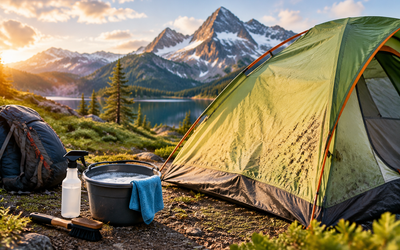
Drainage and Water Flow — Never camp in a depression, dry wash, or anywhere water could pool or flow during rain. Look for subtle signs: worn soil, debris lines, or vegetation patterns that indicate water movement. Pitch on slightly elevated ground, even if it's just a few inches higher than surrounding terrain. If you're also outfitting your camp kitchen, our guide to cleaning and maintaining camping stoves covers keeping your gear dry and functional in wet conditions.
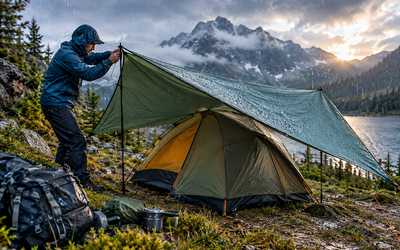
Wind Protection and Exposure — Trees, rock formations, or terrain features provide natural windbreaks, but avoid camping directly under dead trees or loose rock (widow makers). In exposed areas, orient your tent so the narrow end faces prevailing winds to reduce surface area and improve stability. Consider sun exposure—east-facing sites warm up faster in the morning, while west-facing spots stay cooler longer.
Distance from Water Sources — Leave No Trace principles require camping at least 200 feet (70 adult paces) from lakes, streams, and rivers. This protects riparian ecosystems, ensures wildlife access to water, and reduces your exposure to nighttime temperature drops and morning condensation that occur near water. It also keeps you safer if water levels rise unexpectedly.
Safety from Hazards — Scan above and around your site for dead branches, loose rocks, ant hills, bee nests, and animal trails. Avoid camping in tall grass where ticks thrive, and steer clear of bear trails, scat, or scratched trees. In mountain terrain, watch for avalanche paths and rockfall zones. Camp away from cliffsides, especially in the dark when depth perception fails.
Ground Conditions and Stake-ability — Rocky, hard-packed, or sandy soil makes staking difficult. Bring a variety of stakes (Y-stakes for loose soil, V-stakes for harder ground) and know how to improvise with rocks or trees. For ultralight tents like the MSR Hubba Hubba NX 2, proper staking is critical for structural integrity in wind.
💡 Pro Tip: Arrive at camp with enough daylight to properly evaluate your site. Two hours before sunset gives you time to relocate if your first choice proves problematic.
Terrain Types and Adaptation
Forest and Wooded Sites
Forested campsites offer natural windbreaks, shade, and softer ground from accumulated duff and needles. Look for openings between trees that provide enough flat space without requiring you to clear vegetation. Pine duff makes excellent natural padding, but watch for sap that can stick to your tent floor. Avoid camping under large dead branches, and be aware that wind can create unpredictable falling hazards even from healthy-looking trees.
In established forest camping areas, use existing cleared sites rather than creating new ones. This concentrates impact and prevents expanding the damaged footprint. Root systems close to the surface can make staking difficult—bring longer stakes or use guy-line wraps around tree trunks where regulations allow.
Alpine and Above-Treeline Sites
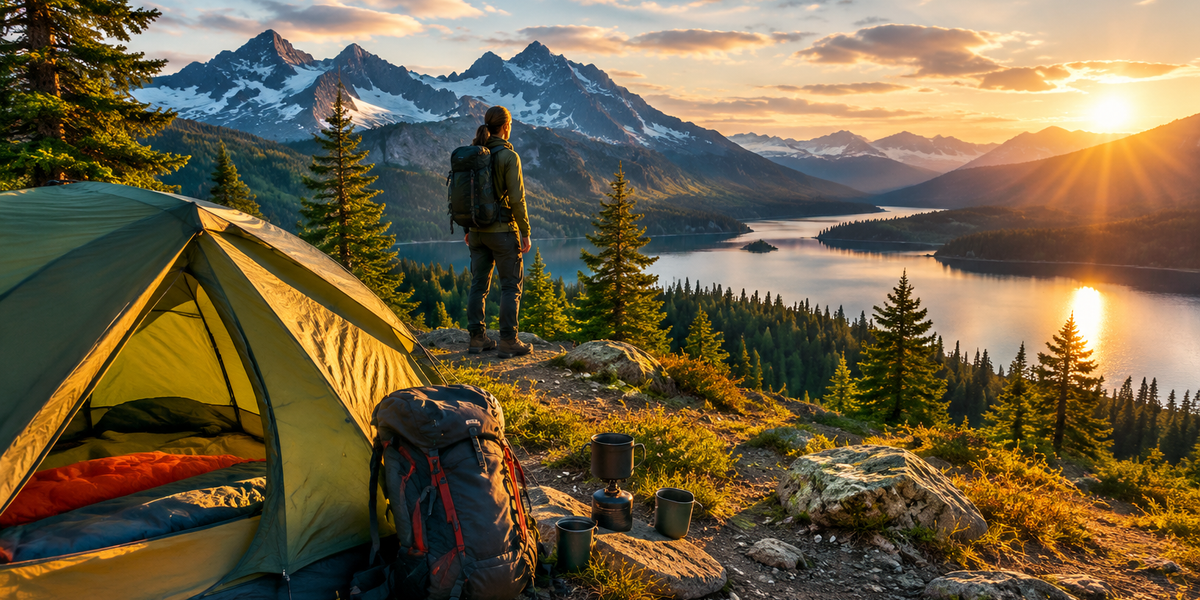
Alpine environments are fragile and unforgiving. Wind is your primary concern—speeds can triple above treeline. Look for natural rock formations, terrain dips, or krummholz (stunted trees) that provide windbreaks without putting you in a runoff path. These sites are often on exposed rock or thin soil, so bring rock-compatible stakes or plan to weight guy-lines with boulders.
Alpine tundra vegetation takes decades to recover from trampling. Camp on durable surfaces like rock slabs, gravel, or snow when possible. Never trench around your tent or move rocks to create flat spots. If you're setting up your TETON Sports Mountain Ultra Tent here, the full fly coverage becomes essential as afternoon thunderstorms arrive with little warning.
| Criteria | Score |
|----------|-------|
| Weather Protection | 8/10 |
| Weight for Alpine Carry | 5/10 |
| Ease of Setup | 7/10 |
| Durability | 7/10 |
✅ Pros:
- Full fly coverage handles sudden alpine storms effectively
- Straightforward pole structure sets up quickly when weather turns
- Budget allows investing in other alpine safety gear
❌ Cons:
- Weight makes it impractical for long alpine approaches
- Basic materials may struggle in sustained high winds
Desert and Arid Landscapes
Desert camping presents unique challenges: hard, rocky ground makes staking difficult, and temperature swings can be extreme. Look for sites with natural shade during the day (rock overhangs, large boulders) but remember these features radiate absorbed heat well into the night. Sandy washes are tempting for flat ground but are flash flood zones—avoid them entirely.
Sand stakes or deadman anchors (burying stuff sacks filled with sand) work better than standard stakes in loose desert soil. Consider bringing a Buff Original UV Headwear for sun protection during site setup and morning camp tasks. Wind can pick up suddenly in open desert, creating sandstorms that abrade tent fabric and find their way into every zipper.
Coastal and Beach Sites
Beach camping requires understanding tide schedules. Camp well above the high tide line—look for driftwood and debris lines that mark how far water reaches. Sandy ground requires specialized stakes or deadman anchors. Wind is constant and often laden with salt that corrodes zippers and fabric.
Never camp in dunes, which are fragile ecosystems and often legally protected. Look for established sites on stable ground behind the primary dune line. Stake your tent with extra guy-lines and bury stakes deep—beach wind can generate surprising force.
Evaluating Established vs Primitive Sites
Established Campgrounds
Designated sites in developed campgrounds remove much of the guesswork. Sites are already cleared, leveled, and positioned to minimize environmental impact. However, you still need to evaluate each site's specific characteristics: sun exposure, proximity to bathrooms and water, vegetation screening from neighbors, and ground condition after repeated use.
Compacted soil in popular sites makes staking harder. Bring extra-sturdy stakes or carry a small rubber mallet. Check for fire rings, food storage lockers, and picnic tables positioned to maximize your usable space. Sites near bathroom facilities get more foot traffic but offer convenience, especially with kids or older campers.
Dispersed Backcountry Camping
When camping in undesignated wilderness, Leave No Trace principles become critical. Look for durable surfaces: rock slabs, gravel, dry grasses, or snow. Avoid camping on vegetation whenever possible. If you must camp on plants, choose dry grasses over fragile alpine tundra or wetland species.
Move camp if staying multiple nights to prevent sustained impact. Never alter the site by digging trenches, moving rocks, building structures, or clearing vegetation. Pack out every trace of your stay—inspect the site before leaving and remove any micro-trash, food scraps, or gear fragments.
💡 Pro Tip: Take a photo of your site before setting up camp. When packing out, use the photo to verify you've restored the site to its original condition.
Weather and Seasonal Considerations
Wind Direction and Speed
Wind kills more tent poles than any other factor. Before pitching, observe vegetation lean, debris patterns, and feel the prevailing wind direction. Orient your tent's narrow end into the wind to reduce surface area. In high-wind forecasts, add extra stakes at mid-panel tie-outs and run guy-lines to rocks or trees.
Natural windbreaks—rock formations, dense shrubs, terrain dips—reduce wind speed but can create turbulence. Camp slightly leeward of these features rather than directly behind them. Avoid terrain funnels like passes or ridges where wind accelerates.
Rain and Storm Preparation
Even on clear evenings, prepare for rain. Look for sites with natural drainage away from your tent location. Slightly crowned or sloped ground (1-2 degrees) sheds water without making you slide in your sleeping bag. Never camp in depressions, dry creek beds, or anywhere water could pool.
Inspect the ground for compacted soil or clay that won't absorb water. Sandy or rocky sites drain better. Pitch your tent before the rain starts—wet flies and floors add weight and take forever to dry. If you're also considering sleep system options, see our guide to sleeping bag liners for adding warmth and managing condensation.
Cold Weather and Snow Camping
Winter sites require different priorities. Camp on packed snow rather than loose powder to prevent your tent from sinking overnight. Build a vestibule platform for gear organization and cooking. Avoid valley bottoms where cold air pools—camp on slight ridges or benches where air circulates.
Windbreaks become critical in cold weather. Build snow walls upwind from your tent or camp near natural features. Ventilation remains important even in freezing temperatures—closed tents create condensation that freezes and adds weight or drips on you when temperatures rise.
Wildlife Safety and Food Storage
Bear Country Protocols
In bear country, campsite selection directly affects your safety. Camp at least 200 feet from your cooking area and another 200 feet from your food storage location, creating a triangle. This separates food odors from your sleeping area. Never cook or eat in your tent, and change clothes after cooking before sleeping.
Look for trees suitable for bear hangs or carry a bear canister. Avoid sites with fresh bear sign: scat, tracks, digging, scratched trees, or torn logs. Camp away from berry patches, salmon streams, or other food sources that attract bears. If using established sites, check whether bear boxes or food lockers are provided.
Other Wildlife Considerations
Mice, chipmunks, and other rodents are attracted to food and scented items. Store toiletries with food—toothpaste, sunscreen, and soap count as attractants. In some regions, raccoons are the primary concern; in others, mountain goats seek salt from sweat-soaked gear.
Avoid camping near animal trails, which you can identify by worn paths, scat, and tracks. Water sources at dawn and dusk see heavy wildlife traffic—maintain your 200-foot distance. In tick-prone areas, avoid tall grass and brush. Set up on rock, gravel, or short vegetation where possible.
Site-Specific Tent Recommendations
Big Agnes Copper Spur HV UL2
| Criteria | Score |
|----------|-------|
| Weight-to-Livability Ratio | 10/10 |
| Weather Resistance | 9/10 |
| Setup Speed | 9/10 |
| Versatility Across Sites | 9/10 |
The Copper Spur excels across diverse terrain types, from alpine approaches to forest camps. At 2.6 lbs, it's light enough for long backpacking trips without sacrificing livability. Dual doors mean you can position the tent to maximize access regardless of terrain constraints—one door can face the view while the other provides sheltered entry. Two vestibules give you flexibility for gear storage and cooking areas.
The ultralight materials require more careful site preparation than burlier tents. Clear the ground thoroughly of sharp objects and consider a footprint for rocky or abrasive sites. The tent's freestanding design (with stakes for optimal performance) adapts well to hard ground where you can supplement stakes with guy-lines to rocks or trees. Quick solo setup is a major advantage when you're racing daylight or weather.
✅ Pros:
- Industry-leading weight-to-space ratio for two-person capacity
- Dual vestibules adapt to any terrain or campsite orientation
- High-volume hub design maximizes headroom and livability
❌ Cons:
- Premium price requires more careful budgeting
- Ultralight fabric demands more thorough site preparation and care
MSR Hubba Hubba NX 2
| Criteria | Score |
|----------|-------|
| Rain Performance | 10/10 |
| Terrain Adaptability | 9/10 |
| Packed Size | 8/10 |
| Value | 8/10 |
The Hubba Hubba's fully freestanding design is your best friend on rocky or hard-packed terrain where staking is difficult. You can pitch it, evaluate the site, and move it without removing stakes—a huge advantage when you're fine-tuning placement. The three-season design and bomber rain fly excel in wet conditions, keeping you dry through Pacific Northwest downpours or Appalachian thunderstorms.
At 3 lbs 9 oz, it's slightly heavier than ultralight competitors but still reasonable for backpacking. The weight trades for durability and weather performance. Vestibules are smaller than the Copper Spur's, so gear organization requires more care, especially in tight sites. The tent performs exceptionally well in exposed locations where wind and rain dominate.
✅ Pros:
- Freestanding design simplifies setup on difficult terrain
- Exceptional rain performance from full-coverage fly and bathtub floor
- Proven durability across thousands of user-nights in varied conditions
❌ Cons:
- Weight is higher than ultralight alternatives
- Smaller vestibules require tighter gear organization
Frequently Asked Questions
How do I know if ground is level enough for my tent?
Lie down on the site before setting up. If it feels uncomfortable or you naturally slide toward one end, it's too sloped. Even a 3-4 degree grade becomes noticeable after hours of sleeping. Walk the area and feel for subtle depressions or bumps that aren't immediately visible. In a pinch, you can sleep with your head slightly uphill to compensate for minor slope, but genuinely level ground is always better.
Can I camp near water if I stay 200 feet away?
Yes, 200 feet (about 70 adult paces) is the Leave No Trace guideline for protecting water quality and riparian ecosystems. This distance also reduces your exposure to temperature swings, condensation, and morning fog that occur near water bodies. It keeps you safer from flash floods and gives wildlife unimpeded access to water sources. Measure the distance rather than estimating—most people underestimate how far 200 feet actually is.
What if I can't find flat ground?
In steep terrain, you have several options. Look for benches or terraces where grade temporarily flattens. Consider sleeping perpendicular to the slope with your tent oriented so you're not sliding lengthwise. Some tents handle slope better than others—freestanding designs give you more flexibility in placement. As a last resort, sleep with your head slightly uphill and use a thick sleeping pad to even out minor bumps. Never modify terrain by digging or moving rocks to create flat spots. For comfort considerations beyond site selection, our camping cot vs air mattress comparison explores sleep system options.
How close can I camp to other groups?
In established campgrounds, you're assigned sites with predetermined spacing. In dispersed camping, Leave No Trace suggests staying at least 200 feet from other groups to preserve everyone's wilderness experience and reduce noise/light pollution. In popular areas during peak season, this isn't always possible—use sound judgment and respect others' space. Camp out of sight lines when possible, and keep noise minimal, especially after dark.
Should I set up my tent before or after cooking dinner?
Set up your tent first, especially if weather is questionable. This gives you immediate shelter if conditions deteriorate and ensures your sleeping area is established before dark. Cook at least 200 feet from your tent in bear country, and store food even farther away. The cooking-tent-food storage triangle protects you from wildlife drawn to food odors. In non-bear country, you have more flexibility, but separating cooking from sleeping areas is still good practice.
Final Thoughts
Choosing the right campsite transforms your wilderness experience from a test of endurance into genuine restoration. Every factor we've covered—terrain, drainage, wind protection, wildlife safety, Leave No Trace principles—compounds over the course of a night. The difference between sleeping well and sleeping poorly often comes down to the ten minutes you spend evaluating options before committing to a spot.
Start building this skill set now, even on car camping trips or overnight tests in your backyard. The more sites you evaluate, the faster you'll recognize the subtle signs of good drainage, the terrain features that provide wind protection, and the safety hazards that aren't immediately obvious. Take photos of your best and worst sites, and review what made each one work or fail. This field knowledge becomes automatic over time, letting you make confident decisions even when you're tired, racing darkness, or dealing with weather.
Remember that the perfect campsite rarely exists—you're balancing competing priorities based on conditions, season, and your specific needs. But by systematically evaluating each site against the criteria in this guide, you'll consistently make better decisions that lead to safer, more comfortable, and lower-impact camping experiences. Now get out there and practice these skills in the field.
Editor's Choice
Big Agnes Copper Spur HV UL2 — The ultimate choice for backpackers who need a tent that adapts to any terrain while keeping pack weight minimal and livability maximal.
MSR Hubba Hubba NX 2 — When you're camping in regions known for rain and wind, this freestanding workhorse delivers bomber weather protection and adapts to difficult terrain with ease.
TETON Sports Mountain Ultra Tent — New campers get solid three-season protection at an entry-level price point, allowing you to focus on learning site selection skills without a major gear investment.