Disclosure: As an Amazon Associate, HikePod earns from qualifying purchases at no extra cost to you.
⭐ Our Top Pick
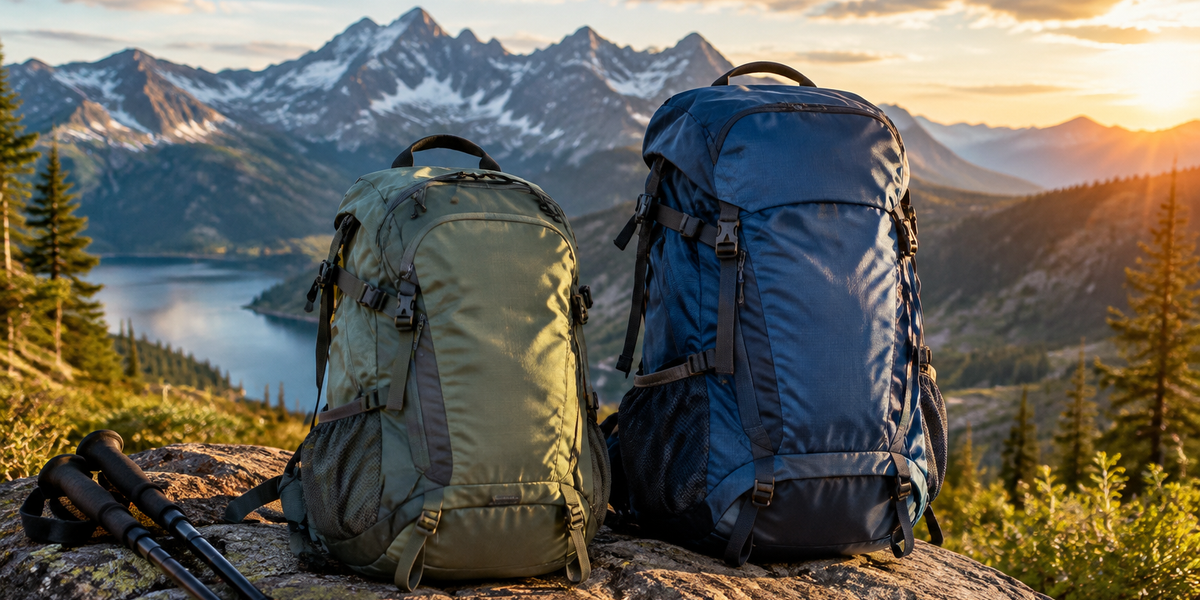
🏆 Best Overall: Osprey Talon 22 Hiking Daypack — the sweet spot for day hikers who want capacity without bulk, proven comfort system, and hydration-ready design.
💰 Best Value: Deuter Speed Lite 30 Hiking Backpack — extra 8L capacity at a lower price point, ideal for photographers and gear collectors.
Introduction
The 20L versus 30L debate is the most common question we hear from hikers outfitting their first serious daypack. Both sizes work for day hikes, but the right choice depends on your hiking style, typical trail conditions, and how much gear you actually carry. We researched dozens of models across both capacity ranges, analyzed verified buyer reviews, and compared manufacturer specs to identify which packs deliver the best balance of volume, weight, and comfort.
The short answer: most day hikers are better served by a 20–22L pack, which forces you to pack light and stays nimble on technical terrain. But if you regularly carry camera gear, extra layers for alpine starts, or plan occasional overnight trips, a 30L pack offers flexibility without the penalty of a true backpacking load. This guide breaks down the tradeoffs, reviews our top picks in each category, and helps you match capacity to your actual trail needs.
Whether you're upgrading from a school backpack or replacing a worn-out pack, the models below represent the best performers in 2026 based on ventilation, load distribution, durability, and real-world feedback from thousands of trail miles.
What to Look For in a Hiking Daypack
Capacity and compression — A 20L pack should fit a 2L reservoir, rain shell, snacks, and first aid without feeling stuffed. A 30L pack accommodates that load plus a puffy jacket, trekking poles (if you're deciding whether to bring them, see our guide on whether trekking poles are worth it for day hiking), and lunch for two. Compression straps let you cinch down lighter loads so the pack doesn't bounce.
Suspension and fit — Look for adjustable torso length, padded shoulder straps with load lifters, and a hip belt that actually transfers weight (not just a token strap). Packs under 1.5 lbs often sacrifice padding, which is fine for sub-10-mile days but painful on longer outings.
Ventilation — Mesh back panels and suspended designs (like Osprey's AG system) keep air flowing between your back and the pack. This matters more in summer heat or high-exertion climbs. Solid back panels are lighter but trap sweat.
Hydration compatibility — Internal sleeves for reservoirs and routing for drink tubes are standard now, but check that the opening is wide enough to load a 3L bladder if you run hot or hike in arid climates. External bottle pockets should fit 1L Nalgenes without requiring contortionist moves to retrieve them.
Gear attachment points — Ice axe loops, trekking pole sleeves, and side compression straps turn a daypack into a versatile gear hauler. If you carry a camera, look for a pack with a dedicated front pocket that keeps lenses accessible without unpacking your entire load.
Durability and weather resistance — 210D nylon is the sweet spot for abrasion resistance without excessive weight. DWR coatings shed light rain, but no daypack is waterproof — pack a dry bag or pack cover for electronics and down layers. Reinforced bottom panels extend pack life on rocky rest stops.
Osprey Talon 22 Hiking Daypack — Best Overall 20L Pick
| Criteria | Score |
|----------|-------|
| Weight-to-Capacity Ratio | 9/10 |
| Suspension Comfort | 9/10 |
| Ventilation | 8/10 |
| Gear Organization | 7/10 |
The Osprey Talon 22 hits the capacity ceiling for true day hiking without creeping into overnight territory. At 1.06 lbs, it's light enough for fast-paced ridge scrambles but includes a real suspension system with load lifters and a padded hip belt. The BioStretch harness moves with your shoulders instead of chafing, and the integrated hydration sleeve routes the tube cleanly through the shoulder strap. Verified buyers consistently praise the pack's stability on steep descents and the fact that it doesn't feel like a empty bag flapping around when you're only carrying a shell and snacks.
The main compartment opens wide with a zippered U-shape, making it easy to see everything inside without dumping the pack. Dual side pockets stretch to fit 1L bottles, and the front shove-it pocket swallows a rain jacket or shed layers. Trekking pole attachments are simple elastic loops that work but lack the refinement of dedicated sleeves. The hip belt pockets are too small for modern phones in bulky cases, which is the pack's biggest usability miss.
We'd spec this pack for hikers logging 8–15 mile days in three-season conditions who don't need to carry group gear or bulky camera bodies. It's overkill for flat rail trails but perfect for variable terrain where you're shedding and adding layers.
✅ Pros:
- Exceptional comfort-to-weight ratio for a sub-2-lb pack
- Hydration routing that doesn't snag or leak
- Stable load carry even when scrambling off-trail
- Durable 210D nylon body holds up to brush and rock scrapes
❌ Cons:
- Hip belt pockets too narrow for large phones
- No dedicated ice axe loop (loops only)
- Front pocket lacks internal organization
Deuter Speed Lite 30 Hiking Backpack — Best Value 30L Pick
| Criteria | Score |
|----------|-------|
| Capacity Flexibility | 9/10 |
| Value for Money | 10/10 |
| Ventilation | 8/10 |
| Load Distribution | 7/10 |
The Deuter Speed Lite 30 offers 8 more liters than the Talon 22 for $20 less, making it the value leader if you frequently max out smaller packs. At 1.5 lbs, it's only marginally heavier, and the VariFlex hip belt uses a clever foam-and-mesh design that ventilates better than solid padding. The extra volume makes this pack viable for overnights with an ultralight sleep system, though it lacks the frame structure of true backpacking packs.
The top-loading design with a floating lid gives you overflow capacity — pile a jacket and lunch on top, then cinch the lid down. Side compression straps pull the load tight when you're traveling light. The hydration sleeve fits 3L reservoirs, and the internal key clip is a small detail that prevents frantic pocket searches at the trailhead. Buyer reviews note that the pack rides higher on the back than Osprey models, which some taller hikers prefer but shorter users find less stable.
This is the pack for hikers who prioritize capacity and budget over cutting-edge suspension tech. If you're carrying a DSLR, extra layers for shoulder-season hikes, or regularly pack for two people, the Speed Lite 30 absorbs that load without complaint.
✅ Pros:
- Lowest price per liter in the 30L category
- VariFlex hip belt stays cool on hot climbs
- Compression system handles variable loads well
- Durable construction backed by Deuter's repair program
❌ Cons:
- Less structured than Osprey — feels floppy when empty
- Sternum strap positioning requires fiddling out of the box
- Top-loading access slower than panel loaders
20L vs 30L: Which Capacity Do You Actually Need?
Most hikers overestimate how much gear they need for a day hike. A 20L pack comfortably holds:
- 2–3L hydration reservoir or two 1L bottles
- Lightweight rain shell
- Insulating layer (fleece or puffy)
- First aid kit, headlamp, fire starter
- Snacks and lunch
- Phone, wallet, keys
That's enough for a full day in variable conditions, and the smaller volume forces you to edit your load. You'll move faster, feel less fatigued, and won't carry "just in case" items that never leave the pack.
A 30L pack makes sense if you:
- Carry camera gear (body + 2–3 lenses)
- Hike in alpine or desert conditions requiring extra water (4L+)
- Regularly pack for a partner or kids
- Want one pack that doubles for overnight trips
- Wear mountaineering boots that require more room for crampons and layers
The tradeoff is weight and bulkiness. Even empty, a 30L pack bounces more, catches on brush, and tempts you to fill it. We recommend most day hikers start with a 20–22L pack and only size up after confirming they routinely max out that capacity.
💡 Pro Tip: Test your actual packing volume at home before buying. Load everything you'd carry on a typical hike into a stuff sack and measure the volume with water displacement. If it's under 18L, a 20L pack gives you room to grow. If you're consistently at 22–25L, skip straight to 30L.
Essential Daypack Features Beyond Capacity
Hydration systems — Internal sleeves beat external pockets for stability, but make sure the pack has dual access (top and side) for refilling without unpacking. The Sawyer Squeeze Water Filter System weighs just 3 oz and lets you filter directly into your reservoir, eliminating the need to carry heavy water from the trailhead. At 0.1 micron filtration, it removes bacteria and protozoa — essential safety gear that fits in any pack size.
Load lifters — These angled straps at the top of the shoulder straps pull the pack closer to your body and shift weight off your shoulders onto your back. They're standard on 30L packs but often missing on budget 20L models. The difference is dramatic on steep climbs.
Hip belt pockets — These should fit your phone, snacks, and sunscreen without requiring you to remove the pack. Mesh pockets work for snacks but let phones slip out. Zippered pockets are more secure but harder to access on the move.
Rain cover vs dry bags — Integrated rain covers add 2–4 oz but protect your entire load. Dry bags are lighter and more versatile (you can pull out just the dry bag when you need something), but require discipline to use consistently. We prefer dry bags for critical items (electronics, down layers) and accept that the rest of the pack will get damp.
Frequently Asked Questions
Can I use a 20L daypack for overnight trips?
Yes, if you're committed to ultralight gear. A 20L pack can fit a quilt-style sleeping bag, bivy sack, inflatable pad, stove, and one day's food. You'll need to strap the pad and possibly the shelter to the outside. This works for fast-and-light summer trips but isn't practical in cold weather when you need bulkier insulation and a four-season shelter.
Do I need a women's-specific pack?
Women's packs have shorter torso lengths, narrower shoulder straps, and hip belts contoured for wider hips. If you're between 5'2" and 5'8" with a torso length under 17", try women's models first — they'll fit better than unisex packs sized down. Taller women often prefer unisex packs with adjustable torso length.
How do I know if a pack fits correctly?
The hip belt should sit on your hip bones (iliac crest), not your waist. When you tighten the hip belt, 80% of the pack's weight should transfer to your hips. The shoulder straps should hug your shoulders without gaps, and load lifters should angle back at 45 degrees. If the pack feels like it's pulling you backward, the torso length is too long.
Are expensive daypacks worth the price premium?
Packs in the $120–150 range (Osprey, Deuter, Gregory) use better materials, offer stronger warranties, and have more refined suspension systems than $50 budget packs. The difference is noticeable on hikes over 8 miles or when carrying 15+ lbs. If you hike monthly or more, the comfort and durability justify the cost. Casual hikers can get by with budget options.
What's the ideal pack weight for day hiking?
Your loaded daypack should weigh 10–15% of your body weight for comfortable all-day carry. A 150-lb hiker should target 15–22 lbs, including water. If your pack consistently exceeds 20% of your body weight, you're either carrying too much or need a larger pack with better suspension. Empty pack weight (1–2 lbs for daypacks) matters less than how the loaded weight distributes.
Final Thoughts
The 20L versus 30L decision comes down to honest assessment of what you actually carry. Most day hikers are better served by a 20–22L pack that keeps them moving fast and forces intentional packing. The Osprey Talon 22 remains our top pick for its unmatched blend of low weight, genuine comfort, and trail-tested durability. If you're a photographer, shoulder-season hiker, or want occasional overnight capability, the Deuter Speed Lite 30 delivers exceptional value without the bulk of full-size backpacking packs.
Before you buy, try on packs with weight in them — stuff a 15-lb load in the store demo and walk around for 10 minutes. The right pack disappears on your back. The wrong one announces itself with hot spots, pressure points, and bouncing. Your daypack is the one piece of gear you'll use on every single hike, so it's worth getting right the first time.
Editor's Choice
Osprey Talon 22 Hiking Daypack — the best all-around daypack for hikers who want nimble capacity without sacrificing comfort or hydration integration.
Deuter Speed Lite 30 Hiking Backpack — extra volume at a budget-friendly price, ideal for gear-heavy hikers and occasional overnights.
Sawyer Squeeze Water Filter System — essential safety gear that fits in any pack size and eliminates the burden of carrying heavy water supplies from the trailhead.