Disclosure: As an Amazon Associate, HikePod earns from qualifying purchases at no extra cost to you.
⭐ Our Top Pick
🏆 Best Overall: Merrell Men's Moab 3 Mid Waterproof Hiking Boot — synthetic construction means zero break-in with legendary Moab durability and all-day comfort.
💰 Best Value: KEEN Men's Targhee III Mid Waterproof Hiking Boot — wide-foot friendly with moderate 1-2 week break-in and excellent waterproof protection at a fair price.
Introduction
You just dropped $150 on a pair of hiking boots and you're itching to hit the trail this weekend. But should you? The answer depends entirely on what your boots are made of. Full-grain leather boots can take 2-4 weeks of consistent wear before they're truly trail-ready, while modern synthetic boots often feel broken in after just 3-7 days of casual use. Rush the process with stiff leather boots and you're asking for blisters, hot spots, and a miserable day on the trail.
We've compared break-in timelines across dozens of boot models, analyzed manufacturer specs, and reviewed thousands of verified buyer experiences to bring you the exact timelines for leather, synthetic, and hybrid constructions. You'll learn how to speed up the process safely, when to push through discomfort versus when to stop, and which boot materials match your hiking schedule. If you're also deciding between materials for longevity, check our Leather vs Synthetic Hiking Boots: Which Lasts Longer and Should You Choose in 2026? guide.
Whether you're breaking in heavy mountaineering boots for a multi-day trek or just want to know if your new trail runners need any prep time, this guide will save you from painful mistakes and get you on the trail faster.
What to Look For
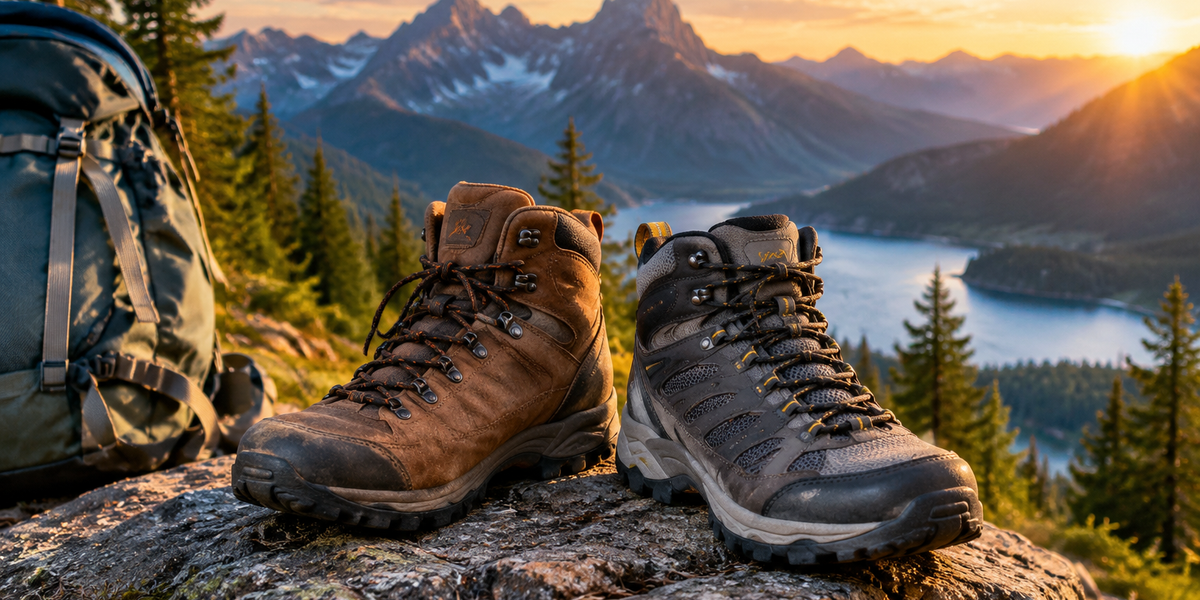
Material composition drives break-in time. Full-grain leather requires the longest break-in (2-4 weeks) because the material must soften and conform to your foot shape. Split leather or nubuck sits in the middle (1-2 weeks), while synthetic fabrics like nylon mesh and polyurethane overlays are nearly trail-ready out of the box (3-7 days of casual wear).
Construction method affects flexibility. Traditionally stitched boots (Goodyear welt, Norwegian welt) start stiffer and need more time to flex naturally at the ball of your foot. Cemented or injection-molded boots flex immediately but may sacrifice long-term durability. If a boot feels rigid when you flex it in the store, expect a longer break-in period.
Your foot shape and hiking style matter. Wide feet, high arches, or bunions extend break-in time because the boot upper needs more stretching to accommodate your anatomy. Aggressive hikers who load their boots hard on steep descents will break in boots faster than casual walkers, but they also risk blisters if they push too hard too soon.
Break-in is not the same as sizing. A boot that causes pain in the heel cup, crushes your toes at the front, or creates pressure points over the top of your foot is the wrong size or shape for you — no amount of break-in will fix poor fit. Break-in should only address initial stiffness and minor hot spots, not fundamental fit problems.
Hot spots are early warnings, blisters are failures. If you feel a warm, tender area developing during break-in walks, stop immediately, apply a blister prevention product, and give your feet a rest day. Pushing through to full blisters sets your break-in timeline back by a week or more while skin heals.
Indoor wear accelerates break-in without risk. Wearing boots around the house with thick hiking socks for 1-2 hours per day for the first week softens materials and identifies pressure points in a controlled environment where you can take them off immediately if problems develop.
Break-In Timeline by Material
Full-Grain Leather Boots (2-4 Weeks)
| Criteria | Score |
|----------|-------|
| Initial Comfort | 4/10 |
| Flexibility Out of Box | 3/10 |
| Break-In Speed | 3/10 |
| Long-Term Durability | 10/10 |
Full-grain leather hiking boots are the marathon runners of footwear break-in. The thick, unprocessed leather starts rigid to provide maximum support and waterproofing, but it demands patience. Expect 2-4 weeks of progressive wear: start with 1-2 hours of indoor wear daily for the first 3-4 days, then short walks on flat terrain (20-30 minutes) for another week, gradually building to 2-3 hour hikes by week three. The leather will crease at natural flex points and soften around your ankle and instep, but rushing this process causes painful heel blisters and pressure points over the foot's bony prominences. Apply a leather conditioner after the first week to keep the material supple without over-softening it.
✅ Pros:
- Unmatched durability and support once broken in
- Superior waterproofing that improves with treatment
- Molds precisely to your unique foot shape over time
❌ Cons:
- Longest break-in period of any boot material
- Requires consistent maintenance with conditioners
- Heavy compared to synthetic alternatives
💡 Pro Tip: Speed up leather break-in by wearing boots in the shower for 5 minutes, then immediately going for a 30-minute walk while they're still damp. The wet leather molds faster, but only do this once per week to avoid over-softening.
Synthetic and Synthetic-Leather Hybrid Boots (3-7 Days)
| Criteria | Score |
|----------|-------|
| Initial Comfort | 8/10 |
| Flexibility Out of Box | 9/10 |
| Break-In Speed | 9/10 |
| Long-Term Durability | 7/10 |
Modern synthetic boots using nylon mesh, polyurethane overlays, and TPU heel counters flex immediately and conform quickly to your foot. Most hikers can wear these straight out of the box for short 1-2 hour hikes after just one day of indoor wear. The materials don't require softening like leather, but you still need 3-7 days to identify any pressure points and let your feet adapt to the boot's support pattern. The Merrell Men's Moab 3 Mid Waterproof Hiking Boot exemplifies this instant-comfort category with its flexible synthetic upper and cushioned midsole that feels broken in from day one.
✅ Pros:
- Minimal break-in time means faster trail access
- Lightweight construction reduces fatigue on long hikes
- Lower maintenance than leather boots
❌ Cons:
- Shorter overall lifespan than full-grain leather
- Less precise molding to individual foot shape
- May not provide enough support for heavy backpacking loads
Split Leather and Nubuck Boots (1-2 Weeks)
| Criteria | Score |
|----------|-------|
| Initial Comfort | 6/10 |
| Flexibility Out of Box | 6/10 |
| Break-In Speed | 7/10 |
| Long-Term Durability | 8/10 |
Split leather (the inner layers of a hide) and nubuck (buffed full-grain leather) offer a middle ground between the stiffness of full leather and the instant flexibility of synthetics. These materials need 1-2 weeks of progressive wear, starting with indoor sessions and building to 1-hour trail walks by day 7-10. The KEEN Men's Targhee III Mid Waterproof Hiking Boot uses nubuck leather that softens faster than full-grain while maintaining excellent durability and waterproof performance.
✅ Pros:
- Faster break-in than full-grain leather
- Good balance of support and initial comfort
- More affordable than premium full-grain boots
❌ Cons:
- Still requires dedicated break-in period
- Not as instantly comfortable as pure synthetics
- May need periodic conditioning to maintain suppleness
How to Speed Up Break-In Safely
Progressive wear is the golden rule. Start with 1-2 hours of indoor wear with your hiking socks for the first 2-3 days, walking on carpet and hard floors to flex the boot naturally. Move to short outdoor walks (20-30 minutes) on flat, even surfaces like sidewalks for the next 3-4 days, then graduate to easy trails with moderate elevation gain. This staged approach lets materials soften gradually while your feet build tolerance to the boot's pressure patterns.
Target problem areas with heat. If you identify a specific stiff spot causing discomfort (common at the ankle collar or over the instep), wear thick socks, aim a hairdryer at the tight area for 30-45 seconds to warm the material, then immediately walk for 10-15 minutes while the boot cools and conforms. This technique works on both leather and synthetic materials but should only be used on specific trouble spots, not the entire boot.
Use blister prevention from day one. Apply lubricant products like BodyGlide or petroleum jelly to known friction zones (heels, outer ankle bones, tops of toes) before every break-in session. This creates a protective barrier that lets materials soften without damaging your skin. Once you develop a blister, you have to stop wearing the boots until it heals, adding a week or more to your timeline.
Vary your sock thickness strategically. Start break-in with thick hiking socks to create extra space and cushioning, then transition to your preferred sock weight once the boot softens. This prevents excessive stretching while still allowing the materials to conform. Never break in boots with thin or cotton socks — you need the cushioning and moisture management of proper hiking socks.
💡 Pro Tip: Lace boots loosely during indoor break-in sessions to let the upper materials flex without creating pressure points. Tighten to normal hiking tension only when you're ready for outdoor walks.
When Break-In Goes Wrong
Persistent pain signals a fit problem, not a break-in issue. If a boot continues to cause sharp pain in the same spot after 7-10 days of progressive wear, the boot's shape fundamentally doesn't match your foot anatomy. Common culprits include a heel cup that's too wide (causing lift and blisters), a toe box that's too narrow (crushing toes on descents), or a instep that's too low (creating top-of-foot pressure). Return or exchange the boots rather than forcing a bad fit.
Blisters that won't heal mean you pushed too hard. If you develop a full blister during break-in, stop wearing the boots entirely until the skin heals completely (typically 5-7 days). Continuing to wear boots over damaged skin compounds the injury and can lead to infection. Use this downtime to treat the blister properly and reassess whether you're breaking in too aggressively.
Excessive creasing or cracking indicates over-softening. Leather boots should develop natural creases at flex points, but if you see deep cracks or the leather becomes too floppy, you've compromised the boot's structural integrity through over-conditioning or excessive wet break-in techniques. This damage is permanent and reduces the boot's support and lifespan.
Frequently Asked Questions
Can I skip break-in on synthetic boots and just start hiking?
Short answer: yes for short day hikes, no for serious mileage. Modern synthetic boots like the Salomon Men's X Ultra 4 GTX Hiking Shoes are comfortable enough for 1-2 hour hikes immediately, but even flexible synthetics benefit from 2-3 days of casual wear to identify any hot spots before you commit to an all-day trek. Your feet also need time to adapt to the boot's support system and pressure patterns, even if the boot itself doesn't require material softening.
Do I need to break in waterproof boots differently?
Waterproof membranes like Gore-Tex don't affect break-in timeline, but the outer materials do. A boot with a synthetic upper and Gore-Tex lining breaks in just as fast as a non-waterproof synthetic boot (3-7 days). However, full-leather waterproof boots often use thicker, stiffer leather for better water resistance, which can extend break-in to the longer end of the 2-4 week range. The membrane itself is flexible and doesn't need breaking in.
Should my feet hurt during the break-in period?
Minor discomfort is normal, pain is not. You should feel slight stiffness and awareness of the boot's structure during early break-in walks, but never sharp pain or burning sensations. Hot spots (warm, tender areas that precede blisters) are acceptable as long as you stop immediately and address them with tape or lubricant. If the same spot hurts every time you wear the boots after 5-7 days of break-in, the fit is wrong.
How do I know when my boots are fully broken in?
Your boots are broken in when you can hike 3-4 hours at normal pace without developing any hot spots or discomfort, the upper materials flex naturally at your foot's bend points without resistance, and you stop thinking about your boots during the hike. For leather boots, you should see natural creasing at the flex points and the leather should feel noticeably softer than when new. For synthetics, the difference is subtler but the boot should feel like an extension of your foot rather than a separate piece of equipment.
Can I speed up leather boot break-in by soaking them overnight?
No — overnight soaking over-softens leather and damages the boot's structure. The controlled "shower method" (5 minutes of warm water exposure followed by a 30-minute walk) works because the leather only gets damp, not saturated, and you immediately mold it to your foot through wear. Soaking boots for hours or overnight causes the leather to lose its shape, weakens adhesives, and can damage waterproof treatments. If your boots need that much softening, they're likely the wrong stiffness category for your intended use.
Final Thoughts
Break-in time isn't just about the boots — it's about matching your footwear choice to your hiking timeline and style. If you need boots ready for a weekend trip in three days, synthetic or hybrid constructions like the Moab 3 or Salomon X Ultra 4 GTX deliver immediate trail readiness. Planning a serious backpacking trip several weeks out? Full-grain leather boots give you time to properly break them in while offering superior long-term durability and support.
The single biggest mistake is skipping the break-in process entirely and hitting the trail for a full-day hike in untested boots. Even the most comfortable synthetic boots benefit from 2-3 short test walks to identify potential hot spots and let your feet adapt to the support pattern. Start your break-in the day your boots arrive, follow the progressive wear schedule for your boot's material, and listen to your feet — minor discomfort is normal, but pain means you need to slow down or reassess fit. When you're deciding between materials for your next pair, remember that understanding the fundamental differences between leather and synthetic constructions helps you choose boots that match both your hiking style and your break-in patience.
Get your new boots on your feet today with short indoor sessions, and you'll be trail-ready when the weekend arrives — no blisters, no regrets.
Editor's Choice
Merrell Men's Moab 3 Mid Waterproof Hiking Boot — Zero break-in synthetic construction with legendary Moab reliability makes this the obvious choice for hikers who want comfort from day one without sacrificing durability.
Salomon Men's X Ultra 4 GTX Hiking Shoes — Ultralight at 12.5 oz with Gore-Tex waterproofing and minimal break-in makes these ideal for fast-and-light hikers tackling aggressive day hikes and ultralight backpacking trips.
KEEN Men's Targhee III Mid Waterproof Hiking Boot — Wide-foot hikers get KEEN's signature roomy toe box with moderate 1-2 week break-in and excellent waterproof protection at a competitive price point.