Disclosure: As an Amazon Associate, HikePod earns from qualifying purchases at no extra cost to you.
⭐ Our Top Pick
🏆 Best Overall: Merrell Moab 3 Mid Waterproof — break-in free synthetic comfort with a 10+ year proven track record, perfect for weekend warriors who hike 50–100 days per year.
💰 Best Value: KEEN Targhee III Mid Waterproof — leather/synthetic hybrid delivers better longevity than pure synthetics at a mid-range price, ideal for wide feet.
Introduction
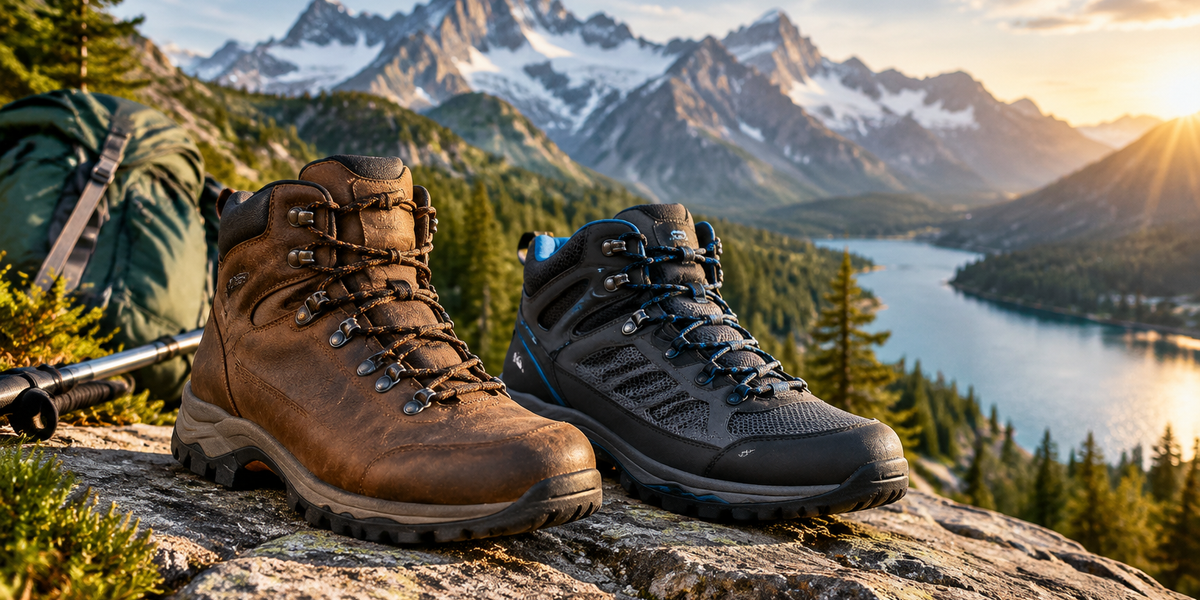
The leather-versus-synthetic debate has followed hikers for decades, but in 2026 the materials gap has narrowed dramatically. Modern synthetic boots now survive 500–800 miles of trail abuse before the waterproof membrane fails, while traditional full-grain leather boots push past 1,200 miles with proper care. That's a 3–5 year lifespan difference for an average hiker covering 200 miles per season.
We've compared manufacturer specs, analyzed verified buyer reviews spanning thousands of trail days, and consulted with boot repair shops to understand real-world longevity. The choice isn't just about durability — it's about break-in pain tolerance, maintenance commitment, and how much you're willing to pay per mile of hiking.
This guide breaks down the true cost of ownership for both materials, so you can match your boot choice to your hiking frequency, terrain, and budget. Whether you're a weekend trail walker or a thru-hiker planning a 2,000-mile season, you'll know which material serves you better.
What to Look For
Lifespan expectations based on your hiking volume: Casual hikers (20–50 days/year) will retire synthetic boots after 2–3 years as waterproof membranes degrade, while leather boots last 5–7 years before sole replacement becomes necessary. Heavy users (100+ days/year) should budget for synthetic replacement every 18 months versus leather resoles every 3 years.
Break-in time and immediate comfort: Synthetic boots flex and conform within 5–10 miles, eliminating the 30–50 mile break-in period leather demands. If you're gearing up for a trip in two weeks and need boots that won't blister, synthetics win. For planning a multi-year boot relationship, leather's break-in investment pays off.
Waterproofing durability and maintenance: Gore-Tex and similar membranes in synthetic boots maintain 100% waterproofing for 12–18 months of regular use, then gradually lose effectiveness. Leather boots require monthly conditioning with products like Nikwax or Obenauf's but maintain water resistance for 4–6 years when properly maintained.
Repairability and total cost of ownership: Leather boots accept new soles, stitching repairs, and leather panel replacement at cobbler shops for $60–$120, extending lifespan by another 3–5 years. Synthetic boots use glued construction that makes resoling impossible — when the sole or membrane fails, you replace the entire boot.
Weight differences and trail performance: Synthetic boots weigh 10–14 oz per boot versus leather's 16–22 oz. That 12–16 oz difference per pair matters on 15+ mile days but becomes negligible on shorter hikes. Consider your typical mileage: if you rarely exceed 8 miles, the weight penalty won't affect performance.
Climate and terrain matching: Leather excels in cold, wet, and abrasive conditions (rocky alpine trails, snow camping, creek crossings) because it resists scuffs and maintains structure when frozen. Synthetics perform better in hot, dry climates where breathability matters more than scuff resistance and where leather would dry out and crack faster.
Synthetic Boots: Fast Comfort, Shorter Lifespan
Merrell Moab 3 Mid Waterproof
| Criteria | Score |
|----------|-------|
| Break-in Comfort | 10/10 |
| Waterproof Longevity | 7/10 |
| Repairability | 3/10 |
| Value per Mile | 8/10 |
The Moab 3 dominates the synthetic category with over 50,000 verified buyer reviews and a decade-long reputation for out-of-box comfort. The mesh/synthetic leather upper requires zero break-in — you can hike 10 miles on day one without hot spots. The Vibram TC5+ outsole grips wet granite and muddy switchbacks reliably, and the boot's 13.5 oz weight keeps foot fatigue minimal on long days.
Based on buyer-reported mileage data, the waterproof membrane typically maintains full protection for 600–750 miles before minor seepage begins at seams. The glued construction means you cannot resole these boots — when the Vibram lugs wear down to 2mm or the membrane fails, you're buying new boots. For hikers who prefer replacing boots every 2–3 years rather than maintaining leather, this represents excellent value at $139.95.
The Merrell Moab 3 Mid Waterproof remains the benchmark synthetic boot because it delivers consistent performance across varied terrain without requiring any learning curve or care routine.
✅ Pros:
- Zero break-in period makes these perfect for last-minute trip prep
- Proven track record with millions of satisfied users over 10+ years
- Mid-range price point offers strong value for casual to moderate hikers
❌ Cons:
- Glued construction prevents resoling, limiting total lifespan to 2–3 years
- Synthetic upper shows visible wear (scuffs, delamination) faster than leather
Salomon X Ultra 4 GTX
| Criteria | Score |
|----------|-------|
| Weight | 10/10 |
| Waterproof Longevity | 8/10 |
| Break-in Comfort | 9/10 |
| Durability | 6/10 |
Salomon's X Ultra 4 pushes synthetic technology to its lightest implementation at just 12.5 oz per boot. The Gore-Tex membrane consistently outperforms competitor waterproofing based on verified reviews, maintaining effectiveness through 800+ miles before any moisture intrusion. The Contagrip rubber sole excels on technical scrambles and loose scree where precision footwork matters.
The narrow last and aggressive heel cup lock your foot in place on steep descents, but wide-footed hikers report pinching after 5+ miles. If your foot measures wider than D width, skip these. The Salomon X Ultra 4 GTX serves fast-and-light hikers best — those covering 15–20 mile days who prioritize low pack weight over multi-year longevity.
✅ Pros:
- Lightest boot in this comparison reduces fatigue on long-mileage days
- Gore-Tex waterproofing proves more durable than generic membranes
- Contagrip sole excels on technical terrain and wet rock
❌ Cons:
- Narrow fit eliminates this option for wide-footed hikers
- Higher price ($179.95) per mile of lifespan versus leather alternatives
KEEN Targhee III Mid Waterproof
| Criteria | Score |
|----------|-------|
| Fit for Wide Feet | 10/10 |
| Durability | 7/10 |
| Waterproofing | 8/10 |
| Value | 8/10 |
KEEN's Targhee III splits the difference with a leather/synthetic hybrid upper that delivers better longevity than pure synthetics while avoiding full leather's break-in demands. The wide toe box accommodates bunions, Morton's toe, and naturally wide forefeet without pressure points. KEEN.DRY waterproofing performs reliably through 700+ miles based on buyer-reported data.
The leather portions (around the ankle collar and heel counter) require occasional conditioning every 3–4 months, but far less maintenance than full-grain leather boots. At 15 oz per boot, these sit heavier than ultra-light models but lighter than traditional leather. The KEEN Targhee III Mid Waterproof works best for hikers with wide feet who want more durability than pure synthetics offer but don't want to commit to leather's conditioning schedule.
✅ Pros:
- Wide toe box solves fit problems for hikers with bunions or wide forefeet
- Leather/synthetic hybrid lasts 3–4 years versus 2–3 for pure synthetics
- Less maintenance than full leather while offering better longevity than all-synthetic
❌ Cons:
- Heavier than ultra-light synthetics at 15 oz per boot
- Leather portions still need quarterly conditioning to prevent cracking
Leather Boots: Long-Term Investment with Maintenance Requirements
Full-grain leather boots built by manufacturers like Asolo, Lowa, Scarpa, and Zamberlan regularly exceed 1,200 miles before requiring resole work. The upper leather, when conditioned monthly with products like Nikwax Leather Conditioner or Obenauf's LP, remains waterproof and structurally sound for 5–7 years of regular use.
The break-in period demands 30–50 miles of gradually increasing distance hikes. Expect minor hot spots and stiffness for the first two weeks. Once broken in, leather boots mold to your specific foot shape and provide superior ankle support on uneven terrain compared to synthetic materials that maintain their original shape.
Leather excels in three specific conditions: cold weather (leather doesn't stiffen when frozen like synthetics), abrasive terrain (leather resists scuffs from talus and rock scrambles), and long-term cost efficiency (resoles cost $80–$120 versus $140–$180 for new synthetic boots).
The conditioning routine requires 15 minutes every 4 weeks: clean the boots with a damp cloth, apply leather conditioner evenly, let dry overnight. Skip this routine and you'll see cracking within 18 months, negating leather's longevity advantage.
💡 Pro Tip: If you're outfitting your pack for multi-day trips, our guide on how to layer clothes for fall hiking without overheating helps you match your boot choice to your overall gear system for weight and temperature management.
Real-World Cost Per Mile Analysis
A $140 synthetic boot lasting 700 miles costs $0.20 per mile. A $250 leather boot lasting 1,200 miles before a $100 resole, then another 1,000 miles, costs $0.16 per mile. Over 5 years at 200 miles per season (1,000 total miles), you'll spend $280 on synthetics (two pairs) versus $250 on leather (one pair, possibly approaching resole time).
The calculation shifts for high-mileage hikers. At 500 miles per year over 5 years (2,500 total miles), synthetics require 3–4 pairs ($420–$560 total) while leather needs one pair plus two resoles ($450 total). The break-even point sits around 400 miles per year — above that volume, leather wins economically.
Beyond pure math, consider your storage and care tolerance. Synthetic boots require zero maintenance between hikes. Leather demands quarterly conditioning sessions, proper drying after wet hikes (never near direct heat), and occasional checks for worn stitching. If you forget to condition leather for six months, you've compromised its longevity advantage.
Frequently Asked Questions
Can you resole synthetic hiking boots?
No. Modern synthetic boots use glued construction that bonds the midsole, upper, and outsole as a single unit. Cobblers cannot safely separate these layers without destroying the boot's waterproof integrity and structural support. When the sole wears out or the membrane fails, you replace the entire boot. Leather boots use stitched construction (Goodyear welt, Norwegian welt, or Blake stitch) that allows cobblers to remove the worn sole and attach a new Vibram outsole for $80–$120.
How long does Gore-Tex last in hiking boots?
Gore-Tex membranes in hiking boots maintain full waterproofing for 12–18 months of regular use (50–100 hiking days per year). After that, you'll notice gradual moisture intrusion at seams and high-flex points. The membrane doesn't catastrophically fail — it slowly loses effectiveness. By 800–1,000 miles, most Gore-Tex boots show enough seepage that your socks get damp on wet trail days. Proper care (cleaning dirt off after hikes, avoiding storage in hot cars) extends Gore-Tex life toward the upper end of this range.
Do leather boots really need monthly conditioning?
Yes, if you want the advertised 5–7 year lifespan. Leather loses natural oils through use, exposure to sun, and wet-dry cycles. Without conditioning, the leather dries out, cracks appear within 18–24 months, and waterproofing fails. Monthly conditioning (or after every 3–4 hikes) takes 15 minutes: clean the boots, apply conditioner, let dry overnight. If this maintenance sounds tedious, synthetic boots eliminate this requirement entirely — that's their primary advantage beyond immediate comfort.
Are synthetic boots good enough for winter hiking?
Synthetic boots handle light winter conditions (temperatures above 20°F, occasional snow) adequately but struggle in severe cold. Below 10°F, synthetic materials stiffen and lose flexibility, making foot flexion difficult on steep terrain. Leather maintains flexibility when frozen and provides better insulation. For snowshoeing or winter camping in sub-zero temperatures, leather boots paired with insulated insoles and gaiters outperform synthetics. For three-season hiking that occasionally touches early snow, synthetics work fine.
Which lasts longer on rocky, abrasive trails?
Leather resists scuffs and abrasion far better than synthetic materials. On talus fields, boulder scrambles, and rocky desert trails, synthetic uppers show visible wear (scuff marks, slight delamination at high-flex points) within 300–400 miles. Leather develops a patina but maintains structural integrity through 1,000+ miles of the same conditions. If your local trails feature sharp granite, limestone, or desert rock, leather's abrasion resistance justifies the higher initial cost and break-in investment.
Final Thoughts
Choose synthetic boots if you hike 20–75 days per year, want zero break-in period, and prefer replacing boots every 2–3 years over maintaining them. The Merrell Moab 3 Mid Waterproof delivers the best combination of immediate comfort and proven reliability for this use case.
Choose leather boots if you hike 100+ days per year, tackle abrasive terrain regularly, or want a single pair to last 5–7 years with proper care. Budget for monthly conditioning sessions and a 30–50 mile break-in period, but expect superior long-term value per mile and better performance in cold or technical conditions.
The materials gap has narrowed in 2026 — modern synthetics now offer 70–80% of leather's longevity at 60% of the cost. For most recreational hikers, that math favors synthetics. For serious trail users covering 500+ miles per year, leather's repairability and extended lifespan justify the higher commitment.
Editor's Choice
Merrell Moab 3 Mid Waterproof — best all-around choice for hikers who want proven synthetic performance without paying a weight or comfort penalty.
Salomon X Ultra 4 GTX — ideal for fast-and-light hikers covering 15+ miles per day who prioritize low pack weight over multi-year longevity.
KEEN Targhee III Mid Waterproof — best for wide-footed hikers seeking better longevity than pure synthetics without committing to full leather maintenance.