Disclosure: As an Amazon Associate, HikePod earns from qualifying purchases at no extra cost to you.
⭐ Our Top Pick
🏆 Best Overall: Black Diamond Spot 400-R Rechargeable Headlamp — 400 lumens and IPX8 waterproofing handle frozen trails and predawn navigation with confidence.
💰 Best Value: Vont Spark LED Headlamp 2-Pack — two waterproof headlamps with red night-vision mode for under $15.
Introduction
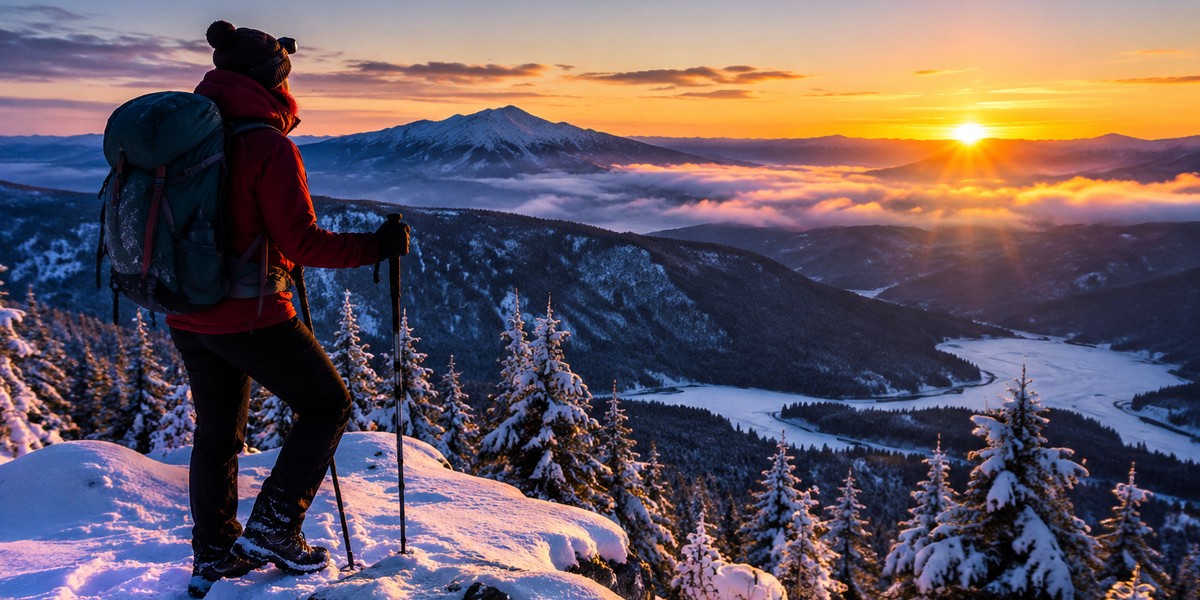
Winter sunrise hikes deliver some of the most spectacular moments in the mountains — alpenglow painting frozen peaks, that first golden light breaking over snow-covered ridgelines, and the quiet satisfaction of summiting before most people leave their beds. But chasing those magic-hour views means hiking in conditions that amplify every risk: darkness, cold, potentially icy trails, and the physiological stress of early starts in freezing temperatures.
We've researched the planning frameworks, gear requirements, and safety protocols that separate a memorable winter sunrise hike from a dangerous one. This guide synthesizes insights from mountaineering organizations, winter trail reports, and verified experiences from cold-weather hikers to help you chase that sunrise safely. Whether you're targeting your first predawn winter summit or refining your cold-weather systems, the strategies below will keep you comfortable and secure when the stakes are highest.
From lighting and navigation to layering systems and emergency protocols, we'll walk through the specific considerations that make winter sunrise hiking unique — and show you how to prepare for them.
What to Look For
Lighting That Handles Darkness and Cold — Your headlamp is non-negotiable for winter sunrise hikes. Look for 300+ lumens for trail navigation, red or dimmed modes to preserve night vision while you wait for sunrise, and waterproof ratings (IPX4 minimum, IPX7+ ideal) to handle snow and freezing precipitation. Lithium or rechargeable batteries perform better in cold than alkaline. Carry a backup light source.
Layering System for Moving and Stationary Warmth — You'll generate heat hiking uphill in the dark, then stand still in freezing temps waiting for sunrise. Plan a moisture-wicking base layer, insulating mid-layer (fleece or synthetic puffy), windproof shell, and a dedicated summit puffy you keep dry in your pack for the stationary waiting period. Bring insulated gloves, a warm hat, and a neck gaiter or balaclava.
Traction Devices for Ice and Frozen Ground — Winter trails are often icy in predawn hours, even on routes that thaw by afternoon. Microspikes or lightweight crampons are essential on most winter sunrise hikes. If you're unfamiliar with icy terrain or considering particularly steep routes, our guide on how to choose a hiking trail for your fitness level includes cold-weather terrain considerations.
Navigation Tools Beyond Your Phone — Cold drains phone batteries rapidly, and winter conditions can obscure trails under snow. Carry a GPS device or downloaded offline maps, a paper map, and a compass. Mark your turnaround time and stick to it — summiting for sunrise is a goal, not a requirement.
Emergency Kit Sized for Cold Weather — Beyond standard ten essentials, winter sunrise kits should include chemical hand warmers, an emergency bivy or space blanket, fire-starting materials, extra food (high-calorie, won't freeze solid), and a thermos with hot liquid. Hypothermia risk is real on winter mornings.
Early-Start Logistics and Partner Communication — Solo winter hiking carries elevated risk; if you're weighing your options, see our analysis in Hiking Alone vs With a Group: Pros, Cons, and Safety Considerations. Regardless, leave a detailed trip plan with someone, including trailhead location, route, expected return time, and emergency contacts.
Best Headlamps for Winter Sunrise Hiking
A reliable headlamp is your most critical piece of gear for predawn winter hiking. We compared models based on brightness, cold-weather battery performance, waterproofing, and features that matter when you're navigating frozen trails in the dark.
Black Diamond Spot 400-R Rechargeable Headlamp
| Criteria | Score |
|----------|-------|
| Brightness | 8/10 |
| Battery Life (Cold) | 7/10 |
| Water Resistance | 10/10 |
| Value | 9/10 |
The Black Diamond Spot 400-R hits the sweet spot for winter sunrise hikers who need proven reliability without premium pricing. Its 400-lumen output provides ample brightness for technical trail navigation and spotting trail markers on snow-covered paths. The IPX8 waterproof rating means it handles submersion up to 1.1 meters — overkill for most hiking, but reassuring when you're caught in freezing rain or heavy snow. Red night-vision mode is clutch for preserving your dark adaptation while you wait for that first light to break.
The rechargeable battery is convenient for frequent hikers and eliminates the disposable-battery waste stream, though like all rechargeable lithium cells, it loses capacity faster in sub-freezing temps. Keep it in an inside jacket pocket until you need it, or carry a small USB power bank as backup. The dimming function lets you conserve battery on easy trail sections. At under $40, it's accessible for hikers who do a few winter sunrise trips per season without needing to invest in expedition-grade lighting.
✅ Pros:
- 400 lumens with adjustable brightness for battery management
- IPX8 waterproofing handles worst-case winter weather
- Red mode protects night vision for sunrise viewing
- USB rechargeable eliminates battery waste
❌ Cons:
- Battery capacity drops in extreme cold (below 10°F)
- Heavier than ultralight headlamps (3.1 oz with battery)
Petzl Actik Core 450 Lumen Headlamp
| Criteria | Score |
|----------|-------|
| Brightness | 9/10 |
| Battery Life (Cold) | 9/10 |
| Water Resistance | 7/10 |
| Value | 7/10 |
The Petzl Actik Core is the choice for serious winter hikers who want maximum brightness and battery flexibility. At 450 lumens, it outshines most headlamps in this weight class, and the wide/focused beam switch lets you toggle between peripheral vision for broad trail awareness and a tight spot beam for picking out distant markers or navigating tricky descents.
What sets the Actik Core apart is its hybrid power system: the rechargeable Core battery delivers the headline 450-lumen performance, but you can swap in standard AAA batteries if the rechargeable dies. That backup option is invaluable on multi-day winter trips or when you're caught out longer than planned. Petzl's cold-weather battery performance is notably better than most competitors — verified buyer reviews consistently mention reliable output down to single-digit Fahrenheit temps.
The IPX4 water resistance (splash-proof) is adequate for most winter conditions but not submersion-proof like the Black Diamond. At $65, it's a premium investment that makes sense if you're doing regular winter hiking or need the confidence of backup power systems.
✅ Pros:
- 450 lumens with wide and focused beam options
- Rechargeable Core battery plus AAA backup system
- Excellent cold-weather performance down to 5°F
- Adjustable tilt for hands-free tasks
❌ Cons:
- Higher price point ($64.95)
- IPX4 rating less robust than fully waterproof models
Vont Spark LED Headlamp (2-Pack)
| Criteria | Score |
|----------|-------|
| Brightness | 6/10 |
| Battery Life (Cold) | 6/10 |
| Water Resistance | 7/10 |
| Value | 10/10 |
For casual winter hikers or those who want an affordable backup headlamp, the Vont Spark 2-Pack delivers surprising functionality for under $15. You get two complete headlamps, both with seven lighting modes including red night-vision, IPX5 waterproofing, and a lifetime warranty. This is the headlamp to keep in your car emergency kit, lend to a friend joining your sunrise hike, or stash as a backup in your pack.
The brightness won't match premium models — it's adequate for well-marked trails and moderate terrain, but not ideal for technical off-trail navigation or extremely dark conditions. Standard AAA batteries drain faster in freezing temps, so keep spares warm and swap them before a long descent. The comfort and build quality are basic but functional. For the price of one premium headlamp, you can outfit yourself and a hiking partner, or have a main light plus a dedicated backup.
✅ Pros:
- Two headlamps for $14.99 — exceptional value
- Seven modes including red night-vision
- IPX5 waterproof handles snow and rain
- Lifetime warranty from manufacturer
❌ Cons:
- Lower maximum brightness limits use on technical terrain
- AAA batteries lose charge quickly in sub-freezing temps
Camp Lighting for Extended Pre-Sunrise Staging
If you're camping near your trailhead the night before or staging at a summit for an extended sunrise wait, a lantern provides 360-degree ambient light for cooking, gearing up, or sharing space with your group. The Etekcity LED Camping Lantern 2-Pack runs 12+ hours on AA batteries, collapses to pocket size, and gives you two units for under $16. Keep one at your tent or car, carry the other to the summit if you're waiting in the dark for a while.
💡 Pro Tip: Warm your headlamp batteries inside your jacket for 5–10 minutes before turning on the light in extreme cold. This simple step can extend runtime by 30% or more when temps drop below 15°F.
Planning Your Winter Sunrise Hike
Start Time Calculation — Work backwards from the sunrise time (check accurate local data, not generic sunrise tables). Add 30–45 minutes before official sunrise to reach your viewpoint — the best light often happens in the pre-sunrise alpenglow phase. Then add your estimated hiking time, accounting for slower winter pace (typically 25–40% longer than summer). Add another 30–60 minutes buffer for gear checks, warm-up, and darkness. For a 7:00 AM sunrise on a 2-hour summer hike, plan a 3:30–4:00 AM trailhead start.
Weather Window Assessment — Winter weather changes fast. Check forecasts from multiple sources (NOAA, Mountain Forecast, local ski area reports) within 24 hours of your hike. Pay attention to overnight lows, wind chill, precipitation type, and visibility. A cloudy sunrise is disappointing; whiteout conditions or freezing rain are dangerous. Have a no-go threshold and stick to it.
Trail Condition Research — Check recent trip reports (AllTrails, local hiking forums, ranger station updates) for winter-specific conditions: snow depth, ice extent, avalanche risk, stream crossings, and whether the trail is being maintained. A summer favorite may be impassable or require winter mountaineering skills.
Hydration Strategy — Dehydration happens faster in cold, dry air, but frozen water bottles and hydration bladders are common problems. Use an insulated bottle, store it upside-down (water freezes from the top), or wrap it in a spare sock. Start hydrated before you leave home. Carry a thermos with warm tea or electrolyte drink for summit waiting time.
Nutrition and Energy Management — Cold weather and early starts spike your caloric needs. Pack high-fat, high-calorie foods that won't freeze solid (nut butter packets, cheese, chocolate, dense energy bars). Eat before you feel hungry. Keep some calories in your jacket pocket where body heat keeps them accessible.
Recognizing and Managing Cold-Weather Risks
Hypothermia Awareness — Symptoms start subtle: shivering, clumsiness, confusion, slurred speech. In winter darkness, it's harder for partners to notice. Do regular self-checks and buddy checks. If you or a partner shows signs, stop, add layers, eat calories, and consider turning back. Hypothermia progresses faster than most people realize.
Frostbite Prevention — Fingers, toes, nose, and ears are most vulnerable. Mittens are warmer than gloves. Keep a spare pair dry. Wiggle toes regularly and check for numbness. If you lose feeling, stop and warm the area immediately — continued hiking on frostbitten toes can cause permanent damage.
Ice Fall Hazards — Frozen waterfalls, ice-coated rocks, and verglas on slabs are slipperier than they appear. Traction devices help but aren't foolproof. If a section looks sketchy, it probably is. Turn back or find an alternate route rather than committing to a dangerous traverse in the dark.
Shortened Daylight and Turnaround Discipline — Winter days are short. Set a turnaround time based on when you need to be off technical terrain before dark (on the descent). Stick to it even if sunrise is minutes away. Missing a sunrise is disappointing; a headlamp-only descent on icy trail is dangerous.
Frequently Asked Questions
How cold is too cold for a winter sunrise hike?
There's no universal threshold — it depends on your experience, gear, and the specific hike. For most recreational hikers, air temps below 0°F or wind chills below -20°F significantly increase risk. More important than the number is whether you have the clothing system, experience, and backup plans to handle the conditions safely. Start with moderate winter hikes (teens to 20s Fahrenheit) before pushing into extreme cold.
Should I bring trekking poles for winter sunrise hikes?
Yes, especially on icy or uneven terrain. Poles provide stability on slippery surfaces, help you test snow depth, and take strain off your knees on steep descents in the dark. Carbide or rubber tips work better on ice than standard tips. If you're concerned about knee strain on long descents, our guide on how to prevent chafing on long hikes covers joint protection and gear considerations that apply year-round.
What's the best way to keep phone batteries from dying in the cold?
Keep your phone in an inside jacket pocket against your body when not in use. Turn on airplane mode to reduce battery drain. Bring a small USB power bank (also kept warm) as backup. For critical navigation, don't rely solely on your phone — carry a dedicated GPS unit or paper map and compass.
How do I know if a trail is safe for winter sunrise hiking?
Check recent trip reports (within the past week) for current conditions. Look for mentions of ice extent, snow depth, and whether traction devices were needed. Contact the managing agency (forest service, park rangers) for winter trail status. Avalanche terrain requires specialized training and equipment — if the trail crosses avalanche paths, check local avalanche forecasts and consider it beyond-scope unless you have proper training. Start with trails you've hiked in summer so you know the route, then progress to winter-only exploration as you gain experience.
What should I do if I get caught in a winter whiteout during a sunrise hike?
Stop moving immediately. In whiteout conditions, it's easy to walk off cliffs or lose the trail entirely. Put on all your layers and activate any chemical hand warmers. If you know your location and the route back is straightforward, navigate carefully with GPS and compass, marking your path. If you're disoriented, stay put, get into your emergency bivy, and wait for visibility to improve. This is why you leave a trip plan — if you don't return on schedule, help will come. Trying to navigate blindly in a winter whiteout is one of the most dangerous decisions you can make.
Final Thoughts
Winter sunrise hikes offer some of the most rewarding experiences in the mountains, but they demand respect for the cold, darkness, and compressed margins for error. The hikers who consistently enjoy these outings safely are the ones who plan conservatively, gear up properly, and maintain the discipline to turn back when conditions exceed their preparation.
Start with trails you know in summer, on stable weather days, with experienced partners. Build your cold-weather systems gradually. Invest in lighting that works when it matters. And remember: there will always be another sunrise. The goal isn't just to summit, but to return safely so you can chase the next one.
If you're building your winter hiking kit from scratch, start with the essentials — a reliable headlamp, proper layers, and traction devices — then refine your systems through experience. The mountains will be there, and the sunrises will keep coming.
Editor's Choice
Black Diamond Spot 400-R Rechargeable Headlamp — The best balance of brightness, weatherproofing, and value for hikers doing regular winter sunrise trips.
Vont Spark LED Headlamp 2-Pack — Two waterproof headlamps with red night-vision mode for under $15 makes this the smart backup or budget-conscious choice.
Petzl Actik Core 450 Lumen Headlamp — Premium brightness and hybrid battery system for serious winter hikers who need maximum reliability in extreme conditions.