Disclosure: As an Amazon Associate, HikePod earns from qualifying purchases at no extra cost to you.
⭐ Our Top Pick
🏆 Best Overall: KEEN Men's Targhee III Mid Waterproof Hiking Boot — The widest toe box in its class with proven waterproofing and traction for technical terrain.
💰 Best Value: Merrell Men's Moab 3 Mid Waterproof Hiking Boot — Break-in free comfort and Vibram durability at a price that won't empty your gear budget.
Introduction
If you've ever limped off a trail with numb toes, blisters on your pinky toes, or that burning sensation across the ball of your foot, you already know: most hiking boots are designed for average-width feet. For the rest of us — those with wide forefeet, bunions, or simply feet that splay under a loaded pack — finding boots that don't feel like medieval torture devices is a real challenge.
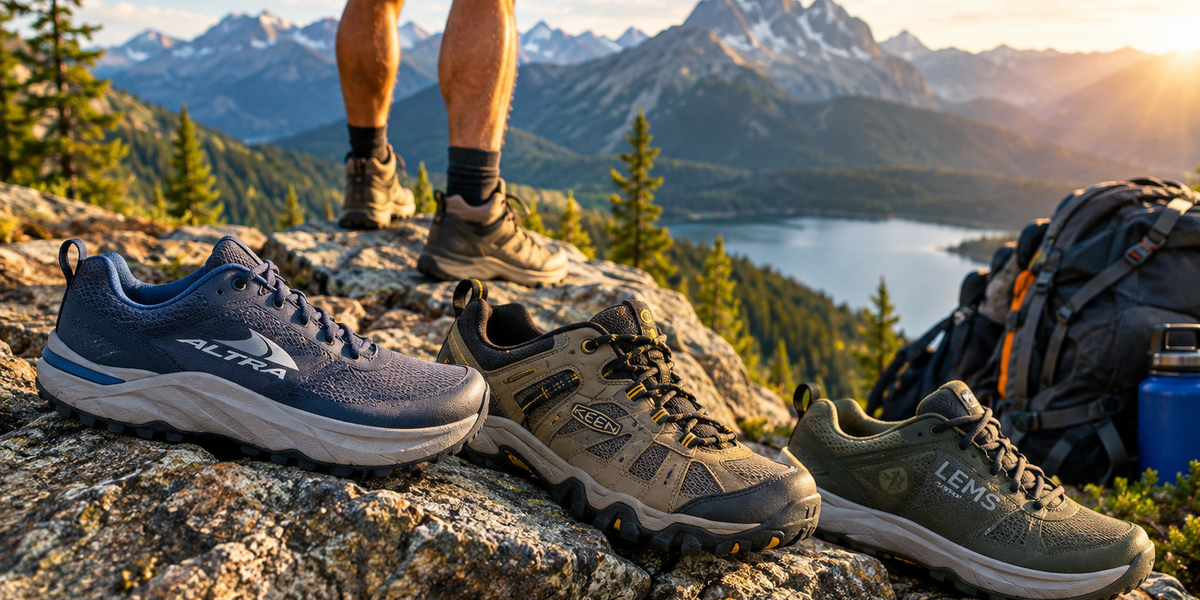
We spent weeks comparing width specifications, last shapes, and verified buyer feedback from hikers with wide feet across Altra, Keen, Lems, Merrell, Salomon, and other major brands. This guide cuts through the marketing claims to show you which boots actually deliver room where you need it, which "wide" options are just relabeled standard fits, and what to look for when shopping online where you can't try before you buy.
Whether you're outfitting for day hikes or multi-day backpacking trips — and if you're planning high-altitude routes, see our guide on preparing for high altitude hiking — the right wide-fit boot will transform your experience from painful to confident.
What to Look For
Toe Box Shape, Not Just Stated Width — A boot listed as "wide" might only add 3mm at the midfoot while keeping a tapered toe box. Look for brands that explicitly mention a "roomy toe box" or "anatomical fit" and check buyer reviews for confirmation. Altra's FootShape™ design and Keen's signature wide toe box are gold standards.
Last Shape and Volume — The last is the foot-shaped mold the boot is built around. Wide feet need higher volume (more space top-to-bottom) as well as width. Low-volume boots will crush the top of your foot even if the width is adequate. European brands like Salomon and Scarpa typically run narrower and lower-volume than American brands.
Materials That Give — Leather stretches and molds to your foot over 20-30 miles; synthetic uppers don't. If you're between sizes, a leather boot sized snug will break in, while a synthetic boot will stay rigid. Mesh uppers offer the most give but sacrifice waterproofing.
Adjustable Lacing Systems — Look for boots with lacing that extends to the toe and allows independent adjustment of forefoot and ankle zones. Speed laces (like Salomon's Quicklace) are convenient but offer less fine-tuning than traditional laces with multiple eyelets.
Removable Insoles — If a boot fits well in length and width but feels tight vertically, pulling the factory insole and replacing it with a thinner aftermarket option (like Superfeet Trim-to-Fit) can gain you 2-3mm of critical space. This is a common trick among wide-footed hikers.
Return Policy Reality Check — When buying online, prioritize retailers with free returns and a 30-60 day wear-test window. REI, Zappos, and Amazon all offer this. Break boots in on short walks before committing to a long hike — blisters from a poor fit won't show up in your living room.
💡 Pro Tip: Order two sizes when shopping online — your usual size and a half size up. Wear them around the house with hiking socks for 20 minutes each. The right fit should feel snug but not tight, with zero pressure points. If you're debating, go with the roomier option — you can always add a thicker insole, but you can't add width.
KEEN Men's Targhee III Mid Waterproof Hiking Boot
| Criteria | Score |
|----------|-------|
| Toe Box Width | 9/10 |
| Waterproofing | 8/10 |
| Traction | 9/10 |
| Break-In Period | 7/10 |
The KEEN Men's Targhee III Mid has earned a near-cult following among wide-footed hikers for one reason: the toe box actually delivers the space Keen promises. Where most "wide" boots taper aggressively past the ball of the foot, the Targhee III maintains width all the way to the toes, accommodating bunions, hammertoes, and naturally splayed feet without pinching.
The KEEN.DRY waterproof membrane isn't Gore-Tex, but it performs nearly as well in wet conditions while keeping the price $30-40 below comparable Gore-Tex boots. The leather and mesh upper takes 15-20 miles to fully break in — not instant like the Moab 3, but faster than traditional all-leather boots. The Traction Rubber outsole (not branded Vibram, but Keen's proprietary compound) grips wet rocks, muddy trails, and loose scree with confidence.
At 1 lb 13 oz per boot (size 10), these aren't ultralight, but the stability and protection are worth the weight for day hikes and weekend backpacking trips under 30 lbs total pack weight. Buyer reviews consistently note that the Targhee III runs slightly large — most recommend going down a half size from your sneaker size, especially if you have medium to narrow heels.
✅ Pros:
- Genuinely wide toe box accommodates bunions and splayed feet
- KEEN.DRY waterproofing keeps feet dry without the Gore-Tex price premium
- Aggressive Traction Rubber outsole grips wet rocks and mud
❌ Cons:
- Runs slightly large — consider half size down
- Heavier than ultralight trail runners (1 lb 13 oz per boot)
Merrell Men's Moab 3 Mid Waterproof Hiking Boot
| Criteria | Score |
|----------|-------|
| Toe Box Width | 6/10 |
| Waterproofing | 8/10 |
| Traction | 9/10 |
| Value for Money | 9/10 |
The Merrell Moab 3 Mid is the best-selling hiking boot in North America for good reason: break-in free comfort, proven Vibram TC5+ outsoles that last 500+ miles, and a price point that leaves room in your budget for the Sawyer Squeeze water filter every hiker should carry. But here's the truth for wide-footed hikers: the Moab 3 in standard width is really a medium-wide fit, not a true wide.
If you have moderately wide feet or wear a D width in dress shoes, the Moab 3 will likely work well out of the box. But if you need a 2E or wider, or have bunions that extend past the edge of your foot, you'll need to size up a half size and accept some heel slippage, or look at the Keen Targhee instead. The synthetic and mesh upper doesn't stretch like leather, so what you feel in the store is what you'll get on the trail.
That said, the Vibram outsole is unmatched at this price point, the bellows tongue keeps trail dust and pebbles out better than gusseted designs, and the zero break-in period means you can hike 10 miles on day one without blisters. For wide-footed hikers who can make the fit work, this is the best value in the category.
✅ Pros:
- Break-in free comfort out of the box
- Vibram TC5+ outsole lasts 500+ miles
- Bellows tongue keeps debris out on dusty trails
❌ Cons:
- Standard width — true wide feet need to size up or look elsewhere
- Synthetic upper less breathable than mesh alternatives
Salomon Men's X Ultra 4 GTX Hiking Shoes
| Criteria | Score |
|----------|-------|
| Toe Box Width | 5/10 |
| Weight | 10/10 |
| Waterproofing | 9/10 |
| Ankle Support | 6/10 |
The Salomon X Ultra 4 GTX is the choice for fast hikers who prioritize speed and weight savings over maximum room. At 12.5 oz per shoe, these feel more like trail runners than traditional boots, and the Gore-Tex membrane keeps feet dry without the swampy feeling of cheaper waterproof liners.
But — and this is critical for wide-footed hikers — Salomon fits run narrow and low-volume across the entire line. The X Ultra 4 is built on a European racing last designed for performance, not comfort for wide feet. If you typically wear a D width sneaker and your feet don't swell much on long hikes, the X Ultra 4 in its standard width might work. But if you need a true wide or 2E fit, these will feel like vises.
The Quicklace system is brilliant for quick adjustments mid-hike, and the Contagrip rubber outsole grips technical terrain as well as anything short of approach shoes. The low-top design saves weight but offers minimal ankle support — fine for groomed trails, less ideal if you're scrambling over boulder fields or carrying a 40 lb pack. These shine on fast-and-light day hikes where every ounce matters and the trail is well-maintained.
✅ Pros:
- Ultra-light 12.5 oz makes fast hiking effortless
- Gore-Tex waterproofing backed by lifetime warranty
- Quicklace system lets you adjust fit on the fly
❌ Cons:
- Narrow European fit — not ideal for true wide feet
- Low-top design offers less ankle support on uneven terrain
Altra Lone Peak vs Olympus: The Zero-Drop Wide Option
Altra built its reputation on the FootShape™ toe box — the widest in the industry — and zero-drop platform that keeps your heel and forefoot at the same height. For hikers transitioning from traditional boots, the zero-drop feel takes 20-30 miles of adaptation, but converts swear by the natural foot position and reduced knee strain.
The Lone Peak (trail runner weight, 10 oz) and Olympus (cushioned boot, 14 oz) both offer the same wide toe box in a choice of stack heights. Neither is waterproof in the standard version, though Altra offers a "Waterproof" suffix on some models with a basic membrane. The MaxTrac rubber outsoles grip well on dry dirt and rock but lose traction on wet roots and mud compared to Vibram or Contagrip compounds.
If you have bunions, Morton's neuroma, or your toes splay significantly under load, Altra may be the only brand that fits comfortably without sizing up. The tradeoff is a less secure midfoot lockdown — the lacing system doesn't cinch as tightly as traditional boots, which can cause heel slippage if you size up for width. Test these on short hikes before committing to a long backpacking trip.
💡 Pro Tip: Zero-drop shoes change your gait and shift load to your Achilles and calves. Transition gradually — start with 3-4 mile hikes and add distance slowly. Calf soreness in the first week is normal; sharp Achilles pain is a sign to slow down.
Lems Boulder Boot: Minimalist Wide Fit for Experienced Hikers
Lems occupies a niche between Altra's zero-drop trail runners and traditional hiking boots: minimalist construction with a wide toe box, flexible sole, and just enough structure for day hiking. The Boulder Boot has a 9mm drop (less than traditional boots, more than Altra), a 4mm insole you can remove for a near-ground feel, and a design that looks more like a casual sneaker than a technical hiking boot.
This is not a boot for beginners or hikers carrying heavy packs. The thin sole (11mm total) provides minimal cushioning on rocky trails, and there's no shank or torsional rigidity to protect your feet on uneven terrain. But for experienced hikers with strong feet who want maximum ground feel and natural movement, Lems delivers a fit that accommodates wide feet without compromise.
The leather upper is durable but not waterproof — treat it with a spray-on waterproofing agent if you hike in wet conditions. At $140-160, these cost as much as the Keen Targhee III but offer far less protection and support. They're a specialized tool for a specific type of hiker, not a general-purpose recommendation.
Width Sizing Reality: What "Wide" Actually Means
Most hiking boot brands offer a "Wide" or "2E" option, but the sizing standards are inconsistent. A "wide" Salomon is narrower than a standard Keen. A "2E" Merrell is about the same width as a standard Altra. Here's what we found comparing manufacturer specs and buyer feedback:
True Wide (2E+): Keen (all models), Altra (all models), Lems (all models)
Medium-Wide (between D and 2E): Merrell standard width, Oboz standard width, Vasque standard width
Standard/Narrow (D or narrower): Salomon, Scarpa, La Sportiva, Arc'teryx
If a brand you like doesn't offer a stated wide option, your best bet is to size up a half size and accept slightly more toe room. Add a thicker insole or heel lock lacing to reduce slippage. This works better with leather boots (which will mold to your foot) than synthetic boots (which stay rigid).
When shopping online, use the retailer's size chart to compare your foot measurements (length and width at the ball of the foot) to the boot's internal dimensions. Most brands now publish these specs, and they're far more reliable than generic "true to size" or "runs large" reviews.
Frequently Asked Questions
Should I buy hiking boots in wide width or just size up?
Size up only if the boot fits well in width at the ball of the foot but feels snug in the toes. If your foot is genuinely wide across the entire forefoot, sizing up gives you extra length you don't need and causes heel slippage. A true wide boot fits your foot's actual shape. The exception: if you're buying a standard-width boot from a narrow-fitting brand (Salomon, Scarpa), sizing up half is often the only option, and you can compensate with thicker insoles or heel pads.
Do waterproof hiking boots run narrower than non-waterproof versions?
Yes, typically by 2-3mm, because the waterproof membrane (Gore-Tex, KEEN.DRY, etc.) adds an interior layer that takes up space. If you're on the edge between standard and wide, and you need waterproofing, go with the wide option. This is especially true for overnight hikes where your feet swell after 8+ hours on the trail. Non-waterproof mesh boots offer the most room and breathability but leave you vulnerable in wet conditions.
Can I stretch hiking boots that are too narrow?
Leather boots can be stretched 3-5mm by a professional cobbler using a boot stretcher, or at home with a two-way shoe stretcher and stretching spray over 48 hours. Synthetic boots don't stretch meaningfully. If your boots are causing pain after two short break-in hikes, return them — no amount of stretching will make a fundamentally wrong fit comfortable for 10-mile days. For wide toe boxes specifically, look for boots with a gusseted or bellows tongue that allows more flex.
Are Altra hiking boots durable enough for technical trails?
Altra trail runners (Lone Peak, Olympus) are built for speed, not durability. The MaxTrac rubber wears faster than Vibram, and the thin uppers tear on sharp rock after 300-400 miles. For day hiking and fast-packing on maintained trails, they're excellent. For scrambling, off-trail routes, or multi-day trips with a 40+ lb pack, you need more protection — look at the Keen Targhee III or a leather boot with a full rand (rubber toe bumper). If you love the Altra fit, consider the Timp (more cushioning) or Lone Peak All-WTHR (light waterproofing).
What's the best way to break in wide hiking boots?
Wear them around the house for 30-minute sessions with your hiking socks for the first week. Then take 2-3 mile walks on pavement or easy trails before attempting longer hikes. Focus on hotspots — if you feel pressure points or rubbing, adjust your lacing or add moleskin before blisters form. Leather boots need 20-30 miles to fully mold to your foot; synthetic boots are break-in free but won't adapt to your shape. For wide-fitting boots specifically, pay attention to heel lockdown — a wide toe box often means less structure in the heel counter, which can cause slippage if your heel is narrow relative to your forefoot.
Final Thoughts
Finding hiking boots that fit wide feet doesn't have to mean settling for numb toes or blisters. The KEEN Targhee III remains the best all-around choice for hikers who need a genuinely wide toe box with proven waterproofing and traction. If you're on a budget and have moderately wide feet, the Merrell Moab 3 delivers Vibram durability and break-in free comfort at $139. For ultra-wide feet or those transitioning to zero-drop, Altra's FootShape™ design offers the most room, though you'll sacrifice some traction and durability.
When shopping, prioritize fit over features — the most waterproof, lightest, or most expensive boot is worthless if it causes pain after three miles. Order multiple sizes, test them at home with your hiking socks and a loaded pack, and return anything that shows pressure points. And remember: if you're planning high-elevation routes and need to dial in your acclimatization strategy, check out our guide to preparing for high altitude hiking before your next trip.
The right wide-fit boot transforms hiking from an endurance test into the adventure it should be. Take the time to find your fit, and your feet will thank you at mile ten.
Editor's Choice
KEEN Men's Targhee III Mid Waterproof Hiking Boot — The widest toe box you'll find in a waterproof leather boot, with traction that works on technical terrain and a fit that accommodates bunions without compromise.
Merrell Men's Moab 3 Mid Waterproof Hiking Boot — Best value for moderately wide feet — proven Vibram durability, zero break-in period, and a price that leaves room for other essential gear like a water filter.
Sawyer Squeeze Water Filter System — Not a boot, but the one piece of gear every hiker needs — filters 0.1 micron contaminants, weighs just 3 oz, and costs less than a single emergency room visit for giardia.
