Disclosure: As an Amazon Associate, HikePod earns from qualifying purchases at no extra cost to you.
⭐ Our Top Pick
🏆 Best Overall: Melissa & Doug Nature Explorer Kit — complete exploration toolkit with binoculars, magnifying glass, and whistle that transforms every campsite walk into an adventure.
💰 Best Value: Crayola Washable Sidewalk Chalk — under $10 for hours of creative play that washes off picnic tables and tent floors without a trace.
Introduction
We've all been there: 20 minutes into your family camping trip, your toddler is melting down because there's no Wi-Fi, no tablet, and the novelty of sleeping in a tent has already worn off. The truth is, keeping toddlers entertained outdoors without screens isn't about packing more toys—it's about leveraging nature's built-in playground and choosing activities that match their short attention spans and endless energy.
After comparing strategies from family camping experts and analyzing what actually works based on parent feedback across hundreds of campground reviews, we've compiled 15 screen-free activities that keep toddlers engaged from sunrise to bedtime. These aren't Pinterest-perfect crafts that require a craft store haul—they're simple, practical activities you can set up with minimal gear and adapt to any campsite.
Whether you're car camping with a spacious setup (like the families we cover in our best family camping tents for rain guide) or backpacking with weight restrictions, this guide gives you a rotation of activities that prevent boredom, burn energy, and build genuine nature connection. Let's dive in.
What to Look For in Screen-Free Toddler Activities
Simple Setup and Cleanup — Toddler activities should require minimal adult supervision and even less cleanup. Look for open-ended play that doesn't generate tons of small pieces to lose in the dirt.
Multi-Day Engagement — The best activities can be repeated with variations over several days. A nature scavenger hunt works on day one; a nature art collage works on day three using the same collected materials.
Energy Burn vs. Quiet Time Balance — Mix high-energy activities (hiking, rock throwing, stomp rockets) with calming ones (story time, nature journals, cloud watching) to match your toddler's natural rhythm and prevent overtiredness.
Age-Appropriate Challenge Level — Choose activities that are achievable but slightly challenging. A 2-year-old can sort rocks by size; a 4-year-old can build a fairy house with branches and leaves.
Weather Flexibility — Have indoor-tent options ready for rain or extreme heat. Finger games, shadow puppets, and storytelling work under any conditions.
Gear Portability — If you're backpacking, every ounce counts. Prioritize activities that use found natural materials or ultralight gear like chalk, a magnifying glass, or a small stuffed animal.
Nature Scavenger Hunts (Adapted for Toddlers)
| Criteria | Score |
|----------|-------|
| Engagement Duration | 8/10 |
| Setup Simplicity | 10/10 |
| Energy Burn | 6/10 |
| Reusability | 9/10 |
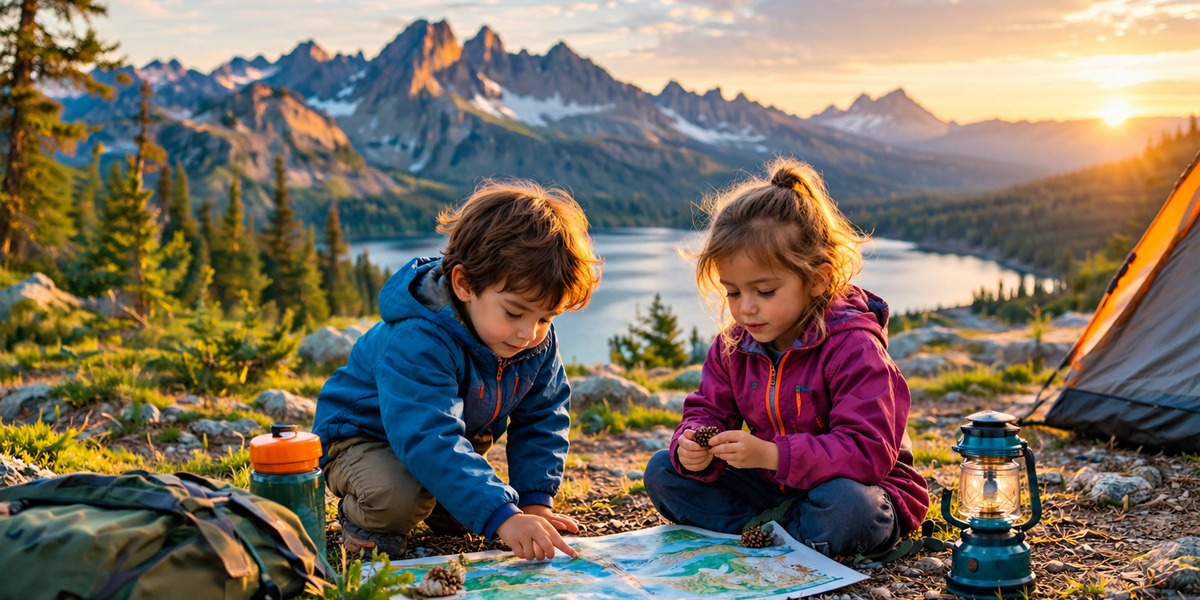
Create a visual scavenger hunt card with pictures instead of words—think a pinecone drawing, a smooth rock, a yellow leaf, and a feather. Laminate it at home or use a Ziploc bag to protect it. As your toddler finds each item, they place it in their collection bucket (any lightweight container works).
The Melissa & Doug Nature Explorer Kit elevates this activity with kid-sized binoculars and a magnifying glass that turn every discovery into a mini science experiment. The included mesh bag is perfect for carrying treasures back to camp.
✅ Pros:
- Keeps toddlers moving and observing for 30+ minutes
- Teaches colors, textures, and observation skills
- Infinitely customizable to your specific campground
❌ Cons:
- Requires advance prep to create the visual hunt card
- Can be frustrating if certain items aren't available at your site
💡 Pro Tip: Take photos of items at your campsite on day one to create a same-day hunt on your phone to show your toddler. No printing required.
Rock Painting and Nature Art
| Criteria | Score |
|----------|-------|
| Engagement Duration | 7/10 |
| Setup Simplicity | 8/10 |
| Energy Burn | 3/10 |
| Mess Factor (Lower is Better) | 6/10 |
Collect smooth rocks during morning walks, then decorate them in the afternoon with washable markers or chalk. Crayola Washable Sidewalk Chalk is perfect here—it's designed to wash off easily, so decorated rocks can be left as trail markers or kindness rocks for other hikers without environmental impact.
For mess-free alternatives, arrange collected leaves, sticks, and flowers into mandalas or faces on the ground. Toddlers love the instant gratification of seeing their "art" come together, and you can photograph it before leaving no trace.
✅ Pros:
- Calming activity perfect for hot afternoons or post-lunch quiet time
- Develops fine motor skills and color recognition
- Creates keepsakes or "gifts" for family members
❌ Cons:
- Washable markers can still stain if your toddler gets creative on themselves
- Requires flat surface like a picnic table
Campfire Storytelling and Shadow Puppets
| Criteria | Score |
|----------|-------|
| Engagement Duration | 6/10 |
| Setup Simplicity | 10/10 |
| Energy Burn | 1/10 |
| Bonding Potential | 10/10 |
Once the sun sets, a headlamp or lantern becomes a shadow puppet theater. Use your hands to create animals—bunny ears, flying birds, barking dogs—and act out simple stories. Toddlers love trying to copy your shapes and will ask for "one more story" long past bedtime.
For families camping in wet conditions, this works equally well inside a tent. If you've invested in a spacious shelter like the Big Agnes Copper Spur HV UL2 with its generous headroom and dual vestibules, you'll have plenty of space for dramatic hand gestures without knocking into tent walls.
✅ Pros:
- Zero gear required beyond a light source you already have
- Calms toddlers down before bedtime
- Builds language and imagination skills
❌ Cons:
- Requires adult participation the entire time
- Can overstimulate if done too close to sleep time
Water Play Stations
| Criteria | Score |
|----------|-------|
| Engagement Duration | 9/10 |
| Setup Simplicity | 7/10 |
| Energy Burn | 5/10 |
| Mess Factor | 8/10 |
If your campsite has access to a creek, lake, or even a portable water basin, toddlers will play for hours. Set up a "washing station" with cups, spoons, and the Green Toys Sand Play Set—its recycled plastic scoops and rakes work just as well in water as in sand or dirt.
Supervision is mandatory, but the payoff is huge: toddlers pour, splash, "cook" mud soup, and experiment with floating vs. sinking objects. Bring a Buff Original Multifunctional UV Headwear for sun protection during midday water play—it dries quickly and doubles as a towel in a pinch.
✅ Pros:
- Naturally cooling on hot days
- Sensory-rich play that holds attention
- Easy cleanup—toddlers are already wet
❌ Cons:
- Requires constant adult supervision near water
- Needs a change of clothes afterward
💡 Pro Tip: Pack a small microfiber towel and a dry bag for wet clothes. Toddlers will inevitably get soaked, and having a system prevents soggy tent disasters.
Stick Collection and Building Projects
| Criteria | Score |
|----------|-------|
| Engagement Duration | 7/10 |
| Setup Simplicity | 10/10 |
| Energy Burn | 6/10 |
| Creativity Development | 9/10 |
Toddlers are natural hoarders, and sticks are the ultimate free toy. Challenge them to find "the longest stick," "the straightest stick," or "a stick shaped like a Y." Then use the collection to build simple structures: lean sticks against a tree to make a "fort," arrange them into letters, or create a miniature teepee.
This activity works especially well if you're teaching Leave No Trace principles—building with sticks is temporary and gets dismantled before you pack up, teaching respect for nature while still allowing creative play.
✅ Pros:
- Free, abundant materials at every campsite
- Develops spatial reasoning and problem-solving
- Can occupy toddlers independently for 20+ minutes
❌ Cons:
- Sharp or pointy sticks require supervision
- Some campgrounds restrict gathering downed wood
Bug Observation (Without Touching)
| Criteria | Score |
|----------|-------|
| Engagement Duration | 6/10 |
| Setup Simplicity | 9/10 |
| Educational Value | 10/10 |
| Fear Management | 7/10 |
Toddlers are fascinated by insects—until they're suddenly terrified. The key is controlled observation. Use a clear plastic container or the magnifying glass from the Melissa & Doug Nature Explorer Kit to examine ants, beetles, or caterpillars from a safe distance.
Teach the "look but don't touch" rule early. Point out what the bug is doing—carrying food, climbing, hiding under leaves. After a few minutes, release the bug exactly where you found it. This builds respect for wildlife and prevents both bites and toddler meltdowns.
✅ Pros:
- Turns fear into curiosity
- Teaches gentle handling and observation
- No special gear needed
❌ Cons:
- Can backfire if a bee or biting insect shows up
- Requires adult to identify safe vs. unsafe bugs
Nighttime Glow Stick Fun
| Criteria | Score |
|----------|-------|
| Engagement Duration | 8/10 |
| Setup Simplicity | 10/10 |
| Energy Burn | 7/10 |
| Magic Factor | 10/10 |
Glow sticks are camping gold. Activate them after dark and play glow stick ring toss (toss onto tent stakes or sticks in the ground), hide-and-seek with glowing clues, or dance party around the campfire. The Stomp Rocket Junior Glow combines physical play with glow-in-the-dark magic—toddlers stomp the launcher to send foam rockets soaring into the night sky, then chase them down.
✅ Pros:
- Provides light and entertainment simultaneously
- Safe, non-toxic, and weather-resistant
- Burns energy right before bedtime
❌ Cons:
- Single-use plastic waste (choose reusable LED alternatives when possible)
- Can overstimulate if used too late
Simple Sensory Bins
| Criteria | Score |
|----------|-------|
| Engagement Duration | 8/10 |
| Setup Simplicity | 6/10 |
| Mess Factor | 7/10 |
| Portability | 5/10 |
Fill a shallow plastic bin with natural materials—acorns, pinecones, smooth pebbles, leaves—and add scoops, cups, and small containers. Toddlers pour, sort, bury, and "discover" for surprisingly long stretches. This is especially useful during meal prep when you need 15 minutes of independent play.
The Green Toys Sand Play Set works perfectly here. Its chunky handles are easy for toddler hands, and the bright colors make sorted piles more visually interesting.
✅ Pros:
- Self-directed play that doesn't require adult involvement
- Develops sorting and categorization skills
- Materials are free and disposable
❌ Cons:
- Requires packing a bin (not backpack-friendly)
- Small pieces can scatter across the campsite
Additional Quick-Win Activities
Cloud Watching and Sky Stories — Lie on a blanket and point out shapes in clouds. Ask, "Does that one look like a dragon or a bunny?" This works for morning or afternoon and requires zero gear.
Toddler-Led Nature Walks — Let your toddler set the pace and direction for 10 minutes. They'll stop to examine every rock and leaf, which builds observation skills and autonomy.
Campsite Obstacle Course — Use logs, rocks, and tent guy lines to create a simple course: step on three rocks, crawl under a rope, hop to the tree. Time them with a phone stopwatch for extra excitement.
Singing and Call-and-Response Games — Teach simple camp songs or play echo games ("If you're happy and you know it" works everywhere). Singing calms anxious toddlers and fills transition times.
Flashlight Tag — After dark, give each family member a flashlight and play a gentle version of tag where you "tag" someone by shining your light on them. Keep the play area small and well-defined.
💡 Pro Tip: Rotate activities throughout the day to prevent burnout. Start mornings with high-energy play like scavenger hunts, mid-day with calming art or water play, and evenings with storytelling or glow sticks.
Frequently Asked Questions
How do I prevent my toddler from having a meltdown when there's no screen time?
Set expectations before the trip. Talk about camping as "outdoor adventure time" where screens stay home. Bring a comfort item like a favorite stuffed animal, and maintain familiar routines (bedtime stories, songs) to provide structure. If your toddler is used to screens for every car ride or waiting period, start weaning them off at home a week before your trip.
What if it rains the entire camping trip?
Have a tent-safe activity kit ready: board books, finger puppets, a small sketch pad with crayons, and a deck of toddler-friendly cards. Play "I Spy" with items inside the tent, sing songs, or do simple yoga stretches together. If you've chosen a spacious tent with good ventilation like the MSR Hubba Hubba NX 2, you'll have enough room to move without feeling claustrophobic. For families with slightly older kids navigating screen-free time, our guide on managing screen-free camping with teens offers strategies that scale down for toddlers too.
How much activity gear should I actually pack?
Less is more. Bring 2-3 compact activity items (magnifying glass, chalk, small shovel) and rely on found natural materials for the rest. Toddlers are more engaged by exploring real sticks and rocks than by a bag of plastic toys. If you need feeding gear that packs small, check out our best camping high chairs for toddlers guide for portable seating that won't eat up your trunk space.
What's the best age to start screen-free camping with toddlers?
Around 18-24 months is ideal. At this age, toddlers are mobile enough to explore but still nap regularly, giving parents breaks. Younger infants require too much gear and don't engage with activities; older preschoolers may resist the transition if they're already screen-dependent. Start with one-night trips close to home to test your system.
How do I handle "I'm bored" complaints?
Reframe boredom as an opportunity: "When you're bored, your brain gets creative." Hand them a stick and say, "I wonder what you can build with this?" or "Can you find five different colored leaves?" Avoid immediately filling every quiet moment. Toddlers who learn to self-entertain in nature develop stronger problem-solving skills and imagination.
Final Thoughts
Keeping toddlers entertained without screens while camping isn't about perfection or Pinterest-worthy crafts—it's about embracing mess, following their curiosity, and leveraging the natural playground around you. The activities that work best are simple, repeatable, and adaptable to your campsite's unique features.
Start with a few core activities like a nature scavenger hunt and water play, then build your rotation based on your toddler's interests. Some kids will spend an hour building stick forts; others will want to launch glow rockets every night. The key is variety, realistic expectations, and remembering that bored moments often lead to the most creative play.
Pack light, plan for weather flexibility, and give yourself grace when things don't go as planned. Screen-free camping builds resilience, curiosity, and family bonds that last far longer than any tablet game. Now get out there and watch your toddler discover that the best entertainment has been outside all along.
Editor's Choice
Melissa & Doug Nature Explorer Kit — Complete exploration toolkit with binoculars, magnifying glass, and mesh storage bag that transforms every campsite walk into an educational adventure for curious toddlers.
Crayola Washable Sidewalk Chalk — Budget-friendly art supply that turns picnic tables and flat rocks into canvases, washes off easily, and provides hours of creative play without the mess of permanent markers.
Green Toys Sand Play Set — Eco-friendly digging and pouring tools made from recycled plastic that work in dirt, sand, or water and hold up to rough toddler handling trip after trip.