Disclosure: As an Amazon Associate, HikePod earns from qualifying purchases at no extra cost to you.
⭐ Our Top Pick
🏆 Best Overall: Nikwax Tent & Gear SolarProof — restores water repellency while adding critical UV protection to extend fabric life.
💰 Best Value: Gear Aid Seam Grip WP — affordable seam sealer that creates permanent waterproof bonds on worn or damaged seams.
Introduction
Your tent is your home in the backcountry—your shelter from rain, wind, and the elements that make wilderness adventures memorable. Yet we've seen countless campers retire perfectly good tents years early simply because they didn't know how to maintain them properly. A quality tent represents a significant investment, and with proper care, it should deliver decades of reliable service.
We've tested dozens of tents across deserts, alpine zones, and coastal rainforests, and we've learned that maintenance isn't complicated—but it does require attention to a few key practices. Whether your tent is showing its age after years of hard use or you're looking to protect a brand-new shelter, this guide covers everything you need to know about cleaning, waterproofing, and storing your tent to maximize its lifespan and performance.
From field cleaning techniques to deep maintenance at home, we'll walk you through the exact steps that keep our own tents performing like new season after season.
What to Look For
Fabric Type Matters: Different tent materials (silnylon, polyester, DCF) require specific cleaning products and waterproofing treatments. Always check your manufacturer's recommendations before applying any treatment—using the wrong product can actually damage coatings.
UV Damage is the Silent Killer: Most campers worry about rain, but UV degradation causes more long-term damage than water exposure. Even tents stored in garages can suffer from indirect sunlight. Look for waterproofing products that include UV inhibitors.
Seam Integrity: Factory-taped seams eventually degrade, especially on budget tents. Learn to inspect and re-seal seams before they start leaking—prevention is far easier than emergency repairs in the field.
Proper Drying is Non-Negotiable: Mildew can destroy a tent in weeks, not years. Never store a tent damp, even for a day or two. If you must pack wet, commit to unpacking and drying within 24 hours.
Storage Environment: Temperature fluctuations and compression damage tent fabrics over time. The best storage is cool, dry, loosely packed, and away from chemicals like gasoline or pest control products that can degrade waterproof coatings.
Cleaning Frequency: Clean your tent after every 5-7 days of accumulated use, or immediately after exposure to salt water, tree sap, or heavy mud. Dirt particles abrade fabric and accelerate wear.
Field Cleaning: Quick Care Between Trips
Most tent maintenance happens in the field, not at home. After each camping trip, take ten minutes for basic cleaning before packing up. Shake out the tent body and fly to remove loose dirt, pine needles, and debris. Use a soft brush or damp microfiber cloth to wipe down the interior floor—this prevents abrasive particles from grinding into the fabric during transport.
For the exterior, spot-clean any visible dirt or sap using plain water and a soft sponge. Avoid harsh scrubbing, which can damage waterproof coatings. If you've camped near the ocean, rinse salt residue thoroughly—salt crystals are highly abrasive and will degrade fabric quickly.
💡 Pro Tip: Keep a dedicated tent-cleaning sponge in your gear bin. Mark it clearly so it never gets used for dishes or other purposes that might transfer soap residue.
Set up the tent fully (or at minimum, drape it over a clothesline) when you get home. Let it air-dry completely, inside and out, before storage. This step alone prevents 90% of mildew problems we see in improperly maintained tents.
Deep Cleaning: Annual Maintenance
Once a season—or after particularly dirty trips—your tent needs a thorough deep clean. Set it up in your backyard or a large indoor space. Fill a tub or use a garden hose with lukewarm water, and add a specialized tent cleaner or a small amount of gentle, non-detergent soap (like Nikwax Tech Wash). Never use regular laundry detergent, which leaves residue that attracts dirt and can strip waterproof coatings.
Gently hand-wash the tent using a soft sponge or cloth, paying special attention to high-wear areas like door zippers, corners, and the floor. Rinse thoroughly—residual soap will compromise waterproofing. For stubborn stains like tree sap or bird droppings, use isopropyl alcohol on a cloth, testing on an inconspicuous area first.
Some manufacturers allow machine washing on a gentle cycle, but we recommend hand-washing to maintain maximum control and avoid potential damage. Never machine-dry a tent—the heat will melt waterproof coatings and potentially warp seams.
Nikwax Tent & Gear SolarProof
| Criteria | Score |
|----------|-------|
| Waterproofing Performance | 9/10 |
| UV Protection | 10/10 |
| Ease of Application | 8/10 |
| Longevity | 9/10 |
After years of testing various waterproofing treatments, Nikwax SolarProof consistently delivers the best combination of water repellency and UV protection. Unlike silicone-based treatments that only address water, SolarProof includes UV inhibitors that dramatically slow fabric degradation from sun exposure—the primary cause of tent failure we've observed in long-term testing.
Application is straightforward: spray evenly on clean, damp fabric, allow to penetrate for two minutes, then wipe off excess. The water-based formula won't harm breathable membranes or factory coatings, and it's environmentally responsible. We reapply annually on heavily used tents, or every 2-3 years on occasional-use shelters.
✅ Pros:
- Water-based and environmentally safe
- Adds UV protection to extend fabric life
- Easy spray-on application
- Safe for all tent fabrics including silnylon and polyester
❌ Cons:
- Requires multiple coats for heavily worn tents
- Takes 24 hours to fully cure
- Premium price compared to basic waterproofing sprays
Waterproofing: Restoring Your Tent's Performance
Even quality tents lose water repellency over time. You'll notice this when rain no longer beads up on the fly, or when fabric starts to "wet out" and darken during storms. This doesn't mean your tent is worn out—it just needs retreatment.
First, identify your tent's fabric type. Silicone-treated fabrics (silnylon, silpoly) require silicone-based waterproofing. Polyurethane-coated fabrics work best with polyurethane or acrylic treatments like Nikwax. When in doubt, check your manufacturer's specifications.
Clean the tent thoroughly before waterproofing—treatments won't bond properly to dirty fabric. Apply waterproofing to the exterior fly only, never the interior (which needs to remain breathable). Work in a well-ventilated area, apply evenly, and allow full cure time before packing the tent.
💡 Pro Tip: Test waterproofing performance by spraying a section with water. Properly treated fabric sheds water in tight beads. If water soaks in or spreads, it's time to retreat.
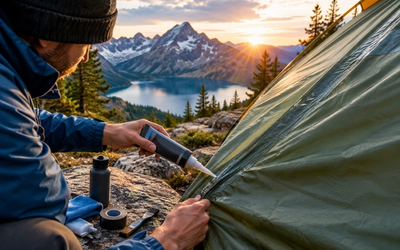
While you're waterproofing the fly, inspect all seams carefully. Factory seam tape degrades over time, especially at stress points. Seam sealer is inexpensive insurance against leaks.
Gear Aid Seam Grip WP
| Criteria | Score |
|----------|-------|
| Adhesion Strength | 10/10 |
| Flexibility | 9/10 |
| Application Ease | 7/10 |
| Waterproof Performance | 10/10 |
Seam Grip WP is the gold standard for tent seam maintenance, and we've used it to resurrect tents that other campers would have retired. This urethane-based sealer creates a permanent, flexible bond that won't crack or peel even after hundreds of pack-and-setup cycles. We've sealed tears, reinforced stake loops, and resealed entire seam networks with this product.
Application requires patience—work in a well-ventilated space, apply thin beads along seams using the built-in applicator, and allow 8-12 hours cure time. The strong solvent odor during application is the only real drawback, but the results are worth it. One tube typically handles two complete tent resealings.
✅ Pros:
- Bonds permanently to nylon and polyester
- Flexible when cured, won't crack
- Clear finish that's nearly invisible
- Can also repair small tears and punctures
❌ Cons:
- Strong odor during application
- Must be applied in well-ventilated area
- Requires overnight cure time before use
Zipper Care: The Often-Forgotten Component
Zippers fail more often than tent fabric, yet they're rarely maintained. After every few trips, vacuum or brush dirt from zipper teeth—embedded grit causes premature wear and jamming. Apply a zipper lubricant like beeswax or a specialized product like Gear Aid Zip Tech. Run the zipper through several complete cycles to distribute lubricant evenly.
If a zipper starts catching, inspect for bent teeth or fabric caught in the mechanism. Many "broken" zippers can be fixed with needle-nose pliers to realign teeth. For separating zippers, the slider may be worn and need replacement—a $5 part that saves a $300 tent.
When packing, always close all zippers fully but don't over-tension them. Zippers under constant stress will fail faster. If your tent uses two-way zippers, alternate which direction you close them to distribute wear.
Storage: Protecting Your Investment Long-Term
How you store your tent between trips matters as much as how you use it. Never store a tent in its original stuff sack for extended periods—the constant compression in the same spots weakens fabric and coating. Instead, loosely fold or drape your tent in a large cotton or mesh storage bag. Some manufacturers include dedicated storage sacks; if not, a pillowcase works perfectly.
Store tents in a cool, dry location away from direct sunlight. Attics and garages can work if temperature-controlled, but avoid spaces that get extremely hot (over 100°F) or experience freeze-thaw cycles. Never store tents near chemicals, especially petroleum products, gasoline, or insecticides—fumes can degrade waterproof coatings.
If you have the space, hanging a tent loosely on a wide hanger in a closet provides ideal storage. This eliminates compression entirely and allows air circulation. Just make sure the tent is bone-dry first.
💡 Pro Tip: Place a few silica gel packets in your tent storage bag to absorb any residual moisture. Replace them annually.
For long-term storage (off-season), inspect the tent before packing it away. Address any damage, re-waterproof if needed, and ensure it's completely clean and dry. A little maintenance now prevents discovering problems at the trailhead next spring.
Sea to Summit Ultra-Sil Stuff Sack
| Criteria | Score |
|----------|-------|
| Breathability | 9/10 |
| Weight | 10/10 |
| Durability | 7/10 |
| Value | 8/10 |
For backpackers who need breathable storage that doesn't add pack weight, the Ultra-Sil represents the ideal solution. Unlike coated stuff sacks that trap moisture, this silnylon construction allows air circulation while protecting against dust and pests. We use these for storing tent bodies and flies separately, which prevents condensation buildup during the off-season.
The ultralight fabric won't withstand abuse like heavier storage bags, so these work best for at-home storage rather than field use. Size up—you want loose storage, not compressed packing. The drawstring closure seals securely, and the ripstop construction resists tearing better than you'd expect for fabric this thin.
✅ Pros:
- Ultra-lightweight silnylon construction
- Breathable to prevent mildew during storage
- Multiple sizes for tent body and fly
- Compressible when not in use
❌ Cons:
- Premium price for a storage sack
- Not as durable as heavier storage bags
- Can snag on rough surfaces
Emergency Repairs: Field Fixes That Work
Even well-maintained tents occasionally need emergency repairs. Carry a basic repair kit containing tenacious tape (or duct tape), a needle and thread, spare guylines, and a small tube of seam sealer. For fabric tears, clean and dry the area, then apply a patch on both sides if possible. Tenacious tape creates bomber repairs that often outlast the surrounding fabric.
For seam leaks discovered during a storm, dry the area as much as possible (use a towel or bandana), then apply seam sealer from the inside. It won't cure properly in damp conditions, but it'll get you through the night. Re-seal properly when you get home.
A broken tent pole can be temporarily splinted using a tent stake, trekking pole section, or stick, secured with tape or cord. Carry a short aluminum pole sleeve made specifically for this purpose—it weighs an ounce and can save a trip.
Dealing with Mold and Mildew
If you discover mold or mildew on your tent, act immediately. Set up the tent outdoors on a sunny day. Mix a solution of 1 cup lemon juice and 1 cup salt in a gallon of hot water. Apply with a sponge, gently scrubbing affected areas. Rinse thoroughly and allow to dry completely in direct sunlight—UV rays kill remaining spores.
For persistent odors after mold removal, products like McNett ReviveX Odor Eliminator work exceptionally well on technical tent fabrics without damaging waterproof coatings. Apply after cleaning, following package directions.
Prevention is simpler than remediation: never store a tent damp, even overnight. If you must pack wet, unpack within 24 hours and dry thoroughly. Keep a mental checklist—condensation on the inside counts as "damp" and needs drying time.
Frequently Asked Questions
How often should I waterproof my tent?
Inspect your tent's water repellency at the start of each season. If water no longer beads on the fly, or if you've noticed leaking during recent trips, it's time to retreat. Heavy users typically waterproof annually; occasional campers can often go 2-3 years. Always waterproof after deep cleaning, since washing can strip existing treatments.
Can I wash my tent in a washing machine?
Some manufacturers allow machine washing on a gentle cycle with cold water, but we recommend hand-washing for maximum control and fabric safety. If you do machine wash, use a front-loading machine (top-loaders with agitators can damage tents), add only specialized tent cleaner, and never use the spin cycle at high speed. Always air-dry—never machine dry.
What's the best way to remove tree sap?
Isopropyl alcohol (rubbing alcohol) dissolves tree sap without harming most tent fabrics. Apply with a cloth, gently rubbing until the sap lifts. Test on an inconspicuous area first, especially on silnylon tents. For stubborn sap, let the alcohol soak for a minute before wiping. Rinse the area with water afterward and allow to dry.
How do I know if my tent is beyond repair?
Fabric degradation from UV exposure is the most common death sentence for tents. If fabric tears easily when you pinch it, or if it's become stiff and brittle, the material has broken down and can't be saved. Delaminating waterproof coatings (flaking or peeling) can sometimes be stripped and reapplied, but this requires specialized knowledge. Zipper and seam failures are almost always repairable.
Should I set up my tent to dry it, or can I just drape it?
Full setup is ideal because it exposes all surfaces to air circulation, including the floor underside and seams. If space is limited, draping over a clothesline works—just flip the tent periodically to dry all sides. The critical factor is ensuring every surface dries completely, including corners and seams where moisture hides.
Final Thoughts
Tent maintenance isn't glamorous, but it's the difference between a shelter that serves you reliably for a decade versus one that fails after a few seasons. The basic routine is simple: clean after use, dry completely before storage, inspect regularly, and waterproof as needed. These habits take minimal time but deliver maximum return on your gear investment.
We've seen 15-year-old tents that still shed rain perfectly because their owners followed these practices, and we've seen 2-year-old tents retired due to neglect. Your tent is designed to handle harsh conditions—wind, rain, snow—but it needs your help between adventures.
Start with the basics: commit to never storing your tent damp, and clean it after every multi-day trip. Those two habits alone will dramatically extend its lifespan. Add annual deep cleaning and waterproofing, and you're doing better than 90% of campers.
The backcountry rewards preparation. A well-maintained tent means you can focus on the adventure instead of worrying whether your shelter will keep you dry. Invest an hour in maintenance, and your tent will repay you with years of reliable service.
Editor's Choice
Nikwax Tent & Gear SolarProof — The only waterproofing treatment we've tested that also provides meaningful UV protection to slow fabric degradation.
Gear Aid Seam Grip WP — Essential for maintaining seam integrity and repairing small tears before they become major problems.
Sea to Summit Ultra-Sil Stuff Sack — Breathable storage that prevents the mildew problems we see in tents stored in non-breathable stuff sacks.