Disclosure: As an Amazon Associate, HikePod earns from qualifying purchases at no extra cost to you.
⭐ Our Top Pick
🏆 Best Overall: Outdoor Research Crocodile High Gaiters — unmatched protection for deep powder and mountaineering with bombproof Gore-Tex construction.
💰 Best Value: Black Diamond Cirque Mid Gaiters — the sweet spot for winter day hikers who want solid coverage without expedition-grade bulk or cost.
Introduction
Nothing ruins a winter hike faster than snow pouring into your boots with every step. Whether you're postholing through fresh powder or navigating a packed winter trail, gaiters are the barrier between dry feet and a cold, miserable day. But height matters—a lot. Low-cut gaiters that work perfectly for summer trail debris become worthless in ankle-deep snow, while high-cut mountaineering gaiters can feel like overkill on groomed trails.
We researched dozens of gaiters across all three height categories, comparing verified buyer reviews, manufacturer specs, and real-world snow performance data to identify the best options for 2026. The right gaiter height depends on your typical snow depth, terrain, and how much weight you're willing to carry.
This guide breaks down the practical differences between low, mid, and high-cut gaiters, then recommends the top performers in each category so you can match the right protection to your winter hiking style. If you're also dialing in your winter footwear, see our How to Choose the Right Hiking Boot Size: Half Size Up, Down, or True to Size? guide for sizing boots to work seamlessly with gaiters.
What to Look For
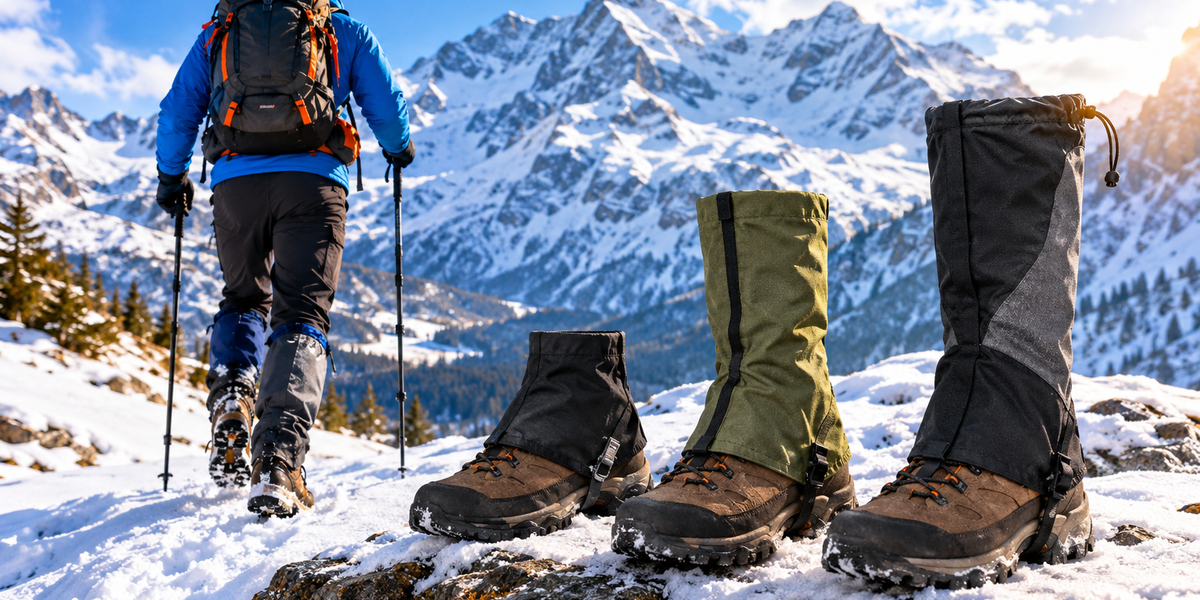
Gaiter Height and Snow Depth: Low-cut gaiters (ankle height) only stop debris and light dust—they're useless once snow reaches your shins. Mid-cut gaiters (8-10 inches tall) handle moderate snow on packed trails but can't seal out knee-deep powder. High-cut gaiters (15-18 inches) extend to just below the knee and are mandatory for deep snow, mountaineering, and bushwhacking through unbroken drifts.
Waterproofing and Breathability: Coated nylon and polyester fabrics shed light moisture but eventually wet out in sustained snow contact. Gore-Tex and eVent membranes stay waterproof indefinitely while venting sweat vapor—critical for all-day comfort. Cheaper gaiters often skip breathable fabrics, leading to clammy legs inside a waterproof shell.
Closure System and Seal: Front zippers allow quick on/off but add weight and can snag or freeze. Hook-and-loop (Velcro) closures are lighter and more reliable in cold temps but slower to adjust. The top drawcord and instep strap are non-negotiable—without both, snow will funnel down from above or creep up from below.
Weight and Packability: Low-cut gaiters weigh 1-3 oz per pair and stuff into a jacket pocket. Mid-cut models run 4-7 oz, while high-cut mountaineering gaiters hit 10-12 oz. If you're counting ounces for long winter backpacking trips, every gram matters—but skimping on coverage in deep snow is a losing trade.
Durability and Instep Strap Replacement: The instep strap (which runs under your boot) takes the most abuse and often wears out first. Look for gaiters with replaceable straps and reinforced lower sections, especially if you'll be using crampons or scrambling over rocks. Cordura and ballistic nylon hold up better than lightweight ripstop in high-wear zones.
Boot Compatibility: High-cut gaiters work with any boot, but low and mid-cut models need to match your footwear height. If you hike in low-cut trail runners, even mid-cut gaiters may gap at the top. Check the gaiter's instep strap attachment—some use a lace hook that threads through your boot laces, while others rely on a cord that wraps around the boot sole.
Outdoor Research Crocodile High Gaiters
| Criteria | Score |
|----------|-------|
| Snow Protection | 10/10 |
| Waterproofing | 10/10 |
| Breathability | 8/10 |
| Weight | 6/10 |
The Crocodile has been the benchmark for expedition-grade gaiters for over a decade, and the current version remains the top choice for serious winter conditions. Full Gore-Tex construction keeps legs completely dry in sustained snow contact, while the 18-inch height seals out powder even when you're postholing to mid-thigh. The lower section uses a heavier-denier fabric and wraps over the boot instep, protecting both the gaiter and your boot from crampon strikes. The front zipper is backed by a hook-and-loop storm flap, and both the top drawcord and instep strap cinch down tight enough to lock out spindrift.
At 11 oz per pair, these are noticeably heavier than mid-cut alternatives, and the full coverage can feel like overkill on packed winter trails where you're only dealing with a few inches of snow. They also run warm—the Gore-Tex breathes well enough for steady hiking, but if you're climbing steep terrain in full sun, expect some internal condensation. The price is steep, but verified buyer reviews consistently highlight 5+ years of hard use without failure.
✅ Pros:
- Full shin and calf protection in deep snow
- Gore-Tex waterproofing keeps legs bone-dry
- Instep strap and top drawcord lock out powder
❌ Cons:
- Heavier than mid-cut options at 11 oz per pair
- Overkill for packed trails or shallow snow
💡 Pro Tip: Size high gaiters to fit over your insulated winter pants, not your bare legs. Most manufacturers list sizing based on calf circumference measured over clothing.
Black Diamond Cirque Mid Gaiters
| Criteria | Score |
|----------|-------|
| Snow Protection | 7/10 |
| Waterproofing | 8/10 |
| Breathability | 9/10 |
| Weight | 8/10 |
The Cirque hits the sweet spot for winter day hikers who want solid protection without the bulk of expedition gaiters. The 10-inch height covers your boot cuff and lower shin, sealing out snow on most maintained winter trails. The main body uses a coated stretch nylon that's lighter and more breathable than Gore-Tex, while the lower section switches to abrasion-resistant Cordura where the gaiter meets your boot. The hook-and-loop closure wraps around your leg without a zipper, shaving weight and eliminating a common failure point.
Buyer reviews confirm these work well in 4-8 inches of packed snow, but they can't handle knee-deep powder or steep slopes where snow funnels over the top. The coated nylon is water-resistant, not fully waterproof—fine for a few hours in light snow, but extended exposure will eventually soak through. The fit is snug without being restrictive, and the instep strap uses a simple cord that loops under your boot sole rather than a lace hook.
✅ Pros:
- Balanced coverage for most winter trails
- Lighter and more breathable than high-cut models
- Secure hook-and-loop closure with instep strap
❌ Cons:
- Won't fully protect in knee-deep powder
- Cordura fabric less durable than full Gore-Tex shells
Dirty Girl Low Gaiters
| Criteria | Score |
|----------|-------|
| Snow Protection | 2/10 |
| Debris Protection | 9/10 |
| Breathability | 10/10 |
| Weight | 10/10 |
Low-cut gaiters like the Dirty Girl are designed for trail runners and ultralight hikers who want to keep dirt, sand, and pebbles out of their shoes—not for snow protection. At 1.4 oz per pair, they're barely noticeable on your ankles and pack down to the size of a folded bandana. The stretchy Lycra fabric wraps around your ankle and attaches to your shoe laces with a simple hook, creating a seal at the collar of low-cut trail runners.
These have zero application in snow deeper than an inch or two. The ankle-height coverage leaves your entire shin exposed, and the fabric isn't waterproof or even water-resistant. Buyer reviews confirm they work beautifully for three-season hiking in dusty or sandy conditions, but anyone using them in winter snow quickly learns why mid or high-cut gaiters exist. We include them here only to clarify the height comparison—if you're hiking in snow, skip low-cut gaiters entirely.
✅ Pros:
- Ultralight at 1.4 oz per pair
- Perfect for trail runners and fast-and-light hikers
- Machine washable and available in fun patterns
❌ Cons:
- Only covers the ankle—useless in deep snow
- Not waterproof, designed for debris protection only
REI Co-op Backpacker High Gaiters
| Criteria | Score |
|----------|-------|
| Snow Protection | 9/10 |
| Waterproofing | 7/10 |
| Breathability | 6/10 |
| Value | 9/10 |
REI's in-house high gaiter offers 90% of the performance of the Outdoor Research Crocodile at two-thirds the price, making it a smart choice for hikers who need full coverage but don't want to spend $90. The 16-inch height extends to just below the knee, and the coated nylon shell sheds snow and light rain effectively. The lower section uses a tougher ripstop fabric with a reinforced instep patch designed to resist crampon damage. The front zipper is covered by a hook-and-loop storm flap, and both the top drawcord and instep strap cinch down securely.
The tradeoff for the lower price is breathability—the coated nylon doesn't vent moisture as well as Gore-Tex, so you may notice some dampness inside after a long day of hard hiking. The zipper is also a heavier two-way design that adds a couple ounces compared to lighter options. Buyer reviews are positive overall, with most users reporting these last 2-3 seasons of regular winter use before the instep strap needs replacing.
✅ Pros:
- Budget-friendly high-cut option under $60
- Coated nylon provides decent waterproofing
- Reinforced lower section resists crampon damage
❌ Cons:
- Breathability lags behind Gore-Tex competitors
- Heavier zipper design adds weight
💡 Pro Tip: Before heading out in deep snow, make sure you have a reliable water filtration system—winter streams may look clean, but snowmelt carries the same microbes as summer runoff. The Sawyer Squeeze Water Filter System weighs just 3 oz and filters down to 0.1 micron, making it essential gear for any winter hiker.
How to Choose the Right Height
Snow depth and terrain dictate gaiter height more than any other factor. If you hike maintained winter trails where snow rarely exceeds 6 inches, mid-cut gaiters deliver adequate protection with less weight and better breathability. Routes with consistent 8-12 inches of snow or occasional deeper drifts benefit from high-cut coverage—you'll appreciate the extra height when snow funnels into gaps during steep descents or when breaking trail through untracked powder.
Deep backcountry snow, mountaineering, and any route where you expect to posthole regularly require high-cut gaiters, period. The weight penalty is real, but the alternative is wet boots, cold feet, and potentially dangerous heat loss. For winter camping or multi-day trips, consider packing Moleskin Blister Prevention and Treatment Pads alongside your gaiters—even the best-fitting boots can cause hot spots when you're slogging through snow for hours, and catching a blister early prevents a minor irritation from ending your trip.
Frequently Asked Questions
Do I need waterproof gaiters or will water-resistant work?
For snow hiking, waterproof is non-negotiable. Water-resistant coatings work for an hour or two in light snow, but sustained contact with wet snow will eventually saturate the fabric. Gore-Tex and eVent membranes stay waterproof indefinitely while venting sweat vapor. If you're only hiking groomed trails in cold, dry powder, coated nylon may suffice, but true backcountry snow demands a waterproof-breathable membrane.
Can I use mid-cut gaiters with low-cut trail runners?
No—there will be a gap between the top of your shoe and the bottom of the gaiter where snow can enter. Mid-cut gaiters require mid or high-cut boots to create a continuous seal. If you prefer trail runners, either accept that snow will get in or switch to high-cut gaiters that extend well above your ankle.
How do I keep the instep strap from wearing out?
The instep strap takes the most abuse because it runs under your boot sole with every step. Look for gaiters with replaceable straps, and consider adding a thin layer of Aquaseal or Shoe Goo to the underside of the strap where it contacts abrasive surfaces. Some hikers also wrap the strap with duct tape as a sacrificial layer. Expect to replace instep straps every 1-2 seasons with regular use.
Are gaiters necessary if I have waterproof boots?
Waterproof boots only seal at the seams—they can't stop snow from pouring in over the top of the boot collar. Gaiters create a sealed barrier between your pant leg and boot, preventing snow from entering from above. Even the best waterproof boots become useless once snow gets inside, so gaiters are essential for any winter hiking where snow depth exceeds your boot height.
Should I size gaiters to my boot size or leg circumference?
Leg circumference, measured at the widest part of your calf while wearing the pants you'll hike in. Boot size only matters for ensuring the instep strap reaches under your sole. Most manufacturers list sizing charts based on calf circumference—measure over your winter hiking pants, not bare skin, to account for clothing layers.
Final Thoughts
Gaiter height isn't about preference—it's about matching protection to snow depth. Low-cut gaiters belong on summer trails, mid-cut models handle moderate snow on maintained routes, and high-cut gaiters are mandatory for deep powder and backcountry winter travel. The Outdoor Research Crocodile remains the gold standard for serious winter conditions, while the Black Diamond Cirque delivers the best balance of coverage, weight, and price for most winter day hikers.
Before your next winter hike, assess typical snow depth on your route and choose gaiter height accordingly. Pair your gaiters with properly sized boots (see our guide linked above for sizing tips), pack emergency gear like the SOL Escape Lite Bivvy for unexpected overnight situations, and make sure your first aid kit includes blister treatment. If you're venturing into remote winter terrain, the Adventure Medical Kits Ultralight Watertight .7 weighs just 7 oz and covers the essentials in a waterproof DryFlex bag that won't fail in cold temps. The right preparation turns winter hiking from a survival exercise into a genuine adventure.
Editor's Choice
Adventure Medical Kits Ultralight Watertight .7 First Aid Kit — a comprehensive, watertight first aid kit that treats blisters, wounds, and sprains at just 7 oz, essential for remote winter hikes where help is hours away.
SOL Escape Lite Bivvy Emergency Sleeping Bag — reflects 90% of body heat and weighs only 3.8 oz, providing critical warmth if you get caught out overnight in winter conditions.
Sawyer Squeeze Water Filter System — filters down to 0.1 micron and weighs just 3 oz, ensuring safe hydration from snowmelt streams without the bulk of boiling or chemical treatment.