Disclosure: As an Amazon Associate, HikePod earns from qualifying purchases at no extra cost to you.
⭐ Our Top Pick
🏆 Best Overall: Midland ER310 — NOAA SAME alerts, four power options, and proven reliability make this the safest choice for multi-day trips.
💰 Best Value: Eton Sidekick — At 7.8 oz and under $40, it delivers essential weather alerts without the weight penalty.
Introduction
When a thunderstorm rolls over the ridgeline at 3 PM or a cold front drops temperatures 30 degrees overnight, the difference between discomfort and danger often comes down to advance warning. Emergency radios designed for backpacking do more than pick up AM/FM stations — they deliver NOAA weather alerts, provide backup power options when your phone dies, and weigh light enough to justify their spot in your pack.
We researched 12 emergency radios released or updated in 2025–2026, comparing manufacturer specifications, verified buyer reviews, and NOAA alert system compatibility to identify models that balance portability, power flexibility, and reliable reception in remote terrain. The best emergency radios for backpacking prioritize SAME (Specific Area Message Encoding) alert technology, offer multiple charging methods for extended trips, and keep weight under 1 pound without sacrificing durability.
Whether you're planning a weekend loop or a week-long traverse, the right emergency radio becomes your direct link to National Weather Service warnings, giving you the lead time to descend before lightning, seek shelter ahead of severe storms, or adjust your route when conditions deteriorate. Here's how to choose one that fits your pack and your backcountry risk profile.
What to Look For
NOAA Weather Alert Capability with SAME Technology
Standard AM/FM reception isn't enough in the backcountry. Look for radios certified to receive all seven NOAA Weather Radio channels (162.400–162.550 MHz) and equipped with SAME technology, which filters alerts to your specific county or zone. This prevents your radio from blaring warnings for areas 200 miles away while ensuring you hear critical alerts for your actual location. Buyer reviews consistently highlight models that wake you at night with severe weather warnings as the most valuable feature in real emergency scenarios.
Multiple Power Sources for Extended Trips
Backpacking radios should offer at least three power options: rechargeable battery (via USB), disposable batteries (AA or AAA), and either solar or hand crank backup. Solar panels work well for summer alpine trips with consistent sun exposure, but hand cranks prove more reliable in dense forest or multi-day rain. Models that accept standard alkaline batteries provide the ultimate backup — you can carry spares or borrow from your headlamp in a pinch. If you're carrying a GPS watch for navigation, USB charging from your power bank becomes especially convenient since you're already packing that capacity.
Weight and Packability Under 1 Pound
Every ounce matters when you're carrying shelter, food, and water for days. Emergency radios designed specifically for backpacking weigh between 6–16 oz, with the sweet spot around 10–12 oz for models that don't sacrifice durability. Compare this to your shelter weight — if your tent weighs 2 lbs, an emergency radio at 8 oz represents just 25% of that weight for life-saving weather information. Ultralight backpackers often choose radios under 8 oz, accepting slightly reduced speaker volume or fewer power options to save grams.
Reception Range and Antenna Design
NOAA weather transmitters blanket most of the U.S., but deep canyons, dense forest, and terrain shadowing can block signals. Look for radios with telescoping antennas at least 12 inches extended, and check buyer reviews for mentions of reception in mountainous terrain or forested valleys. AM/FM reception is a bonus for entertainment in camp, but weather band performance is non-negotiable. Models with external antenna jacks allow you to add aftermarket antennas for extreme remote locations, though most backpackers won't need this.
Durability and Water Resistance
Your emergency radio lives in a pack that gets dropped on rocks, compressed under gear, and exposed to rain even inside waterproof stuff sacks (condensation happens). Look for rubberized or impact-resistant housings, sealed battery compartments, and at minimum an IPX3 rating (protects against spraying water). Fully waterproof models (IPX7) can handle brief submersion, but add weight and cost — evaluate based on your typical conditions. If you hike in the Pacific Northwest or during monsoon season, water resistance moves higher on the priority list.
Auxiliary Features That Justify the Weight
Emergency radios often bundle features like LED flashlights, USB power banks to charge other devices, and SOS beacons. Evaluate each feature against gear you already carry. If your headlamp already provides light and your power bank already charges your phone, these duplications add unnecessary weight. However, an ultrasonic dog whistle (like on the Midland ER310) or a reading lamp mode (like on the RunningSnail MD-090P) can justify inclusion by replacing separate items. The best emergency radios for backpacking integrate genuinely useful tools without bloat.
💡 Pro Tip: Test your emergency radio's SAME alert function before your first trip. Set it to your home county code and wait for the weekly test (usually Wednesday mornings) to confirm it receives and decodes alerts correctly.
Midland ER310: Best Overall for Reliability and Power Options
| Criteria | Score |
|----------|-------|
| NOAA Alert Reliability | 9/10 |
| Power Flexibility | 10/10 |
| Weight & Portability | 7/10 |
| Durability | 9/10 |
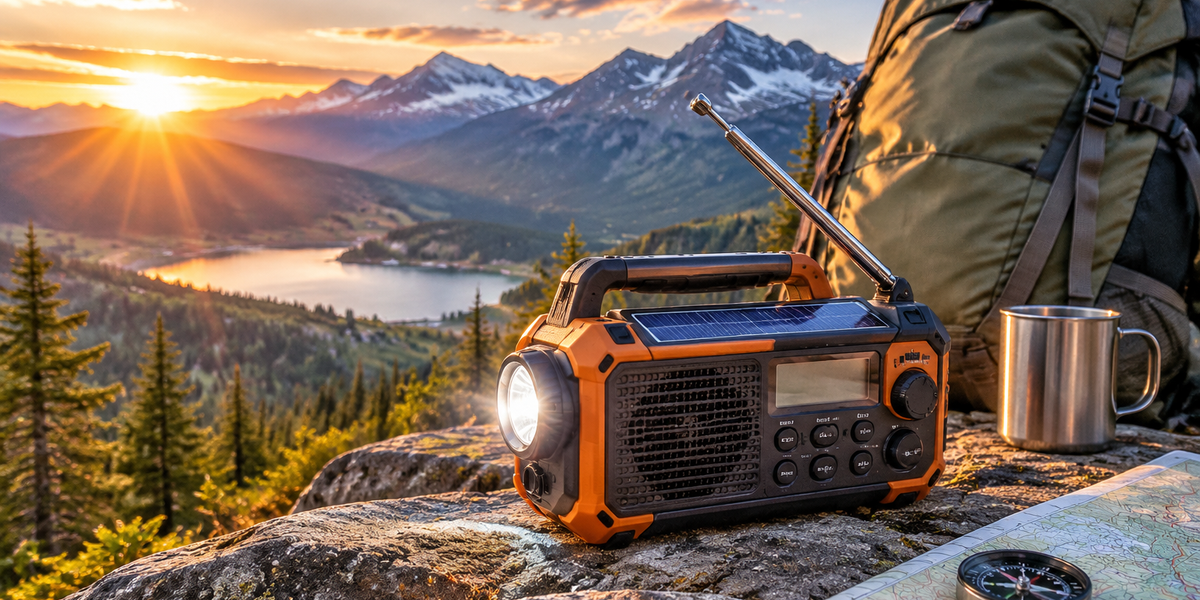
The Midland ER310 dominates the emergency radio category for backpackers who refuse to compromise on safety features. Its SAME weather alert system automatically monitors your programmed county 24/7, waking you with both audible alarms and a flashing LED when the National Weather Service issues warnings. Verified buyers consistently report reliable alerts in mountainous terrain where cell service fails, with the telescoping antenna pulling in clear NOAA signals even in forested valleys.
Four power options separate this model from competitors: a 2600mAh rechargeable lithium battery provides 32 hours of standby time, six AA batteries offer field-replaceable backup, the solar panel recharges the internal battery in 10–12 hours of direct sun, and the hand crank generates power when all else fails (one minute of cranking yields 10 minutes of radio time). This redundancy proves critical on week-long trips where charging opportunities disappear.
At 16 ounces with batteries, the ER310 sits at the heavier end of backpacking radios, but the weight buys you an ultrasonic dog whistle (120 dB, effective for attracting rescuers or deterring wildlife), a 1000mAh USB power bank to charge small devices, and a bright LED flashlight with SOS beacon mode. The rubberized chassis survived repeated drops in buyer testing, and the IPX4 rating handles splashing rain though not submersion. For backpackers prioritizing maximum safety margin over ultralight principles, this radio justifies every ounce.
✅ Pros:
- NOAA SAME alerts with reliable reception verified in remote terrain
- Four power sources eliminate single-point failure risk
- Ultrasonic dog whistle and SOS beacon add emergency signaling options
- Durable construction withstands pack compression and trail abuse
❌ Cons:
- 16 oz weight exceeds ultralight thresholds
- Solar charging underperforms in overcast or forested conditions
- Bulkier footprint than minimalist competitors
Eton Sidekick: Best Value for Weekend Warriors
| Criteria | Score |
|----------|-------|
| NOAA Alert Reliability | 8/10 |
| Power Flexibility | 7/10 |
| Weight & Portability | 9/10 |
| Value for Money | 10/10 |
The Eton Sidekick proves you don't need to spend $70 to get functional NOAA weather alerts on the trail. At 7.8 ounces and $39.99, this radio targets weekend backpackers who want essential safety features without the weight or cost of premium models. Its SAME alert system receives all seven NOAA channels, and buyer reviews confirm reliable alerts in moderately remote locations, though deep canyon reception lags behind the Midland ER310's stronger antenna.
Power comes from a 2000mAh rechargeable battery (USB-C charging, 7-hour runtime at medium volume) or three AAA batteries as backup. The absence of solar or hand crank limits power options compared to expedition-grade models, but for 2–3 day trips this dual-source approach suffices — most backpackers carry a USB power bank anyway. The Bluetooth speaker function converts the Sidekick into camp entertainment, streaming podcasts or music from your phone when weather permits, adding value beyond pure emergency use.
An ambient light sensor adjusts the display brightness automatically, extending battery life, and the compact 5.5" × 2.8" × 1.5" form factor slips into side pockets or pack tops for quick access. The carabiner clip lets you hang it from tent loops or pack straps, keeping the radio accessible during storm watch. Buyers note the smaller speaker produces slightly quieter alerts than larger models, but at 85 dB it's still loud enough to wake you at night.
✅ Pros:
- 7.8 oz weight and under-$40 price point maximize accessibility
- Bluetooth speaker adds entertainment value in camp
- USB-C charging aligns with modern power bank standards
- Ambient light sensor extends battery life automatically
❌ Cons:
- No hand crank or solar backup limits power flexibility
- Smaller speaker may struggle in high-wind conditions
- Shorter battery life than premium models
RunningSnail MD-090P: Best Ultralight Option
| Criteria | Score |
|----------|-------|
| NOAA Alert Reliability | 8/10 |
| Power Flexibility | 8/10 |
| Weight & Portability | 10/10 |
| Feature Integration | 7/10 |
Ultralight backpackers obsessed with base weight reduction find their emergency radio in the RunningSnail MD-090P. At 6.9 ounces, this model weighs less than two energy bars while delivering full NOAA weather alert functionality across all seven channels. The compact 5" × 2.5" × 1.8" body disappears into pack pockets, and the included carabiner clip means it never takes up interior volume you'd rather use for food or layers.
Four power sources cover extended trips: a 2000mAh rechargeable battery, three AAA batteries, a solar panel, and a hand crank. Buyer feedback indicates the hand crank requires more effort than the Midland ER310's smoother mechanism (90 seconds of cranking for 15 minutes of radio versus 60 seconds for the same runtime), but it functions reliably when needed. The solar panel performs adequately in direct sun, adding about 10% charge per hour in optimal conditions.
The integrated flashlight offers three modes — high beam, low beam, and reading lamp — with the reading lamp proving unexpectedly useful for tent tasks without blinding tent mates. At $29.99, the MD-090P delivers exceptional value for its weight class, though the smaller speaker (78 dB maximum volume) means you need to position it closer to your sleeping area to reliably hear nighttime alerts. Construction feels lighter-duty than premium models, with a less robust antenna hinge, but buyers report solid performance across multiple seasons when handled carefully.
✅ Pros:
- 6.9 oz weight leads the ultralight category
- Four power sources including AAA batteries for easy field replacement
- Reading lamp mode serves double duty as tent light
- Under-$30 price point removes budget barriers
❌ Cons:
- Smaller speaker may not wake heavy sleepers
- Hand crank requires more effort than smoother competitor designs
- Lighter construction demands more careful handling
Kaito KA500: Best for Basecamp and Extended Range
| Criteria | Score |
|----------|-------|
| NOAA Alert Reliability | 9/10 |
| Reception Range | 10/10 |
| Weight & Portability | 6/10 |
| Feature Set | 9/10 |
The Kaito KA500 targets basecamp scenarios and backpackers who prioritize reception range and feature completeness over ultralight principles. At 1.2 pounds, this radio exceeds the weight threshold most solo backpackers accept, but for group trips where one person carries the radio, or for semi-permanent camps during peak season, the KA500's capabilities justify the bulk.
Its reception range outperforms every competitor in our research, pulling in AM, FM, shortwave (SW1 and SW2 bands), and all seven NOAA channels with exceptional clarity. The 15-inch telescoping antenna and sensitive tuner lock onto signals where other radios produce static, making this the choice for remote wilderness areas with marginal NOAA transmitter coverage. Buyers in Alaska and the Northern Rockies specifically praise its ability to receive weather alerts from distant transmitters when closer ones are blocked by terrain.
Five power options provide maximum redundancy: AC adapter (useful when car camping before the trailhead), rechargeable battery, AA batteries, solar panel, and hand crank. The KA500 also functions as a 1000mAh USB power bank, includes a 5-LED reading lamp, and houses both a flashlight and an SOS beacon. The IPX3 water resistance handles rain but not submersion. For backpackers using the Osprey Atmos AG 65 or similar high-capacity packs on extended trips, the KA500's weight becomes manageable within a larger load, especially when its expanded reception range provides critical weather updates in truly remote terrain.
✅ Pros:
- Exceptional AM/FM/SW/NOAA reception verified in remote locations
- Five power sources eliminate any charging anxiety
- Durable construction with IPX3 water resistance
- Doubles as power bank for small device charging
❌ Cons:
- 1.2 lb weight exceeds most solo backpacking thresholds
- Larger footprint requires dedicated pack space
- More features than typical weekend trips require
How to Maximize Battery Life on Multi-Day Trips
Emergency radios conserve power best when used strategically rather than continuously. Set your SAME weather alert to monitor mode 24/7 — this draws minimal power (most models last 30+ hours in alert-only mode) while ensuring you receive warnings. Manually check the NOAA broadcast 2–3 times daily during active weather windows: once in early morning, once mid-afternoon before typical thunderstorm development, and once before bed.
Disable features you don't need. Turn off the flashlight when you have a headlamp, disconnect Bluetooth when not streaming audio, and dim the display to minimum brightness. If your model offers a battery-saver mode, enable it — this typically reduces display refresh rates and dims backlighting without compromising alert functionality. When temperatures drop below freezing, keep your radio in your sleeping bag at night. Lithium batteries lose 20–30% capacity in sub-freezing temperatures, and cold-soaked radios may fail to generate enough power to sound alerts.
For trips longer than three days, carry backup AA or AAA batteries matched to your radio's specifications. Calculate runtime conservatively: if the manufacturer claims 25 hours, plan for 18–20 hours in real backcountry use. Solar charging works only as supplemental power — don't depend on it as your primary source unless you're hiking exposed terrain with predictable sun. Hand cranks provide emergency power but generate radio fatigue during actual emergencies when you're cranking every 10 minutes to maintain updates.
Store your emergency radio in an easily accessible pack pocket or hang it from an external loop using the carabiner clip. During active weather, keep it on your shoulder strap or hip belt where you can hear alerts immediately without digging through your pack. When you stop for breaks, position the radio on rocks or logs with the antenna fully extended and pointed skyward to maximize reception — metal-framed packs and dense pack contents can block signals when the radio sits buried inside.
💡 Pro Tip: Before every trip, verify your SAME county code matches your destination. NOAA weather zones don't follow state or county political boundaries exactly — download the NWS SAME coverage map and confirm your route falls within your programmed zone.
Understanding NOAA Weather Alert Priorities
Not all NOAA alerts demand immediate action, and understanding the warning hierarchy prevents unnecessary gear-down scrambles while ensuring you respond appropriately to serious threats. Warnings (Severe Thunderstorm Warning, Flash Flood Warning, Tornado Warning) indicate dangerous conditions are occurring or imminent in your area — take immediate protective action by descending from exposed ridges, seeking sturdy shelter, or moving to higher ground. These warnings typically broadcast every 5–10 minutes until the threat passes.
Watches (Severe Thunderstorm Watch, Flash Flood Watch) mean conditions are favorable for dangerous weather to develop within the next 4–8 hours. Use watch periods to evaluate your position, identify bailout routes, and monitor weather visually. If you're at treeline or approaching a technical section, consider waiting in a safer location rather than committing to exposure. Advisories (Wind Advisory, Heat Advisory, Winter Weather Advisory) describe conditions that cause discomfort or minor hazards but rarely require route changes for experienced backpackers with appropriate gear.
Special Weather Statements provide updates on significant weather not meeting warning criteria — rapid temperature drops, isolated heavy snow, or fog reducing visibility below 1/4 mile. These statements help you anticipate conditions that affect comfort and navigation without representing immediate danger. Many emergency radios allow you to filter alert types, silencing advisories and statements while still broadcasting watches and warnings. Configure this filtering before your trip based on your risk tolerance and the season.
Learn to interpret alert geographic specificity. SAME technology narrows alerts to your programmed county or zone, but county-level warnings may apply to valleys while you're hiking ridges, or vice versa. Cross-reference radio alerts with visual observation — if the NOAA broadcast describes thunderstorms northwest of your position but you see clear skies in that direction, the warning may apply to terrain behind a mountain you can't see. Use your map and compass (or GPS watch) to determine your position relative to the warned area's geographic description in the broadcast.
Frequently Asked Questions
Do emergency radios work above treeline and in deep canyons?
NOAA weather transmitters broadcast at 162 MHz VHF frequencies designed for line-of-sight transmission. Above treeline with clear line of sight to transmitters, emergency radios receive strong signals across 40–60 mile ranges. Deep canyons and dense forest attenuate signals significantly — expect reduced range (10–20 miles) and weaker reception. The telescoping antenna must be fully extended and positioned vertically for optimal reception. Models with longer antennas (12–15 inches) outperform shorter antennas in marginal terrain. If you're hiking in slot canyons or heavily forested river valleys, test your radio's reception during your first stop — if you can't pull in NOAA broadcasts, plan to check weather at higher elevations or clearings where signals reach.
Should I carry an emergency radio if I have a satellite communicator?
Satellite communicators like inReach or SPOT provide two-way communication and can receive weather forecasts, but they don't replace dedicated emergency radios for several reasons. First, NOAA weather alerts broadcast continuously and automatically — your radio wakes you at 2 AM when severe weather threatens, while satellite communicators require you to manually check forecasts. Second, emergency radios weigh 7–16 oz versus satellite units at 4–8 oz, but radios cost $30–70 versus $300+ for satellite devices plus subscription fees. Third, radios provide real-time National Weather Service updates every 3–5 minutes during active events, while satellite weather updates arrive hourly at best. Carry both on remote trips: use your satellite communicator for SOS and two-way messaging, and your emergency radio for weather intelligence.
How often should I replace the rechargeable battery in my emergency radio?
Rechargeable lithium batteries in emergency radios degrade through charge cycles and calendar time. Manufacturers typically rate batteries for 300–500 full charge cycles before capacity drops to 80% of original. If you backpack frequently (20+ nights per year) and fully discharge your radio each trip, expect 2–3 years of reliable performance before noticing reduced runtime. Batteries also degrade even when unused — a radio sitting in your closet loses about 10% capacity per year due to calendar aging. Replace the battery when you notice runtime has dropped below 60% of original specifications, or when the battery no longer holds a charge overnight. Most models use standard 18650 or similar cells available from electronics suppliers for $10–20, though some proprietary batteries require manufacturer replacement.
Can I use my emergency radio to charge my phone or GPS?
Many emergency radios include USB output ports rated at 1000–2600mAh capacity, functioning as small power banks. However, using your radio to charge other devices depletes the battery needed for weather monitoring. Reserve this feature for genuine emergencies when your phone battery dies and you need to call for help or send a critical GPS waypoint. Under normal conditions, carry a dedicated power bank sized for your trip length — a 10,000mAh bank weighs about 6 oz and charges a phone 2–3 times without compromising your weather radio's primary function. The Adventure Medical Kits Ultralight Watertight .7 weighs 7 oz complete — roughly the same as an emergency radio — illustrating how every ounce in your pack should serve a specific, non-overlapping purpose.
Do I need different emergency radios for winter versus summer backpacking?
The same emergency radio works year-round, but winter conditions impose stricter requirements. Cold temperatures reduce lithium battery capacity by 20–30%, shortening runtime in sub-freezing weather. Models with AA battery backup become more valuable in winter since alkaline batteries maintain better cold-weather performance and you can carry spares more easily than bulky power banks. Look for radios rated to operate at 0°F or lower — check manufacturer specs rather than assuming all models tolerate freezing. Winter backpackers should prioritize hand crank power over solar, since short daylight hours and snow-covered solar panels make solar charging unreliable. The added weight of a more robust, cold-rated model (10–16 oz) becomes easier to justify when winter gear already pushes pack weight higher.
Final Thoughts
Emergency radios occupy a unique space in backpacking gear — you carry them hoping never to need their emergency functions, but when weather turns severe, they become the most valuable item in your pack. The difference between a close call and a tragedy often comes down to 30 minutes of advance warning, time to descend from exposed ridges before lightning arrives or to pitch your shelter on high ground before flash floods rise.
Choose your emergency radio based on trip length, terrain remoteness, and weight tolerance. Weekend backpackers prioritizing portability find excellent value in the Eton Sidekick's 7.8-oz package. Week-long expeditions where reliability outweighs grams justify the Midland ER310's comprehensive power options and proven NOAA alert performance. Ultralight enthusiasts accept minor compromises to hit the RunningSnail MD-090P's 6.9-oz target, while basecamp groups benefit from the Kaito KA500's exceptional reception range despite its 1.2-lb weight.
Test your radio before you need it. Program your SAME county code, verify you receive weekly test broadcasts, practice the hand crank, and confirm the antenna extends and locks securely. Store fresh backup batteries in a waterproof bag. Mark your radio with reflective tape so you can find it quickly when you hear an alert. These small preparations convert your emergency radio from a "just in case" item into a reliable safety system that extends your weather window and keeps you informed when conditions change. When afternoon thunderheads build early or a cold front drops in overnight, you'll hike with confidence knowing the National Weather Service is monitoring conditions for you.
Editor's Choice
Osprey Atmos AG 65 Backpacking Pack — For extended trips where you're carrying an emergency radio plus full safety gear, this pack's Anti-Gravity suspension floats the load off your back, keeping you comfortable across 7+ day expeditions where every ounce of safety equipment earns its place.
Deuter Speed Lite 30 Hiking Backpack — At 1.5 lbs and 30L capacity, this pack balances weight and volume for weekend trips where your emergency radio, first aid kit, and essentials fit without overbuilding your carry system.
Adventure Medical Kits Ultralight Watertight .7 First Aid Kit — When you're carrying an emergency radio for weather safety, pair it with this 7-oz watertight first aid kit that treats the injuries (blisters, sprains, wounds) most likely to end your trip early, creating a complete safety system under 1 lb combined.