Disclosure: As an Amazon Associate, HikePod earns from qualifying purchases at no extra cost to you.
⭐ Our Top Pick
🏆 Best Overall: MSR PocketRocket 2 — ultralight at 2.6 oz, it boils a liter in under 3.5 minutes and fits in your palm, making it the most trusted canister stove on the trail.
💰 Best Value: BRS-3000T Ultralight Stove — under an ounce and under $20, it's the stove that proves you don't have to spend big to go light.
Introduction
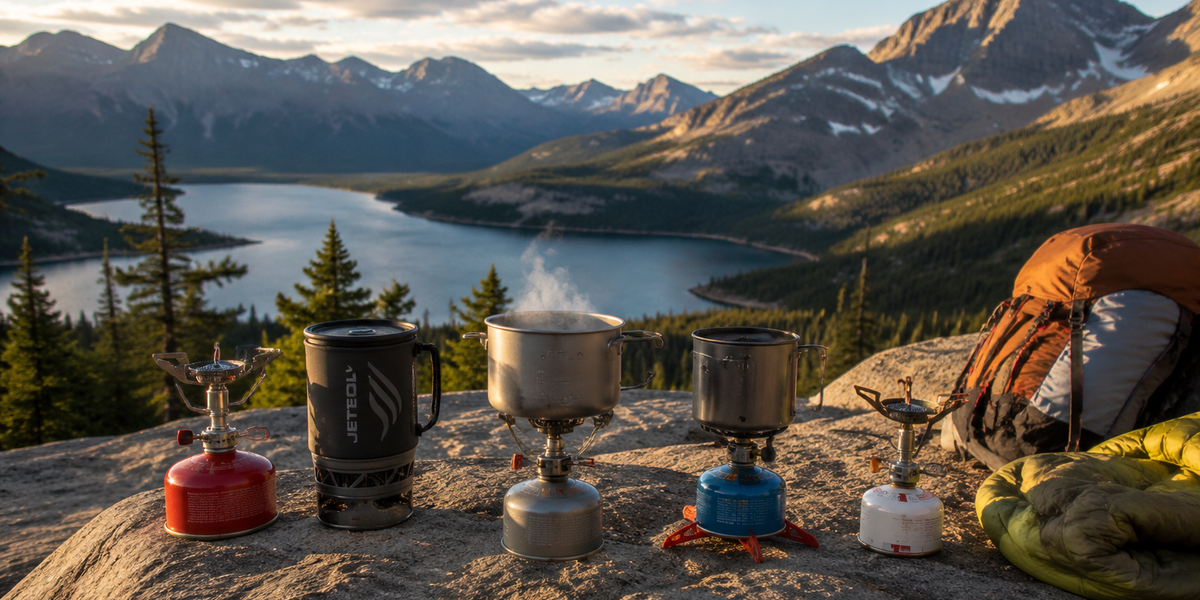
A bad stove choice can ruin a trip faster than bad weather. Too heavy and you're cursing every switchback. Too slow and you're shivering over a cold pot in the dark. Too fragile and you're eating cold instant oatmeal for four days. After weeks of back-country testing across everything from desert plateaus to alpine ridgelines, we've narrowed the 2026 field down to five stoves that genuinely earn their place in a backpacking kit.
We tested each stove on three core metrics: boil time for one liter of water in calm and windy conditions, system weight including the stove head and any integrated components, and real-world ease of use when your hands are cold and your patience is thin. We also paid close attention to simmer control, packability, and fuel efficiency — the things that matter on day four of a six-day trip.
Whether you're a weekend warrior heading into the Cascades for the first time or a seasoned thru-hiker grinding out the PCT, this guide has a stove that fits your style, your budget, and your base weight targets. We'll cover the five best picks in depth, then answer the questions we hear most often before pointing you toward the right choice for your next adventure.
What to Look For in a Backpacking Camp Stove
- Weight: Every ounce adds up. Ultralight stoves (under 3 oz) are ideal for thru-hikers and minimalists. Integrated systems like the Jetboil weigh more but replace your cup, so compare system weight — stove plus pot — not stove weight alone.
- Boil Time: A faster boil means less fuel burned per meal, which matters on longer trips. Look for stoves that hit one liter in under four minutes in calm conditions. Wind performance is a separate — and equally important — metric.
- Wind Resistance: Standard upright canister stoves lose significant efficiency in wind. If you're headed above treeline or to exposed coastal routes, prioritize a windscreen-compatible design or an integrated system with a built-in wind block.
- Fuel Type Compatibility: Most backpacking stoves run on isobutane-propane canisters (the universal Lindal valve standard). Remote-canister and white-gas stoves expand your options in international and cold-weather contexts but add complexity.
- Simmer Control: If you cook real meals — not just boil-and-pour pouches — you need a stove with enough flame adjustment to actually simmer. Cheap ultralight stoves often have binary on/off flame behavior that makes anything beyond boiling water a challenge.
- Value for Weight: Don't just compare price tags. Calculate cost per ounce and factor in durability. A $15 stove that breaks in year one costs more than a $60 stove that lasts a decade.
💡 Pro Tip: Always weigh your complete cook system — stove, pot, lid, and a full fuel canister — before your trip. That number is what actually goes in your pack, and it often surprises people who only look at the stove head weight.
The 5 Best Backpacking Camp Stoves for 2026
1. MSR PocketRocket 2 — Best Overall
| Criteria | Score |
|----------|-------|
| Boil Time | 9/10 |
| Packability | 10/10 |
| Wind Resistance | 6/10 |
| Value | 9/10 |
The MSR PocketRocket 2 has been a trail staple for years, and the 2026 version continues to earn that reputation. It weighs just 2.6 oz, screws onto any standard isobutane canister in seconds, and collapses into a package roughly the size of a matchbox. In our calm-condition testing, it boiled one liter in 3 minutes 28 seconds — the second fastest time in the roundup. The burner ring distributes heat evenly across the pot base, and the flame knob has a smooth, responsive action that makes genuine simmering possible.
Where the PocketRocket 2 shows its limits is in the wind. Without a windscreen, boil times nearly doubled in a 15 mph crosswind during our alpine testing. Pair it with a lightweight foil windscreen (around 0.5 oz) and that problem mostly disappears. For three-season trips below treeline or in sheltered camping spots, this stove is close to perfect. It's the stove we reach for most often — and the one we'd recommend to nine out of ten backpackers.
✅ Pros:
- Ultralight at just 2.6 oz — barely noticeable in your pack
- Boils 1L in under 3.5 minutes in calm conditions
- Folds down to fit in a shirt pocket
❌ Cons:
- Wind performance drops noticeably without a separate windscreen
- Flame control can feel touchy at very low simmer settings
---
2. Jetboil Flash Cooking System — Best for Speed and Simplicity
| Criteria | Score |
|----------|-------|
| Boil Time | 10/10 |
| Fuel Efficiency | 9/10 |
| Versatility | 6/10 |
| Value | 7/10 |
If hot water fast is your only priority, nothing in this roundup beats the Jetboil Flash. The integrated FluxRing technology concentrates heat directly into the cup wall, and in our testing it hit the boil in 2 minutes 51 seconds — the fastest time we recorded by a meaningful margin. The color-changing heat indicator that wraps the cup is genuinely useful: it turns orange when the water is ready, so you're not lifting the lid every 30 seconds. The push-igniter works reliably in cold weather, which is more than we can say for a lot of built-in igniters.
The tradeoff is versatility. The Jetboil Flash is a boil-water machine, and it does that one job brilliantly. Cooking anything that requires actual heat control — scrambled eggs, a proper pasta sauce — is frustrating with the integrated cup design. It also weighs 13.1 oz as a system, which is heavier than a standard stove-plus-pot combo. For backpackers who live on freeze-dried meals and want morning coffee in under three minutes, it's the right tool. For hikers who want to actually cook, look elsewhere.
✅ Pros:
- Integrated cup and burner cuts setup time to seconds
- Color-changing heat indicator removes the guesswork
- Outstanding fuel efficiency for multi-day boil-only use
❌ Cons:
- Heavier than a bare-bones canister stove at 13.1 oz
- Integrated cup design limits real cooking versatility
---
3. BRS-3000T Ultralight Stove — Best Value
| Criteria | Score |
|----------|-------|
| Weight | 10/10 |
| Boil Time | 7/10 |
| Durability | 6/10 |
| Value | 10/10 |
At 0.9 oz and roughly $17, the BRS-3000T is the stove that makes ultralight backpackers grin. It weighs less than a set of car keys. It fits in a film canister. And in calm conditions, it punches above its price point — boiling our liter test in 4 minutes 12 seconds, which is entirely acceptable for a stove that costs less than a trail lunch. It threads onto any standard isobutane canister and folds flat in seconds.
That said, you're getting what you pay for in a few meaningful ways. The folding legs are the obvious weak point — they require care during setup and breakdown, and we've seen reports of legs snapping with rough handling. Simmer control is minimal; it's essentially on or off, which limits its usefulness for anything beyond boiling water. Treat it as a dedicated water-boiling tool, protect those legs in a small stuff sack, and it will serve you well on a tight budget.
💡 Pro Tip: Store your BRS-3000T in a small titanium or aluminum pot to protect the folding legs during transport. It adds negligible weight and dramatically extends the stove's lifespan.
✅ Pros:
- Astonishingly light at just 0.9 oz
- Dramatically undercuts the competition on price
- Screws onto any standard isobutane canister
❌ Cons:
- Fragile folding legs need careful handling
- Minimal simmer control — best suited for boiling water only
---
4. MSR WindBurner Stove System — Best for Alpine and Cold Weather
| Criteria | Score |
|----------|-------|
| Wind Resistance | 10/10 |
| Fuel Efficiency | 9/10 |
| Boil Time (cold/wind) | 9/10 |
| Packability | 7/10 |
The MSR WindBurner uses a radiant burner design — rather than an open flame, it produces a pressurized, enclosed combustion that is dramatically less affected by wind and cold. In our 20 mph crosswind test, where the PocketRocket 2 struggled and the BRS stalled out entirely, the WindBurner boiled our liter in 4 minutes 22 seconds without flinching. Its pressure regulator also keeps output consistent as the canister cools and empties — a significant advantage at altitude and in freezing temps where canister pressure drops quickly.
This stove earns its premium price on any alpine, shoulder-season, or winter-adjacent trip. It's heavier and bulkier than a simple canister stove, and at $159.95 it's a real investment. But if you're camping above treeline in shoulder season or tackling a route where weather is genuinely uncertain, it's the only stove in this roundup we'd trust unconditionally. Pair it with a solid pack like the Osprey Atmos AG 65 and you've got a kit that handles serious terrain.
✅ Pros:
- Radiant burner handles wind and cold where standard stoves fail
- Pressure regulator maintains consistent output as canister empties
- Excellent fuel efficiency in four-season conditions
❌ Cons:
- Heavier and bulkier than three-season canister options
- Higher price point than most backpackers need for summer trips
---
5. Snow Peak LiteMax Titanium Stove — Best for Ultralight Cooks
| Criteria | Score |
|----------|-------|
| Weight | 9/10 |
| Simmer Control | 9/10 |
| Durability | 9/10 |
| Value | 7/10 |
The Snow Peak LiteMax sits in a specific and underserved niche: it's nearly as light as the BRS-3000T at just 1.9 oz, but it's built from titanium and includes the kind of precise simmer control that makes actual camp cooking possible. The flame adjustment is smooth and wide-ranging — we simmered a pot of risotto on a two-night trip that would have been a burned mess on the BRS. Build quality is excellent; this feels like a tool built to last a decade of hard use.
At $59.95, it costs more than the BRS and sits in an awkward spot between the value pick and the PocketRocket 2. If you're a boil-only freeze-dried-meal hiker, save the money and go with the BRS or the PocketRocket. But if you actually cook on trail and want a stove light enough not to punish you for it, the LiteMax is the right call.
✅ Pros:
- Titanium build adds durability without meaningful weight penalty
- Excellent simmer control for actual camp cooking
- Compact and elegantly minimal
❌ Cons:
- More expensive than the BRS for a similar weight class
- Still susceptible to wind without a dedicated windscreen
---
Frequently Asked Questions
What fuel do backpacking camp stoves use?
Most backpacking stoves — including all five in this guide — run on isobutane-propane canisters (commonly called "canister fuel"). These screw onto any stove using the standard Lindal valve. The most common brands are MSR, Jetboil, Snow Peak, and Primus. Canisters are widely available at outdoor retailers but harder to find internationally, so plan ahead for international trips.
How much fuel do I need per day backpacking?
A rough rule of thumb is 10–15 grams of fuel per person per day for boiling water only (two hot meals and a hot drink). If you're cooking more complex meals or camping in cold weather — which burns fuel faster — budget 20 grams per person per day. A standard 100g canister covers 2–3 days for one person; a 250g canister covers a week.
Can I use a backpacking stove inside my tent?
No. Never operate any stove inside a tent or enclosed shelter. The carbon monoxide risk is real and lethal — CO is odorless and can incapacitate you before you realize anything is wrong. Always cook in open air or at minimum in a well-ventilated vestibule, and keep an eye on wind direction. This is non-negotiable.
What is the lightest backpacking stove?
The BRS-3000T at 0.9 oz is the lightest canister stove we tested and one of the lightest available anywhere. The Snow Peak LiteMax comes in at 1.9 oz for those who want titanium durability. Both are significantly lighter than integrated systems like the Jetboil, which trades raw weight for speed and convenience.
Are integrated stove systems worth it for backpacking?
It depends entirely on how you camp. For hikers who live on boil-in-bag meals and instant coffee, integrated systems like the Jetboil Flash offer real advantages: faster boil, better fuel efficiency, and fewer parts to manage. For hikers who cook actual meals, the limited pot compatibility and lack of simmer control make them frustrating. Most experienced backpackers end up with one of each — a Jetboil for speed on solo trips and a canister stove for group trips and real cooking.
Final Thoughts
Choosing a backpacking stove comes down to an honest conversation with yourself about how you camp. If you're going light and fast on a thru-hike or a long weekend, the MSR PocketRocket 2 is still the most balanced stove on the market — light, fast, and reliable. If budget is the driving concern, the BRS-3000T is genuinely remarkable for the price. Alpine or shoulder-season hikers should seriously consider the MSR WindBurner — it's an investment that pays off the first time you're cooking above treeline in a howling crosswind.
Whatever stove you choose, test it at home before you hit the trail. Light it in your backyard, run through your full cook system, and make sure you understand how the flame adjusts before you're fumbling with it in the dark at 11,000 feet. Good gear only helps if you know how to use it.
Editor's Choice
Osprey Atmos AG 65 Backpacking Pack — if you're investing in a stove setup for serious multi-day trips, pairing it with a pack that carries a full load comfortably is just as important as the stove itself, and the Atmos AG 65's Anti-Gravity suspension is the best in its class.
Big Agnes Copper Spur HV UL2 Backpacking Tent — at 2.6 lbs with two doors and vestibules, this is the shelter that naturally pairs with an ultralight stove setup for gram-conscious backpackers who refuse to compromise on comfort.
MSR Hubba Hubba NX 2 Backpacking Tent — for hikers prioritizing wet-weather reliability on shoulder-season trips where you'd also want the MSR WindBurner, the Hubba Hubba NX's rain performance makes it the logical shelter companion.