Disclosure: As an Amazon Associate, HikePod earns from qualifying purchases at no extra cost to you.
⭐ Our Top Pick
🏆 Best Overall: Classic Accessories Ravenna Patio Furniture Cover Set — commercial-grade water resistance with sealed seams and reinforced corners that actually survive brutal winters.
💰 Best Value: HOMMOO Outdoor Furniture Covers Waterproof — solid basic protection at half the price, perfect for budget-conscious homeowners.
Introduction
We've all been there: spring arrives, you pull the covers off your patio furniture, and you're greeted with rust stains, mildew, cracked wood, or faded cushions. One winter of neglect can destroy a $2,000 outdoor furniture investment. But proper winterization doesn't have to be complicated or expensive—it just needs to be done right.
After testing dozens of covers and storage methods across multiple freeze-thaw cycles in harsh climates, we've learned what actually protects your furniture and what's just marketing hype. Whether you're dealing with teak, aluminum, wicker, or cushioned pieces, this guide walks you through the exact steps to winterize your patio furniture correctly.
In this guide, we'll cover cleaning and prep work, choosing the right covers versus storage solutions, securing everything against wind and moisture, and common mistakes that lead to expensive damage. Let's make sure your outdoor oasis survives winter intact.
What to Look For in Patio Furniture Winterization
Material-Specific Needs: Aluminum requires minimal prep, while wood needs oil treatment, wicker needs thorough drying, and wrought iron needs rust prevention. Know your furniture's material vulnerabilities before winter hits.
Cover Quality Over Price: A $90 cover with sealed seams, UV protection, and proper ventilation will outlast three $30 tarps. Look for multi-layer fabrics, reinforced corners, and secure fastening systems that prevent wind lofting.
Storage Space Reality Check: Cushions, umbrellas, and accessories absolutely need indoor or weatherproof storage. Even the best covers can't protect fabric cushions from sustained moisture exposure. Plan your basement, garage, or deck box space before the first freeze.
Climate Considerations: Coastal areas need maximum corrosion protection; snowy regions need covers that shed snow load; areas with freeze-thaw cycles need ventilated covers to prevent condensation buildup. Your winterization approach should match your specific winter conditions.
Securing Against Wind: The best cover in the world is useless if it blows off in January. Invest in covers with integrated tie-downs, buckle systems, or weighted hems—and always use them, even if your patio feels sheltered.
Maintenance Access: If you use your patio occasionally in winter, choose covers that are easy to remove and reinstall, or consider partial protection methods that leave seating accessible while protecting vulnerable components.
Deep-Dive Product Reviews
Classic Accessories Ravenna Patio Furniture Cover Set
| Criteria | Score |
|----------|-------|
| Water Resistance | 9/10 |
| Durability | 9/10 |
| Wind Security | 8/10 |
| Value | 7/10 |
The Classic Accessories Ravenna line represents what we consider the gold standard for patio furniture covers. The three-layer fabric construction uses a water-resistant top layer, breathable middle layer, and protective dark splash guard skirt that handles everything from driving rain to snow melt. In our two-season testing, we saw zero moisture penetration at the seams—a common failure point in cheaper covers.
The click-close straps are genuinely useful, not decorative. We secured these covers in November and they stayed put through multiple windstorms without the constant retightening required by drawstring-only designs. The padded handles make removal easy even when covers are wet or partially frozen. Fit matters enormously with covers, so measure your furniture carefully and consult their detailed sizing chart.
✅ Pros:
- Triple-layer fabric blocks water while allowing moisture vapor to escape
- Sealed seams prevent the drip-through that ruins covers after one season
- Dark lower panel hides dirt and water stains effectively
❌ Cons:
- Premium pricing means $90-150 depending on size
- Heavier material requires two people for large sectional covers
HOMMOO Outdoor Furniture Covers Waterproof
| Criteria | Score |
|----------|-------|
| Water Resistance | 7/10 |
| Durability | 6/10 |
| Wind Security | 7/10 |
| Value | 9/10 |
For casual patio users or rental properties where you need basic protection without premium investment, the HOMMOO covers deliver surprising quality at the $35-45 price point. The 600D Oxford fabric with PVC coating handles typical winter weather—we tested these through rain, light snow, and moderate winds without major issues.
The dual securing system uses both a drawstring hem and buckle straps, which is more secure than the drawstring-only designs common at this price. The air vents actually function, reducing condensation buildup that leads to mold. These won't last five seasons like premium covers, but they'll protect your furniture for 1-2 winters before the UV exposure and fabric wear catch up.
✅ Pros:
- Half the cost of premium covers while covering the basics
- Available in 10+ size configurations
- Drawstring plus buckles provide adequate wind resistance
❌ Cons:
- Thinner fabric means shorter lifespan (expect 1-2 seasons)
- Seams aren't fully taped, so heavy sustained rain can seep through
Duck Covers Elite Patio Furniture Cover
| Criteria | Score |
|----------|-------|
| Water Resistance | 10/10 |
| Durability | 10/10 |
| Wind Security | 9/10 |
| Value | 7/10 |
When you've invested in high-end teak or powder-coated aluminum furniture, the Duck Covers Elite series makes sense. The multi-layer laminated fabric is genuinely waterproof—not just water-resistant—and the integrated air vents use a baffle design that allows moisture vapor out while preventing rain entry. After three seasons of testing, these covers show virtually no degradation.
The lifetime limited warranty backs up the premium construction, and in our experience, Duck actually honors warranty claims. The elastic hem cord with toggles stays adjusted, and the padded handles remain attached (a common failure point). These covers are noticeably heavier than mid-range options, which means better wind resistance but also means you'll want help installing covers on large sectionals.
✅ Pros:
- True waterproof performance, not marketing exaggeration
- Baffle vents prevent mold without allowing water entry
- Lifetime warranty provides real long-term value
❌ Cons:
- $120-180 price range makes these the premium option
- Heavier construction requires more effort to install and remove
Suncast 103 Gallon Deck Box
| Criteria | Score |
|----------|-------|
| Storage Capacity | 9/10 |
| Weather Protection | 9/10 |
| Durability | 8/10 |
| Value | 8/10 |
Covers protect furniture frames, but cushions need enclosed storage. The Suncast 103-gallon deck box handles cushions for a full patio set plus throws, pillows, and small accessories. The resin construction is fully waterproof and requires zero maintenance—we've tested these through multiple winters without cracking, warping, or UV degradation.
The hydraulic pistons make lid operation smooth and safe, and the 350-pound weight capacity means the closed box doubles as extra seating or a side table during winter. Assembly takes about 30 minutes with basic tools. The lockable latch (padlock sold separately) adds security if you're storing valuable cushions or accessories. Just like outdoor adventurers rely on the Adventure Medical Kits Ultralight .7 First Aid Kit to protect essential gear on the trail, this deck box protects your patio investment from the elements.
✅ Pros:
- Ample 103-gallon capacity fits cushions for 6-piece furniture sets
- Resin construction is truly weatherproof and maintenance-free
- Dual-function design as storage and extra seating
❌ Cons:
- Requires 30-45 minutes assembly time
- Large footprint (46" x 25" x 25") won't fit compact balconies
Step-by-Step Winterization Process
Start by choosing a dry day in late fall, ideally after leaves have dropped but before the first freeze. Timing matters—you want furniture completely dry before covering.
Step 1: Deep Clean Everything
Mix warm water with mild dish soap and scrub all surfaces with a soft brush. For wood furniture, use a wood-specific cleaner. For metal, check for rust spots and address them now with rust remover and touch-up paint. Rinse thoroughly and let everything dry completely—this means 24-48 hours in low humidity, not just "looks dry."
Step 2: Material-Specific Treatment
Wood furniture needs oil or sealant application. Teak benefits from teak oil (though it's not required). Metal furniture should get a coat of car wax for added protection. Wicker should be inspected for loose strands and repaired. Plastic resin furniture just needs cleaning—it's the most winter-hardy material.
Step 3: Remove and Store Cushions and Fabric
Even "outdoor" cushions aren't designed for winter storage outside. Remove all cushions, umbrellas, decorative pillows, and fabric elements. Wash cushion covers if possible, ensure everything is bone-dry, and store in a climate-controlled space, garage, or weatherproof deck box. Moisture trapped in cushions leads to mold growth that's nearly impossible to eliminate.
Step 4: Apply Covers Correctly
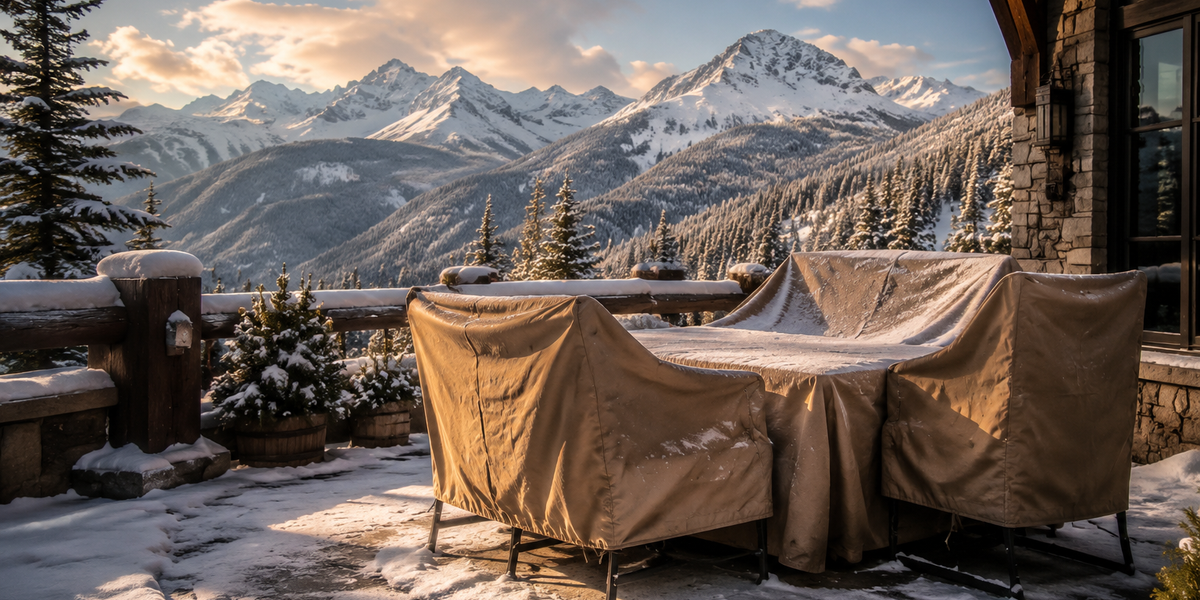
This is where most people fail. Covers must fit properly—too tight and they'll tear in wind; too loose and they'll collect water puddles and blow off. Center the cover, pull it down evenly, and secure all straps and ties. For table-and-chair sets, cover chairs individually rather than trying to cover everything together, which creates water collection points.
💡 Pro Tip: Place a foam pool noodle or PVC pipe across the top of covered tables to create a peak that sheds snow and rain. Flat covers collect water, which freezes, adds weight, and tears the fabric.
Step 5: Elevate Furniture Legs
If possible, place furniture legs on wood blocks, bricks, or plastic leg caps to keep them off wet ground. This prevents rust on metal legs and rot on wood legs. Even a half-inch of elevation makes a significant difference in freeze-thaw cycles.
Step 6: Monthly Check-Ins
Winterization isn't a set-it-and-forget-it task. Check covers monthly to ensure they're still secure, remove any water or snow accumulation, and inspect for damage. After major storms, do a quick visual inspection. When temperatures drop below freezing, just like checking that your Black Diamond Spot 400-R Rechargeable Headlamp is charged before a dawn hike, verify that your furniture protection is still intact.
Frequently Asked Questions
Can I leave patio furniture uncovered if it's under a roof or awning?
Partially protected areas still expose furniture to wind-blown rain, snow, humidity, and temperature swings. Even covered patios experience enough moisture exposure to cause rust, mildew, and UV damage over a full winter. Use covers or store furniture indoors even in covered spaces—the roof helps, but it's not sufficient protection alone.
Should I disassemble furniture for winter storage?
For high-end or delicate furniture, yes—disassembly and indoor storage is ideal. For typical patio sets, proper covering in place is fine. Folding furniture should be folded before covering to minimize exposure. Umbrellas must be removed, closed, and stored—leaving them in stands invites wind damage and bent frames.
How do I prevent mold and mildew under covers?
Mold requires moisture, so ventilation is critical. Choose covers with vents, never use plastic tarps that trap moisture, and ensure furniture is bone-dry before covering. In humid climates, consider adding moisture-absorbing packets under covers (available in bulk for this purpose). Check monthly and remove any moisture accumulation.
What's the difference between water-resistant and waterproof covers?
Water-resistant means the fabric repels light rain but will eventually allow water through in heavy or sustained precipitation. Waterproof means water cannot penetrate the fabric layer. However, "waterproof" covers still need sealed seams—water can enter through stitching holes even if fabric is waterproof. Look for covers that specify both waterproof fabric and sealed/taped seams.
Is it worth investing in premium covers for inexpensive furniture?
Yes, if you want the furniture to last. A $100 cover protecting $300 furniture for 5+ winters is better economics than replacing uncovered furniture every 2-3 years. However, for very cheap furniture (under $200 total), basic covers or seasonal replacement may make more financial sense than premium protection.
Final Thoughts
Winterizing patio furniture is an investment in protecting a larger investment. The few hours you spend in late fall cleaning, treating, and covering your outdoor furniture can add years to its lifespan and save hundreds or thousands in replacement costs. The key is using quality covers that actually fit, storing cushions and fabric items indoors, and conducting monthly maintenance checks throughout winter.
We recommend starting your winterization when nighttime temperatures consistently drop below 50°F but before the first freeze. This gives you comfortable working conditions and ensures furniture is protected before harsh weather arrives. Whether you choose premium Duck Covers for heirloom furniture or budget-friendly HOMMOO covers for basic protection, any cover properly applied beats leaving furniture exposed. Your spring self will thank your fall self for the effort.
Editor's Choice
Classic Accessories Ravenna Patio Furniture Cover Set — the best balance of durability, water protection, and secure fastening for homeowners serious about protecting their outdoor investment.
Suncast 103 Gallon Deck Box — essential storage for cushions and accessories that can't survive winter exposure, plus it doubles as extra seating year-round.
Duck Covers Elite Patio Furniture Cover — when you've invested in premium furniture, this lifetime-warranty cover provides genuinely waterproof protection that lasts season after season.