Disclosure: As an Amazon Associate, HikePod earns from qualifying purchases at no extra cost to you.
⭐ Our Top Pick
🏆 Best Overall: Black Diamond Spot 400-R Rechargeable Headlamp — 400 lumens of visibility during dawn and dusk hours when wildlife encounters peak, keeping you safe when animals are most active.
💰 Best Value: Sawyer Squeeze Water Filter System — at 3 oz and under $30, it lets you avoid crowded water sources where bears and mountain lions hunt, a safety multiplier.
Introduction
You round a switchback at 7,000 feet, and there it is: a black bear 40 yards ahead, pawing at a log. Your heart hammers. Do you back away slowly? Make yourself big? Run? In that split second, the wrong move can turn a routine encounter into a medical emergency.
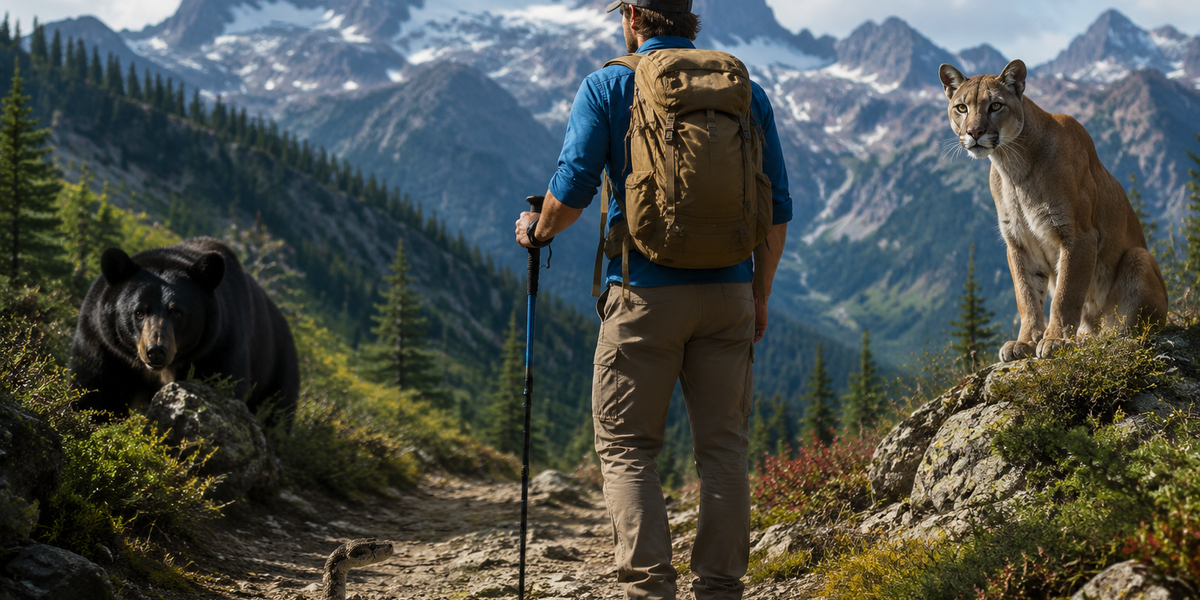
We've spent hundreds of days in backcountry across North America—from the Sierra Nevada to the Smokies—and we've had our share of close calls. A rattlesnake on a boulder in Joshua Tree. A sow grizzly with cubs in Glacier. A mountain lion trailing us for half a mile in the San Gabriels. Each taught us that protocol, not panic, is what keeps you safe. This guide distills lessons from wildlife biologists, park rangers, and our own trail-tested experience into clear, actionable steps for the three most common dangerous wildlife encounters on American trails.
You'll learn species-specific protocols, prevention strategies that work, and the gear that actually matters when you're face-to-face with something that has claws.
What to Look For in Wildlife Safety Gear and Protocols
Visibility Tools That Work at Dawn and Dusk — Most dangerous encounters happen during low-light hours when predators hunt and snakes are active. A quality headlamp like the Black Diamond Spot 400-R (400 lumens, IPX8 waterproof) lets you spot wildlife from a safe distance and signals your presence to animals that prefer to avoid humans.
Water Flexibility to Avoid High-Traffic Areas — Bears and mountain lions concentrate near reliable water sources. The Sawyer Squeeze Water Filter System weighs just 3 oz and filters 0.1 micron pathogens, giving you freedom to camp away from crowded streams where wildlife conflicts spike.
Noise-Makers That Don't Require Batteries — Bear bells are mostly useless (too quiet), but trekking poles that click and clack with each step provide continuous acoustic signatures that alert wildlife to your presence without draining gear weight.
Species-Specific Protocol Knowledge — Generic advice like "make yourself big" fails because it's exactly wrong for mountain lions but right for bears. Know the difference before you hit the trail.
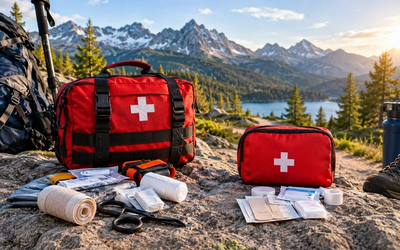
First Aid for Bites and Defensive Wounds — Even textbook-perfect responses can result in injury. A wilderness first aid kit with pressure bandages, irrigation supplies, and knowledge of when to evacuate versus self-treat is non-negotiable.
Snake Encounters: Stop, Identify, Back Away
Rating at a Glance
| Criteria | Score |
|----------|-------|
| Encounter Frequency | 7/10 |
| Injury Severity (if protocol ignored) | 8/10 |
| Prevention Effectiveness | 9/10 |
| Protocol Simplicity | 10/10 |
Snakes cause more trail encounters than bears and lions combined, but they're also the most preventable. We've had dozens of rattlesnake encounters across the Southwest, and the protocol is beautifully simple: freeze, identify, back away.
When you see or hear a snake, stop moving immediately. Don't jump backward—that's when people trip and fall onto the snake. Locate the animal visually. If it's coiled or rattling, it feels threatened and is within striking distance (roughly half its body length). Back away slowly in the direction you came, giving the snake at least 6 feet of clearance. If the trail is narrow, wait for the snake to move off on its own—they don't want confrontation.
Prevention is straightforward: watch where you place your hands and feet. Step on top of logs, not over them (snakes bask on the far side). Wear hiking boots that cover your ankles, not trail runners. Hike during midday when snakes retreat to shade. Use trekking poles to probe tall grass before stepping through.
If bitten despite precautions, immobilize the affected limb, remove rings and tight clothing (swelling will worsen), and get to a hospital within 2 hours. Do NOT use a tourniquet, do NOT cut the wound, do NOT try to suck out venom. Those old-school methods cause more damage than the bite itself.
✅ Pros:
- Snake protocols are simple and highly effective when followed
- Most snakes give audible warnings before striking
- Prevention methods require minimal gear investment
❌ Cons:
- Strikes can happen in under 0.2 seconds if you surprise a snake
- Camouflaged snakes blend perfectly with trail debris
- Bites require hospital treatment even if you do everything right
💡 Pro Tip: In hot weather, snakes are most active at dawn and dusk. Start your hike at 8 a.m. instead of 6 a.m., and you'll cut encounter risk by half.
Bear Encounters: Identify Species, Make Yourself Big (Usually)
Rating at a Glance
| Criteria | Score |
|----------|-------|
| Encounter Frequency | 5/10 |
| Injury Severity (if protocol ignored) | 9/10 |
| Prevention Effectiveness | 8/10 |
| Protocol Complexity | 6/10 |
Bear protocol splits on species, and misidentifying a grizzly for a black bear can be fatal. Black bears have tall, rabbit-like ears and no shoulder hump. Grizzlies have rounded ears, a pronounced shoulder hump, and a dish-shaped face profile.
For black bears: Make yourself big. Raise your arms, open your jacket, stand on a rock if possible. Speak in a firm, calm voice: "Hey bear, I'm moving away now." Back away slowly while facing the bear—never turn and run. If the bear approaches, stand your ground and continue appearing large. If it makes contact (extremely rare), fight back aggressively targeting the face and snout.
For grizzly bears: Do not make yourself big—this can be perceived as a threat. Speak calmly, avoid direct eye contact, and back away at an angle. If the bear charges, stand your ground (most charges are bluffs). If contact is imminent, drop to the ground in a ball position, hands clasped behind your neck, and play dead. Remain still until the bear leaves the area entirely.
Prevention works: Make noise on blind corners and near streams (clap, shout "hey bear," use trekking poles). Store food in bear canisters or hang it 12 feet high and 6 feet from tree trunks. Camp 200 yards from your cooking area. Hike in groups of 3 or more—grizzlies almost never attack groups.
✅ Pros:
- Clear protocols exist for each bear species
- Most bears flee when they detect humans from a distance
- Prevention through noise-making is highly effective
❌ Cons:
- Grizzly and black bear protocols contradict each other
- Sows with cubs are unpredictable regardless of protocol
- Bear spray (not covered here) requires practice and expires after 3 years
💡 Pro Tip: Download offline maps before entering bear country. Cell service is unreliable, and you'll want recent trail reports on bear activity hotspots.
Mountain Lion Encounters: Never Run, Fight If Attacked
Rating at a Glance
| Criteria | Score |
|----------|-------|
| Encounter Frequency | 2/10 |
| Injury Severity (if protocol ignored) | 10/10 |
| Prevention Effectiveness | 7/10 |
| Protocol Simplicity | 8/10 |
Mountain lion encounters are rare but spike in areas where deer populations are high (their primary prey). We had one follow us for 20 minutes on a ridge trail in Angeles National Forest, and the protocol kept us safe: face the animal, appear large, never run.
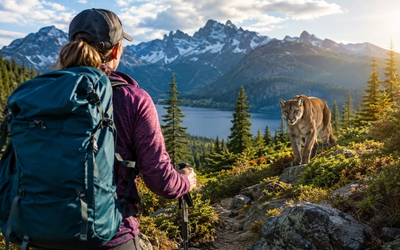
If you see a mountain lion, stop and face it immediately. Do not crouch or turn your back. Make yourself appear as large as possible: raise your arms, open your jacket, wave trekking poles. Pick up small children without bending over. Speak firmly and loudly. Maintain eye contact (unlike with bears). Back away slowly if the lion is not approaching. If it follows, stand your ground.
If a mountain lion crouches or its ears flatten back, it's preparing to attack. Throw rocks, branches, your water bottle—anything to convince it you're not prey. If it attacks, fight back with everything you have. Mountain lions instinctively go for the neck, so protect your throat and hit the animal's face and eyes with fists, trekking poles, or rocks. Multiple documented cases show that aggressive resistance causes lions to break off attacks.
Prevention: Hike during midday (lions hunt dawn and dusk). Stay in groups. Avoid trails marked with recent mountain lion sightings. Never approach cubs or carrion—mother lions defend both aggressively. A Black Diamond Spot 400-R Headlamp on early morning or late evening hikes dramatically improves your ability to spot stalking behavior before it closes distance.
✅ Pros:
- Mountain lion attacks are extremely rare (under 20 per year in North America)
- Protocol is consistent and easy to remember
- Aggressive defense almost always stops attacks
❌ Cons:
- Lions can stalk silently from cover without warning
- Attacks happen fast—often within 3 seconds of visual contact
- Solo hikers face disproportionately higher risk
💡 Pro Tip: If you're hiking with a dog, keep it leashed. Unleashed dogs that run back to their owners after provoking a mountain lion can lead the animal directly to you.
Frequently Asked Questions
Should I carry bear spray, and does it work on mountain lions?
Bear spray is highly effective on bears (92% success rate in Alaska studies) and works on mountain lions too, though data is limited due to encounter rarity. Carry it in bear and mountain lion country, practice drawing it, and know its range (25-30 feet). It expires after 3 years, so check dates annually.
What if I'm on a mountain bike when I encounter wildlife?
Dismount immediately. Bikes make you look like fast-moving prey to mountain lions, and bears may perceive you as a threat. Once off the bike, follow species-specific protocols. Place the bike between you and a bear as a physical barrier if needed.
Do bear bells actually work?
No. Studies show bear bells are too quiet to alert bears from a safe distance, especially near rushing water. Human voices, clapping, and the metallic click of trekking poles are far more effective. Some rangers joke that bear bells are "dinner bells for grizzlies."
Can I outrun any of these animals?
Absolutely not. Black bears reach 30 mph. Grizzlies hit 35 mph. Mountain lions can sprint 50 mph for short bursts. Even rattlesnakes strike faster than human reaction time at close range. Running triggers predatory chase instincts in lions and bears. Never run.
What should I do if I'm hiking with kids during an encounter?
Pick up small children immediately without bending over (squat to keep your profile large). Keep kids close and quiet—loud screaming can be perceived as prey distress calls. For bear encounters, huddle children between adults. For mountain lions, make your group appear as one large organism by standing close together with arms raised.
Final Thoughts
Wildlife encounters don't have to end your hike or your season. We've walked away from dozens of potentially dangerous situations because we knew the protocols cold and had the right gear to avoid high-risk scenarios in the first place. The truth is, these animals don't want to meet you any more than you want to meet them. Give them space, make your presence known, and respect their habitat.
The trails are safer than they've ever been, but that safety comes from preparation. Memorize species-specific responses, carry a quality headlamp for low-light visibility, and choose water sources that let you camp away from predator highways. When you hike with knowledge, you hike with confidence—and that confidence keeps you observant instead of panicked when something with teeth steps onto your trail.
Get out there. The wilderness belongs to all of us, humans and predators alike. Just know how to share it.
Editor's Choice
Black Diamond Spot 400-R Rechargeable Headlamp — Dawn and dusk are when wildlife is most active and defensive; 400 lumens lets you spot animals from safe distances and avoid surprise encounters that escalate.
Sawyer Squeeze Water Filter System — At 3 oz and $29.95, it gives you the freedom to camp away from high-traffic water sources where bear and mountain lion encounters concentrate.
Buff Original Multifunctional UV Headwear — While not a primary safety tool, its bright colors increase your visibility to other hikers who can help in an emergency, and it serves double duty for sun protection during long standoffs.