Disclosure: As an Amazon Associate, HikePod earns from qualifying purchases at no extra cost to you.
⭐ Our Top Pick
🏆 Best Overall: Big Agnes Copper Spur HV UL2 — ultralight construction and dual-door access make managing kids at the campsite dramatically easier.
💰 Best Value: TETON Sports Mountain Ultra Tent — budget-friendly shelter that lets families test the waters before investing in premium gear.
Introduction
The question isn't whether you can take kids camping—it's when the experience shifts from survival mode to genuine adventure. We researched developmental milestones, analyzed verified buyer experiences from hundreds of family camping reviews, and compiled gear recommendations across five age groups to help you time your first trip right.
The honest answer: you can start as early as six months, but the sweet spot for most families lands between ages 3-5 when children develop the physical stamina and emotional regulation that transform camping from a logistical challenge into a memory-making opportunity. That said, every child develops differently, and plenty of families successfully camp with infants or wait until elementary school.
This guide breaks down developmental readiness markers for each age group, addresses the gear shifts that matter most, and helps you decide whether this summer or next year makes more sense for your family's first overnight in the woods.
What to Look For
Thermoregulation ability — Infants and toddlers under 18 months struggle to regulate body temperature, requiring extra layers, appropriate sleeping systems, and careful weather monitoring. By age 3-4, most children can communicate when they're too hot or cold.
Sleep adaptability — Children who can sleep through minor disruptions (wind, unfamiliar sounds, temperature shifts) adapt faster to tent camping. If your child still wakes frequently at home, camping will amplify those challenges.
Bladder control and toileting — Potty-trained children (typically 3+) make overnight camping significantly easier, though families successfully camp with younger kids using portable solutions. For practical strategies on this specific challenge, see our guide to potty training while camping.
Attention span and safety awareness — Around age 4-5, children begin understanding basic campsite safety rules (don't touch the stove, stay within sight, respect fire boundaries). Younger children require constant hands-on supervision.
Physical endurance — Consider not just the camping itself but the getting there. A toddler who can walk a quarter-mile without being carried has more options than an infant who needs constant holding.
Emotional regulation — The child who can recover from frustration or fear with parental support will handle camping challenges better than one who melts down when routines shift. Night fears deserve special attention—our article on helping toddlers scared of the dark while camping offers targeted comfort strategies.
Ages 0-12 Months: Possible But Intensive
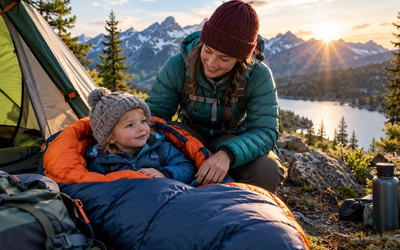
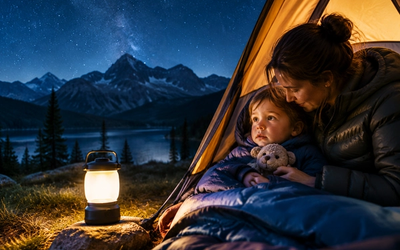
Infant camping is absolutely possible, but frame it as a trial run rather than a vacation. Babies this age need consistent temperature control, frequent feedings, diaper changes every 2-3 hours, and familiar sleep environments.
Developmental considerations: No thermoregulation, complete dependency for all needs, unpredictable sleep patterns, limited immune system development.
Gear essentials: Four-season sleeping bag rated 20°F below expected temps, co-sleeping setup or bassinet that fits your tent footprint, battery-powered white noise machine, complete diaper station with disposal bags, extra clothing layers for rapid temperature shifts.
Realistic expectations: Plan for one parent to be "on duty" at all times. Choose campgrounds with bathrooms within 100 feet of your site. Limit trips to one night maximum until you've refined your system.
💡 Pro Tip: Do a backyard test run first. Set up your tent at home, spend the night outside, and identify gaps in your system before you're an hour from the nearest store.
Ages 1-2: The Mobility Challenge
Toddlers bring delightful curiosity and exhausting supervision needs. They're mobile enough to find trouble but lack the judgment to avoid it.
Developmental considerations: Walking but unsteady, exploring everything, no safety awareness, inconsistent sleep patterns, emerging language but limited communication.
Gear essentials: Tent with vestibule space for gear (keeps choking hazards away from sleeping area), portable travel crib or toddler sleeping bag, easy-access first aid kit, multiple comfort items from home, harness or tether for high-risk areas near water.
Realistic expectations: Accept that one parent will chase the toddler while the other manages camp tasks. Choose established campgrounds with defined boundaries rather than dispersed camping. Keep trips short—two nights maximum.
This age group benefits from dedicated hauling solutions for all the extra gear toddlers require. Families often debate between different carrying methods; our comparison of camping wagons versus strollers helps you choose the right tool for your campground terrain.
Ages 3-5: The Sweet Spot Emerges
| Criteria | Score |
|----------|-------|
| Physical Independence | 7/10 |
| Safety Awareness | 6/10 |
| Sleep Adaptability | 7/10 |
| Emotional Regulation | 6/10 |
This age range marks the transition point where camping shifts from endurance test to genuine family activity. Children develop enough independence to handle basic tasks, communicate their needs clearly, and find joy in outdoor discoveries.
Developmental considerations: Potty-trained or close to it, can walk substantial distances (1-2 miles with breaks), follows simple multi-step instructions, begins understanding cause and effect, capable of 30+ minute focused activities.
Gear essentials: Child-sized sleeping bag rated for expected temps, headlamp or flashlight they can operate, their own small backpack for toys and treasures, camp chair sized for their height. The Buff Original Multifunctional UV Headwear works brilliantly for this age—it adapts to 12+ configurations, so when a child insists on wearing it as a pirate bandana instead of sun protection, you've still got coverage.
Realistic expectations: Plan activities around their interests—bug hunting, rock collecting, stick forts. Expect the first night to include wake-ups as they adjust. Bring favorite books and comfort items. Choose campgrounds with playgrounds or swimming if available.
✅ Pros:
- Old enough to genuinely enjoy outdoor activities
- Can articulate needs and fears
- Building lifelong positive associations with nature
❌ Cons:
- Still require constant supervision near hazards
- May struggle with temperature discomfort at night
- Limited patience for weather delays or setup time
Ages 6-10: Building Skills and Independence
| Criteria | Score |
|----------|-------|
| Physical Independence | 9/10 |
| Safety Awareness | 8/10 |
| Sleep Adaptability | 9/10 |
| Emotional Regulation | 8/10 |
Elementary-age children can participate meaningfully in camp tasks, handle longer hikes, and begin developing outdoor skills that serve them for life.
Developmental considerations: Strong reading skills for following instructions, improved fine motor skills for tent stakes and water filters, beginning problem-solving abilities, peer social awareness (great for family camping with friends).
Gear essentials: Their own sleeping pad and bag system (not sharing with parents), task-specific gear they're responsible for (headlamp, water bottle, day pack), junior versions of adult tools when appropriate. This is the age to invest in quality family shelter—the Big Agnes Copper Spur HV UL2 sets up so quickly that older kids in this range can help with the process, building competence and ownership.
Realistic expectations: Assign age-appropriate jobs (collecting kindling, organizing the tent, helping with meal prep). Plan layered activities from easy to challenging. Encourage independence while maintaining awareness of their location.
✅ Pros:
- Genuine help with camp tasks
- Can hike 3-5 miles comfortably
- Thrilled by skill-building and responsibility
❌ Cons:
- May overestimate abilities and need gentle course correction
- Peer dynamics can create conflicts in group camping
- Still developing judgment around major hazards
Ages 11+: Transitioning to Teen Camping
| Criteria | Score |
|----------|-------|
| Physical Independence | 10/10 |
| Safety Awareness | 9/10 |
| Sleep Adaptability | 9/10 |
| Outdoor Interest | 5-10/10 |
Pre-teens and teens bring physical capability and developing maturity, but the challenge shifts to maintaining their engagement as social priorities compete with family time.
Developmental considerations: Adult-level physical abilities, abstract thinking and planning skills, strong peer orientation, desire for autonomy, capacity for genuine wilderness skills.
Gear essentials: Adult-sized gear, personal shelter options (some teens prefer their own tent), devices for photography or nature apps, gear that reflects their developing identity and interests.
Realistic expectations: Involve them in planning—destination choice, meal prep, route selection. Invite their friends when appropriate. Balance family togetherness with giving them space. Focus on experiences that feel adventurous, not babyish.
This age group often appreciates technical gear that signals competence. The MSR Hubba Hubba NX 2 appeals to teens interested in eventually doing their own trips—it's a legitimate backpacking shelter that handles serious weather while remaining manageable for newer campers.
✅ Pros:
- Can handle challenging terrain and conditions
- Capable of learning complex outdoor skills
- May develop lifelong passion for outdoor recreation
❌ Cons:
- Social schedules complicate planning
- May resist family activities perceived as "for kids"
- Technology dependence can clash with outdoor ethos
💡 Pro Tip: For teens showing genuine interest, consider transitioning to trip styles where they take leadership—navigating, making decisions, managing logistics with your oversight.
Frequently Asked Questions
Is 2 years old too young to start camping?
Not too young, but understand what you're signing up for. Two-year-olds require constant supervision, have minimal impulse control, and won't remember the trip. If you're experienced campers comfortable troubleshooting challenges in real-time, go for it. If this is your first family camping attempt, waiting until 3-4 reduces the difficulty curve substantially. Success at age 2 depends more on parent comfort level than child capability.
How do I know if my child is developmentally ready regardless of age?
Watch for these green lights: sleeps through minor disruptions at home, can walk a half-mile without being carried, communicates basic needs clearly (hungry, cold, need bathroom), recovers from frustration with minimal support, shows interest in outdoor activities during day trips. Red flags include frequent night terrors, extreme sensory sensitivities to temperature or texture, inability to self-soothe when upset, or health conditions requiring controlled environments.
What's the ideal first camping trip length with young children?
One night. Seriously. A 24-hour trip lets you test your systems, identify what worked and what didn't, and end before anyone reaches their limit. If the first night goes smoothly, add a second night on trip two. Veteran families suggest the formula: child's age in years = maximum nights until age 8, when most kids can handle extended trips comfortably. A 4-year-old? Cap it at four nights maximum.
Should I choose car camping or backpacking for the first trip?
Car camping, no question. Access to your vehicle means you can bail if things go sideways, bring comfort items without weight restrictions, and keep backup supplies within reach. Backpacking with children requires specialized gear, careful weight distribution, and contingency planning that assumes you're committed once you're on the trail. Master car camping first, then graduate to backpacking around age 6-8 if your family enjoys it.
What if my child hates the first camping trip?
Don't force it, but do debrief. Ask what specific part bothered them—was it sleeping in the tent, using the bathroom, feeling too hot or cold, missing home routines? Many "failed" first trips trace to fixable issues: wrong season choice, inadequate sleeping gear, poor campground selection, or pushing too hard on activities. Address the specific pain point, wait a few months, and try again with adjustments. Some children genuinely dislike camping, and that's okay—but most negative first experiences reflect correctable planning gaps.
Final Thoughts
The best age to start camping with kids is the age when your family feels ready—and that readiness combines child development, parent confidence, and realistic expectations more than any magic number. We've seen families thrive starting at six months and others who waited until age seven, and both paths create meaningful outdoor traditions.
Start small, choose forgiving conditions, and prioritize positive experiences over ambitious agendas. A successful first trip might mean you spent more time in the tent reading books than hiking trails, and that's perfectly fine. The goal isn't checking boxes—it's building a foundation where your children associate the outdoors with safety, fun, and family connection.
Your child's developmental stage matters, but so does your preparation. With age-appropriate gear, realistic trip planning, and flexibility when things don't go exactly as planned, you'll build camping competence that serves your family for years to come.
Editor's Choice
Big Agnes Copper Spur HV UL2 — The dual-door design means parents can exit for midnight bathroom runs without climbing over sleeping children, while the ultralight construction makes setup manageable when you're juggling kid supervision.
TETON Sports Mountain Ultra Tent — At under $90, this budget-friendly option lets families test whether camping becomes a regular activity before investing in premium gear, with enough weather protection to handle typical summer conditions.
Buff Original Multifunctional UV Headwear — Adapts to 12+ configurations, so when your preschooler insists on wearing it as a superhero mask instead of sun protection, you've still got UPF 50+ coverage working in your favor.