Disclosure: As an Amazon Associate, HikePod earns from qualifying purchases at no extra cost to you.
⭐ Our Top Pick
🏆 Best Overall: Salomon Men's X Ultra 4 GTX Hiking Shoes — Gore-Tex waterproofing and Contagrip rubber in a12.5 oz package that outperforms boots twice its weight.
💰 Best Value: Merell Men's Moab 3 Mid Waterproof Hiking Boot — A zero-break-in Vibram-soled boot that's been trail-tested for over a decade at an honest price.
Introduction
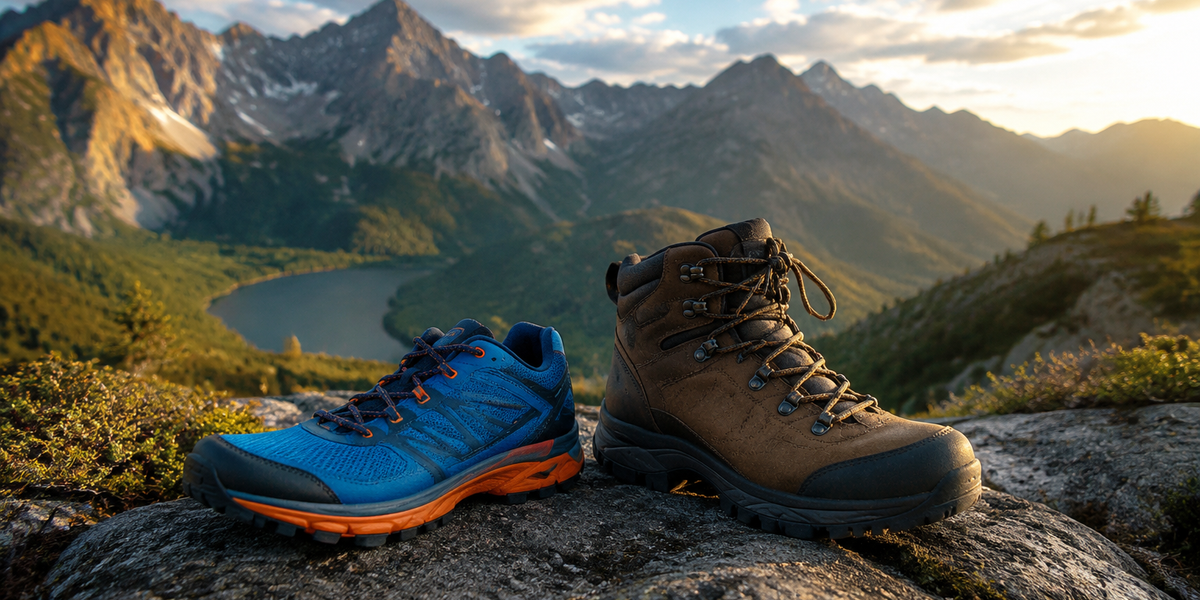
Few debates spark more campsite arguments than this one. Trail runners vs hiking boots — it sounds like a simple gear question, but get it wrong and you're dealing with blisters, rolled ankles, or dead legs before you hit the halfway point. We've put both categories through their paces on everything from sogy Pacific Northwest ridgelines to sun-baked Arizona slickrock, and the answer is almost never "one is better than the other."
The truth is that the right footwear depends on three things: the terrain you're covering, the pack weight you're carrying, and the shape of your foot. A thru-hiker knocking out20-mile days on the PCT has completely different needs from a weekend warrior doing a 6-mile out-and-back with a day pack. In this guide we break down exactly when each category wins, put three of the top-performing boots and shoes head-to-head, and give you a simple framework for making the call before your next trip.
We've also included a couple of gear notes beyond footwear — because the best shoes in the world won't save you if you run out of clean water three miles from the trailhead. Read on and you'll leave with a concrete recommendation that fits your hiking style.
What to Look For
Before diving into specific products, here are the six criteria that actually matter when you're standing in a gear shop (or scrolling Amazon at midnight):
- Ankle Support: Mid-cut and high-cut boots brace the ankle against lateral rolls, which matters most on loose scree, off-trail routes, and any time you're carrying 30+ lbs. Trail runners offer almost none — your lower leg muscles have to compensate.
- Weight: Every extra ounce on your foot costs roughly 5x more energy than the same ounce in your pack. A 14oz trail runner vs a 26 oz boot is a real difference over15 miles.
- Waterproofing: Gore-Tex and similar membranes keep your feet dry in rain and shallow crossings but trap heat and moisture in warm weather. Consider your climate as much as your terrain.
- Outsole Grip: Vibram and Contagrip rubber compounds are the gold standard. Look for deep multi-directional lugs on mudy trails and firmer, stickier rubber on rock.
- Break-In Time: Stiff leather boots can need 20–40 miles before they stop punishing your feet. Modern synthetic boots and trail runners are often wearable straight out of the box.
- Pack Weight Compatibility: As a general rule, add anounce of boot support for every 5 lbs of pack weight beyond a light day pack. Trail runners are fine under ~25 lbs; heavier loads start to justify the structure of a boot.
💡 Pro Tip: If you're on the fence between a low-cut and mid-cut shoe, go mid-cut. You'll barely notice the extra cuff weight when you're fresh, but you'll absolutely appreciate it when your foot catches a root at mile 12.
Head-to-Head: Our Top Picks Reviewed
Salomon Men's X Ultra 4 GTX Hiking Shoes
| Criteria | Score |
|----------|-------|
| Traction | 9/10 |
| Waterproofing | 9/10 |
| Weight & Agility | 10/10 |
| Value | 8/10 |
The Salomon Men's X Ultra 4 GTX sits in a sweet spot that most footwear mises entirely: it's light enough to move like a trail runner but protective enough to feel like a proper hiking shoe. At12.5 oz per shoe, you'd be forgiven for thinking Salomon cut corners somewhere — they didn't. The Gore-Tex lining handled a surprise thunderstorm on a ridgeline section of the Colorado Trail without a single damp spot, and the Contagrip outsole locked into wet granite with the kind of confidence that makes you forget to be careful. The Quicklace system is a small touch that makes a real difference after seven hours when your fingers are cold. Where it concedes ground is in volume: the relatively narrow last won't work for wide feet, and the price is firmly at the premium end. But for the hiker who wants to cover ground efficiently without hauling boat anchors on their feet, this is the shoe we'd reach for first.
✅ Pros:
- Featherlight at 12.5 oz — your feet stay fresh on long days
- Gore-Tex waterprofing handles creek crossings and wet brush without soaking through
- Contagrip rubber outsole grips confidently on rock, mud, and loose gravel
❌ Cons:
- Narrower last won't suit wide or high-volume feet
- Higher price point than most low-cut alternatives
---
Merrell Men's Moab 3 Mid Waterproof Hiking Boot
| Criteria | Score |
|----------|-------|
| Traction | 9/10 |
| Ankle Support | 8/10 |
| Comfort Out-of-Box | 10/10 |
| Value | 9/10 |
The Moab name stands for "Mother of All Boots," and after more than a decade as one of the best-selling hiking boots on the planet, the Merrell Moab 3 Mid Waterproof has earned that title many times over. The third generation refines the fit with a slightly wider platform underfoot and a more cushioned midsole, and the Vibram TC5+ outsole remains among the best all-conditions rubber compounds we've tested. What sets this boot apart from most competitors is the complete absence of a break-in period — you can lace these up for the first time on a 10-mile day without paying for it the next morning. The mid-cut cuff hits right at the ankle bone and provides genuine lateral support under a loaded pack. It runs a bit warm in summer, and at roughly14 oz per shoe it's heavier than a trail runner, but that weight is doing real work in terms of protection and stability.
✅ Pros:
- Zero break-in required straight out of the box
- Vibram TC5+ outsole delivers legendary grip on wet and dry terrain
- Mid-cut cuff offers meaningful ankle support for pack-heavy days
❌ Cons:
- Heavier than low-cut options — noticeable on long-mileage days
- Waterproof membrane can run warm in summer heat
---
KEEN Men's Targhee III Mid Waterproof Hiking Boot
| Criteria | Score |
|----------|-------|
| Fit for Wide Feet | 10/10 |
| Waterprofing | 9/10 |
| Traction | 8/10 |
| Value | 8/10 |
If your foot slides into most hiking boots and immediately screams at you from the pinky toe area, the KEEN Targhee III Mid Waterproof might feel like someone finally made a boot for your actual foot. KEEN's signature romy toe box lets your forefoot splay naturally on downhills, which dramatically reduces the black-toenail problem that plagues wide-footed hikers in narrower footwear. The KEEN.DRY membrane punches above its weight for waterproofing, keeping feet dry in stream crossings and sustained rain without making the boot feel like a sauna. The outsole is gripy and durable across mixed terrain, though it's not quite as sticky on pure rock as Vibram or Contagrip compounds. It's a bulkier shoe overall, and narrow-foted hikers will find the fit slopy — but for its target audience, no other boot comes as close to all-day comfort.
✅ Pros:
- Generously wide toe box is a game-changer for wide or bunion-prone feet
- KEEN.DRY membrane keeps water out without sacrificing too much breathability
- Rugged rubber outsole handles off-trail scrambling with confidence
❌ Cons:
- Bulkier silhouette adds weight compared to trim competitors
- Toe box width can feel sloppy for narrow feet
💡 Pro Tip: Bring the socks you actually hike in when you try on boots. A thick wool sock changes the fit equation entirely — what feels snug in a cotton ankle sock might be perfect, or what felt fine might suddenly be too tight across the forefoot.
When to Choose Trail Runners
Trail runners win in four clear scenarios:
- You're moving fast and light — day hikes under 25 lbs of pack weight, fastpacking, or any trip where mileage matters more than stability.
- It's hot — breathable mesh upers shed heat and dry out quickly after a stream crossing, unlike sealed waterproof boots that hold warmth and moisture.
- You have strong ankles — if you've never rolled ankle on trail and you actively train your lower legs, you probably don't need the extra cuff.
- You're covering high daily mileage — thru-hikers on well-maintained trails (think Appalachian Trail or Camino de Santiago) increasingly default to trail runners because the weight savings compound over hundreds of miles.
When to Choose Hiking Boots
Bots earn their place in these situations:
- You're carrying a heavy pack — once you're north of 30 lbs, the lateral stability of a mid or high-cut boot actively reduces fatigue and injury risk.
- The terrain is technical or loose — scree fields, boulder scrambles, and off-trail cross-country travel are where ankle support goes from "nice to have" to "non-negotiable."
- Cold and wet conditions — a waterproof boot with insulation is simply more reliable in sustained rain, snow, or early-season conditions than a trail runner.
- You have a history of ankle injuries — there's no shame in using every tool available. A boot isn't a weakness; a twisted ankle three miles from the car is.
💡 Pro Tip: No matter which footwear you choose, carry a Sawyer Squeeze Water Filter. At 3 oz and $30, it's the lightest insurance policy in your pack — and the one piece of gear we never leave the trailhead without.
Frequently Asked Questions
Are trail runners actually okay for backpacking?
Yes, with caveats. Trail runners work well for backpacking on maintained trails with moderate pack weights (under 30 lbs). Many experienced backpackers swear by them for the weight savings and comfort on high-mileage days. On technical terrain with a heavy pack, you'll likely want the structure and ankle support of a proper boot.
Do waterproof hiking boots really keep your feet dry?
Waterproof membranes like Gore-Tex excel at repelling rain and light stream splashes, and they'll keep your feet dry in most conditions a day hiker encounters. They can't beat a deep stream crossing where water simply pours in over the collar. In very hot weather, the same membrane that keeps water out also traps sweat, so your feet can end up wet anyway — just from the inside.
How long do hiking boots typically last?
A quality pair of hiking boots with a Vibram outsole should last 500–1,000 miles depending on terrain and care. Trail runners typically wear out faster — expect 300–500 miles before the midsole cushioning gives out noticeably. If you're hiking200+ miles per year, budget to replace trail runners roughly annually.
Should I size up for hiking boots?
Generally, yes — go up half a size from your street shoe size. Your foot swells on long days and needs room to move on downhills without jaming your toes into the front of the boot. This is especially true for boots with a more structured last. When in doubt, try them on in the afternoon when your feet are at their largest.
Can I use trail running shoes on snowy or icy trails?
Standard trail runners are poor choices for icy conditions — the flexible outsole and low traction depth provide little grip on packed snow or ice. If you're hiking in winter conditions, look for boots with aggressive lugs and consider microspikes as an add-on. Some trail runners are available in Gore-Tex and warmer insulated versions, but they're still better suited to wet autumn conditions than true winter terrain.
Final Thoughts
The trail runners vs hiking boots debate doesn't have a universal winner — it has a right answer for your specific situation. If you're moving fast, traveling light, and sticking to well-graded trails in warm weather, a quality lightweight shoe like the Salomon X Ultra 4 GTX will outperform a traditional boot in nearly every metric that matters. If you're shouldering a multi-day pack, picking your way through loose rock, or hiking in cold and wet conditions where your feet simply cannot get wet, the structured support and waterproofing of the Merell Moab 3 or KEEN Targhee III will keep you on the trail longer and more safely.
Our practical advice: own one of each if your budget allows. Use trail runners for day hikes and fit-and-fast trips; use a mid-cut waterproof boot for everything technical, heavy, or wet. And regardless of which footwear you lace up, never head out without a water filter — because the best footwear in the world won't matter if you're too dehydrated to walk back.
Editor's Choice
Salomon Men's X Ultra 4 GTX Hiking Shoes — The best single shoe for hikers who want trail-runner agility with real waterproofing and grip, covering the widest range of conditions at a reasonable weight penalty.
Merell Men's Moab 3 Mid Waterproof Hiking Boot — The definitive no-fuss boot for weekend backpackers who need zero break-in time and a Vibram sole that handles everything the trail throws at them.
Sawyer Squeeze Water Filter System — The one piece of gear every hiker on this page should already have in their pack, regardless of whether they chose boots or trail runners.