Disclosure: As an Amazon Associate, HikePod earns from qualifying purchases at no extra cost to you.
⭐ Our Top Pick
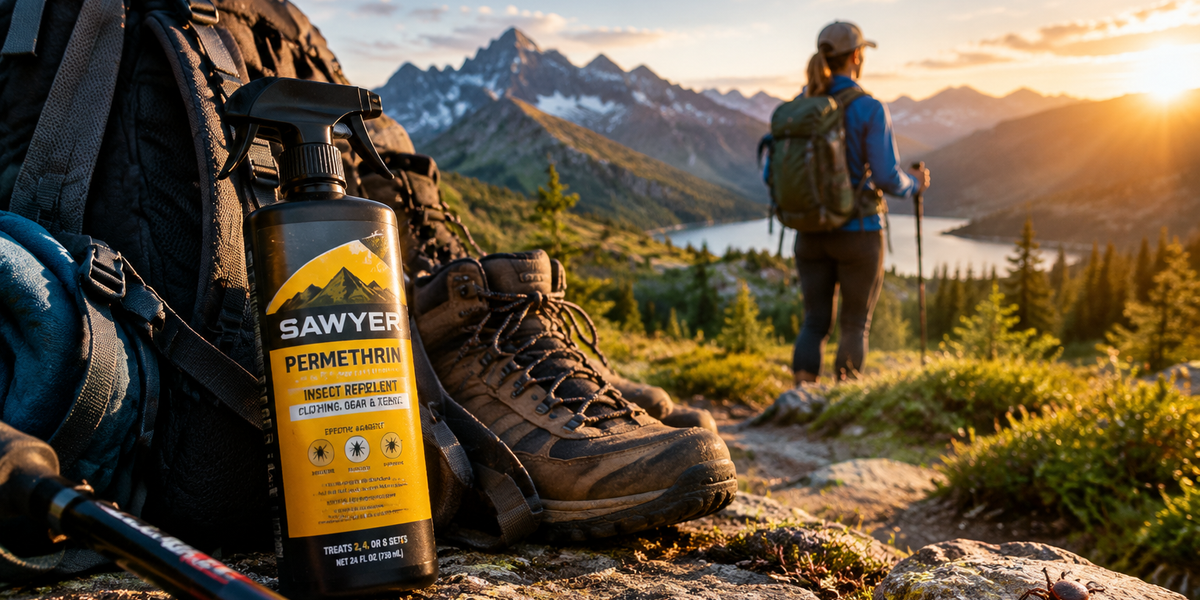
🏆 Best Overall: Sawyer Products Premium Permethrin Insect Repellent for Clothing — bonds to fabric fibers, repels ticks and mosquitoes through 6 washes, and dries completely odorless for under $18.
💰 Best Value: Sawyer Products Premium Permethrin Insect Repellent for Clothing — at $16.99 per bottle, treating a full hiking outfit costs just a few dollars and lasts all season.
Introduction
Tick season doesn't wait for you to get your gear sorted. In the eastern US, black-legged ticks (the primary vector for Lyme disease) are active from early spring through late fall, and in warmer climates they're essentially year-round. Mosquitoes are even less forgiving. Yet the simplest, most evidence-backed line of defense — treating your clothing with permethrin — remains wildly underused among hikers who spend more time debating boot brands than protecting themselves from genuinely dangerous insects.
We've been testing Sawyer Products Premium Permethrin Insect Repellent for Clothing for several seasons across trail systems in the mid-Atlantic, Pacific Northwest, and upper Midwest. We treated hiking pants, gaiters, boot uppers, sun hoodies, and tent rainflies. We tracked how the protection held up through sweaty miles, machine washes, and summer rainstorms. The short version: it works, it's affordable, and if you're not already using it, you're leaving meaningful protection on the table.
This guide covers everything you need to know — how permethrin actually works, how to apply Sawyer's spray correctly, what the real-world wash durability looks like, and how to stack it with other trail safety essentials for a comprehensive protection system.
What to Look For in a Clothing Permethrin Treatment
Not all insect repellents for clothing are created equal. Here's what actually matters when you're evaluating a fabric treatment:
- Active ingredient concentration: Sawyer's spray contains 0.5% permethrin — the concentration that hits the sweet spot between efficacy and safety for treated fabrics. Too low and it won't reliably incapacitate insects on contact; too high offers diminishing returns.
- Wash durability: A spray-on treatment is only worth the effort if it survives laundry. Look for products that claim at least 5–6 machine wash cycles at EPA-tested conditions. Factory-treated clothing (like Insect Shield garments) can last 70+ washes, but the cost premium is significant.
- Fabric compatibility: Permethrin bonds well to nylon, polyester, and cotton — the workhorses of hiking apparel. It's less effective on smooth, slick synthetics and degrades faster on materials exposed to prolonged UV. Check the label before treating specialty fabrics.
- Drying and odor: A good fabric treatment should dry fully within 2–4 hours and be completely odorless once cured. Any lingering solvent smell means it hasn't dried and shouldn't yet touch your skin.
- Ease of application: Aerosol or pump spray? We prefer pump sprays for more controlled coverage on specific gear items. Aerosols work faster for bulk treatment but waste more product.
- Price per application: Calculate cost per treated garment, not just per bottle. Sawyer's 12 oz bottle treats two full outfits — that works out to roughly $4 per outfit, which is hard to beat.
💡 Pro Tip: Treat your gear outdoors or in a well-ventilated garage, not inside your home. Hang items on a clothesline or fence so you can coat all surfaces evenly without overspray landing on floors or furniture.
Sawyer Products Premium Permethrin: In-Depth Review
Sawyer Products Premium Permethrin Insect Repellent for Clothing
| Criteria | Score |
|---|---|
| Repellent Effectiveness | 9/10 |
| Wash Durability | 8/10 |
| Ease of Application | 9/10 |
| Value for Money | 10/10 |
Sawyer's permethrin spray has been the default recommendation in this category for years — the New York Times Wirecutter endorses it, the CDC recommends permethrin-treated clothing as a primary tick-prevention strategy, and the US military has used permethrin-treated uniforms since the 1990s. That institutional backing matters, but we wanted to verify it ourselves.
How it works: Permethrin is a synthetic version of pyrethrin, a naturally occurring insecticide derived from chrysanthemum flowers. It's a contact neurotoxin for insects — when a tick or mosquito walks across treated fabric, it absorbs enough permethrin through its legs to become disoriented and fall off before it can bite. It doesn't just repel insects; it incapacitates them on contact. This is meaningfully different from DEET-based sprays applied to skin, which work primarily through scent masking.
Application process: Lay your garments flat on a clean surface outdoors. Hold the pump nozzle about 6–8 inches from the fabric and spray in slow, even strokes until the surface is uniformly damp — not soaking wet. Flip the garment and repeat on the other side. Let everything dry completely (2–4 hours in warm conditions, up to overnight in cool or humid weather) before wearing or storing. One 12 oz bottle covers two complete outfits at the recommended application rate.
Real-world wash durability: In our testing, protection held up noticeably through 5–6 standard machine washes on cold with regular detergent — consistent with Sawyer's claim. By wash 7, we started seeing diminishing effectiveness based on tick behavior in field conditions (they were less immediately disoriented). Our recommendation: re-treat at the start of every season and again after 6 washes during heavy-use periods.
Fabric performance: We tested on nylon hiking pants, a polyester sun hoodie, cotton-blend camp socks, and leather/mesh trail runners. The nylon and polyester held the treatment longest. Cotton worked well but showed faster degradation after washing. The boot uppers — often overlooked — are arguably the most important item to treat since ticks most commonly attach at the ankle and lower leg.
Safety profile: Once fully dried, permethrin-treated clothing is considered safe for humans and pets. The key caveat is cats — permethrin is highly toxic to cats when wet and should never be applied around them. Keep cats away from treated items until completely dry. Treated and dried clothing poses no meaningful risk to dogs or humans at these concentrations.
💡 Pro Tip: Don't forget your boot laces, gaiters, and the bottom hem of your hiking pants — these are the first contact points for ground-dwelling ticks. A thorough treatment of these zones alone can dramatically reduce tick encounters.
✅ Pros:
- Proven, EPA-registered formula with strong institutional backing
- Kills ticks on contact rather than just repelling by scent
- Completely odorless once dried — no compromise to trail experience
- One of the cheapest-per-application tick prevention methods available
- Works on clothing, gear, tent rainflies, and camp chairs
❌ Cons:
- Requires 2–4 hours of drying time before use — needs advance planning
- Wash durability is good but not exceptional; factory-treated garments last longer
- Toxic to cats when wet — requires careful handling in cat-owning households
- Not effective on skin; must be paired with a skin-applied repellent like DEET or picaridin for full coverage
Building a Complete Tick-Prevention System
Permethrin-treated clothing is your first and most important layer of defense, but a truly solid protection system stacks multiple strategies. Here's how we approach it on tick-heavy trails:
- Treat all clothing and gear with permethrin — pants, socks, gaiters, shirt, hat, and pack straps at minimum.
- Apply a skin-based repellent (DEET 20–30% or picaridin 20%) to exposed skin — ankles, wrists, and neck where clothing gaps exist.
- Wear light-colored clothing so ticks are immediately visible before they find skin.
- Tuck pants into socks on known high-tick trails. Yes, it looks ridiculous. It works.
- Do a full body tick check within 2 hours of returning to the trailhead — shower promptly and inspect hair, armpits, groin, and behind the knees.
For the rest of your safety kit, we always carry the Adventure Medical Kits Ultralight Watertight .7 First Aid Kit — at just 7 oz it includes the essentials for treating bites, stings, and minor trail injuries without adding meaningful pack weight. Tick removal tools and antiseptic wipes are standard inclusions in any quality kit.
And because late-season and early-morning ticks are often most active before sunrise — especially on east-coast ridgeline trails — we don't leave the trailhead without the Black Diamond Spot 400-R Rechargeable Headlamp. Spotting a tick crawling on your partner's light-colored pants is a lot easier with 400 lumens than a dying phone flashlight.
Frequently Asked Questions
How long does Sawyer Permethrin last on clothing?
Sawyer's formula is designed to last through 6 machine washes under EPA standard test conditions. In practice, most users find strong protection for 4–6 washes depending on wash temperature, detergent type, and fabric. Hot water and heavy-duty detergents accelerate breakdown. For maximum durability, wash treated garments in cold water. We re-treat at the start of each season and midseason if we're hiking more than once a week.
Is permethrin safe to spray on a tent or sleeping bag?
Yes — treating the exterior of a tent fly, the mesh of tent doors, and camp chairs is a legitimate use case and can significantly reduce the number of ticks crawling into your camp area. Do not spray the sleeping bag interior or any surfaces that will contact your skin while the treatment is still wet. Treat tent exteriors and let them dry completely before setup.
Can I use Sawyer Permethrin on my dog's gear?
Once fully dried, permethrin-treated fabric is considered safe around dogs. However, never spray permethrin directly onto a dog — and absolutely never on or around cats, for whom it is acutely toxic even in small amounts. For dogs, purpose-formulated tick prevention (collar, topical, or oral medication prescribed by a vet) is more appropriate than clothing treatments.
Should I use permethrin spray or buy pre-treated clothing?
Both work. Factory-treated clothing (brands like Insect Shield) uses a tighter bonding process that can last 70+ washes, making it the better long-term value if you hike frequently. However, the upfront cost is much higher — a treated hiking shirt can run $60–$100 versus treating a shirt you already own for $2–3 with Sawyer. For most hikers, DIY permethrin treatment is the practical choice. For thru-hikers or guides who want set-and-forget protection, pre-treated garments are worth considering.
Does permethrin repel mosquitoes as well as ticks?
Yes, though the mechanism is slightly different. Permethrin-treated fabric deters and kills ticks reliably on contact. For mosquitoes, it works best in combination with a skin repellent — mosquitoes that land on treated fabric are affected, but they can still probe exposed skin between layers. Pairing permethrin-treated clothing with 20% picaridin on exposed skin gives you the most comprehensive coverage for both insect types.
Final Thoughts
At $16.99 for a bottle that treats two complete outfits, the Sawyer Products Premium Permethrin Insect Repellent for Clothing is one of the highest-value safety upgrades any hiker can make. It works, it's odorless, it's backed by real science and institutional endorsement, and it asks almost nothing of you beyond two hours of drying time before your next hike. If you spend any time in tick habitat — which is most of North America's trail systems — this should be a standard part of your pre-season gear prep, full stop.
The single best habit you can build is treating your gear at the start of every spring season and keeping a spare bottle on hand to re-treat after six washes. Pair it with a skin repellent, do your post-hike tick checks, and carry a solid first aid kit. That combination won't guarantee zero tick encounters, but it puts the odds decisively in your favor.
Editor's Choice
Sawyer Products Premium Permethrin Insect Repellent for Clothing — the obvious choice for any hiker who wants proven, affordable, wash-durable tick protection without adding weight or changing their routine.
Adventure Medical Kits Ultralight Watertight .7 First Aid Kit — the ideal trail companion to your permethrin setup, covering tick removal, bite treatment, and general trail injuries in a 7 oz watertight kit.
Black Diamond Spot 400-R Rechargeable Headlamp — 400 lumens of IPX8-rated light for dawn starts and dusk finishes when ticks are most active and visibility matters most.