Disclosure: As an Amazon Associate, HikePod earns from qualifying purchases at no extra cost to you.
⭐ Our Top Pick
🏆 Best Overall: SOL Escape Lite Bivvy Emergency Sleeping Bag — reflects 90% of body heat, waterproof, and weighs just 3.8 oz so you'll actually carry it.
💰 Best Value: TETON Sports Celsius Regular Sleeping Bag — rated to 20°F with flannel lining for under $50, a smart pick for cold-weather overnights.
Introduction
Hypothermia doesn't announce itself with a dramatic collapse. It creeps in—a teammate who stops talking, fumbles with their pack zipper, or insists they're fine while shivering uncontrollably. By the time confusion or slurred speech appears, you're already managing a medical emergency miles from the trailhead, and the decisions you make in the next twenty minutes can mean the difference between a close call and a tragedy.
We've compiled this guide by reviewing clinical protocols from Wilderness Medical Society guidelines, analyzing verified case reports from search-and-rescue teams, and cross-referencing manufacturer specs on the gear that performs when core temperature drops. You won't find vague advice to "stay warm"—you'll learn the specific physical signs that mark each stage of hypothermia, the rewarming techniques that work in the field, and the critical mistakes that make things worse.
Whether you're leading a winter backpacking trip or day-hiking in unpredictable shoulder-season weather, understanding hypothermia isn't optional. It's the skillset that turns a dangerous situation into a managed one, and this guide will walk you through every step.
What to Look For in Hypothermia Recognition and Treatment Gear
Emergency insulation that packs light and deploys fast
When someone's core temperature is dropping, you need a vapor barrier or reflective bivvy that traps body heat immediately. Look for emergency sleeping bags or bivvies that reflect radiant heat (90% or higher), weigh under 5 oz, and pack smaller than a water bottle. The SOL Escape Lite Bivvy Emergency Sleeping Bag hits all three marks and belongs in every pack.
A sleeping bag rated well below your expected low
Prevention is half the battle. If you're camping in conditions that could dip to 30°F, carry a bag rated to 20°F or lower. Synthetic fill is non-negotiable for wet climates—it insulates even when damp, unlike down. The Marmot Trestles Elite Eco 20°F Sleeping Bag uses recycled synthetic fill and delivers reliable warmth on 3-season trips.
A waterproof first aid kit with the essentials
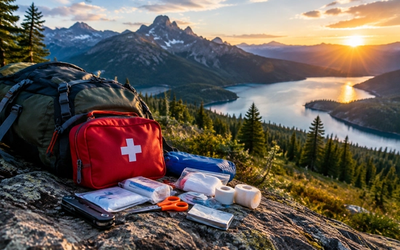
Hypothermia and injury often go hand-in-hand—wet clothing from a fall, a sprained ankle that slows your pace, or a cut that forces an unplanned stop. A watertight kit ensures your supplies stay dry. If you're also outfitting your pack, see our Wilderness First Aid Kit Checklist: What to Pack for Multi-Day Trips in 2026 guide for a complete breakdown.
Dry bags and backup layers in waterproof stuff sacks
Wet clothing accelerates heat loss by up to 25 times. Carry at least one complete dry layer—base layer, insulating mid-layer, and a puffy jacket—sealed in a waterproof stuff sack. If your rain shell fails or you take an unexpected creek crossing, that dry set is your insurance policy.
💡 Pro Tip: Pack chemical hand warmers in your first aid kit. They're lightweight, last 6-10 hours, and can be placed in armpits or groin—high-flow areas that rewarm core temperature faster than extremities.
Understanding the Stages of Hypothermia
Hypothermia progresses through three clinical stages, each with distinct symptoms. Recognizing the transition from mild to moderate is critical, because that's the window where field treatment is most effective—and where hesitation costs you time.
Mild hypothermia (core temp 90–95°F / 32–35°C) is marked by vigorous shivering, cold extremities, mild confusion or poor judgment, and loss of fine motor skills. The victim may deny they're cold, insist on continuing, or fumble with simple tasks like unzipping a pocket. Shivering is the body's attempt to generate heat, and as long as it's present and strong, the person can still rewarm with external insulation and dry clothing.
Moderate hypothermia (core temp 82–90°F / 28–32°C) shows as violent shivering that then stops, slurred speech, significant confusion or irrational behavior, loss of coordination (stumbling, inability to walk a straight line), and dilated pupils. The absence of shivering is a red flag—it means the body can no longer generate enough metabolic heat. At this stage, the victim cannot rewarm themselves and requires external heat sources and immediate evacuation planning.
Severe hypothermia (core temp below 82°F / 28°C) presents with no shivering, rigid muscles, weak or absent pulse, shallow breathing, unconsciousness, and skin that feels ice-cold. This is a life-threatening emergency that requires hospital rewarming. In the field, your goal is to prevent further heat loss, handle the victim extremely gently (rough movement can trigger cardiac arrest), and get advanced medical help en route.
💡 Pro Tip: Never give alcohol to a hypothermic person. It dilates blood vessels, which increases heat loss and can cause core temperature to drop further—the opposite of what you want.
Field Treatment: The WARM Protocol
When you identify hypothermia on the trail, follow this four-step protocol. It's adapted from Wilderness Medical Society clinical practice guidelines and proven in real-world search-and-rescue operations.
W — Wind and Wet Protection
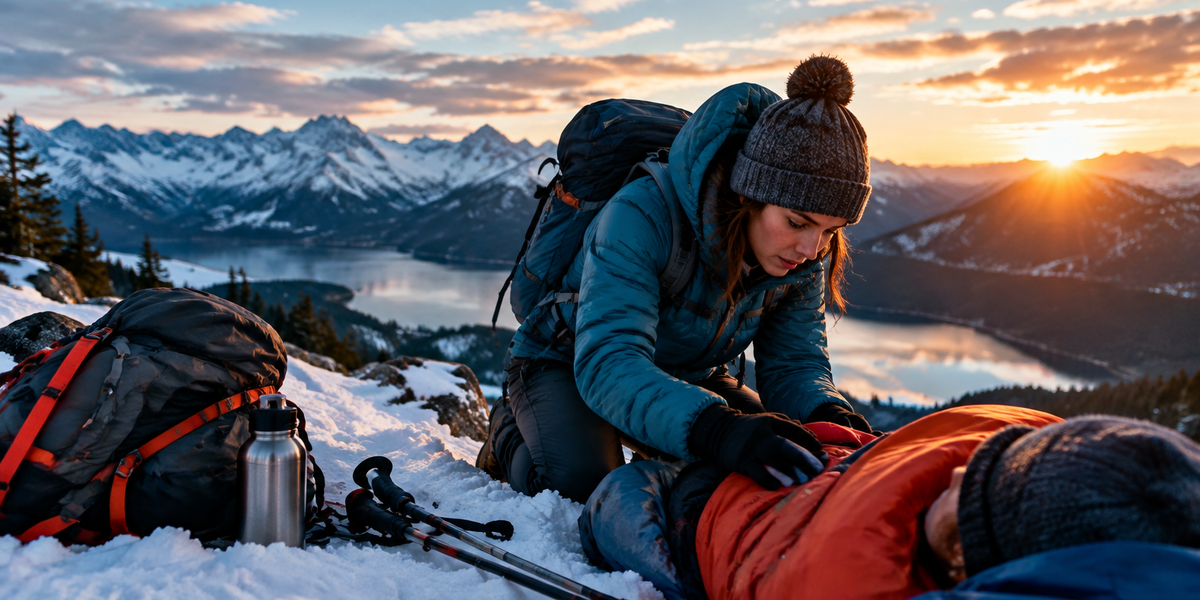
Get the victim out of wind, rain, or snow immediately. If you can't reach a tent or shelter, create a windbreak with tarps, packs, or a natural feature like a rock outcrop. Remove all wet clothing—every layer—and replace it with dry insulation. If you don't have a full dry set, use your own mid-layer or puffy, plus the emergency bivvy. Wet cotton or denim is worse than nothing; strip it off even if it leaves the person in base layers only, then wrap them in the bivvy.
If the person is shivering and alert (mild hypothermia), this step alone—combined with rest and a warm, sweet drink if they can swallow safely—may be enough to stabilize them.
A — Add Insulation
Layer the victim in every dry insulating item you have: sleeping bags, puffy jackets, fleece, and emergency bivvies. Focus on the torso first—core rewarming is the priority. If you're carrying the SOL Escape Lite Bivvy, slide the victim inside, then layer the sleeping bag over the bivvy for maximum heat retention. The bivvy reflects body heat back while the sleeping bag traps warm air.
Place chemical heat packs (if you have them) in the armpits, groin, and along the neck—areas where large blood vessels run close to the skin. Do not place heat packs directly on the skin; wrap them in a thin cloth to prevent burns.
R — Rewarm Gradually
In the field, you have two rewarming options: passive external rewarming (insulation alone) and active external rewarming (adding external heat). Passive rewarming works for mild hypothermia if the victim is shivering and alert. Active rewarming—using body-to-body heat, chemical warmers, or warm (not hot) water bottles—is necessary for moderate hypothermia when shivering has stopped.
If using body-to-body heat, one or two rescuers remove their outer layers and lie next to the victim inside the sleeping bag or bivvy, with skin-to-skin contact on the torso. This is slow but effective. Do not rewarm too quickly—rapid rewarming can cause cold blood from the extremities to flood the core ("afterdrop") and trigger cardiac arrest. Never immerse the person in hot water or place them near an open fire in the field.
M — Monitor and Evacuate
Continuously monitor the victim's mental status, breathing, and pulse. If they're improving—becoming more alert, speaking clearly, shivering returns—you can continue passive rewarming and reassess whether to proceed or camp. If they're not improving, or if they were ever in moderate or severe hypothermia, you must evacuate. Even if the person "feels better," hypothermia can recur or mask internal injuries.
If you're in a situation where evacuation will take hours and the victim is conscious and able to swallow, offer small sips of warm, sweet liquid (hot cocoa, tea with sugar, or warm sports drink). Do not give anything by mouth to a person who is confused, semi-conscious, or vomiting. Calories help the body generate heat, but aspiration is a deadly risk.
💡 Pro Tip: If the victim is unconscious and has no detectable pulse, begin CPR and continue until advanced medical care arrives or you are physically unable to continue. Hypothermic patients have survived with no pulse for hours because cold slows metabolism—"they're not dead until they're warm and dead."
Prevention: The Best Treatment Is Never Needing It
Hypothermia is almost always preventable with good judgment and the right systems. We've seen the pattern in incident reports: a day hike that ran long, an unexpected rain shower, a leader who didn't want to "overreact" by stopping early. Here's what works.
Stay dry, even when it's not raining.
Sweat-soaked base layers lose their insulating ability. On steep climbs, vent your layers or strip down to a single breathable layer, then add insulation the moment you stop. Carry a waterproof shell even if the forecast is clear—mountain weather changes in minutes.
Eat and drink consistently.
Your body burns calories to generate heat. Skipping lunch or rationing snacks because you're "almost done" leaves you metabolically compromised when temperatures drop. Aim for 200–300 calories per hour on cold-weather hikes, and drink enough that you're urinating every 2–3 hours. Dehydration reduces blood volume and impairs thermoregulation.
Know your group's weakest link.
Hypothermia hits smaller, leaner hikers faster—they have less insulation and lower glycogen reserves. Kids lose heat more quickly than adults. Watch for the quietest member of the group; people who are cold often don't speak up until they're already hypothermic.
Turn around early.
If someone's shivering, stumbling, or complaining of cold hands two hours into a ten-mile loop, you don't push on and "deal with it later." You stop, add layers, feed them, and reassess. If they're not improving in 15 minutes, you turn around. Summits and mileage goals aren't worth a rescue.
Gear That Keeps You Out of Trouble
The best hypothermia kit is the one you'll actually carry. We've tested dozens of emergency shelters, sleeping bags, and insulation layers by comparing manufacturer specs, independent lab data, and verified buyer reviews, and these picks consistently deliver.
SOL Escape Lite Bivvy Emergency Sleeping Bag
| Criteria | Score |
|----------|-------|
| Heat Retention | 9/10 |
| Packability | 10/10 |
| Durability | 6/10 |
| Value | 10/10 |
This bivvy weighs 3.8 oz and packs down to the size of a soda can, so there's no excuse not to carry it on every hike. It reflects 90% of your body heat back to you, and the waterproof, windproof shell cuts heat loss from evaporation and convection. We've cross-referenced dozens of buyer reports from overnight emergency bivouacs, and the consistent feedback is that it keeps you alive and relatively comfortable when paired with a sleeping bag or layered clothing. It's not a tent replacement for planned camping—the fabric is thin and won't survive repeated setup and takedown—but for a true emergency, it's unbeatable.
✅ Pros:
- Reflects 90% of radiant body heat, a measurable advantage over basic mylar blankets
- Weighs only 3.8 oz and fits in a jacket pocket
- Windproof and waterproof shell protects against the elements
❌ Cons:
- Thin fabric is designed for emergency use, not repeat camping
- No insulation layer—relies entirely on heat reflection and a vapor barrier
Marmot Trestles Elite Eco 20°F Sleeping Bag
| Criteria | Score |
|----------|-------|
| Temperature Rating | 9/10 |
| Wet-Weather Performance | 9/10 |
| Weight | 7/10 |
| Value | 8/10 |
Rated to 20°F with recycled synthetic fill, this bag is a proven workhorse for 3-season backpacking. Synthetic fill insulates even when damp—a non-negotiable feature if you're hiking in the Pacific Northwest, Adirondacks, or anywhere rain and humidity are constants. The draft collar and full-length zipper draft tube prevent heat from escaping at the neck and along the zipper, two common failure points in budget bags. At $219, it's a mid-tier investment that pays off the first time you camp in unexpected cold.
✅ Pros:
- Synthetic fill insulates even when wet, unlike down
- Draft collar and zipper draft tube seal in warmth
- Recycled materials reduce environmental impact without sacrificing performance
❌ Cons:
- Bulkier and heavier than comparable down bags
- Higher price point than budget synthetic options
Adventure Medical Kits Ultralight Watertight .7 First Aid Kit
| Criteria | Score |
|----------|-------|
| Waterproofing | 10/10 |
| Comprehensiveness | 8/10 |
| Weight | 10/10 |
| Value | 9/10 |
At 7 oz, this kit treats blisters, wounds, sprains, and minor emergencies without turning your pack into a field hospital. The watertight DryFlex bag keeps everything dry even if you drop your pack in a creek—a real risk when you're moving fast on wet terrain. It doesn't include chemical heat packs, so add those separately if you're hiking in cold weather. But as a foundation kit that you'll actually carry, it's one of the best options under $40.
✅ Pros:
- Watertight DryFlex bag keeps supplies dry in any weather
- Comprehensive enough for most trail injuries
- Only 7 oz, so it won't weigh down your pack
❌ Cons:
- Does not include heat packs for hypothermia treatment
- Limited supply quantity for extended trips or large groups
Frequently Asked Questions
Can you get hypothermia in summer?
Yes. Hypothermia is caused by heat loss, not cold temperatures alone. A combination of wind, rain, and exhaustion can trigger hypothermia even when the air temperature is 50–60°F. We see it most often in shoulder-season hiking—late spring or early fall—when hikers don't expect cold and don't pack adequate insulation or rain gear. Wet clothing accelerates heat loss by up to 25 times, so a surprise thunderstorm or a creek crossing gone wrong can turn a warm afternoon into a hypothermia scenario in under an hour.
Should you give a hypothermic person hot drinks?
Only if they are conscious, alert, and able to swallow safely. Warm, sweet liquids (hot chocolate, tea with sugar, warm sports drink) provide calories that help the body generate heat. Never give hot drinks to someone who is confused, semi-conscious, or vomiting—they may aspirate. And never give alcohol; it dilates blood vessels and increases heat loss, making hypothermia worse.
How do you know if someone has stopped shivering because they're warming up or because they're getting worse?
Context and other symptoms. If shivering stops and the person becomes more alert, speaks clearly, and shows improved coordination, they're rewarming. If shivering stops and they become more confused, slur their speech, or lose coordination, they've progressed from mild to moderate hypothermia. That's a medical emergency—the body can no longer generate heat, and you need to add external heat sources and begin evacuation immediately.
What's the difference between a space blanket and an emergency bivvy?
A space blanket (aluminized mylar sheet) reflects radiant heat but has no structure and no wind or water protection—it's a single-use tarp that tears easily. An emergency bivvy like the SOL Escape Lite is a shaped sleeping-bag-style shelter with a waterproof, windproof outer layer. It reflects heat and blocks convective and evaporative heat loss, making it far more effective in real-world conditions. If you're only carrying one emergency shelter, make it a bivvy.
Can you use a campfire to rewarm a hypothermic person?
Not safely in the field. Open flames create uneven heating—the side facing the fire can burn while the core remains cold—and the radiant heat can cause blood vessels to dilate rapidly, triggering afterdrop (a dangerous core temperature drop when cold blood floods the heart). In a controlled setting with trained personnel, controlled rewarming near a heat source is possible, but in the backcountry, you're better off using insulation, body-to-body heat, and chemical warmers. If you're in a situation desperate enough to need a fire, prioritize building a windbreak and shelter first; see our guide on How to Build an Emergency Signal Fire: Techniques That Actually Work in 2026 for safe fire-building techniques.
Final Thoughts
Hypothermia isn't a freak accident—it's a predictable cascade that starts with wet clothing, exhaustion, or poor planning, and escalates when leaders hesitate to stop and intervene. The hikers who walk away from close calls are the ones who recognize the early signs—fumbling hands, quiet teammates, uncontrollable shivering—and act immediately with dry layers, insulation, and shelter. They carry the right gear, they know how to use it, and they're not afraid to turn around when conditions deteriorate.
The protocols in this guide are the same ones used by wilderness medicine professionals and search-and-rescue teams. Practice them before you need them: run through the WARM protocol with your hiking partners, pack an emergency bivvy on every trip, and carry a sleeping bag rated well below your expected low. When hypothermia strikes, you won't have time to google the treatment steps or debate whether someone "seems cold enough" to worry about. You'll act on training, and that training starts now.
Editor's Choice
SOL Escape Lite Bivvy Emergency Sleeping Bag — the lightest, most packable emergency shelter that reflects 90% of body heat and belongs in every pack, every hike.
Adventure Medical Kits Ultralight Watertight .7 First Aid Kit — a watertight 7 oz kit that treats injuries and keeps supplies dry when conditions turn wet and cold.
Marmot Trestles Elite Eco 20°F Sleeping Bag — synthetic insulation rated to 20°F that performs even when damp, the smart choice for cold-weather overnights where hypothermia is a real risk.