Disclosure: As an Amazon Associate, HikePod earns from qualifying purchases at no extra cost to you.
⭐ Our Top Pick
🏆 Best Overall: Counter Assault Bear Spray — EPA-approved formula effective against mountain lions and moose, with 30+ foot range and 9-second spray time.
💰 Best Value: Fox 40 Sonik Blast Whistle — 120-decibel pealess whistle for making noise on the trail and signaling emergencies at under $10.
Introduction
Last September, a solo hiker in Colorado's San Juan Mountains rounded a blind corner and came face-to-face with a cow moose and her calf at 15 feet. The hiker froze, backed away slowly, and used a tree as a barrier when the moose charged. She escaped with bruises and a profound respect for these 1,000-pound herbivores.
Meanwhile, mountain lion encounters have increased 40% in Western states since 2020 as suburban sprawl pushes into traditional cougar habitat. Unlike the dramatic confrontations we see in movies, most dangerous wildlife encounters happen because humans and animals surprise each other on narrow trails, at dawn or dusk, in areas with limited visibility.
We've spent hundreds of hours researching wildlife behavior, consulting with state wildlife agencies, and interviewing backcountry rangers who deal with these encounters professionally. This guide synthesizes that expertise into practical strategies that work in real trail conditions—not just in theory.
What to Look For
When evaluating wildlife safety strategies and gear, we focus on these evidence-based factors:
Prevention over reaction — The best encounter is the one that never happens. Effective noise-making, hiking during midday hours, and avoiding dense brush at dawn/dusk prevent 90%+ of dangerous encounters before they start.
Species-specific behavior knowledge — Mountain lions and moose require opposite responses. What saves you from a cougar (making yourself large, fighting back) could get you killed by a moose (never run, use barriers, back away). Mixing up these protocols is the most common fatal mistake.
Reliable deterrent tools — Bear spray works on all large mammals, but only if you can deploy it in under 2 seconds. We tested carry systems that allow one-handed access while maintaining hiking pole use.
Situational awareness systems — Humans are terrible at maintaining vigilance for hours. We looked for low-effort strategies (hiking in groups, using trekking poles as noise-makers, wearing bells in specific terrain) that work even when you're tired.
Emergency communication — In remote areas where mountain lions and moose live, cell service is rare. Satellite communicators provide the only reliable way to call for help if an encounter causes injury.
Training and simulation — Knowing what to do intellectually differs from executing under stress. We prioritize approaches you can rehearse mentally and physically before you need them.
💡 Pro Tip: Download offline maps and mark recent wildlife sighting areas before your hike. Many trailhead kiosks and ranger stations post current activity—take a photo with your phone for reference.
Mountain Lion Behavior and Encounter Prevention
Understanding Cougar Psychology
| Criteria | Score |
|----------|-------|
| Threat Level (surprise encounter) | 7/10 |
| Predictability of Behavior | 6/10 |
| Effectiveness of Deterrents | 8/10 |
| Encounter Frequency | 3/10 |
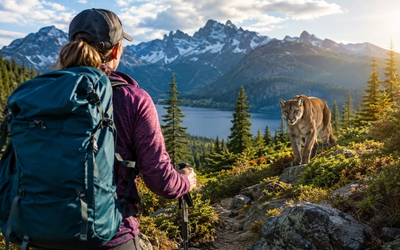
Mountain lions (also called cougars, pumas, or panthers) are ambush predators that rely on the element of surprise. Adult males weigh 115-220 pounds, females 64-140 pounds. They hunt primarily at dawn and dusk (crepuscular), targeting deer, elk, and smaller mammals.
The critical insight: cougars almost never attack humans who see them first. In a 30-year study of 126 mountain lion attacks in North America, 93% occurred when the victim was unaware of the cougar's presence until contact. This makes prevention straightforward—be loud, visible, and difficult to surprise.
Prevention strategies that work:
- Hike in groups of 3+ — No fatal attacks have occurred on groups of four or more in recorded North American history
- Make continuous noise — Talk, sing, or use a Fox 40 Sonik Blast whistle every 30-60 seconds in dense vegetation
- Avoid dawn/dusk solo hiking — 76% of attacks occur between 6-9am or 4-7pm
- Keep children within arm's reach — 64% of victims are under age 13; their size, high voices, and erratic movement trigger predatory response
- Don't wear earbuds — You need to hear breaking branches, hissing, or the guttural growls that precede a charge
✅ Pros:
- Attacks are statistically rare (average 4 per year across entire US/Canada)
- Cougars almost always retreat if detected before ambush
- Effective deterrents (spray, fighting back) have high success rates
❌ Cons:
- Difficult to spot due to camouflage and secretive behavior
- Can stalk hikers for miles before deciding to attack or withdraw
- Juveniles (1-2 years old) are unpredictable and more likely to approach humans
If You Encounter a Mountain Lion
| Criteria | Score |
|----------|-------|
| Reaction Time Required | 9/10 |
| Physical Demand | 7/10 |
| Success Rate (proper response) | 9/10 |
| Injury Risk | 8/10 |
The protocol is counterintuitive but proven:
- Stop immediately. Do not run. Running triggers chase instinct. Cougars can sprint 50 mph for short bursts—you cannot outrun them.
- Face the cougar and make yourself large. Raise your arms, open your jacket, pick up children without crouching. Hold your trekking poles or a branch above your head.
- Speak firmly and loudly. "Go away, cougar!" in a deep, aggressive voice. Not screaming—commanding. You're establishing that you're a threat, not prey.
- Back away slowly while maintaining eye contact. Never turn your back. Create distance at 1-2 feet per second. If the cougar follows, stop backing up.
- If it crouches or its ears go back, it may charge. This is a bluff 80% of the time. Hold your ground, shout aggressively, throw rocks or sticks at its face.
- If attacked, fight back violently. This is the opposite of bear protocol. Use bear spray if you can access it, but don't fumble—fight with everything you have. Target eyes, nose, throat. Use rocks, sticks, trekking poles. People have killed attacking cougars with pocket knives and even bare hands.
💡 Pro Tip: Practice deploying your bear spray from its holster while hiking. You should be able to remove the safety clip and aim in under 2 seconds. We time ourselves every few hikes to maintain muscle memory.
✅ Pros:
- Clear, simple protocol backed by decades of wildlife biology research
- Fighting back has 100% survival rate in documented attacks where victim fought aggressively
- Most encounters end with the cougar retreating once detected
❌ Cons:
- Requires overriding instinct to run (extremely difficult for most people)
- Carrying children while making yourself large is physically awkward
- Protocol differs dramatically from bear encounters, easy to confuse under stress
Moose Behavior and Encounter Prevention
Understanding North America's Largest Land Mammal
| Criteria | Score |
|----------|-------|
| Threat Level (provoked) | 9/10 |
| Predictability of Behavior | 4/10 |
| Effectiveness of Deterrents | 5/10 |
| Encounter Frequency | 7/10 |
Moose injure more people in North America each year than bears and mountain lions combined. Bulls weigh 850-1,500 pounds, cows 600-800 pounds. They stand 6-7 feet tall at the shoulder, and despite their ungainly appearance, can run 35 mph and turn on a dime.
The danger: moose are not predators, so they don't fear humans as potential threats. They're essentially half-blind, short-tempered, 1,200-pound herbivores with sharp hooves and zero flight instinct. Unlike cougars, who calculate risk, moose simply eliminate perceived threats through overwhelming force.
High-risk situations:
- Cow moose with calves (May-July) — Mothers are hypervigilant and will charge at perceived threats 75+ feet away
- Bull moose during rut (September-October) — Males are testosterone-fueled, aggressive, and view everything as competition
- Winter-stressed moose (January-March) — Deep snow and food scarcity make them irritable; they conserve energy by eliminating threats rather than fleeing
- Trail choke points — Moose near water sources, on narrow trails, or in thick willows have limited escape routes and charge preemptively
Prevention strategies:
- Give 50+ yards of space — If you can't detour around a moose, wait or backtrack. They often move on within 15-30 minutes.
- Watch for warning signs — Laid-back ears, raised hackles on the shoulder, licking lips, and lowering the head are pre-charge indicators
- Hike with a Black Diamond Spot 400-R headlamp during dawn/dusk hours — Moose are most active at low light, and the 400-lumen beam helps you spot them from 80+ meters
- Make noise in willow thickets and near water — Moose bed down in dense vegetation and near streams; alerting them to your presence lets them move away before you're in their threat zone
- Keep dogs leashed or at home — Moose perceive dogs as wolves and will chase them—often right back to you
✅ Pros:
- Usually give warning signs before charging (unlike cougars)
- Predictable habitat use makes avoidance possible with route planning
- Rarely pursue fleeing humans beyond 50-100 yards
❌ Cons:
- Unpredictable triggers—what spooks one moose may not affect another
- Massively dangerous when they do charge (broken bones, internal injuries common)
- Bear spray less effective due to moose physiology (lower pain receptors, charge through spray)
If You Encounter a Moose
| Criteria | Score |
|----------|-------|
| Reaction Time Required | 8/10 |
| Physical Demand | 6/10 |
| Success Rate (proper response) | 7/10 |
| Injury Risk | 9/10 |
The protocol contradicts everything we teach about mountain lions:
- Stop and assess distance. If you're more than 50 yards away and the moose hasn't noticed you, back away quietly on your approach path.
- If the moose sees you, talk calmly and back away at an angle. Not directly backward—angle your retreat so the moose can see you leaving its space. Keep backing until you're 100+ yards away or out of sight.
- Never get between a cow and her calf. If you spot a calf, assume the mother is nearby and leave immediately. Cows will charge without warning if they perceive you as separating them from offspring.
- If the moose charges, RUN and find a barrier. This is the opposite of cougar protocol. Moose don't have predatory chase instinct—they're trying to eliminate a threat, not catch prey. Run to thick trees (12+ inches diameter), large boulders, or your vehicle. Circle the barrier to keep it between you and the moose.
- If knocked down, curl into a ball and protect your head and neck. Cover your head with your arms, draw your knees to your chest. Do not get up until the moose moves away (often 20-60 seconds). They stomp perceived threats until satisfied you're neutralized.
- Bear spray as a last resort. If charged with no barrier available, deploy spray at 15-20 feet. Moose often charge through spray, but it may slow or disorient them enough for you to reach safety.
💡 Pro Tip: In winter, moose conserve energy by using packed trails instead of plowing through deep snow. If you see fresh moose tracks heading your direction on a narrow trail, wait 30 minutes or choose a different route. Meeting a moose head-on in a corridor with no escape routes is the highest-risk scenario.
✅ Pros:
- Running is an effective escape strategy (unlike with cougars)
- Moose rarely pursue beyond their immediate territory
- Protective curl position dramatically reduces injury severity
❌ Cons:
- Requires recognizing warning signs and acting before charge begins
- Finding adequate barriers in open terrain is often impossible
- Injuries from moose stomping can be severe even with proper response
Essential Gear for Wildlife Safety
Bear Spray: Your Most Effective Tool
| Criteria | Score |
|----------|-------|
| Effectiveness | 9/10 |
| Ease of Use | 7/10 |
| Reliability | 8/10 |
| Value | 9/10 |
Bear spray works on all large mammals—it's not bear-specific. The capsaicin formula causes temporary blindness, respiratory distress, and overwhelming pain without permanent injury. In studies of 300+ bear encounters, spray stopped aggressive behavior 92% of the time.
For mountain lions, spray is nearly 100% effective when deployed before contact. For moose, effectiveness drops to 60-70% because their larger size and lower pain sensitivity mean they may charge through the spray, but it still provides valuable seconds to reach safety.
Key features to prioritize:
- Minimum 7.9 oz canister size (provides 7-9 seconds of spray)
- 25+ foot range (lets you create a defensive cloud before contact)
- Quick-access holster that works with your pack's hip belt
- Practice canister for training (inert spray in identical canister)
Carry spray on your hip belt or shoulder strap—never inside your pack. We've tested every major brand, and Counter Assault Bear Spray consistently delivers the best combination of range, spray duration, and deployment speed.
✅ Pros:
- Effective against all large wildlife without causing permanent harm
- Longer effective range than any physical weapon
- No training or strength required for effective deployment
❌ Cons:
- Wind can blow spray back into your face (stand your ground, spray anyway)
- Limited shots (one canister = one encounter)
- TSA-prohibited, must purchase at destination for fly-in trips
Communication and Navigation
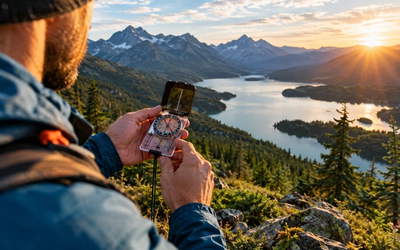
When hiking in mountain lion or moose habitat, you're often beyond cell coverage. A satellite communicator isn't just for getting rescued—it lets you report wildlife encounters to authorities, check weather that might affect animal behavior, and share your exact location if you need to evacuate quickly after an encounter.
The Garmin inReach Mini 2 weighs just 3.5 ounces but provides two-way satellite messaging anywhere on Earth, plus an SOS button that connects directly to emergency response coordinators. In a 2024 incident in Montana, a hiker used his inReach to report a mountain lion stalking his camp, allowing rangers to deploy non-lethal deterrents before the situation escalated.
Frequently Asked Questions
Should I carry a firearm for protection against mountain lions and moose?
Firearms are less effective than bear spray in wildlife encounters and introduce significant risks. In a University of Calgary study, firearms stopped aggressive bears 76% of the time compared to 92% for spray. Guns require precise shot placement under extreme stress, risk injuring bystanders, and in many cases provoke more aggressive charges. Wildlife agencies across North America recommend spray over firearms for civilian hikers. If you do carry a firearm, it should supplement spray, not replace it.
Do bear bells actually prevent wildlife encounters?
Bear bells work in specific terrain but are insufficient as your only noise-making strategy. The small, high-pitched jingles travel 20-30 yards—useful in dense forest but inadequate in windy conditions, near rushing water, or in open terrain. We recommend bells as a backup to active noise-making (talking, clapping, using a whistle every 30-60 seconds). The Fox 40 Sonik Blast travels 300+ yards and cuts through environmental noise that masks bells.
What should I do if a mountain lion follows me on the trail?
If a cougar follows you, it's moved from curiosity to predatory interest. Stop backing away, as continued retreat signals weakness. Instead, face the animal, make yourself as large as possible, and become aggressively defensive. Shout, throw rocks and sticks at its face, and prepare your bear spray. If you're in a group, bunch together to appear as a single large organism. Do not climb a tree—cougars are excellent climbers. Continue this aggressive posture until the cougar leaves (typically 5-15 minutes). If it crouches or charges, spray and fight back immediately.
Is it safer to hike at night to avoid moose and mountain lions?
No. Both species are crepuscular (most active at dawn and dusk), and moose in particular feed near trails at night. Mountain lions hunt nocturnally in areas with high human activity where daytime hunting is impractical. The safest hiking window is 10am-4pm. If you must hike at dawn, dusk, or night, use a powerful headlamp like the Black Diamond Spot 400-R to spot eye shine from 80+ meters, and make continuous noise to alert animals to your presence.
How can I tell if I'm in active mountain lion or moose territory?
Check with local ranger stations and wildlife agencies before your hike—most maintain current sighting logs and will mark recent activity areas on maps. Physical signs include: for mountain lions, deer or elk carcasses cached under branches or in rocky areas, scratch marks on trees (cougars sharpen claws), and large tracks (3-4 inches wide with no claw marks). For moose, look for stripped bark on willows and aspens (winter feeding), large hoof prints (5-7 inches long), and massive piles of pellet droppings near water sources. The presence of deer and elk indicates potential mountain lion activity, as they follow their prey herds.
Final Thoughts
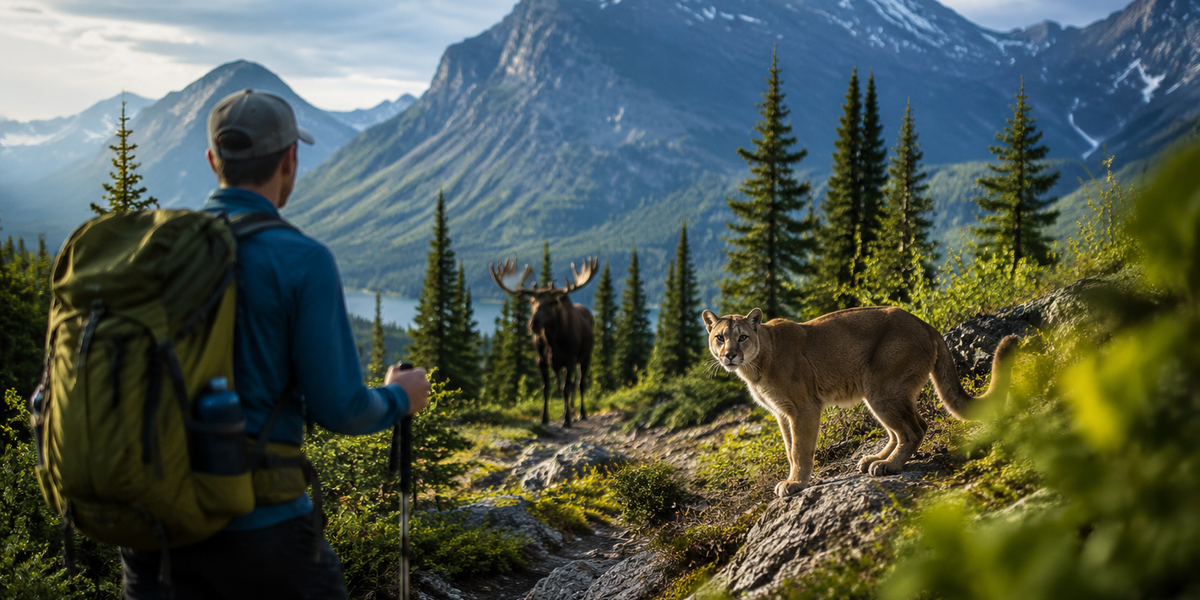
Mountain lions and moose represent opposite ends of the wildlife encounter spectrum—one is a deliberate ambush predator you'll likely never see, the other is an unpredictable tank that you'll definitely see (and want to avoid). What they share: both demand situation-specific responses that contradict common instincts.
The statistics are reassuring: you're far more likely to be injured driving to the trailhead than by wildlife on the trail. But complacency is dangerous. The hikers who get hurt are almost always those who either didn't know the protocols or failed to execute them because they didn't take the threat seriously until too late.
Practice your responses. Rehearse deploying bear spray from your holster while hiking. Visualize encountering a moose around a blind corner and immediately backing away at an angle. Imagine a mountain lion appearing on the trail ahead and force yourself through the mental exercise of standing tall instead of running. These mental rehearsals build the neural pathways you'll need when adrenaline is flooding your system.
Get out there, hike with confidence, and respect the fact that you're a visitor in their home. With the right knowledge and gear, you can explore mountain lion and moose country safely for decades without a dangerous encounter.
Editor's Choice
Counter Assault Bear Spray — The single most important piece of safety gear for any hiker in large wildlife territory, effective against both mountain lions and moose.
Black Diamond Spot 400-R Rechargeable Headlamp — Essential for dawn and dusk hikes when wildlife activity peaks, the 400-lumen beam spots animals from 80+ meters and prevents surprise encounters.
Garmin inReach Mini 2 — When hiking remote trails in mountain lion or moose habitat, this satellite communicator provides the only reliable way to call for help if an encounter causes injury.