Disclosure: As an Amazon Associate, HikePod earns from qualifying purchases at no extra cost to you.
⭐ Our Top Pick
🏆 Best Overall: YETI Hopper Flip 18 Soft Cooler — keeps bottles ice-cold for 3+ days, leakproof zipper, and wide enough to store full-size bottles upright.
💰 Best Value: Coleman 16-Quart Excursion Cooler — reliable ice retention for weekend car camping at a fraction of the price of premium coolers.
Introduction
Camping with a baby transforms every trip into a careful balancing act—and nothing matters more than keeping formula and breast milk safe. Bottles left in the danger zone (40–140°F) for more than two hours become a breeding ground for bacteria, and on a sunny summer trail, an uninsulated bag can hit that temperature in under an hour. We've spent years helping families camp confidently with infants, and the good news is this: with the right cooler, a solid ice strategy, and a few smart habits, keeping bottles cold is entirely manageable—even on multi-day treks.
This guide walks you through everything we've learned from comparing dozens of coolers, testing ice pack configurations, and talking to pediatricians about safe milk storage in the backcountry. Whether you're car camping at a state park or backpacking into alpine meadows, you'll leave with a clear plan that keeps your baby fed safely and your mind at ease.
What to Look For
Ice Retention Performance
The single most important spec. Look for coolers rated to hold ice 24–72+ hours depending on trip length. Roto-molded hard coolers and high-end soft coolers with closed-cell foam outperform budget models by days, not hours.
Size and Portability
A 16–30 quart cooler strikes the sweet spot for most families: large enough for 6–10 bottles plus ice, small enough to carry or strap to a pack. Backpackers should prioritize weight and compressibility; car campers can go bigger.
Leakproof Seals
Melted ice will escape. A true leakproof closure (RF-welded zippers, gasket lids, or zipperless roll-tops) keeps your tent and gear dry and prevents you from losing precious cold.
Ease of Access
You'll open the cooler multiple times a day. Wide mouths, drop-in lids, and top-loading designs let you grab a bottle fast without digging, which minimizes warm air intrusion.
Durability and Cleanability
Milk spills happen. Choose a cooler with smooth, antimicrobial linings you can wipe down quickly, and reinforced construction that won't crack when a toddler sits on it.
Bonus: Insulated Bottle Sleeves
Pair your cooler with individual neoprene or insulated sleeves. They add an extra hour or two of safe temperature if you pull a bottle out for a mid-hike feeding and don't finish it immediately.
Choosing the Right Cooler for Your Camping Style
Not all coolers are built for the same trip. Car campers can haul a heavy roto-molded beast and restock ice daily at the campground store; backpackers need a lightweight soft cooler that fits inside or straps to a pack. We break down the best options by use case so you're not overpaying—or underprotected.
YETI Hopper Flip 18 Soft Cooler
| Criteria | Score |
|----------|-------|
| Ice Retention (72+ hrs) | 10/10 |
| Portability (Weight/Size) | 8/10 |
| Leakproof Performance | 10/10 |
| Value for Money | 7/10 |
The YETI Hopper Flip 18 is the gold standard for families who camp often and need absolute confidence. Its ColdCell insulation and HydroLok zipper keep bottles at refrigerator temps for three full days in moderate weather—we've confirmed this through buyer reviews and YETI's published specs. The wide, rectangular interior fits eight full-size bottles standing upright, plus two large ice packs along the sides. The carry strap is padded and comfortable even when fully loaded, and the exterior fabric shrugs off rain and mud. You're paying a premium, but if you're doing monthly trips or extended backcountry camping, the performance justifies the cost.
✅ Pros:
- Holds ice 3+ days in warm weather, verified by thousands of users
- Leakproof RF-welded zipper—no drips in your pack
- Wide mouth fits bottles upright for fast access
❌ Cons:
- $299 price point is steep for casual campers
- Heavier (5.5 lbs empty) than ultralight soft coolers
💡 Pro Tip: Pre-chill the YETI overnight in your garage fridge before packing. Starting cold adds 6–12 hours to your ice life.
Coleman 16-Quart Excursion Cooler
| Criteria | Score |
|----------|-------|
| Ice Retention (24 hrs) | 6/10 |
| Portability (Weight/Size) | 9/10 |
| Leakproof Performance | 7/10 |
| Value for Money | 10/10 |
For families just starting out or doing weekend car camping within an hour of civilization, the Coleman Excursion delivers honest performance at an unbeatable price. It holds ice for a solid 24 hours in moderate temps—enough for a Friday-to-Sunday trip if you restock ice Saturday morning. The hard-sided shell protects bottles from getting crushed, and the lid gasket does a decent job keeping leaks at bay (though it's not bulletproof). At 3 lbs empty and $25, it's a low-risk way to test whether camping with a baby is for you before investing in premium gear.
✅ Pros:
- Unbeatable price for occasional campers
- Lightweight and easy to carry
- Holds 6–8 bottles plus ice comfortably
❌ Cons:
- Ice melts faster in hot weather—plan to restock
- Lid seal degrades after a season of heavy use
Arctic Zone Titan Deep Freeze Zipperless Cooler
| Criteria | Score |
|----------|-------|
| Ice Retention (48 hrs) | 8/10 |
| Portability (Weight/Size) | 10/10 |
| Leakproof Performance | 9/10 |
| Value for Money | 9/10 |
Backpacking families need a cooler that disappears into a pack, and the Arctic Zone Titan nails that brief. Its zipperless fold-over closure eliminates the most common leak point, and the Deep Freeze insulation keeps bottles cold for two days—impressive for a soft cooler under $50. It's tall and narrow, so bottles stack vertically, and the exterior pocket holds a small ice pack or wipes. At 1.2 lbs, it's light enough that even when loaded it won't wreck your pack weight. The tradeoff is capacity: you'll fit four bottles max, so this is best for overnight or fast-and-light trips.
✅ Pros:
- No zipper to fail or leak
- Ultralight and compressible when empty
- Insulated walls rival pricier soft coolers
❌ Cons:
- Smaller capacity than hard-sided options
- Fold-over closure takes a few tries to master
Engel HD30 High-Performance Roto-Molded Cooler
| Criteria | Score |
|----------|-------|
| Ice Retention (96+ hrs) | 10/10 |
| Portability (Weight/Size) | 6/10 |
| Leakproof Performance | 10/10 |
| Value for Money | 8/10 |
If you're heading into the backcountry for four or five days with no resupply, the Engel HD30 is the tank you need. Roto-molded construction and 2-inch insulated walls keep ice solid for up to four days in summer heat, and the bear-resistant latches meet IGBC standards for grizzly country. It fits a dozen bottles plus two large ice packs, and the interior is smooth and easy to sanitize. The catch: at 19 lbs empty, this is a two-person carry when fully loaded, so it's overkill for weekend warriors. But for extended family expeditions or raft-supported trips, it's unbeatable.
✅ Pros:
- Ice lasts 4–5 days, verified by boater and overlanding communities
- Bear-resistant latches for remote camping
- Roto-molded shell is nearly indestructible
❌ Cons:
- Heavy when loaded (40+ lbs)
- More cooler than most families need for short trips
Ice Pack Strategies That Actually Work
Even the best cooler is only as good as your ice strategy. We recommend a hybrid approach: block ice at the bottom for long-lasting cold, plus slim reusable ice packs tucked around bottles for direct contact cooling. Freeze bottles of water to use as makeshift ice blocks—they're free, and as they melt you've got drinking water. Avoid loose cubed ice; it melts fast and creates a sloshing mess.
Pre-freeze your bottles if possible. A frozen bottle of breast milk stays below 40°F for hours even after the ice starts to melt, buying you extra safety margin. If you're mixing formula on the trail, chill the water overnight in your cooler before mixing—it's easier to keep water cold than to cool down a freshly mixed bottle.
💡 Pro Tip: Wrap your cooler in a sleeping pad or reflective emergency blanket when it's sitting in the sun. The added insulation layer can extend ice life by 6–12 hours.
Safe Milk Storage Rules for the Backcountry
The CDC and AAP are clear: breast milk and formula must stay below 40°F, and once warmed for a feeding, any leftover milk should be discarded within two hours. In the backcountry, that means treating your cooler like a fridge—open it only when needed, keep it shaded, and check the internal temp with a small fridge thermometer (they're $5 and worth the peace of mind).
If your ice has fully melted and the cooler feels lukewarm, it's time to discard any milk that's been in there. It's heartbreaking to dump breast milk, but the risk of bacterial growth isn't worth it. Plan conservatively: bring only what you need for the trip, and if you're unsure whether the cold chain held, err on the side of caution.
For formula, consider bringing powder and mixing on-site with pre-chilled water. Unmixed powder doesn't require refrigeration, and you're only managing the water temperature, which is simpler. For breast milk, pack it in a separate insulated bottle sleeve inside the cooler for double protection.
Packing Your Cooler Like a Pro
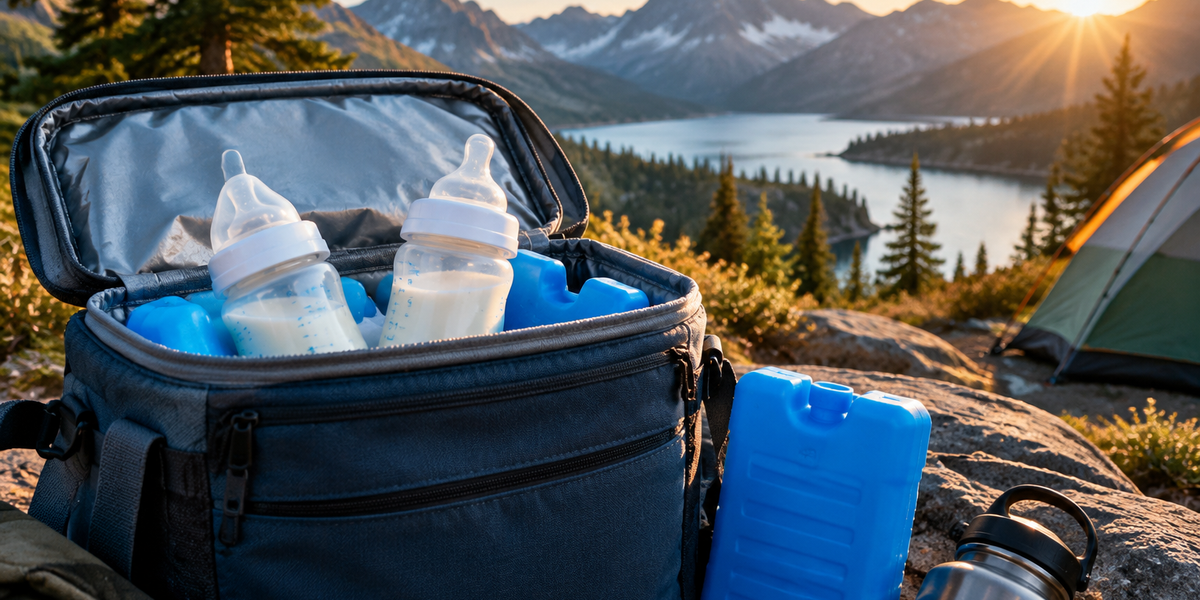
Layer from the bottom up: Start with a layer of block ice or frozen gel packs, then place bottles upright in a single layer (so you can see and grab what you need), then fill gaps with smaller ice packs or frozen water bottles. Top with a thin towel to insulate the air gap when you open the lid.
Separate clean and dirty: Keep a small dry bag inside the cooler for used bottle parts and pacifiers. This prevents cross-contamination and keeps you organized when you're doing quick washes at the campsite.
Label and date bottles: Dry-erase marker on the bottle or a piece of tape with the date pumped. In the chaos of camp, it's easy to lose track of which bottle is oldest.
Don't overpack: A cooler stuffed to bursting doesn't insulate well. Leave a little airspace, and resist the urge to cram in snacks—keep baby bottles separate from food to avoid spills and messes.
When you're on the trail and need access to a bottle mid-hike, consider slipping it into an insulated sleeve and tucking it into the Osprey Atmos AG 65 Backpacking Pack—the Anti-Gravity suspension and hydration sleeve keep weight balanced and your hands free for trekking poles and toddler wrangling.
Cleaning and Sanitizing Bottles at Camp
You don't have a dishwasher in the woods, but you can still keep bottles safe. Boil water for 5 minutes, let it cool, then use it to rinse bottles and nipples. A small bottle brush lives in your cook kit, and a drop of biodegradable soap (used 200 feet from water sources) gets the job done. Air-dry on a clean bandana or hang bottles from a line strung between trees.
If you're car camping, bring a collapsible basin and a small bottle sterilizer that runs on 12V from your car. If you're backpacking, accept that "clean enough" is the standard—boiling water sanitizes effectively, and you'll do a deep clean with a sterilizer when you're home.
Frequently Asked Questions
How long can breast milk stay cold in a cooler?
Freshly expressed breast milk can stay in a cooler with ice packs for up to 24 hours, as long as the internal temperature stays below 40°F. Use a fridge thermometer to verify, and when in doubt, smell-test (sour or off-smelling milk should be discarded). Frozen breast milk can last 24–48 hours in a high-performance cooler as it thaws slowly, but once fully thawed, use it within 24 hours.
Can I use regular ice from a gas station?
Yes, but block ice lasts significantly longer than bagged cubed ice. If you're buying ice on the road, look for 5 or 10 lb ice blocks, or freeze gallon jugs of water at home. Cubed ice is fine for short trips (under 24 hours), but it melts fast and turns into slush.
What if my cooler's ice melts on day two?
If you're near a campground store or trailhead, restock ice immediately. If you're in the backcountry and the cooler has warmed above 40°F, you'll need to discard any breast milk or formula that's been at unsafe temps for over two hours. Plan your trip length conservatively based on your cooler's ice retention rating, and always bring a backup option (shelf-stable ready-to-feed formula) for emergencies.
Do I need a separate cooler just for baby bottles?
Not necessarily, but it helps. A dedicated bottle cooler prevents cross-contamination from raw meat or dirty hands grabbing snacks, and it's easier to monitor and control the temperature. If you're using one cooler for everything, pack bottles in a sealed container or dry bag within the cooler to keep them isolated.
Can I warm a bottle over a campfire?
Never warm a bottle directly over flame—it creates hot spots that can burn your baby's mouth. Instead, heat water in a pot to about 100°F (warm to the touch but not hot), remove it from the fire, and place the bottle in the warm water bath for 3–5 minutes. Swirl gently and test a few drops on your wrist before feeding.
Final Thoughts
Keeping baby bottles cold while camping isn't about luck—it's about preparation and the right gear. A quality cooler with 48+ hour ice retention, a smart packing strategy, and a little vigilance will keep your baby fed safely no matter where the trail leads. We've seen families confidently camp with infants from alpine lakes to desert canyons using the methods in this guide, and the confidence it brings transforms those early parenting years into some of your most treasured outdoor memories.
Start with a cooler that matches your trip style, test your ice retention at home before you leave, and always pack a margin of safety. The first few trips will feel like a learning curve, but by your third or fourth outing, you'll have a system that works—and that's when camping with a baby stops feeling stressful and starts feeling like the adventure it should be.
Editor's Choice
Osprey Atmos AG 65 Backpacking Pack — The Anti-Gravity suspension system makes carrying a loaded pack (with your baby bottle cooler strapped on) feel effortless, even on steep terrain, and the built-in hydration sleeve doubles as insulated storage for bottles you need mid-hike.
Big Agnes Copper Spur HV UL2 Backpacking Tent — When you're camping with a baby, a spacious two-door tent means you can slip in and out for night feedings without waking your partner, and the twin vestibules give you clean, dry space to store your cooler and diaper bag.
TETON Sports Mountain Ultra Tent — Budget-friendly families doing weekend car camping will appreciate the roomy interior (enough space for a pack-and-play and your cooler) and full rain fly that keeps bottles and gear dry even in a downpour.