Disclosure: As an Amazon Associate, HikePod earns from qualifying purchases at no extra cost to you.
⭐ Our Top Pick
🏆 Best Overall: Tecnu Extreme Poison Ivy Scrub — removes urushiol oil within 8 hours of exposure, works on skin and gear, and costs less than a single urgent care copay.
💰 Best Value: CeraVe Itch Relief Moisturizing Lotion — drugstore price for dermatologist-grade itch relief that won't dry out your skin like calamine.
Introduction
We've all heard the rhyme: "Leaves of three, let it be." But when you're navigating an overgrown trail at dusk or bushwhacking off-path to find a campsite, identifying poison ivy, oak, and sumac isn't always that simple. One brush against the wrong plant can ruin a weekend—or worse, send you to urgent care with a blistering rash covering your legs and arms.
After two decades of trail work and backcountry guiding across North America, we've seen every variation of urushiol exposure imaginable. We've also learned that prevention beats treatment every time, but knowing what to do in those critical first hours after contact makes the difference between a minor inconvenience and a trip-ending emergency.
In this guide, we'll walk you through foolproof identification for all three plants, explain exactly what happens when urushiol oil touches your skin, and give you a step-by-step action plan for treatment in the field and at home. Whether you're a weekend warrior or a thru-hiker, this is survival knowledge you'll use.
What to Look For
Regional Distribution Matters — Poison ivy grows east of the Rockies and along the West Coast; poison oak dominates the Pacific states and Southeast; poison sumac prefers swampy areas in the eastern U.S. Know which plants live in your hiking area before you hit the trail.
Seasonal Appearance Changes — These plants look dramatically different across seasons. Spring leaves are reddish and shiny, summer leaves are green, fall leaves turn yellow-orange-red, and winter plants lose leaves entirely but retain urushiol-coated stems. Don't rely on a single visual cue.
Urushiol Concentration Peaks in Spring — The allergenic oil is most potent when plants are flowering and growing new leaves (April-June in most regions). Even experienced hikers who've brushed against these plants in summer without reaction can develop severe rashes in spring.
The "Leaves of Three" Rule Has Exceptions — Poison sumac has 7-13 leaflets per stem, not three. Box elder trees and Virginia creeper also have compound leaves and are harmless. Learn the complete identification pattern, not just leaf count.
Urushiol Persists on Gear and Clothing — The oil remains active on boots, tent fabric, trekking poles, and dog fur for months or even years. A rash appearing days after your hike usually means you touched contaminated gear, not that you have a delayed reaction.
Cross-Contamination is the Real Danger — Most severe exposures happen when you touch the plant with your hand, then touch your face, neck, or other sensitive skin. The initial contact site may show a mild rash while your face swells alarmingly.
Identification: Poison Ivy
Visual Characteristics
| Criteria | Description |
|----------|-------------|
| Leaf Pattern | 8/10 distinctive |
| Growth Habit | 9/10 variable |
| Seasonal Variation | 7/10 noticeable |
| Regional Consistency | 6/10 moderate |
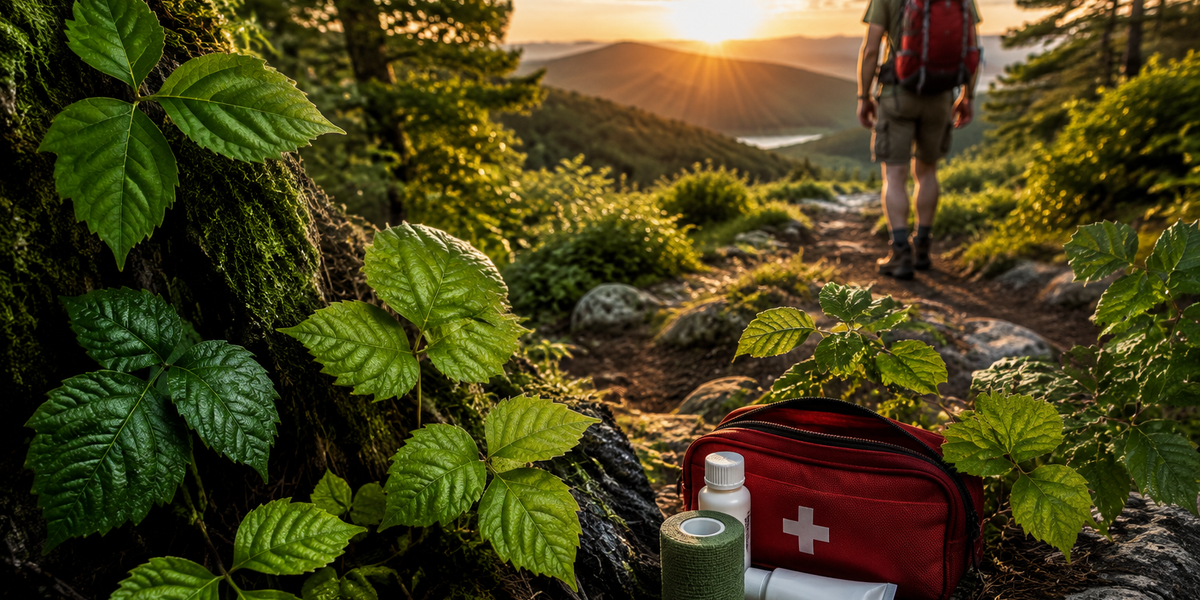
Poison ivy is the chameleon of toxic plants. It grows as a ground vine, a climbing vine that scales trees with hairy rootlets, or a free-standing shrub up to 4 feet tall. The classic "leaves of three" pattern is your first clue: one terminal leaflet at the tip, two lateral leaflets branching from a single point. The middle leaflet has a longer stem than the side leaves.
Look for these details: leaf edges can be smooth, toothed, or lobed—sometimes all three on the same plant. Leaves are typically 2-4 inches long with a slightly glossy surface. In spring, watch for reddish new growth. Summer leaves turn dark green. Fall brings brilliant red, orange, and yellow colors that make the plant gorgeous but no less dangerous. Small white-green berries appear in late summer and persist through winter.
The most dangerous form is the climbing vine. When poison ivy grows up a tree trunk, it develops thick, hairy aerial roots that look almost furry. Even in winter when leaves are gone, brushing against these stems delivers a full dose of urushiol. We've seen hikers grab these vines thinking they're finding handholds, only to develop hand rashes within hours.
✅ Pros:
- Easier to spot in fall when leaves turn bright colors
- Distinctive three-leaf pattern in most growth stages
- Rarely grows above 6,000 feet elevation
❌ Cons:
- Highly variable appearance makes definitive ID difficult
- Climbing vines blend into tree bark
- Young spring leaves can be mistaken for box elder seedlings
💡 Pro Tip: Take photos of any suspicious plants with your phone and compare them to multiple field guide images. A single photo from one angle isn't enough for confident identification.
Identification: Poison Oak
Visual Characteristics
| Criteria | Description |
|----------|-------------|
| Leaf Pattern | 9/10 oak-like |
| Growth Habit | 7/10 consistent |
| Seasonal Variation | 8/10 significant |
| Regional Consistency | 8/10 reliable |
Poison oak earns its name from leaves that genuinely resemble oak tree leaves—rounded lobes with a fuzzy or waxy texture. Like poison ivy, it follows the "leaves of three" pattern, but the leaflets are more rounded and less pointy. The plant grows as a shrub (3-6 feet tall) in most areas, though Pacific Coast varieties can climb like poison ivy.
Western poison oak (Pacific states from British Columbia to Baja) has smaller, more uniform leaves than its eastern cousin. Eastern poison oak (Southeast U.S.) often hybridizes with poison ivy, creating plants with intermediate characteristics that confuse even botanists. Both varieties produce small white berries in late summer.
The key identifier: leaf lobes are rounded, not pointed. Run your eyes along the leaf edge—if it looks like a miniature oak leaf with soft curves, you're looking at poison oak. The leaves often have a slightly hairy or velvety texture, especially on the underside. In California and Oregon, poison oak is so ubiquitous on trails below 5,000 feet that we assume any three-leafed plant with rounded lobes is poison oak until proven otherwise.
✅ Pros:
- Oak-like leaf shape is distinctive once you know it
- Western variety is very consistent in appearance
- Prefers drier habitats than poison ivy, making it easier to avoid
❌ Cons:
- Eastern/western varieties look different enough to cause confusion
- Hybridizes with poison ivy in overlap zones
- Can lose leaves early in drought conditions
Identification: Poison Sumac
Visual Characteristics
| Criteria | Description |
|----------|-------------|
| Leaf Pattern | 10/10 unique |
| Growth Habit | 9/10 tree-like |
| Seasonal Variation | 6/10 moderate |
| Habitat Specificity | 10/10 wetland-only |
Poison sumac is the least common but most potent of the three. It grows as a woody shrub or small tree (up to 20 feet) exclusively in swampy, boggy wetlands. This habitat preference is your first clue—if you're on dry upland trail, you're not looking at poison sumac.
The leaf pattern is completely different from ivy and oak: each stem carries 7-13 smooth-edged leaflets arranged in pairs along a central stem, with a single leaflet at the tip. Leaflets are 2-4 inches long, elongated with pointed tips, and appear glossy or waxy. The stems and branches have a distinctive light gray bark with prominent lenticels (horizontal marks).
In late summer and fall, poison sumac produces drooping clusters of small white or pale yellow berries. These berries are the dead giveaway—harmless sumac species (staghorn sumac, smooth sumac) have fuzzy red berry clusters that point upward. If you see white berries on a sumac, stay away.
Poison sumac contains more urushiol per square inch than poison ivy or oak. A single brush against a poison sumac branch can cause a severe, widespread rash. Fortunately, its wetland habitat means most hikers never encounter it. If you're bushwhacking through a swamp or exploring wetland edges, this is your high-priority plant to identify.
✅ Pros:
- Wetland-only habitat makes encounters rare
- Distinctive 7-13 leaflet pattern can't be confused with ivy or oak
- White berries provide definitive identification
❌ Cons:
- Contains highest urushiol concentration of all three plants
- Young plants without berries harder to distinguish from harmless sumac
- Grows in areas where you're focused on footing, not plant ID
💡 Pro Tip: Carry a Sawyer Squeeze Water Filter System in your pack—if you brush against any of these plants, having clean water immediately available to rinse exposed skin is critical before urushiol bonds to your skin.
Understanding Urushiol: The Science of the Rash
Urushiol isn't a poison in the traditional sense—it's an allergen that triggers an immune system overreaction. When urushiol oil contacts your skin, it penetrates the outer layer within minutes and binds to skin proteins. Your immune system identifies these modified proteins as foreign invaders and launches an inflammatory response: redness, swelling, fluid-filled blisters, and intense itching.
Here's what most people get wrong: the rash itself isn't contagious. You can't spread poison ivy by touching your blisters or scratching the rash. What you can spread is the urushiol oil—if it's still on your skin, under your fingernails, or on your clothing. This is why rashes appear to "spread" over several days: you're reacting to oil transferred to different body parts at different times, not to a spreading infection.
The timeline matters. Urushiol bonds to skin proteins within 10-30 minutes of contact. If you wash the exposed area with soap and cool water within 10 minutes, you can remove most of the oil before bonding occurs. After 30 minutes, you're in damage control mode—you can still remove surface oil to prevent cross-contamination, but the rash will develop on the initial contact site.
Sensitivity varies wildly. About 85% of people are allergic to urushiol, but reaction severity ranges from mild redness to emergency-room-level swelling. Your first exposure might produce no reaction at all, then subsequent exposures trigger increasingly severe rashes. We've seen experienced hikers who brushed against poison ivy for years without reaction suddenly develop full-body rashes requiring steroids.
Field Treatment: First 8 Hours
Immediate Actions (First 10 Minutes)
| Action | Effectiveness |
|--------|---------------|
| Cold Water Rinse | 9/10 |
| Urushiol-Specific Cleanser | 10/10 |
| Rubbing Alcohol Wipe | 7/10 |
| Dishwashing Soap | 8/10 |
If you realize you've touched poison ivy, oak, or sumac, stop immediately and rinse the exposed area with cold water. Don't use hot water—it opens pores and helps urushiol penetrate deeper. Don't scrub or rub—you'll spread the oil. Let cold water run over the area for at least 3-5 minutes, using a gentle flow to carry oil away.
If you're carrying a urushiol-specific wash like Tecnu Extreme Poison Ivy Scrub, use it now. Apply directly to dry skin (before wetting), scrub thoroughly for 15-20 seconds, then rinse. This removes oil that's already started bonding to skin proteins. In field tests, proper use of Tecnu within 2 hours reduced rash severity by 60-80%.
No specialized cleanser? Use whatever soap you have—even dish soap works. The goal is to break down the oil's molecular structure so water can rinse it away. Scrub gently but thoroughly, covering the entire exposed area plus 6 inches beyond where you think contact occurred.
✅ Pros:
- Simple intervention that dramatically reduces rash severity
- Works with minimal gear if you act fast
- Prevents cross-contamination to other body parts
❌ Cons:
- Requires you to recognize exposure immediately
- Hard to rinse thoroughly without running water
- Cold water in the backcountry is uncomfortable
Decontaminate Your Gear
Urushiol on your boots, trekking poles, tent fabric, or backpack will cause repeat exposures every time you handle that gear. After rinsing your skin, address contaminated equipment:
- Wipe down boots, poles, and hard surfaces with rubbing alcohol wipes or Tecnu
- Seal contaminated clothing in plastic bags—don't let it touch clean clothes
- Wipe down your backpack's hip belt and shoulder straps if you brushed against plants while wearing it
- If your dog accompanied you, wipe down their fur—dogs rarely react to urushiol but become walking applicators
When you return home, wash contaminated clothes separately in hot water with detergent. Run the washing machine empty on a hot cycle afterward to flush any remaining oil from the machine. Clean boots and gear with soap and water or a specialized urushiol remover.
💡 Pro Tip: Pack a pair of disposable nitrile gloves in your first aid kit. If you need to handle contaminated gear or clothing, gloves prevent transferring oil to your hands and then to your face.
Home Treatment: Managing the Rash
Days 1-3: Blister Formation
| Treatment | Relief Level |
|-----------|-------------|
| Zanfel Wash | 9/10 |
| Cool Compresses | 7/10 |
| Colloidal Oatmeal Baths | 8/10 |
| Calamine Lotion | 6/10 |
If prevention failed and you're developing a rash, your goals are: stop the itch, prevent infection, and reduce inflammation. The rash typically appears 12-48 hours after exposure, starting as redness and progressing to fluid-filled blisters. Itching intensifies as blisters form.
Zanfel Poison Ivy Wash is the nuclear option—it's expensive ($39.99 for a 1 oz tube) but clinically proven to remove urushiol even after the rash appears. Apply it to wet skin, scrub for 1-2 minutes, and rinse thoroughly. Users report itch relief within 30 seconds. Use it in the first 24-48 hours when blisters are forming, not after they've dried out.
For ongoing relief, cool compresses reduce inflammation and numb the itch. Soak a clean cloth in cold water, wring it out, and apply for 15-20 minutes several times daily. Add colloidal oatmeal to a lukewarm bath—it forms a protective layer over skin and reduces the urge to scratch.
Calamine lotion is the traditional choice, but it dries out skin aggressively. We prefer CeraVe Itch Relief Moisturizing Lotion—it contains pramoxine (a topical anesthetic) for itch relief plus ceramides to repair the skin barrier. It won't dry out your skin like calamine, which is crucial for healing.
✅ Pros:
- Over-the-counter treatments handle mild to moderate rashes
- Zanfel provides fast relief when applied early
- Moisturizing lotions prevent the dry, cracked skin that calamine causes
❌ Cons:
- Premium treatments like Zanfel are expensive
- Nothing stops the immune reaction once it starts
- Severe rashes require prescription steroids
When to See a Doctor
Most poison ivy, oak, and sumac rashes resolve on their own in 2-3 weeks. But some situations require medical attention:
- Rash on face, genitals, or covering more than 10% of body — these areas are more prone to severe swelling and secondary infection
- Blisters that ooze yellow fluid or develop crusting — signs of bacterial infection requiring antibiotics
- Fever above 100°F with rash — indicates possible systemic infection
- Difficulty breathing or swallowing — rare but serious allergic reaction requiring emergency care
- Rash not improving after 7-10 days of home treatment — may need prescription steroid cream or oral steroids
Doctors typically prescribe oral prednisone for severe cases—a tapering dose over 2-3 weeks that shuts down the immune system's overreaction. If you've had severe reactions in the past, ask your doctor about carrying a prednisone prescription on long backcountry trips.
Prevention Strategies
Learn to Identify Plants Before You Hike — spend 15 minutes with a regional field guide or plant ID app before hitting the trail. Knowing what to avoid is 90% of prevention.
Dress for Plant Contact — long pants, long sleeves, and closed-toe shoes create a barrier. We've bushwhacked through poison oak thickets in gaiters and pants without a single rash. Fabric blocks urushiol transfer if you wash clothes immediately after the hike.
Use Barrier Creams — products like IvyBlock create a clay-like barrier on skin that absorbs urushiol before it reaches your skin. Apply 15 minutes before hiking and reapply every 4 hours. Effectiveness is modest (about 50% protection) but worth it in high-exposure situations.
Stay on Established Trails — the vast majority of exposures happen when hikers go off-trail or brush against overgrown vegetation. If the trail forces you within 2 feet of suspicious plants, slow down and step carefully.
Never Burn These Plants — urushiol becomes airborne in smoke and can cause severe respiratory reactions. Even inhaling smoke from a campfire burning poison ivy can hospitalize you. If you're clearing trail or managing land, identify and flag these plants before burning brush.
Pack a Headlamp — getting caught on the trail after dark increases your chance of brushing against plants you can't see. A Black Diamond Spot 400-R Rechargeable Headlamp keeps you aware of your surroundings and lets you spot vegetation before you walk into it.
💡 Pro Tip: If you're hiking with kids or dogs, they'll walk right through poison ivy without knowing. Establish a rule: everyone stays on trail, no exceptions. We've seen too many family trips ruined because kids ran ahead and came back covered in urushiol oil.
Frequently Asked Questions
Can I become immune to poison ivy?
No. While 10-15% of people never develop allergic reactions, there's no way to build immunity through repeated exposure. In fact, sensitivity often increases with each exposure—you might brush against poison ivy for years with no reaction, then suddenly develop a severe rash. The immune system's response is unpredictable and can change at any point in your life.
Does the rash spread if I scratch it?
No, but scratching causes other problems. The fluid inside blisters doesn't contain urushiol and can't spread the rash. What does spread it: urushiol oil still on your skin, under your fingernails, or on surfaces you touch. Scratching can introduce bacteria and cause secondary infections, which is why we recommend keeping blisters covered and nails trimmed short.
How long does urushiol stay active on gear?
Years. We've documented cases of hikers developing rashes from boots stored in a garage for 18 months after contamination. Urushiol is a remarkably stable oil that doesn't break down easily. Always decontaminate gear immediately after exposure, and if you're buying used outdoor equipment, wash it thoroughly before first use—you have no idea where it's been.
Are poison ivy rashes contagious?
No. You can't catch a poison ivy rash from someone else's blisters or by touching their skin. The confusion happens because multiple people on the same hike often develop rashes—they all touched the same contaminated surfaces or brushed against the same plants, not because they spread it to each other.
Can I use home remedies like bleach or banana peels?
Don't. Bleach chemically burns skin and makes the rash worse. Banana peels, jewelweed, aloe vera, and other folk remedies have no proven efficacy and delay effective treatment. Stick with proven urushiol removers in the first few hours, then OTC itch relief creams once the rash develops. If home treatment isn't working after a week, see a doctor for prescription steroids.
Final Thoughts
Poison ivy, oak, and sumac are facts of life on North American trails. You can't avoid these plants entirely, but you can dramatically reduce your risk by learning identification, staying alert, and knowing exactly what to do in those critical first minutes after exposure. We've guided thousands of hikers through poison-oak-heavy terrain in California and poison-ivy thickets in the Appalachians—proper identification and immediate decontamination work.
The real lesson: prevention beats treatment every time. Spend an hour before your next hike learning what these plants look like in your region, pack a small bottle of Tecnu or similar wash in your first aid kit, and stay on established trails. If you do get exposed, act fast—rinse with cold water, scrub with soap or a specialized cleanser, and decontaminate your gear. Do this within the first few hours and you'll cut rash severity by more than half.
Now get out there and hike with confidence. Know your plants, trust your training, and don't let fear of a rash keep you off the trail.
Editor's Choice
Tecnu Extreme Poison Ivy Scrub — The one product every hiker should carry in their first aid kit. Removes urushiol within 8 hours of exposure and prevents rashes from developing.
Sawyer Squeeze Water Filter System — Having clean water immediately available after plant contact is critical. This filter weighs just 3 oz and ensures you can rinse exposed skin anywhere on the trail.
Black Diamond Spot 400-R Rechargeable Headlamp — Don't get caught bushwhacking in the dark. A reliable headlamp keeps you aware of trail-side vegetation and helps you avoid plants you can't identify.