Disclosure: As an Amazon Associate, HikePod earns from qualifying purchases at no extra cost to you.
⭐ Our Top Pick
🏆 Best Overall: Merrell Men's Moab 3 Mid Waterproof Hiking Boot — waterproof, grippy Vibram sole, and break-in free comfort make this the most reliable first snow boot under $150.
💰 Best Value: KEEN Men's Targhee III Mid Waterproof Hiking Boot — wide toe box and proven KEEN.DRY waterproofing at a mid-range price that won't break the bank.
Introduction
Your first snow hike can feel like stepping into a different world — the muffled quiet, the glittering landscape, the crisp air that makes every breath feel alive. But winter trails demand respect. What works on dry summer paths won't cut it when ice hides under fresh powder and temperatures drop fast. We've spent years researching winter hiking gear and analyzing feedback from thousands of first-time snow hikers to compile the essentials that actually matter.
The good news? You don't need a complete gear overhaul or expedition-level experience. With the right boots, traction devices, layering strategy, and safety protocols, your first snow hike can be both safe and exhilarating. This guide walks you through exactly what to pack, how to move on snow and ice, and the rookie mistakes that trip up beginners.
Whether you're tackling a groomed winter trail or venturing into untracked powder, the fundamentals stay the same: stay dry, stay visible, and stay prepared for changing conditions. Let's break down what that looks like in practice.
What to Look For
Waterproof Insulated Boots — Your summer trail runners won't survive five minutes in snow. Look for mid or high-cut boots with waterproof membranes (Gore-Tex or equivalent), insulation rated for the temperatures you'll face, and aggressive lugs that bite into packed snow. The Merrell Men's Moab 3 Mid Waterproof Hiking Boot offers Vibram traction and proven waterproofing at a price that won't scare off beginners.
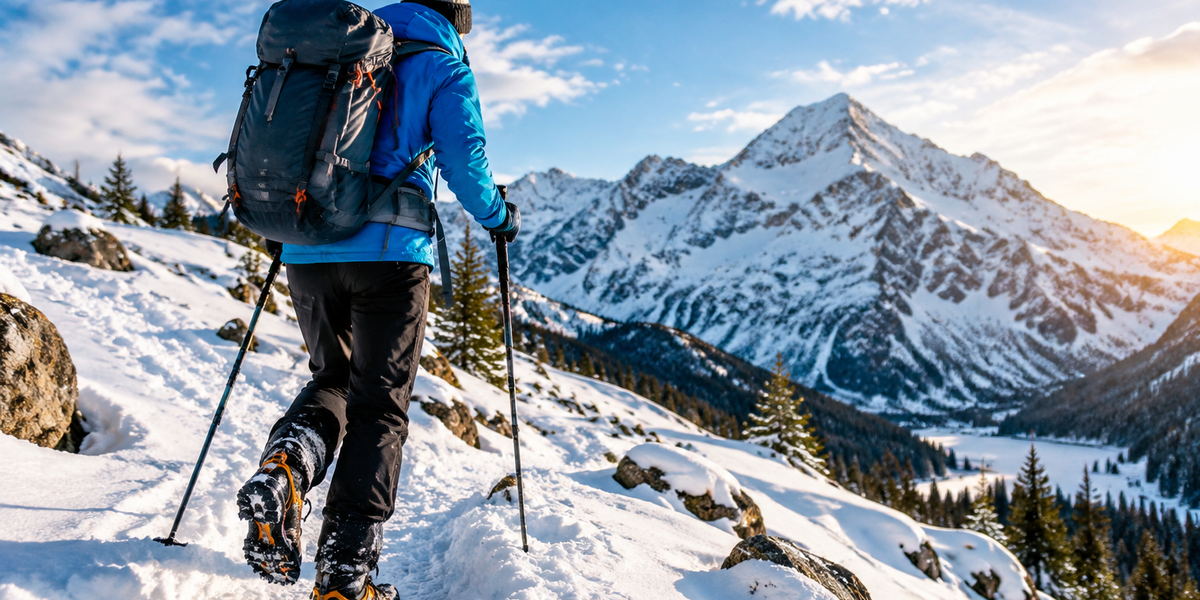
Traction Devices for Ice — Even gentle trails turn treacherous when ice forms. Microspikes (coil chains with carbide teeth) attach to any boot and provide confidence-building grip on icy sections. For steep or technical terrain, full crampons may be necessary, but most first-timers do fine with microspikes on moderate winter trails.
Moisture-Wicking Base Layers — Cotton kills in winter. Your base layer should be merino wool or synthetic fabric that wicks sweat away from your skin. When you stop moving, wet cotton will chill you fast. A good base layer regulates temperature during exertion and retains warmth when you pause for a break.
Insulating Mid Layer — Fleece or synthetic puffy jackets trap warm air without adding bulk. Look for pieces that breathe during uphill slogs but seal in heat when you stop. Avoid down for your mid layer if conditions are damp — wet down loses all insulating power.
Weatherproof Shell Layer — Your outer shell blocks wind and precipitation. A waterproof, breathable jacket with a hood protects you from sudden squalls and windchill. Pit zips let you vent heat without removing the jacket entirely.
Winter-Specific Accessories — Gloves (bring a backup pair), a warm hat that covers your ears, neck gaiter or balaclava, and UV-blocking sunglasses or goggles round out your kit. Snow reflects intense UV light that can sunburn exposed skin and cause snow blindness without proper eye protection.
Best Waterproof Hiking Boots for Snow
Merrell Men's Moab 3 Mid Waterproof Hiking Boot
| Criteria | Score |
|----------|-------|
| Waterproofing | 9/10 |
| Traction on Snow | 8/10 |
| Warmth/Insulation | 6/10 |
| Value for Money | 9/10 |
The Moab 3 Mid has dominated the hiking boot market for over a decade, and the waterproof version translates that success to winter conditions. The Vibram TC5+ outsole grips packed snow reliably, and the waterproof membrane keeps feet dry through slush, shallow stream crossings, and wet snow. The break-in free comfort means you can wear them straight out of the box without blisters — a huge advantage for first-timers who don't want to gamble on fit.
The trade-off is insulation. The Moab 3 Mid isn't heavily insulated, so you'll need thick merino wool socks for temperatures below 20°F. The lug pattern can also pack with wet, sticky snow, requiring periodic stomping to clear. But for three-season hikers dipping into winter, this boot offers the best balance of price, comfort, and performance.
✅ Pros:
- Waterproof membrane handles slush and wet snow
- Vibram outsole grips packed snow and ice
- No break-in period required
- Proven reliability backed by thousands of reviews
❌ Cons:
- Minimal insulation requires thick socks in deep cold
- Lug pattern can pack with wet snow
Salomon Men's X Ultra 4 GTX Hiking Shoes
| Criteria | Score |
|----------|-------|
| Waterproofing | 10/10 |
| Traction on Snow | 9/10 |
| Weight | 10/10 |
| Ankle Support | 5/10 |
If you prioritize speed and agility over ankle support, the X Ultra 4 GTX delivers. At just 12.5 ounces per shoe, this is one of the lightest waterproof hiking shoes available. Gore-Tex waterproofing keeps feet dry, and the Contagrip rubber stays flexible even in freezing temps, maintaining grip when other soles stiffen up. The Advanced Chassis technology provides torsional stability without the weight of a traditional hiking boot.
The low-cut design is the limiting factor for snow hiking. Powder and slush enter easily at the ankle unless you pair these with gaiters. For groomed winter trails or fast-and-light missions where you'll encounter minimal deep snow, the X Ultra 4 GTX excels. For backcountry powder or untracked routes, choose a mid-height boot instead.
✅ Pros:
- Gore-Tex waterproofing handles wet conditions
- Ultralight design reduces fatigue
- Contagrip rubber stays flexible in freezing temps
- Quick-lace system works with gloves on
❌ Cons:
- Low-cut design lets snow enter at the ankle
- Premium price point
- Less ankle support than mid-height boots
KEEN Men's Targhee III Mid Waterproof Hiking Boot
| Criteria | Score |
|----------|-------|
| Waterproofing | 9/10 |
| Traction on Snow | 8/10 |
| Fit for Wide Feet | 10/10 |
| Weight | 7/10 |
KEEN built its reputation on accommodating wider feet without sacrificing performance, and the Targhee III Mid delivers on that promise. The generous toe box allows thick insulating socks without cramping, and the KEEN.DRY waterproof membrane keeps feet dry in slushy, wet conditions. The mid-height cut provides ankle support and keeps snow out better than low-cut options.
The trade-off is weight — the Targhee III runs slightly heavier than competitors, which some hikers notice on long days. A minority of users report needing a break-in period, though most find them comfortable from day one. If you've struggled with narrow hiking boots in the past, the Targhee III solves that problem without compromising on waterproofing or traction. For more insights on preventing common hiking discomfort, see our guide on why knees hurt going downhill and how to prevent it.
✅ Pros:
- Wide toe box accommodates thick socks
- KEEN.DRY waterproofing performs in slushy conditions
- Mid-height cut keeps snow out
- Excellent for wide-footed hikers
❌ Cons:
- Slightly heavier than competitors
- Some users need a break-in period
Traction Devices: When and What to Use
Bare boot soles slip on ice, period. Even the grippiest lugs can't bite into smooth ice the way metal can. Traction devices fall into three categories:
Microspikes — Coil chains with carbide or stainless steel teeth that stretch over your boots. These handle packed snow, ice patches, and moderate inclines. They're easy to put on with gloves, pack small, and work on any boot. For 90% of first-time snow hikers on maintained trails, microspikes are the right choice.
Crampons — Rigid frames with longer spikes designed for steep ice and mountaineering. Full crampons require compatible boots with toe and heel welts. Unless you're tackling technical alpine routes, crampons are overkill for your first snow hike.
Trekking Poles — While not a traction device per se, poles with snow baskets distribute your weight and prevent post-holing. They also provide balance on icy descents and reduce impact on your knees when navigating uneven snow-covered terrain.
💡 Pro Tip: Carry microspikes even if the forecast looks clear. Shaded north-facing slopes and stream crossings often harbor ice when everything else is bare. Having them in your pack means you won't turn back when you hit an unexpected icy section.
Layering for Winter Hiking: The Three-Layer System
Winter hiking generates heat. You'll start cold, warm up fast during climbs, then chill quickly during breaks. The three-layer system lets you adjust on the fly:
Base Layer (Next to Skin) — Merino wool or synthetic fabric that wicks moisture. Avoid cotton entirely. A long-sleeve base layer top and bottom keeps you warm without trapping sweat.
Mid Layer (Insulation) — Fleece jacket or synthetic puffy vest traps warm air. This layer goes on during breaks or when you stop generating heat. It breathes enough to hike in during cold conditions but packs small when you don't need it.
Shell Layer (Weather Protection) — Waterproof, windproof jacket with a hood. Your shell blocks wind and precipitation without adding insulation. Look for pit zips or other ventilation options so you can dump heat without removing the jacket.
The key is adjusting layers before you overheat. If you wait until you're drenched in sweat, your base layer loses effectiveness and you'll chill when you stop. Open your shell, remove your mid layer, or roll up sleeves before you start sweating.
Safety Protocols for First-Time Snow Hikers
Check Avalanche Conditions — If you're hiking in avalanche terrain (steep slopes above treeline), check the local avalanche forecast and understand the basics of avalanche safety. Many first-time snow hikes happen below treeline on gentle trails where avalanche risk is negligible, but always verify.
Tell Someone Your Plan — Leave your route, expected return time, and vehicle description with a friend or family member. If you don't return on schedule, they'll know where to send help.
Carry the Essentials — The Adventure Medical Kits Ultralight Watertight .7 First Aid Kit weighs just 7 ounces and treats common winter hiking injuries like blisters, sprains, and minor wounds. Also pack extra food, water (or a method to melt snow), a headlamp, fire starter, emergency shelter (space blanket or bivy), and a fully charged phone.
Know When to Turn Back — Winter conditions change fast. If visibility drops, wind picks up, or you're not making expected progress, turn around. The mountain will be there tomorrow. First-time snow hikers often underestimate how much slower snow travel is compared to summer hiking — budget extra time and don't push into darkness.
Stay Hydrated — Cold air is dry, and you'll dehydrate faster than you realize. Insulated water bottles or hydration reservoirs with insulated hoses prevent freezing. Drink regularly even if you don't feel thirsty.
💡 Pro Tip: Start with popular, well-trafficked winter trails where you'll see other hikers. Breaking trail through deep untracked snow is exhausting work that burns energy fast. Let someone else do the heavy lifting on your first trip. For help finding beginner-friendly trails with good access, check out our guide on finding easy hiking trails near you with good parking.
Frequently Asked Questions
Can I hike in snow with regular hiking boots?
Regular hiking boots without waterproofing will soak through in minutes, leading to cold, wet feet and potential frostbite. If your boots aren't waterproof and insulated, either upgrade or choose a trail with minimal snow coverage. Even waterproof summer boots may lack the insulation needed for extended winter use.
How do I prevent my water from freezing on the trail?
Carry water in an insulated bottle and store it upside down in your pack — water freezes from the top, so inverting the bottle keeps the drinking spout accessible longer. Hydration reservoirs with insulated hoses work well, but bring a backup insulated bottle in case the hose freezes. Drinking regularly prevents the water from sitting still long enough to freeze solid.
What's the best way to break in new winter boots before a snow hike?
Wear them around the house for a few days with the socks you'll hike in. Then take short neighborhood walks before committing to a full day on the trail. Most modern hiking boots like the Merrell Moab 3 Mid require minimal break-in, but it's still worth confirming fit and comfort before a long winter hike. Blisters in cold conditions are miserable and potentially dangerous.
Do I need gaiters for snow hiking?
Gaiters prevent snow from entering the top of your boots, keeping feet dry and warm. If you're hiking in deep, loose snow or wearing low-cut shoes, gaiters are essential. For packed trails with mid-height boots, you can often skip them. Carry a pair in your pack — they weigh almost nothing and you'll be grateful if conditions turn slushy.
How much slower is hiking in snow compared to summer trails?
Expect to move 25-50% slower in snow, depending on depth and whether the trail is packed. Deep, untracked powder can slow you to a crawl. Post-holing (breaking through the snow crust with each step) is exhausting and drastically reduces pace. Plan shorter mileage for your first snow hikes and give yourself extra daylight buffer.
Final Thoughts
Your first snow hike doesn't have to be intimidating. With waterproof boots, reliable traction devices, a smart layering system, and a conservative approach to route selection, you'll discover why winter hiking offers some of the most rewarding trail experiences of the year. The solitude, the stark beauty, and the satisfaction of moving confidently through a winter landscape make the extra preparation worthwhile.
Start with a short, well-traveled trail to dial in your gear and get a feel for snow travel. As your comfort and skills grow, you'll be ready to explore deeper into winter terrain. The mountain doesn't care what season it is — but with the right preparation, you'll care a lot less about the cold.
Ready to get started? Grab your boots, check the forecast, and we'll see you on the trail.
Editor's Choice
Merrell Men's Moab 3 Mid Waterproof Hiking Boot — The best all-around first snow boot combining waterproof protection, proven Vibram traction, and break-in free comfort at a beginner-friendly price.
Adventure Medical Kits Ultralight Watertight .7 First Aid Kit — A watertight, ultralight first aid kit that treats blisters, sprains, and minor wounds without adding bulk to your winter pack.