Disclosure: As an Amazon Associate, HikePod earns from qualifying purchases at no extra cost to you.
⭐ Our Top Pick
🏆 Best Overall: Buff Original Multifunctional UV Headwear — adapts to 12+ wearing styles for sun protection in dry heat or sweat management in humidity, with UPF 50+ and moisture-wicking fabric.
💰 Best Value: Neutrogena Ultra Sheer Sunscreen SPF 100+ — delivers maximum UV protection without the greasy feel, staying put through 80 minutes of heavy sweating in any climate.
Introduction
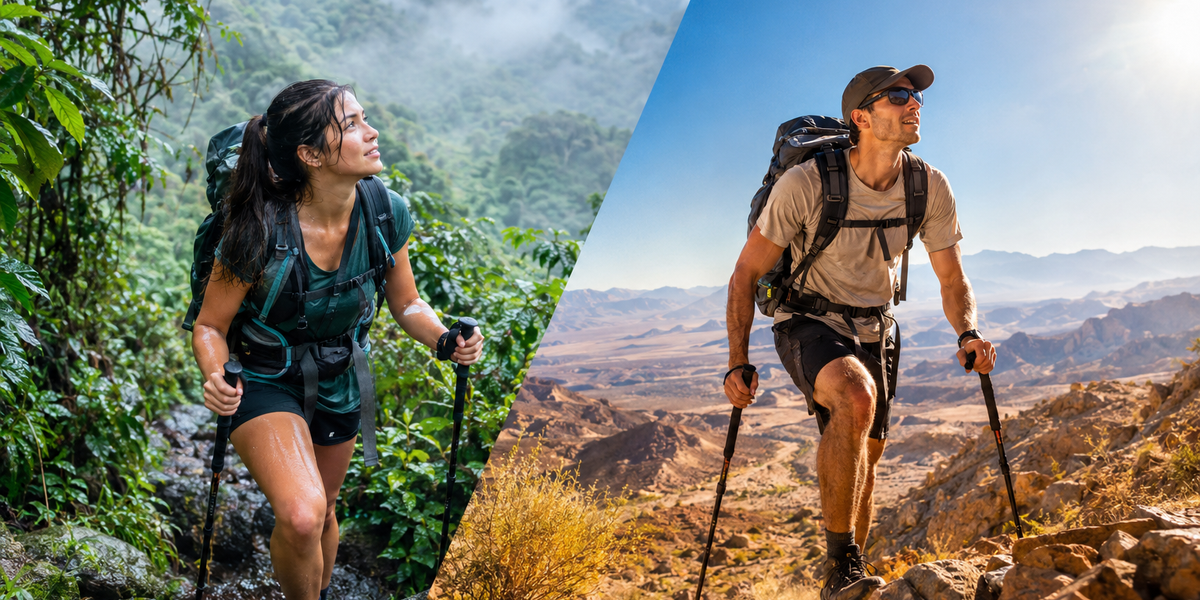
You've hiked the Smokies in July when the air felt like a wet blanket, and you've tackled Nevada trails where the sun baked moisture from your lips before you could lick them. Both felt brutal, but in completely different ways. The question isn't academic: understanding whether humidity or dry heat challenges your body more directly determines how you pack, pace, and prepare for a safe hike.
We've compared the physiological demands of both conditions by examining how your body regulates temperature, what the research says about heat stress, and what thousands of hikers report from real trails. The answer isn't simple — each climate stresses different systems, and your personal vulnerabilities matter as much as the thermometer reading.
This guide breaks down the science, helps you identify which conditions hit you harder, and gives you concrete strategies and gear choices for staying safe and comfortable whether you're hiking the humid Southeast, the arid Southwest, or anywhere in between. If you're also concerned about technical terrain, see our How to Prevent Ankle Rolling on Rocky Trails: Footwork, Shoes, and Strengthening That Actually Work guide for complementary safety strategies.
What to Look For
Sweat evaporation efficiency — Your body cools by evaporating sweat. In humidity above 60%, evaporation slows dramatically, trapping heat inside even when you're drenched. In dry heat, sweat evaporates so fast you may not realize how much water you're losing. Look for gear and strategies that maximize cooling in humidity (airflow, moisture-wicking) and prevent dehydration in dry conditions (high SPF, electrolyte management).
Cardiovascular load differences — Research shows humid heat forces your heart to work 10-15% harder than dry heat at the same temperature because your core can't shed heat efficiently. In dry heat, the primary stress is fluid loss and electrolyte imbalance. Choose your intensity and rest intervals based on which system is under more strain.
UV exposure and skin damage — Dry climates often sit at higher elevations with thinner atmosphere, increasing UV intensity by 10-12% per 1,000 feet. Humidity offers some UV filtering through water vapor, but reflective surfaces (sand, rock) amplify exposure in deserts. Prioritize broad-spectrum SPF 50+ sunscreen and sun-protective clothing in both, with extra vigilance in dry heat.
Hydration and electrolyte balance — In humidity, you'll see and feel every drop of sweat, making it easier to remember to drink, but you lose fewer electrolytes per liter because sweat is more dilute. In dry heat, sweat evaporates invisibly, and you can lose 1-2 liters per hour without noticing until you're already dehydrated, with concentrated electrolyte loss causing cramps and confusion. Match your hydration strategy to the visibility of your sweat loss.
Perceived exertion vs actual effort — Humid heat feels harder immediately because you're sticky and uncomfortable, but dry heat can fool you into pushing too hard because you feel relatively comfortable until you suddenly don't. Monitor your heart rate and urine color rather than how you feel in the moment.
Nighttime recovery — Humidity rarely drops at night in places like the Southeast, preventing your body from fully recovering between hiking days. Dry climates often cool dramatically after sunset, giving you a recovery window. Plan multi-day trips with this recovery difference in mind, taking shorter mileage days in sustained humidity.
The Science: Which Condition Is Actually Harder?
Both the research and trail experience point to the same conclusion: humid heat is physiologically harder on your cardiovascular system, but dry heat is more dangerous because it's deceptive.
In humid conditions above 70°F with humidity over 70%, your body's primary cooling mechanism — sweat evaporation — becomes severely impaired. A 2018 study in the Journal of Applied Physiology found that core body temperature rises 0.3-0.5°C higher in humid heat compared to dry heat at the same ambient temperature, and heart rate increases by 10-15 beats per minute to compensate. You're working measurably harder, you feel miserable, and the discomfort itself acts as a warning system that forces you to slow down.
Dry heat, by contrast, allows efficient evaporative cooling until you run out of water. You can feel relatively comfortable hiking in 95°F desert conditions because sweat evaporates instantly, creating a cooling effect. The danger is that you're losing 1-2 liters of fluid per hour without the sticky, visible reminder that humidity provides. By the time you feel thirsty, you're already 1-2% dehydrated, and performance drops 10-20%. Heat exhaustion and heat stroke happen faster in dry conditions because warning signs are subtler.
The verdict: If you're asking which feels harder and forces you to work harder, it's humidity. If you're asking which is more likely to land you in serious trouble, it's dry heat — because it hides the danger until you're already compromised.
💡 Pro Tip: Use your first 30 minutes on the trail as a calibration period. In humidity, if you're soaked and breathing hard within 15 minutes, scale back your pace immediately. In dry heat, if you feel great after 30 minutes, check your water consumption — you should have already drunk 16-20 oz.
Preparing for Humid Heat: Gear and Strategy
Clothing That Moves Air
| Criteria | Score |
|----------|-------|
| Moisture-Wicking | 10/10 |
| Breathability | 10/10 |
| UV Protection | 8/10 |
| Durability | 8/10 |
In humidity, your priority is moving water away from skin and allowing maximum airflow. Synthetic or merino wool shirts with mesh panels outperform cotton, which absorbs sweat and clings. Lightweight hiking pants with ventilation zippers let you regulate temperature as you move between shaded valleys and exposed ridges. The Buff Original Multifunctional UV Headwear serves double duty as a sweat-wicking headband or neck gaiter, keeping moisture off your face while providing UPF 50+ sun protection.
✅ Pros:
- Moisture-wicking fabrics dry quickly even in high humidity
- Mesh panels create convective cooling when air moves
- Lightweight materials don't add insulation you don't need
❌ Cons:
- Even technical fabrics stay damp in extreme humidity
- Requires frequent washing to prevent bacterial buildup
Pacing and Rest Strategy
Start at 60-70% of your normal pace and take 5-10 minute shade breaks every hour. Your heart rate will climb faster than you expect, and pushing through the discomfort leads to heat exhaustion. Schedule humid-climate hikes for early morning or late afternoon when temperatures drop even slightly, and accept that your mileage will be 20-30% lower than in moderate conditions.
Hydration Focus
Drink 20-24 oz per hour in moderate humid heat (75-85°F), increasing to 32 oz per hour above 85°F or on steep climbs. Because sweat is more dilute in humidity, you need less aggressive electrolyte supplementation than in dry heat — one electrolyte tablet per liter is usually sufficient. Watch for the warning signs of heat exhaustion: dizziness, nausea, cessation of sweating (a medical emergency), and confusion.
Preparing for Dry Heat: Gear and Strategy
Sun Protection Is Non-Negotiable
| Criteria | Score |
|----------|-------|
| UV Protection | 10/10 |
| Water Resistance | 9/10 |
| Non-Greasy Formula | 9/10 |
| Value | 10/10 |
Dry climates offer no atmospheric UV filtering, and elevation amplifies exposure. Apply Neutrogena Ultra Sheer Sunscreen SPF 100+ to all exposed skin 30 minutes before starting, and reapply every 2 hours or after heavy sweating. Pair it with a wide-brimmed sun hat, UV-protective sunglasses, and lightweight long sleeves. Sunburn increases your core temperature and fluid loss, compounding heat stress.
✅ Pros:
- SPF 100+ blocks 99% of UVB rays in intense desert sun
- Lightweight formula doesn't feel heavy in heat
- 80-minute water resistance holds up through sweat
❌ Cons:
- Needs frequent reapplication in full-sun exposure
- Can sting if sweat drips into eyes
Aggressive Hydration and Electrolyte Management
In dry heat, increase your intake to 32-40 oz per hour, and use electrolyte tablets or mixes in every liter. You're losing sodium, potassium, and magnesium faster than in humid conditions because sweat concentration is higher. Carry at least 3 liters for a 4-hour hike, and cache extra water if you're going longer. Urine should be pale yellow; if it's dark or you haven't urinated in 3-4 hours, you're already dangerously dehydrated.
Timing and Terrain Choices
Hike before 10 AM or after 4 PM when the sun is lower and temperatures drop 10-15°F. Choose shaded canyon routes over exposed ridges when possible. If you're planning a multi-day trip in dry heat, schedule rest days every 2-3 days to let your body recover from cumulative fluid and electrolyte deficits — unlike in humid climates, nighttime cooling gives you a true recovery window, so use it.
Emergency Preparation
Carry a lightweight emergency bivy or reflective blanket to create shade if you're caught in midday heat with no natural cover. The MSR PocketRocket 2 Ultralight Backpacking Stove weighs just 2.6 oz and boils water in 3.5 minutes, letting you quickly prepare electrolyte drinks or rehydrate emergency meals if you need to recover before continuing. In dry heat, the ability to rapidly rehydrate can be the difference between finishing safely and calling for rescue.
✅ Pros:
- Ultralight at 2.6 oz doesn't burden your pack
- Fast 3.5-minute boil time for urgent rehydration
- Compact fold-down design fits in a side pocket
❌ Cons:
- Requires carrying fuel canisters
- Wind can slow boil times without a windscreen
💡 Pro Tip: In dry heat, wet a bandana and drape it around your neck. Evaporative cooling on your carotid arteries drops your perceived temperature by 5-10°F. Re-wet it every 30-45 minutes for continuous relief.
Acclimatization: Training Your Body for Each Climate
Your body adapts to heat stress over 10-14 days of consistent exposure, but the adaptations are climate-specific. If you're traveling from a temperate region to hike in either extreme, give yourself time to acclimatize.
For humid heat, spend 30-60 minutes per day exercising outdoors in the heat for at least 5-7 days before your hike. Your body will increase sweat production, expand blood plasma volume, and improve cardiovascular efficiency. The discomfort will decrease noticeably by day 5.
For dry heat, the same 10-14 day window applies, but focus on hydration habits. Train your body to tolerate higher fluid intake (many people underhydrate because they're not used to drinking 32+ oz per hour), and practice electrolyte supplementation so you know how your stomach responds before you're on a remote trail.
If you can't acclimatize in advance, reduce your first few days' mileage by 30-40% and monitor yourself obsessively for warning signs. Acclimatization is one of the most powerful tools you have, and skipping it is one of the most common mistakes that lead to heat illness.
Frequently Asked Questions
Can you hike safely in 100°F heat, humid or dry?
Yes, but with significant precautions. In dry 100°F heat, start before dawn, carry 4+ liters of water, take shade breaks every 45-60 minutes, and turn back if you feel any confusion or dizziness. In humid 100°F heat, we recommend not hiking at all unless you're highly experienced and acclimatized — heat index can reach 115-120°F, putting you in the danger zone for heat stroke within 30-60 minutes of exertion. If you must hike, go very slowly, stay in shade as much as possible, and have an emergency exit plan.
How do you know if you're experiencing heat exhaustion vs heat stroke?
Heat exhaustion symptoms include heavy sweating, weakness, dizziness, nausea, headache, and cool, clammy skin. You're still sweating, and while you feel terrible, you can think clearly. Stop hiking immediately, move to shade, drink electrolyte fluids, and cool your skin with wet cloths. Heat stroke symptoms include cessation of sweating, hot dry skin, confusion or altered mental state, rapid pulse, and core temperature above 104°F. This is a medical emergency — call 911, move to shade, remove excess clothing, and cool the person with any available water while waiting for help. Heat stroke can cause permanent organ damage or death within hours.
Is it better to hike shirtless in dry heat to stay cooler?
No. While it feels cooler initially, direct sun exposure increases UV damage and raises your skin temperature, which then raises your core temperature. Lightweight, light-colored, UV-protective long sleeves actually keep you cooler by creating a microclimate between fabric and skin while blocking UV. The evaporative cooling from sweat is more efficient under fabric than on bare skin in intense sun. Save the shirtless hike for cloudy days or shaded forest trails.
How much does elevation change the difficulty of hiking in heat?
Elevation helps in dry climates by lowering ambient temperature (roughly 3-5°F per 1,000 feet of elevation gain) and increasing evaporative cooling in thinner air. But it also increases UV exposure and can cause altitude-related symptoms above 8,000 feet that compound heat stress. In humid climates, elevation helps less because humidity often remains high at elevation in places like the Appalachians or Pacific Northwest mountains, though temperatures do drop. If you're hiking steep terrain in heat, remember that the cardiovascular demand of climbing combines with heat stress, so pace yourself even more conservatively than you would on flat ground. For steep, technical descents in any climate, our Why Do Your Knees Hurt Going Downhill When Hiking? Causes and How to Prevent It guide covers how to protect your joints when fatigue sets in.
Does humidity or dry heat affect sleep quality more on overnight trips?
Humidity disrupts sleep more severely. In humid climates, nighttime temperatures often stay in the 70s-80s with 70%+ humidity, preventing your body from cooling down and entering deep sleep. You'll wake up multiple times, and recovery between hiking days suffers. In dry climates, nighttime temperatures can drop 30-40°F from daytime highs, giving you a comfortable recovery window. If you're backpacking in sustained humidity, consider taking shorter mileage days to compensate for poor sleep recovery, and camp near water sources where evening breezes may provide slight relief.
Final Thoughts
Both humid heat and dry heat demand respect, preparation, and a willingness to adjust your expectations. Humidity makes you work harder every step, pushing your cardiovascular system and forcing you to slow down. Dry heat hides its danger, allowing you to feel comfortable right up until dehydration and heat exhaustion hit suddenly.
The hikers who thrive in extreme heat — humid or dry — share one trait: they listen to their bodies and adjust immediately when something feels off. They pack the right gear, they start early or late, they drink aggressively, and they're willing to turn back when conditions exceed their preparation. There's no shame in cutting a hike short when heat stress threatens your safety.
Whether you're heading into the swamps of Florida or the canyons of Utah, use this guide to build a climate-specific strategy, invest in key gear that addresses the unique challenges of each environment, and give yourself the gift of acclimatization time. The trail will still be there tomorrow — and you'll be in better shape to enjoy it safely.
Editor's Choice
Buff Original Multifunctional UV Headwear — The single most versatile piece of sun and sweat management gear for any hot-weather hike, adapting from headband to neck gaiter to hat as conditions change.
Neutrogena Ultra Sheer Sunscreen SPF 100+ — Maximum UV protection without the greasy feel, staying effective through 80 minutes of heavy sweating in both humid and dry conditions.
MSR PocketRocket 2 Ultralight Backpacking Stove — Ultralight emergency rehydration capability for extended dry-heat hikes where rapid water and electrolyte replacement can prevent serious heat illness.