Disclosure: As an Amazon Associate, HikePod earns from qualifying purchases at no extra cost to you.
⭐ Our Top Pick
🏆 Best Overall: Adventure Medical Kits Ultralight Watertight .7 First Aid Kit — the perfect balance of comprehensive treatment options and packable weight for any group size.
💰 Best Value: SOL Escape Lite Bivvy Emergency Sleeping Bag — under $20 for potentially lifesaving emergency warmth that weighs less than a granola bar.
Introduction
We've all experienced it: the friend who charges ahead on switchbacks, the stranger who joined your meetup group without proper water, the well-meaning companion who forgot to tell anyone about their bee allergy. Group hiking amplifies both the joys and risks of the trail. When you're responsible not just for yourself but for the safety and experience of others, the stakes change entirely.
After leading dozens of group hikes ranging from close friends to 20+ stranger meetups, we've learned that group safety isn't about being the "trail police." It's about creating a culture where everyone looks out for each other, communicates openly, and understands their role in keeping the whole group safe. Whether you're organizing a casual hike with coworkers or joining a Sierra Club outing with strangers, the principles remain the same.
In this guide, we'll walk through the essential strategies for pre-hike planning, on-trail communication, pace management, emergency preparedness, and the often-overlooked dynamics of hiking with people you've just met. By the end, you'll have a framework that works for any group size or experience level.
What to Look For in Group Hiking Safety Practices
Clear Pre-Hike Communication — Everyone should know the route difficulty, distance, elevation gain, expected duration, and required gear before committing. Mismatched expectations cause 90% of group hiking problems. Share trail maps, weather forecasts, and turnaround times in advance.
Established Pace and Regrouping Protocol — The group moves at the pace of the slowest hiker, period. Decide on regrouping points (every junction, every mile, every 30 minutes) and stick to them. Never let anyone hike alone unless explicitly agreed upon.
Designated Sweep and Leader Roles — Assign a confident navigator to lead and an experienced hiker to sweep the rear. The sweep ensures no one falls behind and can address issues without holding up the entire group. Rotate these roles on longer hikes to prevent fatigue.
Shared Emergency Equipment — While each hiker should carry the ten essentials, distribute group items strategically: first aid kit with the sweep, navigation tools with the leader, emergency shelter with someone in the middle. Everyone should know who carries what.
Buddy System for Mixed-Experience Groups — Pair inexperienced hikers with veterans. This prevents slower hikers from feeling isolated and ensures someone notices immediately if a buddy is struggling, overheating, or showing altitude sickness symptoms.
Agreed-Upon Decision-Making Process — Before leaving the trailhead, establish how the group will make turnaround decisions. Is it democratic? Does the leader have final say? What triggers an automatic turnaround (injury, weather, time limits)? Clarity prevents dangerous debates mid-hike.
Essential Group Safety Gear
Adventure Medical Kits Ultralight Watertight .7 First Aid Kit
| Criteria | Score |
|----------|-------|
| Comprehensiveness | 9/10 |
| Weight-to-Utility Ratio | 10/10 |
| Waterproofing | 10/10 |
| Group Size Suitability | 7/10 |
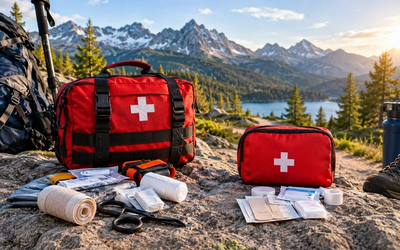
This is the first aid kit we recommend every group designate as their "official" medical supply. The watertight DryFlex bag has survived stream crossings, rainstorms, and the bottom of overstuffed packs in our testing. Inside, you'll find everything needed to treat the most common trail emergencies: moleskin and blister treatments, gauze and tape for cuts, medications for pain and inflammation, and treatment supplies for sprains.
At just 7 ounces, it's light enough that even the designated carrier won't resent the assignment. The contents are organized and labeled, which matters enormously when you're trying to locate supplies with cold fingers or in fading light. For groups of 4-6, this kit provides exactly what you need. Larger groups should consider carrying two or supplementing with additional supplies.
✅ Pros:
- Completely waterproof construction protects supplies in any conditions
- Treats blisters, wounds, sprains, and common ailments comprehensively
- Ultralight design encourages actually carrying it
- Clear organization for quick access during emergencies
❌ Cons:
- May need supplementation for groups larger than 6 people
- Limited medication quantities for multi-day trips
💡 Pro Tip: Designate the sweep hiker to carry the Adventure Medical Kits Ultralight Watertight .7 First Aid Kit so it's immediately available when someone at the back of the group needs attention.
Sawyer Squeeze Water Filter System
Every group should have at least one reliable water filter, and the Sawyer Squeeze has earned its reputation as the hiker's choice. At 3 ounces, it's light enough to throw in any pack, yet it filters to 0.1 micron—removing 99.99999% of bacteria and protozoa including giardia and cryptosporidium.
The real genius for group hiking is versatility. You can filter directly into water bottles, hydration bladders, or even drink straight from the source using the included pouch. When someone forgot to bring enough water (and someone always does), you can quickly filter a liter for them at any stream crossing. We've used ours to filter water for groups of 8+ people without issue.
Maintenance requires occasional backflushing, which is simple with the included syringe. In freezing conditions, the flow rate does slow, so keep it inside your jacket to prevent the filter from freezing.
✅ Pros:
- Removes 99.99999% of harmful bacteria and protozoa
- Weighs only 3 oz—won't burden any group member
- Versatile filtering options for bottles, bladders, or direct consumption
- Can quickly provide safe water for entire groups
❌ Cons:
- Requires regular backflushing maintenance
- Flow rate decreases in freezing temperatures
Pre-Hike Planning for Groups
The most important safety work happens before anyone laces up their boots. Start with a detailed trail brief: send the AllTrails link, elevation profile, and honest difficulty assessment. Include expected mileage, elevation gain, terrain type (rocky, exposed, scrambling), and your estimated completion time with buffer.
Collect essential information from each participant: emergency contact, relevant medical conditions, allergies, current fitness level, and experience with similar terrain. Create a simple Google Form if you're organizing for strangers. This isn't invasive—it's responsible. You need to know if someone has a bee sting allergy before you're 5 miles from the trailhead.
Establish gear requirements and verify them. For anything beyond a casual nature walk, require the ten essentials: navigation, sun protection, insulation, illumination, first aid, fire starter, repair kit, nutrition, hydration, and emergency shelter. Send a checklist. For stranger groups, we do a quick pack check at the trailhead—it takes 5 minutes and prevents major issues.
Set clear expectations about pace, breaks, and turnaround times. If you're marketing a hike as "moderate" but planning an aggressive pace, that's a safety issue. Build in time for slower hikers, photo stops, and the unexpected. A good rule: add 50% to your solo hiking time for groups of 4+, and double it for groups of 10+.
Finally, share your hiking plan with someone not on the trip. Include your route, expected return time, and a "call authorities" time (usually 3-4 hours past your planned return). This simple step has saved lives when groups got lost or injured.
On-Trail Communication and Pace Management
The most common group hiking failure is the "accordion effect"—the group stretches out over hundreds of yards, communication breaks down, and suddenly no one knows where anyone else is. Prevent this with a strict regrouping protocol.
We use the "junction rule": every trail junction, water source, or landmark is a mandatory regroup point. The leader stops, the group collects, everyone gets a quick head count, and we discuss the next section. This takes 60 seconds and prevents hours of searching for lost hikers. For longer stretches without junctions, set time-based regroups: every 30-45 minutes, everyone stops.
Establish visual and auditory signals. Three whistle blasts means emergency or help needed. One whistle means "regroup." If you lose sight of the person behind you for more than 2 minutes, stop and wait. These simple protocols create accountability—everyone is watching someone else.
The pace conversation needs to happen early and honestly. We tell our groups: "We move at the speed of our slowest hiker, and that's not a bad thing—it means everyone gets to enjoy the hike." If someone is consistently struggling, the group takes more breaks or re-evaluates the turnaround point. Peer pressure to "keep up" causes dangerous situations—exhausted hikers make poor decisions, trip more easily, and develop heat illness.
For mixed-ability groups, consider splitting into A and B groups with separate leaders and sweeps. The fast hikers can push ahead to the summit while the steady hikers enjoy a more relaxed pace, then everyone regroups for the descent. This requires good communication and works best when both groups have experienced members.
💡 Pro Tip: Use a group messaging app like WhatsApp or GroupMe for real-time updates if you have cell service. The leader can share location pins at regroup points, and anyone falling behind can communicate without shouting up the trail.
Emergency Protocols and Decision-Making
Hope for the best, plan for the worst. Before leaving the trailhead, establish your emergency protocols: who carries the first aid kit (Adventure Medical Kits Ultralight Watertight .7 First Aid Kit is our go-to), who has wilderness first aid training, who calls 911 if cell service exists, and who stays with an injured person while others go for help.
The "3-1-2 rule" works for most emergencies: if someone is injured or ill, 3 people stay on scene (one to provide care, one to assist, one to maintain morale and handle logistics), 1 person records exact location coordinates and injury details, and 2 people go for help if needed. Never send anyone for help alone.
Common group hiking emergencies and responses:
Blisters and Hot Spots — The sweep should carry Moleskin Blister Prevention and Treatment Pads and address hot spots immediately. A 2-minute moleskin stop prevents a hike-ending blister 30 minutes later.
Dehydration and Heat Illness — Monitor each other for early signs: excessive sweating that suddenly stops, confusion, weakness, rapid pulse. Stop immediately, move to shade, provide water and electrolytes, and cool the person with wet bandanas. This is non-negotiable—heat stroke kills.
Hypothermia — Surprisingly common even in summer at elevation. Shivering, slurred speech, and fumbling hands are red flags. Get the person into dry clothes, insulation layers, and a sheltered spot. The SOL Escape Lite Bivvy Emergency Sleeping Bag reflects 90% of body heat and weighs almost nothing—everyone should carry one.
Lost or Separated Hiker — If someone is missing, immediately stop the entire group. Establish last known location and time. Check obvious places first: behind you on the trail, at the last junction, at a viewpoint. If not found within 15 minutes, designate searchers to backtrack while others stay put and make noise (whistle, shout). Call search and rescue early—they'd rather be cancelled than needed 2 hours later.
Twisted Ankle or Knee Injury — Assess severity: can they walk with support? Do they need to be carried? Make the turnaround decision quickly. It's better to cut a hike short than to push forward and create a much more serious evacuation scenario.
Empowerment question: "What does your gut tell you?" If anyone—especially less experienced members—expresses serious concern about weather, someone's condition, or the route, treat it as valid. People often downplay their worries in groups. Create a culture where speaking up is praised, not dismissed.
Hiking With Strangers: Special Considerations
Meetup hikes, club outings, and guided groups introduce unique dynamics. You don't know these people's fitness levels, decision-making styles, or how they handle adversity. The anonymity can also lead to less accountability—someone might push beyond their limits to avoid embarrassment, or duck out early without telling anyone.
Start with extra-clear communication. At the trailhead, do a full group introduction: names, hiking experience, any medical concerns they're comfortable sharing, and their goals for the day. This 10-minute investment creates social accountability and helps everyone look out for each other.
Establish the "no judgment" rule explicitly: "We hike at the pace of our slowest member, and that's fine. If you need to turn around early, that's also fine—just tell the leader. There's no shame in listening to your body." This permission structure prevents dangerous pride-driven decisions.
For stranger groups, we always carry backup supplies: extra water purification (Sawyer Squeeze Water Filter System filters enough for a whole group), extra snacks, extra first aid supplies. Someone will inevitably show up underprepared—you can choose to be frustrated or to be prepared.
Watch for personality conflicts early. The ultracompetitive hiker who makes others feel slow, the complainer who drains morale, the person who ignores group protocols—address these issues quickly and privately. Pull the person aside at a break: "Hey, I noticed you've been hiking ahead of the group. We need to stay together for safety. Can you help me by staying within sight of the person behind you?"
For women especially, stranger group hikes provide safety in numbers compared to solo hiking in remote areas. However, establish boundaries early if someone's behavior feels inappropriate. The leader should create an environment where anyone can report concerns privately.
Frequently Asked Questions
What's the ideal group size for safe hiking?
4-8 people is the sweet spot for most trails. You have enough people for safety (can split to send for help while others stay with an injured hiker), but not so many that communication breaks down. Groups over 10 require significantly more organization, multiple leaders, and longer breaks. Groups under 4 lose some safety redundancy—consider it solo hiking with company.
How do you handle someone who wants to hike faster than the group?
Address it early and kindly: "We move as a group for safety. If you want a faster pace, you're welcome to turn around and hike solo, but we can't split up mid-route." Offer to connect them with more aggressive hiking groups. Some people genuinely don't understand group dynamics—explain that separation creates search and rescue risks if something goes wrong.
Should you turn around if one person is struggling?
It depends on the situation and what was communicated beforehand. If someone is showing signs of altitude sickness, heat exhaustion, or injury—yes, absolutely turn around or at minimum, have a sub-group escort them down while others continue. If someone is just tired but safe, they can rest while the group continues to a nearby goal, then everyone descends together. Make these decisions as a group when possible.
What if someone refuses to carry safety gear?
For casual hikes with friends, it's their choice (though you should explain the risks). For organized groups or challenging terrain, make the ten essentials a requirement and be willing to turn people away at the trailhead. It's harsh but necessary—their poor preparation becomes everyone's emergency. We've refused to let underprepared hikers join, and every time, other participants thanked us later.
How do you maintain group morale on difficult hikes?
Celebrate small wins: reaching viewpoints, making good time, spotting wildlife. Share snacks—food is a universal mood booster. Keep the energy positive but realistic; don't minimize legitimate concerns. Use humor to diffuse tension. Take photos of the group at milestones. And most importantly, make sure everyone feels heard and valued—the strongest hiker should be just as celebrated as the person pushing through to complete their first difficult summit.
Final Thoughts
Group hiking safety isn't about being the most experienced or the strongest—it's about creating a culture where everyone looks out for each other. The best group hikes we've led aren't the ones where everything went perfectly; they're the ones where the group communicated honestly, adapted to challenges together, and ensured everyone made it down safely.
Start with thorough pre-hike planning, establish clear protocols before you leave the trailhead, maintain communication and pace discipline on the trail, and empower everyone to speak up about concerns. Whether you're hiking with your closest friends or complete strangers, these principles create safer, more enjoyable experiences.
The mountain will be there tomorrow. Your primary responsibility is making sure everyone in your group gets to come back and hike it again. Pack the essentials, watch out for each other, and remember that turning around isn't failure—it's good decision-making.
Now get out there and explore responsibly. The trails are waiting, and they're always better with good company.
Editor's Choice
Adventure Medical Kits Ultralight Watertight .7 First Aid Kit — Every group needs one designated medical kit, and this waterproof, comprehensive, ultralight option is the gold standard for treating trail emergencies from blisters to sprains.
Sawyer Squeeze Water Filter System — At 3 ounces and $30, there's no excuse for anyone in your group to go without safe drinking water—this filter can quickly provide clean water for an entire group at any stream.
SOL Escape Lite Bivvy Emergency Sleeping Bag — For under $20 and less than 4 ounces, every group member should carry this emergency bivvy—it could save a life if someone gets separated, injured, or the group has to wait out unexpected weather.