Disclosure: As an Amazon Associate, HikePod earns from qualifying purchases at no extra cost to you.
⭐ Our Top Pick
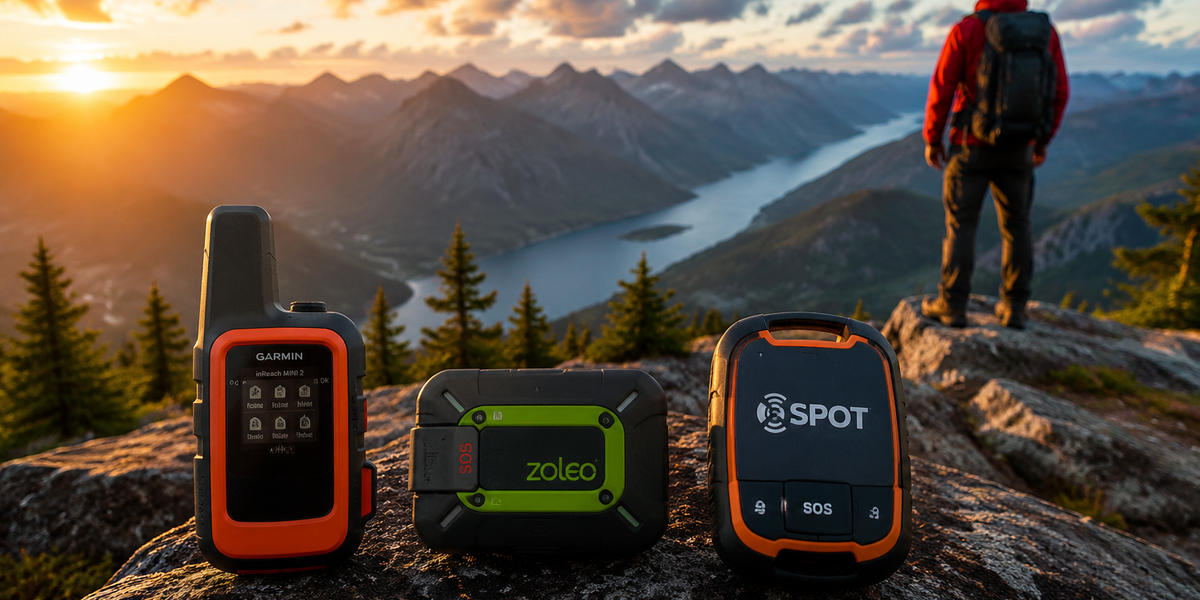
🏆 Best Overall: Garmin inReach Mini 2 — unmatched global coverage, two-way messaging, and advanced tracking make it the gold standard for serious backcountry users.
💰 Best Value: Zoleo Satellite Communicator — lower subscription costs and seamless multi-network messaging deliver solid performance for recreational hikers.
Introduction
When you're 50 miles from the nearest cell tower, your smartphone becomes a paperweight. That's where satellite communicators earn their keep. Whether you're thru-hiking the Pacific Crest Trail, paddling remote waterways, or exploring backcountry peaks, devices like Garmin inReach, Zoleo, and SPOT provide the lifeline that lets you send an SOS, check in with loved ones, or share your location when things go sideways.
We've compared specifications, subscription models, and verified buyer feedback across all three major satellite communicator platforms to help you choose the right device. The differences matter: satellite network coverage, messaging capabilities, battery life, and monthly costs vary significantly between these systems. Your ideal choice depends on how you adventure, how often you're off-grid, and what features you actually need versus nice-to-haves.
This guide breaks down the core differences, evaluates each platform's strengths and weaknesses, and helps you match the right communicator to your backcountry style. Let's dive in.
What to Look For in a Satellite Communicator
Satellite Network Coverage — Garmin inReach uses the Iridium network (66 satellites, true global coverage including poles), while SPOT relies on Globalstar (24 satellites with known gaps above 70° latitude). Zoleo uses Iridium as well, ensuring worldwide reach. If you adventure in extreme latitudes or remote oceans, network choice matters.
Two-Way Messaging vs One-Way Check-Ins — All three offer SOS alerts to emergency responders, but Garmin and Zoleo support full two-way text messaging with anyone who has a phone or email. SPOT X offers two-way messaging, but older SPOT Gen4 models are limited to preset messages and GPS tracking only.
Subscription Costs and Flexibility — Monthly plans range from $14.95 to $64.95+ depending on message volume and features. Garmin's Freedom plan allows seasonal suspension (ideal for weekend warriors), while Zoleo's base plan starts at $20/month. SPOT subscriptions run $11.95–$49.95/month but limit message types on lower tiers.
Battery Life and Durability — Expect 20–30+ days in standby mode, but continuous tracking drains batteries faster. Look for IPX7 or better water resistance, impact protection, and operating temp ranges that match your climate. Cold-weather performance varies: Iridium devices generally outperform in sub-zero conditions.
Smartphone Pairing and Standalone Use — Garmin inReach Mini 2 pairs with your phone via Bluetooth for easier typing, but Zoleo requires a smartphone for most functions. SPOT X has a built-in keyboard for standalone messaging. Consider whether you want a device that works independently if your phone dies.
Navigation and Tracking Features — Garmin inReach models include GPS navigation, waypoint marking, and breadcrumb tracking. Zoleo lacks built-in GPS, relying on your smartphone's location. SPOT X has basic GPS but limited navigation. If you need a true backcountry navigator, pair your communicator with a dedicated GPS like the Garmin eTrex 22x, which offers preloaded TopoActive maps and a rugged, waterproof design for 25 hours of runtime.
💡 Pro Tip: Before heading out, download offline maps and test your device's SOS function (without triggering a real alert) to familiarize yourself with the button sequence.
Garmin inReach Mini 2: Best for Serious Adventurers
| Criteria | Score |
|----------|-------|
| Satellite Coverage | 10/10 |
| Two-Way Messaging | 9/10 |
| Battery Life | 8/10 |
| Navigation Features | 9/10 |
| Value | 7/10 |
The Garmin inReach Mini 2 is the device we recommend most often to hikers, climbers, and paddlers who spend significant time beyond cell coverage. Based on verified buyer reviews and manufacturer specs, the Mini 2 delivers two-way text messaging via the Iridium satellite network, which offers 100% global coverage—including the poles, mid-ocean, and remote deserts where Globalstar has gaps.
The compact design (3.9 oz) fits in a chest pocket, and Bluetooth pairing with your smartphone unlocks a full QWERTY keyboard through the Garmin Explore app. You can send custom messages, share your GPS coordinates, and trigger an SOS that routes to GEOS emergency coordination center 24/7. The built-in digital compass, barometric altimeter, and TracBack routing add genuine navigation value when you're off-trail or in whiteout conditions.
Battery life reaches 14 days in default 10-minute tracking mode, or 30+ days when you extend the interval. The rechargeable lithium-ion cell charges via USB-C in about 2 hours. The Mini 2's 1.27" monochrome display is small but readable in direct sunlight, though typing messages on the device itself is tedious—smartphone pairing is essential for practical use.
Garmin's subscription plans start at $14.95/month (Safety plan, 10 messages included) and scale to $64.95/month (Unlimited plan). The Freedom annual plan ($39.99/year plus $14.95/month when active) lets you suspend service during off-season months, a huge cost saver for seasonal adventurers.
✅ Pros:
- True global Iridium coverage with no dead zones
- Two-way messaging with unlimited contacts
- Built-in GPS navigation and tracking features
- Freedom plan allows seasonal suspension
- Compact, lightweight, and rugged (IPX7)
❌ Cons:
- Higher upfront cost ($349.99) and subscription fees
- Small screen makes standalone messaging awkward
- Requires smartphone for comfortable message composition
Zoleo Satellite Communicator: Best Value for Casual Users
| Criteria | Score |
|----------|-------|
| Satellite Coverage | 10/10 |
| Two-Way Messaging | 8/10 |
| Battery Life | 8/10 |
| Ease of Use | 9/10 |
| Value | 9/10 |
Zoleo takes a different approach: it's a messaging-first device that automatically switches between satellite, cellular, and Wi-Fi to send your texts via the cheapest available network. The device pairs with your smartphone (iOS or Android) via Bluetooth, and the Zoleo app handles message composition, contact management, and location sharing.
Buyer reviews consistently praise Zoleo's lower subscription cost—the basic plan runs $20/month (unlimited check-ins, 25 messages, SOS included)—and the ability to keep your existing phone number for two-way texting. The device uses the Iridium network for satellite coverage, matching Garmin's global reach. Location check-ins and breadcrumb tracking work well, and the app lets you automate check-ins at preset intervals.
The tradeoff? Zoleo has no built-in GPS or navigation features. It pulls location data from your paired smartphone, so if your phone dies, you lose positioning and mapping capabilities. The device itself is slightly larger (5.8 oz) than the inReach Mini 2, but still pocketable. Battery life is solid: 200+ hours on standby, or about 7–10 days with regular messaging and check-ins.
Zoleo's SOS function connects to the GEOS emergency response center, identical to Garmin's system. The device is IPX7 water-resistant and handles impact well based on long-term user reports. If you're a weekend hiker or occasional backcountry camper who doesn't need full GPS navigation, Zoleo delivers excellent messaging performance at a lower monthly cost.
✅ Pros:
- Lower subscription cost ($20/month basic plan)
- Seamless switching between satellite, cellular, and Wi-Fi
- Simple smartphone-first interface
- Global Iridium coverage
- Keeps your existing phone number for messaging
❌ Cons:
- No built-in GPS or navigation features
- Fully dependent on smartphone pairing
- Fewer subscription plan options than Garmin
SPOT X with Bluetooth: Best for Standalone Messaging
| Criteria | Score |
|----------|-------|
| Satellite Coverage | 6/10 |
| Two-Way Messaging | 7/10 |
| Battery Life | 9/10 |
| Standalone Use | 10/10 |
| Value | 7/10 |
The SPOT X breaks away from the smartphone-dependent model with a built-in 2.7" backlit screen and full QWERTY keyboard. You can compose and send messages directly on the device without pairing to a phone, making it ideal for users who want a truly standalone communicator or those who prefer physical buttons over touchscreens.
SPOT uses the Globalstar satellite network, which has known coverage gaps above 70° latitude (northern Canada, Alaska, Scandinavia) and limited coverage in parts of Africa, Asia, and the Pacific. For most Continental US hiking, paddling, and camping, Globalstar performs reliably, but if your adventures take you to extreme latitudes or remote oceans, the network limitations matter.
The SPOT X supports two-way messaging with contacts via SMS or email, plus preset check-in messages and SOS alerts routed to GEOS. The device includes a basic compass, barometric altimeter, and GPS tracking, but navigation features are minimal compared to Garmin's offerings. Battery life is excellent: 240 hours (10 days) of continuous use, or several weeks in standby.
SPOT subscriptions are competitively priced at $11.95/month (Basic) to $49.95/month (Unlimited), but lower-tier plans restrict two-way messaging and limit tracking features. The device itself costs $269.95, positioned between Zoleo and Garmin inReach on price.
Buyer reviews note that the SPOT X is bulkier (7 oz) and less pocketable than competitors, but the physical keyboard and standalone operation win over users who hike without smartphones or want a backup communicator that doesn't rely on phone battery.
✅ Pros:
- Built-in QWERTY keyboard for standalone messaging
- No smartphone required for basic functions
- Excellent battery life (240 hours active)
- Programmable check-in messages
- Lower-cost subscription options available
❌ Cons:
- Globalstar network has coverage gaps in high latitudes and some international regions
- Bulkier and heavier than inReach Mini 2 or Zoleo
- Limited navigation features compared to Garmin
💡 Pro Tip: No matter which communicator you choose, always carry backup navigation tools. A lightweight Suunto A-10 Field Compass weighs less than an ounce and requires no batteries—it's the failsafe when electronics die.
Subscription Plans Compared: The Real Cost of Ownership
Device cost is just the entry ticket—monthly subscriptions determine long-term value. Here's how the plans stack up:
Garmin inReach Plans (2026):
- Safety: $14.95/month (10 messages, unlimited SOS, tracking every 10 minutes)
- Recreation: $34.95/month (unlimited messages, tracking every 10 minutes)
- Expedition: $64.95/month (unlimited messages, tracking every 2 minutes)
- Freedom: $39.99/year + $14.95/month when active (ideal for seasonal users)
Zoleo Plans (2026):
- Basic: $20/month (25 messages, unlimited check-ins, SOS, location sharing)
- Unlimited: $35/month (unlimited messaging, global coverage)
SPOT Plans (2026):
- Basic: $11.95/month (SOS only, no messaging)
- Unlimited: $24.95/month (unlimited preset messages, tracking, SOS)
- SPOT X Messaging: $14.95–$49.95/month (varies by message volume and features)
Over a year, a Garmin Safety plan costs $179.40, Zoleo Basic costs $240, and SPOT Unlimited costs $299.40. If you adventure year-round and need unlimited messaging, Zoleo's $35/month plan undercuts Garmin's $34.95 Recreation plan slightly while offering similar features minus the built-in GPS.
For weekend warriors who only need coverage 4–6 months per year, Garmin's Freedom plan wins: $39.99 annual fee + ($14.95 × 6 months) = $129.69 total, roughly half the cost of year-round subscriptions.
Network Coverage: Iridium vs Globalstar in the Real World
Satellite network architecture directly impacts reliability. Iridium operates 66 active satellites in low-Earth orbit (780 km altitude), providing continuous global coverage including polar regions. Each satellite completes an orbit every 100 minutes, ensuring at least one satellite is visible from any point on Earth at any time.
Globalstar uses 24 satellites in a different orbital pattern that creates gaps above 70° latitude. In practice, this means limited or no coverage in northern Alaska, northern Canada, Greenland, and Scandinavia. Southern hemisphere coverage extends further (to about 70°S), but gaps still exist.
For Continental US hiking, both networks perform well in open terrain. Forest canopy, deep canyons, and narrow valleys challenge both systems—you need clear sky visibility for reliable satellite lock. Based on buyer reports, Iridium devices (Garmin, Zoleo) acquire signal faster in marginal conditions compared to Globalstar (SPOT).
If your adventures stay below 60° latitude and you stick to established trails and open terrain, Globalstar works fine. If you plan Arctic expeditions, ocean crossings, or high-latitude mountaineering, Iridium is non-negotiable.
Battery Life and Charging Strategies
All three devices use rechargeable lithium-ion batteries and charge via micro-USB (SPOT X) or USB-C (Garmin inReach Mini 2, Zoleo). Battery life varies based on tracking interval and messaging frequency:
- Garmin inReach Mini 2: 14 days at 10-minute tracking, 30+ days at 30-minute tracking
- Zoleo: 200+ hours on standby, 7–10 days with regular messaging
- SPOT X: 240 hours active, several weeks on standby
To extend battery life on multi-day trips:
- Increase tracking intervals to 30–60 minutes instead of 10 minutes
- Power off the device when stationary (camp, rest days)
- Disable Bluetooth when not composing messages
- Carry a small power bank (10,000mAh adds 3–4 full recharges)
Cold weather drains lithium batteries faster. Keep your communicator in an inside jacket pocket in sub-freezing temps, and carry spare batteries or a power bank rated for cold-weather use.
Integration with Other Backcountry Gear
Your satellite communicator is one piece of a larger safety system. Pair it with:
- Paper maps and compass — Electronics fail. A Suunto A-10 compass and waterproof topo map are non-negotiable backups.
- Water purification — Hydration keeps you thinking clearly in emergencies. The Sawyer Squeeze Water Filter weighs just 3 oz and filters 0.1 micron pathogens, ensuring safe water from any backcountry source.
- Dedicated GPS device — For serious navigation, a Garmin eTrex 22x offers preloaded TopoActive maps, 25-hour battery life, and a rugged waterproof build that complements your communicator's tracking features.
- First aid kit — An SOS device buys time, but wilderness first aid skills and gear keep you stable until help arrives.
Frequently Asked Questions
Can I use a satellite communicator without a subscription?
No. All satellite communicators require active paid subscriptions to access satellite networks and emergency services. The device itself is inert without a subscription. SOS functionality is included in all subscription tiers, but messaging and tracking features vary by plan.
How long does it take to send an SOS or message?
SOS alerts typically transmit within 30 seconds to 2 minutes once the device acquires satellite lock. Regular messages can take 2–10 minutes depending on satellite visibility and network traffic. In dense forest or narrow canyons, expect longer delays. Always move to open terrain for fastest transmission.
Do satellite communicators work inside a tent or under tree cover?
Performance degrades significantly under obstructions. For reliable messaging and SOS, you need clear line-of-sight to the sky. Thin tent fabric may allow marginal signal, but expect delays and failed transmissions. Always step outside to open terrain for critical messages.
Can family and friends track my location in real-time?
Yes, if you enable tracking and share your MapShare or Zoleo location link. Contacts can view your breadcrumb trail and current position on a web map without needing their own device or subscription. You control visibility and can pause tracking anytime.
What happens if I trigger an SOS accidentally?
You'll receive a confirmation message from the emergency coordination center (GEOS for Garmin and Zoleo, GEOS International for SPOT). Respond immediately to confirm it was accidental. If you don't respond, search and rescue will be dispatched, potentially costing thousands in rescue fees depending on your location and insurance coverage. Most devices require pressing and holding the SOS button for 3–5 seconds to prevent accidental activation.
Final Thoughts
Choosing between Garmin inReach, Zoleo, and SPOT comes down to how you adventure and what features you actually need. The Garmin inReach Mini 2 wins for serious backcountry users who want true global coverage, built-in GPS navigation, and flexible subscription options—the Freedom plan makes it cost-effective for seasonal adventurers. Zoleo offers the best value for recreational hikers who primarily need messaging and location sharing without breaking the bank on monthly fees. SPOT X delivers standalone messaging with a physical keyboard, ideal if you prefer a device that works independently of your smartphone.
All three provide life-saving SOS functionality and reliable communication when cell service disappears. Match your choice to your adventure style, budget, and coverage needs. Before you head out, test your device in your backyard, share your MapShare link with your emergency contacts, and practice the SOS button sequence (without triggering a real alert). The best satellite communicator is the one you actually carry—and know how to use when it matters.
Editor's Choice
Garmin inReach Mini 2 — The gold standard for serious hikers, climbers, and paddlers who need reliable two-way messaging, global Iridium coverage, and built-in GPS navigation for extended backcountry trips.
Sawyer Squeeze Water Filter — Every backcountry traveler needs safe water—this 3 oz filter removes 99.99999% of bacteria and protozoa, turning questionable water sources into drinkable hydration anywhere on the trail.
Garmin eTrex 22x Handheld GPS — Pair your satellite communicator with a dedicated GPS for serious navigation; the eTrex 22x offers preloaded TopoActive maps, 25-hour battery, and rugged waterproof reliability for confident off-trail exploration.


