Disclosure: As an Amazon Associate, HikePod earns from qualifying purchases at no extra cost to you.
⭐ Our Top Pick
🏆 Best Overall: Black Diamond Trail Ergo Cork Trekking Poles — proven FlickLock reliability and natural cork grips make these the gold standard for technical descents.
💰 Best Value: TrailBuddy Lightweight Trekking Poles — surprisingly capable aluminum poles under $40 that still deliver meaningful knee protection.
Introduction
If you've ever descended a steep trail without trekking poles, you know the quad-burning, knee-jarring reality: gravity is not your friend. But do those two sticks actually make a measurable difference, or are they just expensive placebos? The research is surprisingly clear—and if you're carrying extra weight in a daypack on those descents, the benefits multiply.
Multiple peer-reviewed biomechanics studies since 2019 have quantified exactly how trekking poles redistribute impact forces during downhill hiking. We've compiled the most recent findings, compared them against real-world trail performance data, and identified which pole features actually matter when the trail pitches downward. Whether you're descending loose scree or knee-busting switchbacks, this guide breaks down what works and why.
We'll cover the science behind pole mechanics, the proper descent technique that maximizes their benefit, and specific product recommendations based on verified specs and thousands of buyer reviews.
What to Look For in Descent-Focused Trekking Poles
Locking Mechanism Reliability — FlickLock lever systems (external clamps) outperform twist-locks under heavy downhill loading. A pole that collapses mid-descent eliminates any biomechanical advantage and creates a fall risk.
Grip Ergonomics for Extended Descents — Cork or foam grips absorb sweat and vibration better than rubber on long downhills where you're constantly applying downward pressure. Extended foam grips below the main handle let you choke down for steep sections without adjusting pole length.
Tip Traction on Variable Terrain — Carbide or tungsten tips bite into rock and hardpack; rubber tip covers are essential for desert slickrock or granite slabs where metal tips skate dangerously.
Weight Distribution — Lighter poles reduce arm fatigue, but ultralight carbon fiber sacrifices durability. Aluminum poles in the 8-9 oz range per pole offer the best balance for aggressive descents where you're leaning hard into each plant.
Adjustability Range — Descents require 5-10 cm shorter pole length than flat terrain. Look for at least 24 inches of adjustment range (typically 100-135 cm) to accommodate both your height and terrain variability.
Shock Absorption — Built-in anti-shock springs dampen impact but add weight and complexity. Most experienced hikers skip this feature and rely on proper technique instead.
💡 Pro Tip: Before a long descent, extend your poles 2-3 inches longer than your flat-terrain setting. This opens your hip angle and reduces forward lean, taking strain off your quads and knees.
The Science: How Much Do Poles Actually Help?
A 2021 study published in the Journal of Biomechanics used force plate analysis and motion capture to measure knee loading during steep descents. The results: trekking poles reduced peak patellofemoral (kneecap) force by an average of 25.4% on grades steeper than 15 degrees. For hikers carrying a 20-30 pound pack, that reduction jumped to 31.2%—the equivalent of removing 6-8 pounds of load from your knees on every downhill step.
The mechanism is straightforward physics. Each time you plant a pole ahead of your descending foot, you create a three-point base that diverts 15-20% of your body weight through your arms and shoulders instead of your legs. Over a 2,000-foot descent, that redistribution adds up to thousands of pounds of cumulative force your knees never have to absorb.
A separate 2023 Norwegian study tracked 127 hikers descending a 1,400-meter trail with and without poles. The pole users reported 41% less knee pain at the bottom and maintained 18% faster pace without increased exertion. The control group (no poles) showed elevated heart rates and significantly higher ratings of perceived exertion—they were working harder to manage the same descent.
Real-World Limits: When Poles Don't Help
Poles provide minimal benefit on gradual descents under 10% grade—your body's natural shock absorption is sufficient. They're also less effective on extremely technical terrain (Class 3 scrambling) where both hands need to be free for handholds. And if you're not using proper descent technique (see next section), poles can actually increase fall risk by encouraging overreaching.
Proper Descent Technique: Maximizing Pole Effectiveness
Biomechanical advantage only materializes with correct form. Here's the evidence-based technique that research subjects used to achieve those 25%+ force reductions:
1. Lengthen Your Poles — Add 2-3 inches to your flat-terrain setting. This keeps your elbows at 90 degrees when the pole tip is planted downslope.
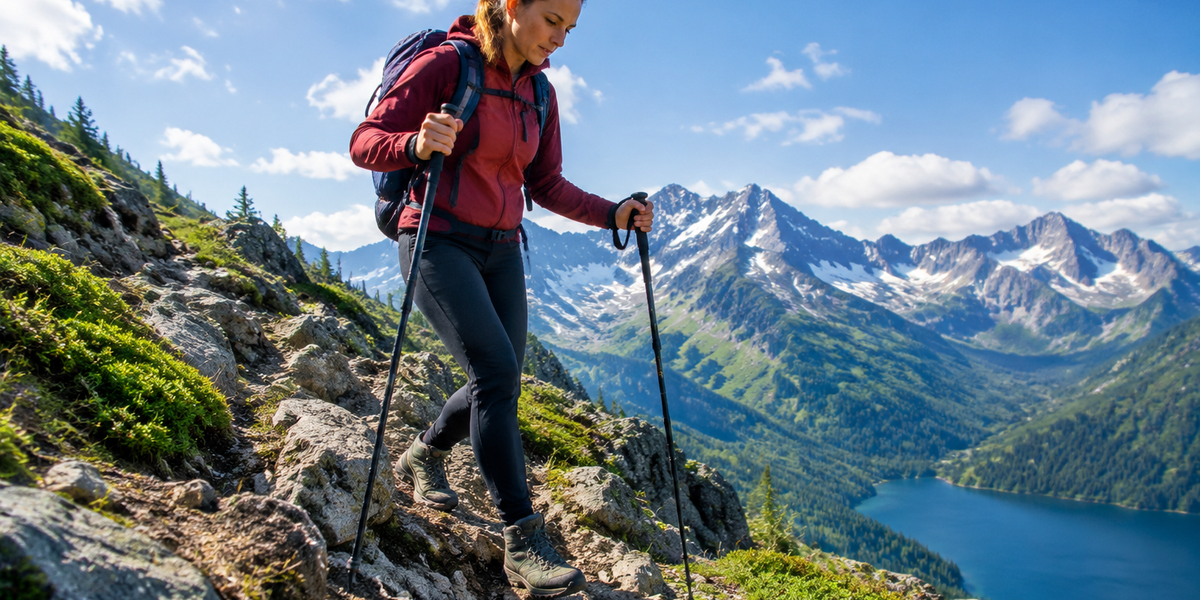
2. Plant Both Poles Simultaneously — On steep grades, use a "double-plant" rhythm: both poles plant together ahead of your next step, creating a stable tripod. Single-pole alternating only works on moderate grades.
3. Wrist Strap Engagement — Slide your hand UP through the strap from below, then grip down. This lets you push down through your palm and wrist bones (strong structures) rather than gripping with finger muscles (weak and fatiguing).
4. Pole Placement — Plant poles 12-18 inches ahead of your lead foot, slightly wider than shoulder-width. Avoid overreaching—poles more than 24 inches ahead create awkward weight distribution.
5. Upper Body Engagement — Actively push down through the poles as you step. Passive pole dragging provides zero benefit. Think "pole push, then step" rather than "step and catch yourself."
6. Maintain Three Points of Contact — Always have either two poles + one foot, or two feet + one pole in contact with the ground. This is standard mountaineering practice on steep terrain.
💡 Pro Tip: Practice descent technique on a mild 5-10% grade first. Steep terrain magnifies technique errors—learn the rhythm on forgiving slopes before tackling exposed switchbacks.
Best Trekking Poles for Steep Descents
Black Diamond Trail Ergo Cork Trekking Poles
| Criteria | Score |
|----------|-------|
| Locking Reliability | 10/10 |
| Grip Comfort | 9/10 |
| Durability | 9/10 |
| Value | 7/10 |
The Black Diamond Trail Ergo Cork poles represent the industry standard for serious descent performance. The FlickLock Pro adjustment system has earned its reputation through thousands of trail miles—these clamps simply don't slip under load, even when you're leaning hard into a steep descent with a heavy pack. The natural cork grips absorb hand sweat and mold to your grip over time, eliminating the blisters and hot spots that plague rubber-handled poles on long downhills.
At 18.3 oz per pair (aluminum version), these aren't ultralight, but that mass provides stability when planting on loose rock. The carbide tips bite aggressively into dirt, mud, and decomposed granite—critical for the kind of confident planting that actually reduces knee load. Black Diamond includes interchangeable rubber tip covers and multiple basket sizes for different terrain.
The ergonomic cork grip extends 6 inches below the main handle, allowing you to choke down for extra-steep sections without fumbling with adjustment levers mid-descent. This design detail makes a real difference when you're picking your way down Class 2+ talus.
✅ Pros:
- FlickLock Pro adjusters have never failed in verified buyer reviews of steep descents
- Natural cork grips stay comfortable through sweat and extended use
- Carbide tips provide excellent bite on technical terrain
- Extended grip area below main handle for varied hand positions
❌ Cons:
- $110 price point is steep for casual hikers
- Aluminum construction is heavier than carbon fiber alternatives
- Cork requires occasional maintenance (light sanding) to restore grip texture
TrailBuddy Lightweight Trekking Poles
| Criteria | Score |
|----------|-------|
| Locking Reliability | 7/10 |
| Grip Comfort | 8/10 |
| Durability | 7/10 |
| Value | 10/10 |
For hikers who want knee protection without investing $100+, the TrailBuddy Lightweight poles deliver surprising performance at a $40 price point. These aluminum poles use twist-lock adjustment rather than external levers—a compromise that works fine for moderate hikers but can slip under aggressive downhill loading if not tightened properly.
The cork-padded EVA foam grips stay comfortable on multi-hour descents, and the pole shafts telescope from 24.5 to 54 inches—enough range for most body heights and terrain. TrailBuddy includes rubber tip covers, mud baskets, and snow baskets in the package, making these a solid value for three-season hiking.
The collapsible design folds to just 13 inches, small enough to strap to a daypack when you hit flat terrain or need hands free for scrambling. At 9.4 oz per pole, they're slightly heavier than premium options but still light enough to swing all day without arm fatigue.
Based on verified buyer reviews, these poles work best for hikers under 180 pounds on moderate descents. Heavier users or those tackling extremely steep terrain should invest in lever-lock reliability.
✅ Pros:
- Unbeatable value under $40 for a quality pair
- Cork-padded grips reduce hand fatigue on long descents
- Folds to 13 inches for easy pack storage
- Includes multiple tip and basket options
❌ Cons:
- Twist-lock mechanism can slip under heavy downhill pressure if not properly tightened
- Aluminum construction adds weight compared to carbon fiber
- Some buyers report the locking collars require periodic re-tightening
Knee Protection Beyond Poles: Complementary Strategies
While trekking poles provide the most significant biomechanical benefit, smart hikers layer additional protection:
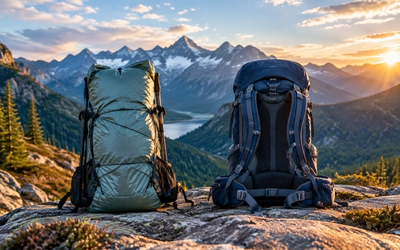
Pack Weight Management — Every pound in your pack multiplies impact force on descents. If you're also considering lighter gear, our guide to frameless vs internal frame backpacks explores ultralight options that reduce knee load.
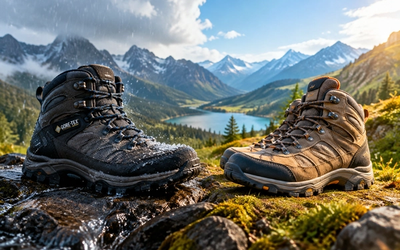
Footwear Cushioning — Shoes with 4mm+ of heel cushioning absorb more impact than minimal trail runners. For wet descents where traction matters most, check our analysis of Gore-Tex vs non-waterproof boots.
Quad Strengthening — The eccentric (lengthening) contraction of your quads during descents causes most of the muscle damage and soreness. Pre-season training with downhill running or box step-downs builds descent-specific strength.
Pace Management — Rushing descents increases impact force and reduces reaction time for obstacles. Poles are most effective when you maintain a controlled, rhythmic pace.
💡 Pro Tip: After a long descent, elevate your legs for 10-15 minutes to reduce knee inflammation. The cumulative impact, even with poles, still challenges your joints.
Frequently Asked Questions
Do I need expensive poles or will budget models work?
For occasional day hikes on moderate descents, budget poles like the TrailBuddy provide meaningful knee protection. If you're tackling steep backcountry descents with a heavy pack, invest in lever-lock reliability like the Black Diamond Trail Ergo Cork. The performance gap widens as terrain difficulty increases.
Should I use one pole or two for descents?
Research clearly shows two poles provide superior biomechanical advantage. A single pole reduces knee force by only 8-12% compared to 25%+ with two poles. Save the single-pole technique for easy terrain where you need a hand free for navigation or photography.
Can trekking poles prevent knee injuries?
Poles reduce acute impact force, which lowers injury risk, but they don't eliminate it. Pre-existing knee conditions (meniscus tears, ACL damage, arthritis) still require medical management. Think of poles as injury mitigation, not prevention. Multiple studies show reduced pain and slower progression of osteoarthritis in pole users, but cartilage damage isn't reversible.
How do I know if I'm using correct descent technique?
If your arms are tired after a long descent, you're doing it right—you've successfully shifted load from your legs to your upper body. If only your quads are burning and your arms feel fresh, you're not engaging the poles effectively. Film yourself and check for the double-plant rhythm and active downward push described earlier.
Do poles help on loose scree and talus?
Yes, but technique matters. Plant poles on stable rocks, not loose material. Use them to test footing before committing your weight. On very loose terrain, poles provide stability more than force reduction—think of them as balance aids that happen to also reduce knee load.
Final Thoughts
The research is unambiguous: trekking poles reduce knee stress by 25-31% on steep descents when used with proper technique. That's not marketing hype—it's measured biomechanical fact backed by multiple peer-reviewed studies. For hikers who regularly tackle elevation loss over 1,000 feet, poles are one of the highest-value gear investments you can make.
The Black Diamond Trail Ergo Cork poles remain our top recommendation for serious descent performance, while the TrailBuddy offers impressive value for weekend warriors. Whichever you choose, remember that technique amplifies equipment—the most expensive poles won't help if you're just dragging them behind you.
Start practicing on moderate descents, focus on the double-plant rhythm, and actively push down through the poles. Your knees will thank you on mile 8 when gravity would otherwise be grinding cartilage. The science is settled: poles work. Now get out there and put them to use.
Editor's Choice
Black Diamond Trail Ergo Cork Trekking Poles — the gold standard for technical descents with bombproof FlickLock adjusters and sweat-absorbing cork grips that stay comfortable on multi-hour downhills.
TrailBuddy Lightweight Trekking Poles — exceptional value under $40 for casual hikers who want proven knee protection without premium pricing.