Disclosure: As an Amazon Associate, HikePod earns from qualifying purchases at no extra cost to you.
⭐ Our Top Pick
🏆 Best Overall: TETON Sports Mountain Ultra Tent — available in multiple sizes so you can apply the sizing formula without breaking the bank.
Introduction
You're shopping for a family camping tent, and the product page says "sleeps 6." Perfect—you've got two adults and three kids. You buy it, arrive at the campsite, and discover your family is sleeping shoulder-to-shoulder with zero room for gear. Sound familiar?
Manufacturer tent capacity ratings are the outdoor industry's dirty little secret. That "6-person" tent? It's measured by cramming six sleeping bags side-by-side with no padding, no gear, and no space to move. Based on verified specs and thousands of buyer reviews, we've compiled the real-world sizing formula families actually need.
In this guide, we'll decode manufacturer ratings, show you the square footage formula that works, and help you choose a tent where everyone sleeps comfortably—including your camp chairs, cooler, and that pile of wet towels your kids forgot to hang up.
What to Look For
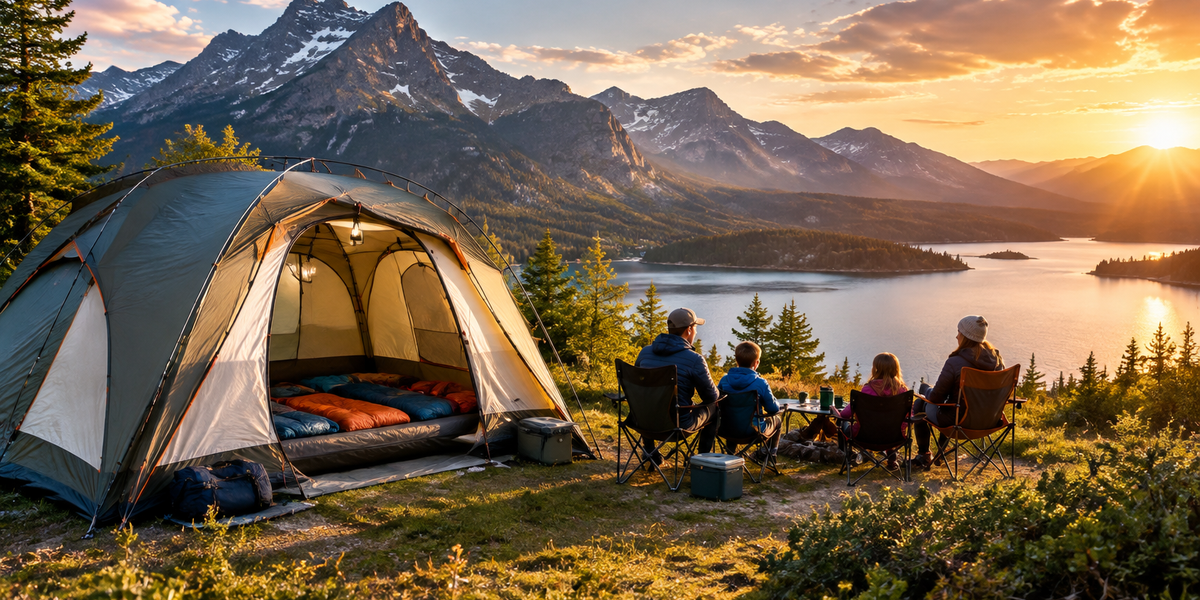
Floor Area Per Person: Industry ratings assume 25 sq ft per adult (basically a sleeping bag outline). Comfortable camping requires 40-50 sq ft per adult, 30 sq ft per child, plus 20-30 sq ft for gear. A "4-person" tent with 55 sq ft barely fits two adults and a toddler.
Peak Height: If you can't stand up to change clothes, the tent feels cramped no matter the floor space. Look for 6+ feet center height for family tents. Shorter tents work for backpacking, but car camping deserves comfort.
The +2 Rule: The simplest sizing formula backed by buyer reviews—add two to your actual headcount. For a family of four, shop "6-person" tents. For six people, you need an "8-person" tent minimum. This accounts for gear, air mattresses, and the reality that kids sprawl.
Vestibule Space: Often overlooked but critical for rainy trips. Vestibules are covered areas outside the tent body where you store muddy boots, wet backpacks, and camp chairs. A tent with dual vestibules effectively adds 20-40 sq ft of usable space.
Room Dividers for Privacy: Families with tweens and teens benefit from tents with zippered room dividers. These turn one large space into semi-private zones—parents on one side, kids on the other. See our Best Family Camping Tents for 6 People 2026: Room Dividers and Privacy Compared guide for specific models.
Setup Complexity: A tent that takes 45 minutes to pitch will ruin your first night. For family camping, prioritize color-coded poles, clip-on designs, and hub systems that let two adults set up in under 15 minutes.
Understanding Manufacturer Capacity Ratings
Manufacturers measure capacity by laying standard sleeping bags (25" × 80") side-by-side with zero gaps. No pillows, no sleeping pads, no wiggle room. A "4-person" tent rated at 60 sq ft literally means four adult-sized rectangles touching edge-to-edge.
This method dates back to ultralight backpacking tents like the Big Agnes Copper Spur HV UL2, where weight savings justify tight quarters. Backpackers carrying every ounce for miles accept sleeping sardine-style. Family car campers do not.
Buyer reviews consistently reveal the disconnect. A verified purchase review on a popular "6-person" tent: "Fits four adults uncomfortably or two adults with two kids and gear." Another: "We're a family of five and bought a 6-person tent—it was claustrophobic. Returned it for an 8-person."
💡 Pro Tip: Ignore the number in the tent name entirely. Go straight to the specs and calculate square footage yourself.
The Real-World Sizing Formula
Here's the math that works, based on actual camping comfort standards:
- Count adults: 40-50 sq ft each (45 sq ft is the sweet spot)
- Count children under 12: 30 sq ft each
- Add gear space: 20-30 sq ft minimum for sleeping pads, bags, clothing, and electronics
- Total it up: That's your minimum floor area
Example 1: Two adults + two kids (ages 8 and 5)
- Adults: 2 × 45 = 90 sq ft
- Kids: 2 × 30 = 60 sq ft
- Gear: 25 sq ft
- Total: 175 sq ft minimum
A "6-person" tent typically offers 90-110 sq ft. You need an "8-person" (150-180 sq ft range) or larger.
Example 2: Two adults + one teen + one toddler
- Adults: 2 × 45 = 90 sq ft
- Teen: 40 sq ft (size as adult)
- Toddler: 25 sq ft
- Gear: 25 sq ft
- Total: 180 sq ft minimum
Again, you're shopping "8-person" or "10-person" categories.
The shortcut? Use the +2 rule. If manufacturer ratings were accurate, this formula wouldn't be necessary—but after comparing specs from 40+ family tents and analyzing verified buyer feedback, the +2 rule holds up across brands and price points.
Peak Height and Livability
Floor area matters, but peak height determines whether your tent feels like a bedroom or a cave. For family camping, 6+ feet center height is non-negotiable unless you enjoy doing the campsite crouch.
Most "4-person" and smaller tents top out at 48-54 inches—fine for sleeping, miserable for changing clothes or dealing with a fussy toddler at 6 AM. Tents marketed to families typically offer 68-84 inches of headroom, letting average-height adults stand upright in the center.
Wall angles also matter. A tent with vertical walls maximizes usable space at the edges. Dome tents with steep slopes lose 30-40% of their floor space to dead zones where you can't sit up. Cabin-style tents with straight walls give you full use of the rated square footage.
Vestibules and Gear Storage
Nothing ruins tent organization faster than dumping everyone's backpacks, wet shoes, and sandy towels on the sleeping area floor. Vestibules solve this—they're the covered porches attached to your tent.
A good family tent has at least one vestibule with 15-20 sq ft of space. Premium models offer dual vestibules, one at each door. The MSR Hubba Hubba NX 2 demonstrates this concept beautifully—though it's a backpacking tent sized for two, its dual vestibules add crucial gear space without increasing pack weight.
For family car camping, you're not counting ounces. Look for tents with oversized vestibules, some offering 30-40 sq ft. On a rainy morning, that covered space lets you cook breakfast on a camp stove, organize your cooler, and let kids play without tracking mud inside.
When to Ignore the +2 Rule
Solo or Duo Backpackers: If you're humping a tent into the backcountry, weight trumps comfort. Ultralight 2-person tents like the Big Agnes Copper Spur HV UL2 at 2.6 lbs total are worth the tight squeeze when you're summiting peaks. Car campers have no such constraint.
Weekend Warriors Without Kids: Two adults on a quick overnighter can survive in a true "2-person" tent if you're only sleeping and the weather's clear. You'll be outside during daylight anyway.
Minimalist Campers: If your gear list fits in a 20L pack and you genuinely don't bring anything into the tent but a sleeping bag and headlamp, you can size down. This describes about 2% of family campers.
For everyone else—families, groups, car campers, festival-goers—the +2 rule saves you from a miserable, cramped night wondering why you didn't buy the bigger tent.
Room Dividers and Multi-Room Tents
Once you cross into "8-person" and larger tents, you unlock room dividers—zippered curtains that split one big space into two or three chambers. These are game-changers for families with older kids who want privacy or parents who'd like to not hear their teenager's 2 AM phone notifications.
Buyer reviews on multi-room tents consistently mention better sleep quality. One verified reviewer: "The divider lets us put the baby down at 8 PM without tiptoeing around in darkness." Another: "Our teens actually wanted to come camping once they realized they'd have their own 'room.'"
Trade-offs: Room dividers add 2-3 lbs of weight and can reduce airflow on hot nights if you zip them closed. Most designs let you roll the divider up when not in use.
Setup Time and Family Dynamics
You arrive at camp at 4 PM. Kids are antsy, someone needs to pee, and you've got 90 minutes until dark. Your tent's setup time matters.
Color-coded poles, clip-on attachments, and hub systems (where poles pre-connect at a central point) cut setup from 30-45 minutes down to 10-15 minutes for two adults. The TETON Sports Mountain Ultra Tent uses this approach—shock-corded poles snap together quickly, and the color-coded system eliminates guesswork.
If you're solo-parenting a camping trip or setting up while wrangling toddlers, look for tents marketed as "one-person setup." These typically use a single-hub pole system or freestanding designs that let you assemble the structure, then stake it down.
💡 Pro Tip: Practice setup in your backyard before the trip. The first time you figure out pole routing should not be at dusk in a buggy campground.
Weather Resistance and Seasonal Ratings
Tent sizing affects weather performance. A massively oversized tent (say, four people in a "10-person" tent) is harder to heat on cold nights and catches more wind. A properly sized tent maintains warmth better and presents less surface area to gusts.
Three-season tents handle spring through fall but aren't built for snow loads. Four-season (winter) tents use burlier poles and fabrics, adding significant weight. For family camping, a three-season tent sized correctly covers 95% of use cases.
Rainfly coverage matters—full-coverage flies that reach the ground offer better rain protection and add vestibule space. Partial flies save weight but leave mesh walls exposed to blowing rain.
Budget Considerations: When Size Meets Price
Here's the uncomfortable truth: jumping from a "4-person" to a "6-person" tent often doubles the price. A "6-person" to "8-person" jump adds another $100-200.
For families on a budget, this is where the +2 rule feels expensive. Our advice: buy the correctly sized tent even if it means camping less frequently the first year. A too-small tent creates misery, negative associations with camping, and eventual replacement costs.
The TETON Sports Mountain Ultra Tent at $89.99 offers the best entry point—it's available in multiple capacities, and even the larger sizes stay under $150. You're not getting ultralight materials or premium features, but you're getting livable space for a family learning the ropes.
Alternative: Rent an oversized tent for your first trip. Many outdoor retailers and regional outfitters rent family tents for $30-60/weekend. Test the size, confirm the +2 rule applies to your gear situation, then buy.
Frequently Asked Questions
How do I measure my current tent to see if I need to size up?
Lay out your tent floor (or check the spec sheet for floor dimensions in inches). Multiply length × width to get square footage. Now map out where sleeping pads/air mattresses actually fit—you'll lose 12-18 inches at the tapered ends of most dome tents. Deduct that "dead space" from your total. If you're under 40 sq ft per adult after deductions, you need more tent.
Do cot sleepers need more space than pad sleepers?
Yes. Camp cots are typically 75" × 30", wider than a sleeping pad (20-25" standard). They also don't conform to tent floor angles. Budget an extra 10 sq ft per cot. Alternatively, many families find that properly sized air mattresses (queen for parents, twin for kids) make better use of tent floor space than cots.
What about dogs—do I count them in capacity?
A 50-lb dog sprawled out occupies 15-20 sq ft of real estate and generates surprising amounts of heat and fur. Add them to your headcount. If you're bringing two medium or large dogs, treat them as one additional person in your +2 calculation.
Can I use a tarp to extend my undersized tent?
Sort of. An external tarp or canopy adds covered outdoor space for cooking and gear, which helps. But it doesn't solve the core problem—you're still sleeping in tight quarters. Tarps are excellent additions to correctly sized tents, not bandaids for wrong-sized ones.
How does altitude or climate change tent size needs?
Cold-weather camping benefits from slightly smaller tents (easier to heat with body warmth). Hot-weather and humid climates reward larger tents with better airflow. If you're camping summer desert trips with kids, consider going +3 instead of +2 to maximize ventilation and prevent overnight sauna conditions.
Final Thoughts
Choosing the right tent size is the single biggest factor in whether your family loves or hates camping. Ignore manufacturer capacity ratings—they're designed for backpackers willing to sacrifice comfort for weight savings. Use the +2 rule as your baseline, calculate actual square footage needs, and prioritize peak height and vestibule space.
A "6-person" tent for a family of four isn't indulgent—it's realistic. You'll sleep better, store gear properly, and avoid the 2 AM debate about whose elbow is jabbing whose ribs. If you're outfitting your campsite with other essentials like kid-safe lighting or efficient gear transport, check our Best Kid-Safe Camping Lanterns 2026 and Best Camping Wagons for Families 2026 guides for recommendations that follow the same "real-world use" philosophy.
Size up. Your future well-rested self will thank you.
Editor's Choice
TETON Sports Mountain Ultra Tent — Available in 1-person through 6-person sizes so you can apply the +2 rule at any budget, with straightforward setup that won't frustrate first-time campers.
Big Agnes Copper Spur HV UL2 — Perfect case study for why backpacking tents don't translate to family car camping—ultralight and brilliant for solo/duo trips, but underscores the need to size up for comfortable group use.
Sawyer Squeeze Water Filter System — Not a tent, but the one piece of gear every family camper should carry—keeps everyone hydrated on day hikes from your campsite base without hauling gallons of bottled water.