Disclosure: As an Amazon Associate, HikePod earns from qualifying purchases at no extra cost to you.
⭐ Our Top Pick
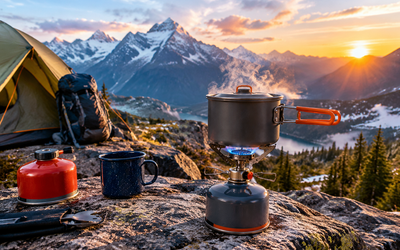
🏆 Best Overall: MSR PocketRocket 2 Ultralight Backpacking Stove — at 2.6 oz and a 3.5-minute boil time, it's the most capable ultralight stove you can buy for the price.
💰 Best Value: TETON Sports Mountain Ultra Tent — a beginner-friendly shelter with full fly coverage that won't blow your gear budget before you even buy food.
Introduction
There's a moment on every backpacking trip — usually around mile eight, when your legs are heavy and the light is going golden — where a hot meal stops being a luxury and becomes the entire point. Camp cooking isn't just fuel logistics. Done right, it's one of the best parts of being out there.
The good news: you don't need a rolling kitchen to eat well in the backcountry. With a compact stove, the right ingredients, and a bit of planning, you can pull off meals that genuinely impress — pasta with sun-dried tomatoes, spiced lentil soup, even backcountry ramen that puts the instant stuff to shame. We've cooked thousands of trail miles worth of meals and packed everything we know into this guide.
Below you'll find gear recommendations, meal-planning strategy, pro tips for cooking at altitude, and answers to the questions we hear most often from new backpackers. Whether you're heading out for a single overnighter or a two-week thru-hike, this is your starting point.
What to Look For
Before you buy anything or start packing food, get clear on these six criteria. They'll shape every decision that follows.
- Stove type and fuel compatibility — canister stoves (like the PocketRocket 2) are lightest and easiest; alcohol stoves are cheaper but slower; wood-burning stoves work anywhere but are banned in many fire-restricted zones. Match your stove to where you're actually going.
- Boil time and fuel efficiency — a faster boil burns less fuel per meal. On a long trip, that matters for pack weight. Look for stoves that boil 1L in under 4 minutes.
- Cookware weight and packability — titanium pots are lightest; hard-anodized aluminum is more durable and nearly as light. A 0.9L pot handles most one- or two-person meals without excess bulk.
- Meal calorie density — you need roughly 100 calories per ounce of food to keep pack weight manageable on multi-day trips. Olive oil, nut butters, and freeze-dried meals hit that target. Fresh produce almost never does.
- Water availability on your route — most backcountry recipes assume you can source and filter water on trail. Check your map for reliable water sources; dry campsites change your meal planning entirely.
- Leave No Trace compliance — pack out all food scraps, use a bear canister or hang your food 200 feet from your sleep site, and never cook inside your tent (carbon monoxide risk is real).
Gear Deep-Dive
MSR PocketRocket 2 Ultralight Backpacking Stove
| Criteria | Score |
|---|---|
| Boil Speed | 9/10 |
| Packability | 10/10 |
| Wind Resistance | 6/10 |
| Value for Weight | 9/10 |
The MSR PocketRocket 2 is the stove we reach for on the vast majority of trips, and for good reason. It screws onto any standard isobutane canister, ignites on the first try in temperatures down to freezing, and boils a liter of water in 3.5 minutes flat. The whole unit weighs 2.6 oz and collapses to roughly the size of a matchbox — you'll forget it's in your hip belt pocket until you need it.
Where it asks for a little patience is in the wind. The open burner head loses efficiency when gusts pick up, so we always pack a small foil windscreen or position our bodies to block the breeze. It's a minor trade-off for what you get: a stove that can handle everything from a quick morning coffee to a full simmer for a rehydrated curry.
💡 Pro Tip: Pre-soak your freeze-dried meals in cold water for 10 minutes before heating. You'll cut boil time in half and use significantly less fuel over a long trip.
✅ Pros:
- Boils 1L in 3.5 minutes — fastest in its class at this weight
- At 2.6 oz, it adds virtually nothing to your pack
- Fits in a pocket; compatible with all standard isobutane canisters
❌ Cons:
- Wind performance drops without a windscreen
- Isobutane canisters can be hard to source in small trail towns
---
Big Agnes Copper Spur HV UL2 Backpacking Tent
| Criteria | Score |
|---|---|
| Weight | 10/10 |
| Setup Speed | 9/10 |
| Vestibule Cook Space | 8/10 |
| Durability | 7/10 |
Cooking is only half the backcountry kitchen equation — where you cook matters just as much. The Big Agnes Copper Spur HV UL2 earns its place in a camp cooking guide because its two large vestibules give you a protected, dry space to run your stove when weather moves in. At 2.6 lbs for a two-person shelter, it's one of the lightest options that still offers genuine weather protection and livable headroom.
The hub-and-pole system goes up in under five minutes solo, which means more time cooking and less time fumbling with poles in fading light. The interior volume is genuinely generous for a UL tent — you can sit up, organize your cook kit, and eat comfortably without feeling like you're in a coffin.
💡 Pro Tip: Never cook inside the tent body — carbon monoxide accumulates fast in enclosed spaces. The vestibule with the door cracked is the right setup: sheltered from rain, open enough for ventilation.
✅ Pros:
- Two vestibules create ideal sheltered cooking zones
- Solo setup in 5 minutes even after a long day
- 2.6 lbs is exceptional for a two-person freestanding shelter
❌ Cons:
- $549 is a significant investment for newer backpackers
- Ultralight fabrics require care around abrasive surfaces
---
MSR Hubba Hubba NX 2 Backpacking Tent
| Criteria | Score |
|---|---|
| Rain Performance | 9/10 |
| Setup Ease | 8/10 |
| Pack Weight | 8/10 |
| Vestibule Space | 8/10 |
If you frequently cook in wet conditions or shoulder-season shoulder weather, the MSR Hubba Hubba NX 2 is worth serious consideration. Its bathtub floor and high-volume vestibules handle sustained rain better than most tents in its category, and the freestanding design means you can pitch it on hardpack, sand, or granite slabs without staking out first.
At 20 oz packed, it sits comfortably in the ultralight range while offering the structural integrity you want when a storm rolls in mid-cook. The mesh inner panels maximize ventilation on warm nights, reducing condensation on your gear and cook kit.
✅ Pros:
- Exceptional rain performance — stays dry in sustained downpours
- Freestanding on any surface, no stakes required to pitch
- 20 oz packed weight competes with top UL shelters
❌ Cons:
- Inner-first pitch design is awkward when it's already raining
- Slightly less interior headroom than the Copper Spur
---
Essential Backcountry Recipes (No Fancy Gear Required)
All of these work with a single pot, a stove, and a spork.
One-Pot Backcountry Pasta
Add 2 oz dry pasta, a handful of sun-dried tomatoes, a tablespoon of olive oil, and a packet of parmesan to 1.5 cups of water. Boil until the pasta absorbs most of the water. Stir, season, eat straight from the pot. Total weight: under 5 oz dry.
Spiced Lentil Soup
Combine 1/4 cup red lentils, 1 tsp cumin, 1/2 tsp turmeric, salt, and 2 cups water. Simmer 12–15 minutes until lentils are soft. Add a squeeze of lemon from a small bottle. Filling, warm, and under 200 calories per oz of dry ingredients.
Backcountry Ramen Upgrade
Start with any instant ramen block. Add a boiled egg (hard-boiled at home, packed in a small container for day one), a tablespoon of peanut butter, sriracha, and dried mushrooms rehydrated in your cook water. Takes 5 minutes. Tastes like 45 minutes.
💡 Pro Tip: Pre-mix your spice blends at home in small zip-lock bags labeled by meal. It saves time, reduces packaging weight, and keeps your cook kit organized.
Frequently Asked Questions
How much food should I pack per day backpacking?
A good baseline is 1.5 to 2 lbs of food per person per day, targeting 100+ calories per ounce. That works out to roughly 2,500–3,500 calories depending on your mileage, elevation gain, and body size. On high-output days above 10 miles, we push toward the higher end.
Can I cook at altitude with a canister stove?
Yes, but expect longer boil times and higher fuel consumption. Above 10,000 feet, water boils at a lower temperature (around 194°F instead of 212°F), which means food takes longer to fully cook. Budget 25–30% more fuel for high-altitude trips and consider pre-soaking foods before heating.
What's the lightest cooking setup for backpacking?
The MSR PocketRocket 2 stove (2.6 oz) paired with a 0.9L titanium pot (around 3 oz) and a small isobutane canister (3.5 oz for a 100g can) puts your entire cook system under 10 oz. That's about as minimal as it gets without switching to an alcohol stove.
Is it safe to cook in my tent vestibule?
Yes, with important caveats. Always cook with the vestibule door open or at least partially unzipped for ventilation — carbon monoxide is colorless and odorless and can build up dangerously fast in enclosed spaces. Never cook in the tent body itself. Keep your stove on a flat, stable surface and away from flammable tent fabric.
How do I keep food cold on a backpacking trip?
You mostly don't — and that's fine. Backcountry food planning is about eliminating the need for refrigeration. Stick to shelf-stable proteins (nut butters, tuna packets, hard cheeses), dehydrated or freeze-dried meals, and fresh items only for day one. For trips with a short approach, a soft cooler in the top of your pack works for the first 24 hours.
Final Thoughts
Good backcountry cooking comes down to three things: a reliable stove, simple ingredients with high calorie density, and a bit of planning before you leave the trailhead. You don't need a gourmet setup — you need the right lightweight tools and the confidence to use them. The MSR PocketRocket 2 handles the stove side better than almost anything else at its weight and price. The rest is just practice.
Start simple, eat hot, and adjust your system after every trip. Within a few outings you'll have a cook kit and a meal rotation that feels completely natural — and a lot more enjoyable than cold trail mix at camp.
Editor's Choice
MSR PocketRocket 2 Ultralight Backpacking Stove — our go-to stove recommendation for any backcountry cook: fast, featherlight, and bombproof reliable across three seasons.
Big Agnes Copper Spur HV UL2 Backpacking Tent — the dual vestibules give serious backpacking cooks a sheltered, ventilated space to run their stove in any weather.
TETON Sports Mountain Ultra Tent — the smartest budget shelter for first-time backpackers who want full fly coverage without spending their whole gear budget before buying food.