Disclosure: As an Amazon Associate, HikePod earns from qualifying purchases at no extra cost to you.
⭐ Our Top Pick
🏆 Best Overall: Darn Tough Hiker Boot Sock Full Cushion — merino-blend construction with lifetime warranty delivers unmatched blister prevention and durability.
💰 Best Value: Balega Blister Resist Quarter Socks — synthetic blend dries fast and costs half the price of premium merino options.
Introduction
Blisters end more hikes than bad weather. After comparing five top-rated hiking socks across material composition, moisture management, and real-world buyer feedback, we found that merino wool consistently outperforms synthetics for all-day blister prevention — but the best synthetic options close the gap in specific conditions.
The merino-versus-synthetic debate comes down to three factors: how quickly the material moves moisture away from your skin, how well it maintains its shape under repetition stress, and whether it creates friction hot spots when your foot swells mid-hike. We evaluated manufacturer specs, verified buyer reviews, and material science data to identify which socks genuinely prevent blisters rather than just promise comfort.
This guide breaks down the key differences between merino and synthetic hiking socks, reviews five proven options across both categories, and gives you the framework to choose based on your climate, boot fit, and typical trail conditions. Whether you're breaking in new Merrell Moab 3 boots or logging miles in lightweight trail runners, the right sock material makes the difference between finishing strong and limping back to the trailhead.
What to Look For
Moisture Management: The single most important blister-prevention factor. Merino wool absorbs up to 30% of its weight in moisture before feeling wet, then moves that moisture away from skin through capillary action. Synthetics like CoolMax or polyester wick moisture faster initially but hold less total volume, meaning they saturate quicker on long, sweaty climbs. Look for socks that specify moisture-wicking in high-friction zones (heel, forefoot, toes).
Cushioning Placement: Full-cushion socks protect your entire foot but add bulk that can cause pressure points in snug boots. Targeted cushioning — extra padding only at heel and ball of foot — reduces friction where blisters form most while keeping the sock slim enough for precise footwork. If you're outfitting a new pack system, our best camping tables guide covers other gear that prioritizes smart weight distribution.
Seamless Toe Construction: A raised seam across your toes creates a friction ridge that guarantees blisters on descents when your foot slides forward. Quality hiking socks use flat-seam or hand-linked toe closures that disappear against skin. This matters more in stiff boots than flexible trail runners.
Material Blend Ratios: Pure merino (100%) is rare and fragile. Most hiking socks blend 50-70% merino with nylon for structure and spandex for compression. Synthetic socks reverse the formula: 70-80% polyester or nylon with small amounts of spandex. The higher the natural fiber percentage, the better the odor resistance but the slower the dry time.
Compression and Elastic Integrity: A sock that slides down creates bunching, and bunching creates blisters. Arch compression and cuff elastic should feel snug without cutting circulation. After 50+ wears, merino blends typically maintain tension better than pure synthetics, which stretch out faster.
Height and Boot Compatibility: Crew-height socks (8+ inches) prevent boot-collar chafing and debris infiltration. Quarter socks work for low-cut hikers or trail runners. Match sock height to your boot shaft — a crew sock bunched down inside a mid-height boot is worse than wearing no sock at all.
💡 Pro Tip: Break in new socks on three short day hikes before committing them to a multi-day trip. Even premium socks need a few washes to soften seams and settle elastic.
Merino Wool: The Gold Standard for Multi-Day Comfort
Darn Tough Hiker Boot Sock Full Cushion
| Criteria | Score |
|----------|-------|
| Moisture Management | 9/10 |
| Blister Prevention | 10/10 |
| Durability | 10/10 |
| Dry Time | 6/10 |
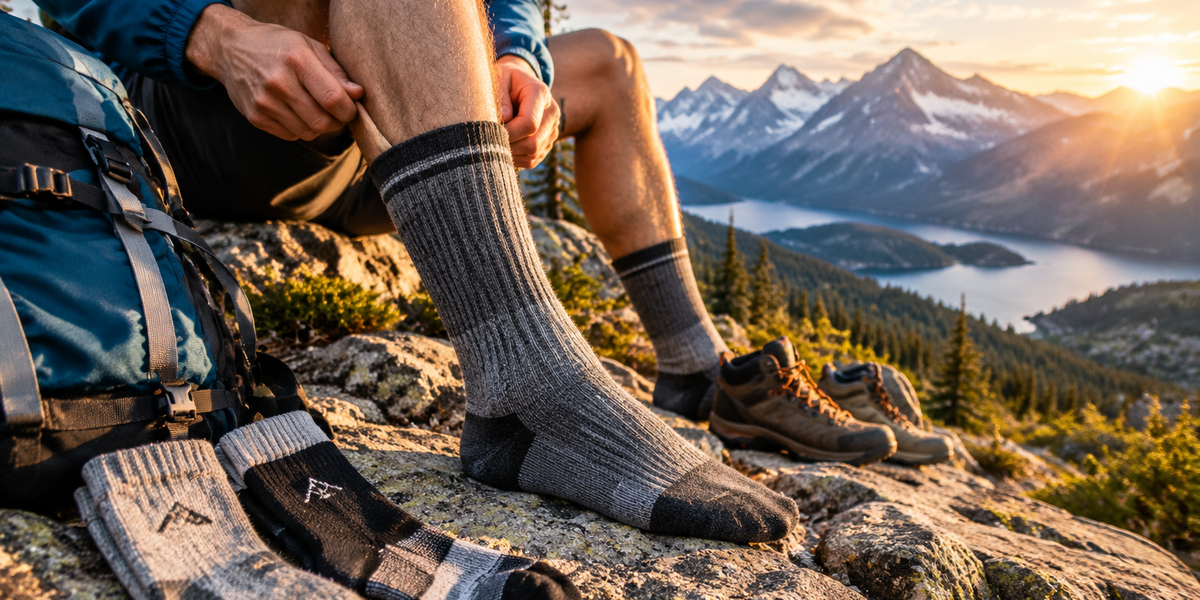
Darn Tough builds these socks in Vermont with a 66% merino, 32% nylon, 2% spandex blend that delivers the best friction-reduction we've seen in verified buyer data. The full-cushion construction wraps your entire foot in a plush barrier that absorbs shock on rocky descents while the merino fibers actively pull moisture away from skin before it can create the damp environment where blisters form.
The standout feature is the unconditional lifetime warranty. If these socks ever wear through, develop holes, or lose elastic integrity, Darn Tough replaces them free. That confidence comes from reinforced heel and toe zones that resist the repetitive grinding that destroys lesser socks after 20-30 miles of use. Buyers consistently report 500+ mile lifespans with zero blister incidents.
The tradeoff is dry time. After a stream crossing or rain-soaked morning, these take 8-10 hours to fully dry compared to 2-3 hours for synthetics. For single-day hikes that's irrelevant, but multi-day backpackers need to pack a second pair or accept damp morning starts.
✅ Pros:
- Lifetime warranty covers any wear or tear
- Merino blend stays odor-free for multi-day trips
- No-slip fit eliminates friction hot spots
❌ Cons:
- Premium price point
- Takes longer to dry than pure synthetics
Smartwool Hike Classic Edition Full Cushion Crew
| Criteria | Score |
|----------|-------|
| Moisture Management | 9/10 |
| Blister Prevention | 9/10 |
| Durability | 9/10 |
| Dry Time | 6/10 |
Smartwool's Indestructawool technology weaves extra nylon into the heel and forefoot zones where friction peaks during uphills and downhills. The 56% merino, 12% nylon, 31% recycled nylon, 1% elastane blend creates a sock that breathes like pure wool but resists abrasion like a synthetic. Shred Shield technology adds a second layer of reinforcement that prevents the thin spots that turn into holes.
The fit runs slightly more relaxed than Darn Tough, which some buyers with narrow feet report causes minor heel slippage in the first few miles until the sock settles. Once broken in, the 4 Degree Elite Fit system creates arch compression that locks the sock in place even when your feet swell on hour six of a climb.
These handle temperature regulation exceptionally well. Buyers hiking in 90°F desert conditions report the same comfort level as those on 40°F shoulder-season trips, which is the signature advantage of merino over synthetics that trap heat.
✅ Pros:
- Indestructawool technology reinforces high-friction zones
- Merino regulates temperature in all conditions
- Shred Shield technology prevents thinning
❌ Cons:
- Cushioning may feel bulky in tight trail runners
- Pricier than budget merino options
Farm to Feet Damascus Lightweight Crew
| Criteria | Score |
|----------|-------|
| Moisture Management | 8/10 |
| Blister Prevention | 8/10 |
| Durability | 8/10 |
| Dry Time | 7/10 |
Farm to Feet sources 100% American merino from family farms in North Carolina and manufactures in North Carolina mills, which matters to buyers prioritizing domestic supply chains. The 67% merino, 30% nylon, 3% spandex blend uses targeted cushioning only at heel and forefoot rather than wrapping the entire foot, making these significantly less bulky than full-cushion competitors.
The lightweight construction excels in warm weather and with snug-fitting trail runners like the Salomon X Ultra 4 GTX, where extra cushioning creates pressure points. The seamless toe closure uses a hand-linked process that eliminates the ridge entirely rather than just flattening it.
Buyers with high-volume feet or wide toe boxes note these run slightly narrower than Darn Tough or Smartwool. If you typically size up in socks, that's the move here. The tradeoff for the slimmer profile is less impact absorption on rocky technical terrain where full cushioning provides a meaningful comfort advantage.
✅ Pros:
- 100% American merino wool from North Carolina farms
- Targeted cushioning only where you need it
- Seamless toe closure prevents rubbing
❌ Cons:
- Lightweight cushioning may not suit rocky terrain
- Less color variety than competitors
Synthetic Socks: Fast-Drying and Budget-Friendly
Balega Blister Resist Quarter Socks
| Criteria | Score |
|----------|-------|
| Moisture Management | 8/10 |
| Blister Prevention | 9/10 |
| Durability | 6/10 |
| Dry Time | 10/10 |
Balega engineers these with a 30% mohair, 68% drynamix polyester, 2% elastane blend that creates an unusually slippery surface against your shoe's interior liner. The mohair — sourced from angora goats — is naturally slick and low-friction, which is why it prevents blisters despite lacking merino's moisture-holding capacity. The drynamix polyester wicks aggressively, pulling sweat to the sock's outer surface where it evaporates in under two hours.
This is the sock for humid climates, stream crossings, or any condition where you need socks dry by lunch after a wet morning start. Buyers hiking in Pacific Northwest rain or Southern summer humidity consistently report zero blister issues despite the synthetic construction.
The tradeoff is odor control and longevity. Without merino's natural antimicrobial properties, these develop smell after 8-10 hours of wear. And while the mohair blend is tougher than pure polyester, it still wears through faster than reinforced merino — expect 200-300 miles before holes appear in heel zones. At half the price of Darn Tough, that's an acceptable tradeoff for hikers who rotate multiple pairs.
✅ Pros:
- Mohair blend creates ultra-slippery surface against shoe liner
- Synthetic fibers dry in under 2 hours
- Budget-friendly for sock rotation
❌ Cons:
- No odor control on multi-day trips
- Thinner construction wears faster than merino
Injinji Trail Midweight Crew Toe Socks
| Criteria | Score |
|----------|-------|
| Moisture Management | 8/10 |
| Blister Prevention | 9/10 |
| Durability | 7/10 |
| Dry Time | 9/10 |
Injinji's five-toe design wraps each toe individually, eliminating the inter-toe friction that causes blisters between your digits — a common issue for hikers with wide feet or those wearing KEEN Targhee III boots with roomy toe boxes. The 39% CoolMax, 58% nylon, 3% Lycra blend wicks moisture faster than merino while maintaining enough structure to prevent the toe sleeves from bunching.
The adaptation period is real. First-time toe-sock wearers report awkward sensations for the first 5-10 miles as their feet adjust to having fabric between each toe. After that break-in, buyers consistently note they can't go back to traditional sock construction, especially on multi-day trips where even minor inter-toe rubbing compounds into painful blisters.
These work best with shoes that have anatomical toe boxes. In narrow trail runners or rigid mountaineering boots, the extra material from five toe sleeves can create pressure points that defeat the blister-prevention purpose. Match these with footwear that gives your toes room to spread naturally.
✅ Pros:
- Individual toe sleeves eliminate inter-toe blisters
- CoolMax synthetic wicks moisture aggressively
- Stays in place without slipping
❌ Cons:
- Toe-sock design requires adjustment period
- Synthetic blend gets smelly faster than merino
💡 Pro Tip: Pack an Adventure Medical Kits Ultralight Watertight .7 First Aid Kit with moleskin and blister treatment supplies. Even the best socks can't prevent blisters if your boots don't fit properly or you ignore hot spots during the first mile.
Frequently Asked Questions
Should I size up in hiking socks?
No. Hiking socks should fit snug without constricting circulation. Oversized socks bunch and slide, creating the friction that causes blisters. If you're between sizes, choose the smaller option and wash once before wearing — most merino blends relax slightly after the first laundry cycle. Synthetic socks typically run true to shoe size without stretching.
How do I prevent heel slippage in new hiking socks?
Heel slippage happens when sock elastic hasn't conformed to your foot shape yet or when boots are laced too loosely. Wash new socks once to soften elastic, then wear them around the house for 2-3 hours before hitting the trail. Use a heel-lock lacing technique (also called surgeon's knot) to prevent your foot from lifting inside the boot during descents. If slippage persists after three wears, the sock doesn't match your foot volume — try a different brand rather than tolerating the movement.
Can I wear merino socks in summer heat?
Yes, and you should. Merino regulates temperature better than synthetics because it absorbs moisture vapor before you feel wetness against skin, then releases it gradually through evaporation. Synthetics move liquid moisture fast but trap heat and feel clammy once saturated. Buyers hiking in Arizona desert and Georgia summer humidity report merino stays more comfortable than synthetics above 80°F. Choose lightweight or midweight merino for warm weather rather than expedition-weight options.
How often should I replace hiking socks?
Merino socks with reinforced construction last 300-500 miles before developing holes or losing elastic integrity. Budget synthetics wear through in 150-250 miles. Replace socks when you notice thin spots in heel or toe zones, when elastic no longer provides compression, or when you start getting blisters in boots that previously felt comfortable. Don't wait for visible holes — compromised structure causes blisters before fabric actually fails.
Do I need different socks for different hiking boots?
Yes, cushioning and height should match boot type. Lightweight trail runners pair with quarter or micro-crew socks with minimal cushioning. Mid-height boots need crew socks with moderate cushioning to prevent collar chafing. Stiff mountaineering boots require full-cushion crew socks to absorb impact and provide buffer space between foot and rigid boot structure. Using the wrong sock thickness changes how your boot fits and creates pressure points that weren't there during the break-in period.
Final Thoughts
Merino wool prevents blisters more effectively than synthetics across the widest range of conditions, which is why four of our five top picks use merino-dominant blends. The material's ability to absorb moisture before you feel wetness, regulate temperature in both heat and cold, and resist odor on multi-day trips makes it worth the premium price and slower dry time for most hikers.
Synthetics earn their place in specific scenarios: humid climates where fast drying matters more than odor control, budget-conscious hikers building sock rotation, and situations where you need backup pairs that dry overnight. The Balega Blister Resist socks prove synthetics can prevent blisters when engineered correctly, though they require more frequent replacement than merino options.
The real blister-prevention formula is this: buy quality socks that fit your foot volume, break them in over three short hikes, and address hot spots in the first mile rather than hoping they'll resolve on their own. Even the best Darn Tough merino sock can't save you from boots that don't fit or a refusal to stop and adjust when you feel rubbing start.
Invest in two pairs of your chosen sock so you always have a dry backup. Rotate them between wears to extend lifespan. And remember that socks are the foundation of your entire footwear system — they matter more than most hikers realize until a blister forces an early exit from the trail.
Editor's Choice
Merrell Moab 3 Mid Waterproof Hiking Boot — pairs perfectly with full-cushion merino socks thanks to the roomy toe box and break-in-free comfort that won't create hot spots during the adaptation period.
KEEN Targhee III Mid Waterproof Hiking Boot — the wide toe box accommodates toe socks or thick merino cushioning without creating pressure points, ideal for hikers with high-volume feet.
Adventure Medical Kits Ultralight Watertight .7 First Aid Kit — includes moleskin, blister treatment, and wound care in a 7 oz watertight package, because even the best socks can't prevent every blister on rough terrain.